
Written by: Dr. Akash Chandawarkar, Board Certified Plastic Surgeon, Mirror Plastic Surgery | Last updated: September 9, 2026
Key Takeaways
- Collagen peptide therapy includes oral supplements, injectable GHK-Cu, and FDA-approved biostimulators like Sculptra, each with distinct mechanisms and regulations.
- Choosing a provider should prioritize physician oversight, comprehensive lab testing, personalized protocols, quality sourcing, and consistent follow-up care.
- GHK-Cu is an off-label injectable peptide that stimulates collagen synthesis at the cellular level and requires medical supervision and safety screening.
- Patients should avoid unregulated sources and use peptides from licensed compounding pharmacies with third-party batch testing.
- Schedule your physician-supervised collagen peptide evaluation at Mirror Plastic Surgery to receive a protocol tailored to your labs and goals.
How Collagen Peptide Therapy Works
Collagen peptide therapy uses bioactive peptides, most notably GHK-Cu (copper peptide), administered via injection under medical supervision. These peptides stimulate the body’s natural collagen and elastin production. Oral collagen supplements are digested into amino acids, while injectable peptides signal skin cells directly to rebuild structural proteins.
GHK-Cu is an endogenous tripeptide (Gly-His-Lys) first isolated from human plasma in 1973 by Loren Pickart; circulating plasma levels decline from roughly 200 ng/mL at age 20 to approximately 80 ng/mL by age 60, a 60% drop that parallels age-related declines in skin repair and collagen synthesis. GHK-Cu activates at least 32 genes involved in extracellular matrix remodeling, including genes for collagen types I and III, decorin, and tissue inhibitors of metalloproteinases (TIMPs). At Mirror Plastic Surgery, GHK-Cu serves as a cornerstone of anti-aging peptide protocols, used alone or as part of the Glow Stack with BPC-157 and TB500.
Comparing Injectable Peptides, Collagen Supplements, And Biostimulators
Patients often group several different treatments under the umbrella of “collagen therapy,” even though they work in very different ways. Clarifying these categories helps you choose the right approach before you evaluate any provider.
Oral Collagen Supplements are hydrolyzed collagen proteins that break down during digestion into amino acids and small peptides. They do not directly signal collagen synthesis in the skin. Evidence for visible skin changes exists but remains modest, and these products are not considered clinical “peptide therapy.”
Injectable Peptides (GHK-Cu And Others) are bioactive, cell-signaling molecules that target specific biological pathways. GHK-Cu’s mechanism includes copper ion delivery as a cofactor for lysyl oxidase, the enzyme that crosslinks collagen and elastin, upregulation of superoxide dismutase and ferritin, and suppression of NF-kB inflammatory signaling. Injectable delivery bypasses absorption limits of topical products. Injectable GHK-Cu has a more complex legal status than the topical cosmetic form and far less published human data, so these protocols require medical supervision, careful dosing, and vetted sourcing.
Biostimulators (Sculptra/PLLA) use poly-L-lactic acid, an FDA-approved synthetic biodegradable polymer that stimulates fibroblasts mechanically. This process produces a gradual collagen response over weeks to months.1 A clinical histologic review documented a 66.5% increase in Type I collagen at three months after Sculptra treatment, with results often lasting up to 24 months1. Sculptra is a synthetic polymer, not a peptide, and its mechanism differs from GHK-Cu.
The right choice depends on your goals, physiology, and lab results. A qualified physician reviews these factors and designs a protocol or combination that fits your needs.
Five Criteria For Choosing A Safe Collagen Peptide Provider
A clear evaluation framework helps you separate physician-grade collagen peptide therapy from basic aesthetic offerings in Tampa Bay. These five criteria highlight the hallmarks of safe, effective care.
- Physician Oversight And Board Certification: GHK-Cu has no FDA-approved indication for any condition; all skin regeneration use is off-label, so medical supervision is essential. Look for a board-certified physician, ideally a plastic surgeon with deep anatomical expertise, who personally leads the peptide program rather than delegating it entirely to mid-level providers.
- Comprehensive Consultation And Lab Testing: A responsible provider completes a detailed medical history and orders baseline lab panels, including thyroid, liver, kidney, and hormone markers, before prescribing. One-size-fits-all protocols signal a lack of personalization. Relevant biomarkers for GHK-Cu include serum copper, ceruloplasmin, C-reactive protein, a complete metabolic panel, complete blood count, and zinc.
- Personalized Protocol Design: Effective protocols match your physiology, lab findings, and goals. Custom peptide stacks can address several issues at once, such as systemic inflammation, collagen decline, and skin texture changes, rather than relying on generic menus.
- Quality Sourcing And Batch Testing: Sourcing matters because most injectable peptides lack direct FDA oversight. Injectable GHK-Cu differs from topical cosmetic forms and carries a more complex legal status. Reputable practices use licensed compounding pharmacies with third-party batch testing to confirm purity, accurate dosing, and sterility.
- Ongoing Support And Follow-Up Care: Peptide therapy works best with monitoring and adjustments over time. Look for clear follow-up schedules, direct access to the prescribing physician, and availability for questions between visits.
Mirror Plastic Surgery: Physician-Led Collagen Peptide Care
Mirror Plastic Surgery (St. Petersburg, FL) meets these criteria at a high level. The practice is led by Dr. Akash Chandawarkar, a Harvard-educated, Johns Hopkins-trained, board-certified plastic surgeon with fellowship training in aesthetic surgery at the Manhattan Eye Ear & Throat Hospital/Lenox Hill Hospital and medical innovation training at Stanford University. Dr. Akash personally oversees every peptide protocol, so patients receive direct physician-level care.
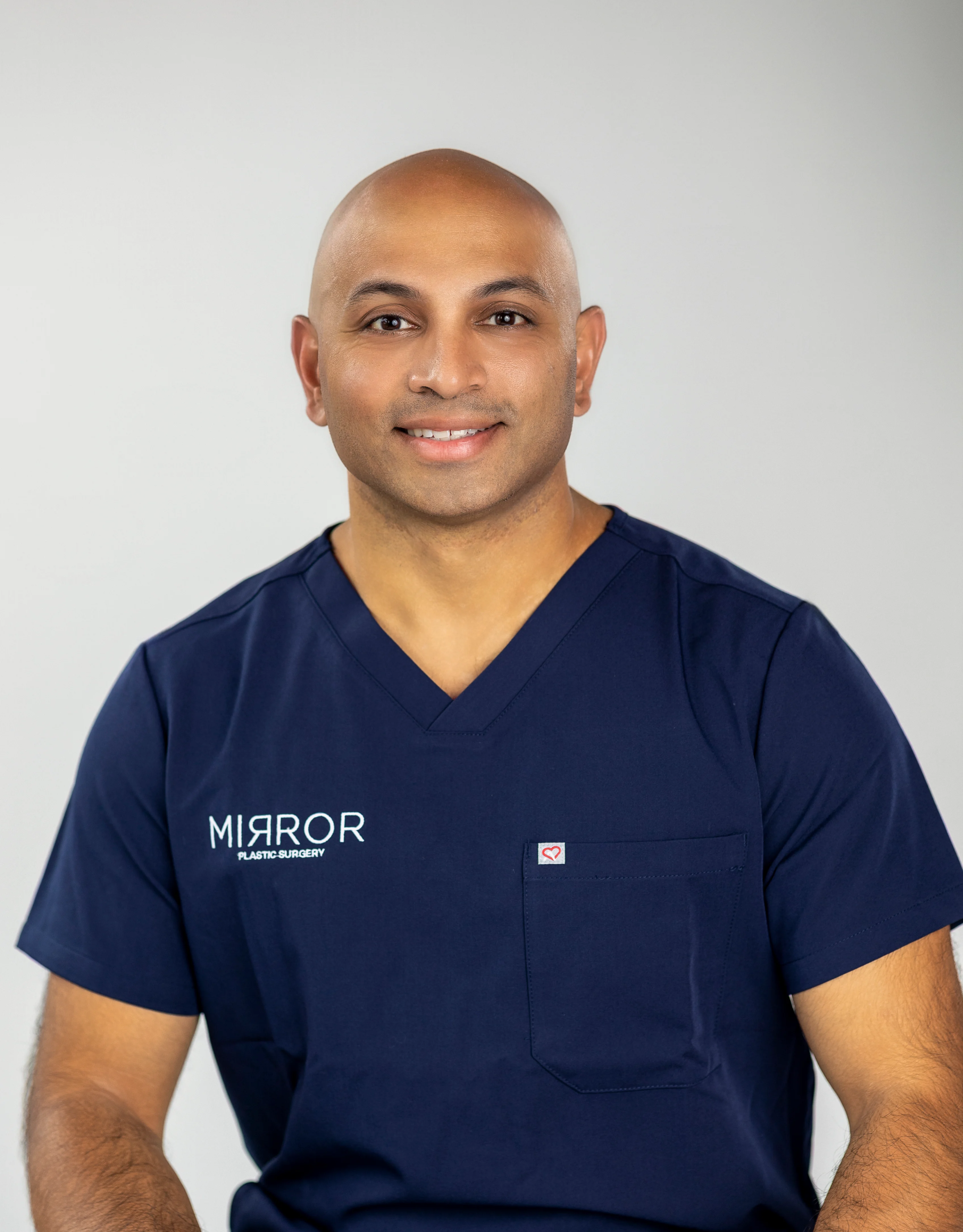
Consultations at Mirror Plastic Surgery can last up to an hour to allow for detailed discussion. Dr. Akash reviews comprehensive lab work before designing custom peptide stacks, such as the Glow Stack (GHK-Cu, BPC-157, TB500), which targets systemic inflammation, melasma, and collagen and elastin production. The practice sources peptides from reputable compounding pharmacies that perform rigorous batch testing. Patients receive 24/7 text access to Dr. Akash, and remote services are available across the United States.
Book An Appointment With Ellie to receive a collagen peptide protocol designed around your labs, health history, and physiology.
Other Tampa Bay practices, including wellness centers and med spas in Lutz, Brandon, Palm Harbor, Clearwater, and Wesley Chapel, offer GHK-Cu and related peptides under physician oversight, with cash-pay protocols commonly ranging from $150–$700 per month depending on the compound and monitoring intensity. Levels of personalization, lab testing, and direct physician access vary widely. Apply the five criteria above when comparing any clinic.
Regulatory Status And Risks Of Unregulated Peptides
The regulatory environment for injectable peptides continues to evolve. GHK-Cu has no FDA-approved indication for any condition, and the FDA’s approved drug database lists no New Drug Application or Biologics License Application for GHK-Cu.
GHK-Cu (except for injectable routes of administration) was removed from FDA Category 1 on April 22, 2026, after nominators withdrew their submissions; on May 5, 2026, one nominator clarified it intended to withdraw only the injectable route, and GHK-Cu (except for injectable routes) returned to Category 1. The FDA also announced plans to consult the Pharmacy Compounding Advisory Committee before the end of February 2027 regarding GHK-Cu’s potential inclusion on the permanent 503A bulks list. Injectable GHK-Cu remains under separate review.
For BPC-157, a July 2026 FDA briefing document for the Pharmacy Compounding Advisory Committee concluded that the evaluation criteria weigh against placing BPC-157 on the 503A bulk drug substances list, citing concerns about characterization, immunogenicity risk, and quality attributes for injectable formulations.
The greatest danger in this space comes from unregulated online peptide sources that lack quality control, accurate dosing, and medical oversight. Physician-supervised protocols reduce these risks through screening, lab testing, and sourcing from licensed compounding pharmacies.
Who Is Not A Candidate For Peptide Injections
A thorough medical evaluation determines whether collagen peptide therapy is appropriate. Peptide injections may be unsuitable for the following groups:
- Pregnant or nursing women
- Individuals with copper metabolism disorders such as Wilson’s disease or Menkes disease, because even small amounts of absorbed copper could worsen hepatic and neurological copper accumulation
- Those with active malignancies, due to GHK-Cu’s pro-angiogenic effects, including VEGF pathway activation, which have not been studied in cancer populations
- Patients on medications that may interact with peptide protocols, including copper-chelating drugs
- Individuals with active uncontrolled infections
These considerations highlight why physician oversight, appropriate lab work, and careful history review are essential before starting any peptide protocol.
Cost And What To Expect At Consultation
The cost of collagen peptide therapy depends on protocol complexity, the compounds selected, and the provider’s level of support. For a detailed breakdown of local pricing structures, review the guide to Clinical-Grade Collagen Peptide Therapy Cost In Tampa. A typical consultation at Mirror Plastic Surgery includes a comprehensive review of your medical history and goals and may involve lab work. Personalized quotes follow the consultation and reflect your specific protocol.
Choosing Physician-Supervised Excellence In Tampa Bay
Wellness clinics, online retailers, and med spas across Tampa Bay now advertise collagen peptide therapy. The real difference between a safe, effective protocol and a risky experiment lies in physician oversight, lab-driven personalization, and quality-controlled sourcing. A 2026 systematic review in the Aesthetic Surgery Journal assessed 20 studies on GHK-Cu and concluded that larger controlled studies are needed before broad clinical adoption and emphasized the need for standardized formulations, dosing regimens, and delivery methods. These findings reinforce how much your choice of provider matters.
Mirror Plastic Surgery aligns with every key evaluation point: board-certified surgical leadership from Dr. Akash Chandawarkar, comprehensive lab analysis, custom peptide stacks, quality-tested sourcing, and 24/7 concierge support. For Tampa Bay residents seeking high-level collagen peptide therapy, this standard of care sets a clear benchmark.
Book An Appointment With Ellie at Mirror Plastic Surgery today. Call 727-361-6515 or visit the practice at 780 4th Ave S, St. Petersburg, FL 33701.
Results vary from person to person. Peptide therapies are not FDA-regulated for general use, and professional medical supervision is essential for safety and efficacy. This article is for educational purposes and does not constitute medical advice. Consult a qualified physician to determine whether peptide therapy is appropriate for your health profile.
Frequently Asked Questions
What Is The Best Peptide For Collagen Growth?
GHK-Cu (copper peptide) is the most extensively studied peptide for collagen stimulation. Research dating back to the 1980s shows that GHK-Cu stimulates collagen synthesis in cultured fibroblasts at concentrations as low as 10⁻¹² M1, and a 2018 review by Pickart and Margolina documented its effects on over 4,000 genes relevant to tissue remodeling1. The strongest human clinical evidence comes from topical formulations, including a 2025 meta-analysis of seven randomized controlled trials showing statistically significant effects on wrinkles1. Injectable GHK-Cu is used in supervised protocols to bypass topical absorption limits. At Mirror Plastic Surgery, GHK-Cu is used alone or as part of the Glow Stack with BPC-157 and TB500 for broader anti-aging and anti-inflammatory support.
Are Peptide Injections Safe For Skin?
When administered under medical supervision with quality-sourced, batch-tested compounds, injectable GHK-Cu protocols are generally well-tolerated. Published studies report mild, transient erythema in 7–9% of subjects using topical formulations, with no serious adverse events attributed to GHK-Cu across available clinical studies1. The injectable route has far less published human safety data than the topical form, so physician oversight, screening, and quality sourcing remain essential. Contraindications such as copper metabolism disorders, active malignancy, and pregnancy must be ruled out before treatment.
How Long Does It Take To See Results From Collagen Peptide Therapy?
Some patients notice early improvements in skin texture and firmness within weeks, while optimal results usually take several months of consistent use.1 Collagen remodeling occurs gradually. Topical GHK-Cu studies show measurable improvements at 8–12 weeks1, and injectable protocols follow a similar timeline because the underlying mechanism, fibroblast activation and extracellular matrix remodeling, is the same. Maintenance protocols often help sustain benefits as collagen production naturally declines with age.
Are Peptides FDA Approved?
Many peptides used in collagen therapy, including GHK-Cu, are not FDA-approved for any therapeutic indication. The regulatory picture continues to shift. As of mid-2026, the non-injectable form of GHK-Cu returned to the FDA’s Category 1 compounding list in May 2026, which allows licensed 503A compounding pharmacies to include it in physician-prescribed topical formulations. Injectable GHK-Cu remains under separate FDA review, with the Pharmacy Compounding Advisory Committee expected to evaluate it before February 2027. BPC-157, another peptide used in collagen-focused stacks, received a negative FDA evaluation for compounding in July 2026. These nuances highlight the value of receiving peptides through a licensed, physician-supervised practice rather than informal online sources.
Can Peptides Help With Weight Loss?
Some peptides, such as GLP-1 and newer-generation GLP-3R compounds, support weight management by addressing insulin resistance and metabolic function. GLP-3R, offered at Mirror Plastic Surgery, is a newer-generation compound reported to cause fewer gastrointestinal side effects than older GLP-1 formulations and to support broader indications, including cardiovascular risk factors. Collagen-focused peptides like GHK-Cu primarily target skin quality, tissue repair, and systemic inflammation rather than weight loss. A comprehensive peptide plan can address several goals at once, so a personalized consultation and lab review provide the best starting point.
1 Results may vary from person to person. Editorial content, before and after images, and patient testimonials do not constitute a guarantee of specific results.
Peptide therapy is intended for wellness and optimization purposes and is not prescribed to diagnose, treat, cure, or prevent disease unless specifically stated. Many peptides are not FDA-approved and may be used off-label. Some have limited long-term safety data, with a potential for unknown risks, complications, or desensitization with prolonged use.