
Written by: Dr. Akash Chandawarkar, Board Certified Plastic Surgeon, Mirror Plastic Surgery | Last updated: September 9, 2026
Key Takeaways
- Board certification by the American Board of Plastic Surgery guarantees at least six years of accredited surgical training and ABMS recognition.
- Concierge-level access at Mirror Plastic Surgery includes one-hour consultations, same-day text support, and protocols built around each patient’s physiology.
- Comprehensive lab panels covering thyroid, liver, kidney, diabetes, and hormone markers are required before any peptide or hormone protocol begins.
- Quality sourcing from batch-tested compounding pharmacies reduces the risks associated with unregulated online peptide retailers.
1. Physician-Led Care: Board Certification Matters
The phrase “board certified” is not legally protected, so providers can advertise credentials from organizations with minimal training and no American Board of Medical Specialties recognition. The American Board of Plastic Surgery (ABPS) is the only plastic surgery board recognized by the ABMS. It requires a minimum of six years of surgical training after medical school, completion of an accredited residency, and comprehensive written and oral examinations. Patients should ask specifically, “Are you certified by the American Board of Plastic Surgery?”
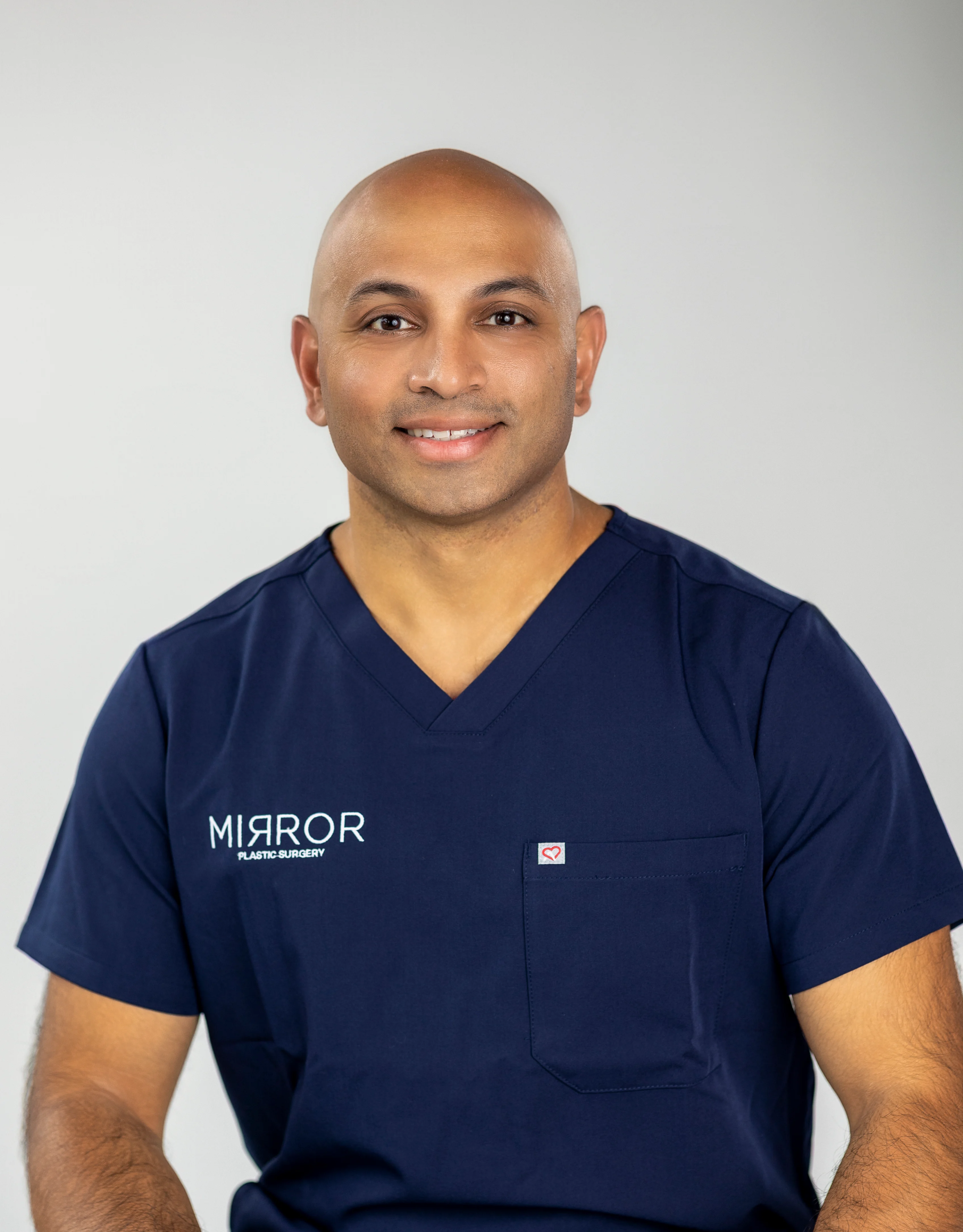
Dr. Akash Chandawarkar is certified by the American Board of Plastic Surgery. His path to that certification began at MIT, where he studied neuroscience and nuclear engineering. It continued at Harvard Medical School, where he graduated with Honors through the Harvard-MIT Division of Health Sciences and Technology. He then completed a seven-year integrated plastic and reconstructive surgery residency at Johns Hopkins University, followed by fellowship training in aesthetic surgery at the Manhattan Eye Ear & Throat Hospital and Lenox Hill Hospital. He also completed the Stanford University Biodesign Innovation Fellowship, which trains physician-innovators to identify unmet clinical needs and develop technological solutions. This depth of training supports a clinician who understands physiology and metabolic health at a level that typical med-spa providers cannot match.
2. Concierge Access: Time Is The Ultimate Luxury
High-volume practices routinely perform five to ten procedures daily and compress consultations into fifteen-minute windows. Mirror Plastic Surgery limits itself to one to two surgeries per day and dedicates up to one hour per consultation. This structure reflects a commitment to personalized attention that extends to non-surgical and peptide services.
Dr. Akash’s guiding philosophy is safety first, function second, aesthetics third. He compares wellness to dentistry: professional treatments deliver results, and lasting outcomes require understanding and consistent maintenance. He explains the physiology behind each recommendation in plain terms so patients understand what they are taking and why. Direct access to Dr. Akash is available via text or scheduled telemedicine appointments. Most practices, regardless of how they market themselves, do not offer this level of availability.
Schedule A Concierge Consultation to experience this level of physician access.
3. Comprehensive Lab Analysis: Labs First, Protocol Second
Providers who prescribe peptides or hormone therapy without reviewing baseline lab work apply a one-size-fits-all approach to a field that demands individualization. Mirror Plastic Surgery’s peptide consultations include in-depth lab panels covering thyroid, liver, kidney, diabetes markers, and hormone levels. If a patient arrives without recent labs, the practice orders them before any protocol begins.
This step protects safety and improves efficacy. Lab analysis identifies root causes such as hormonal imbalances, metabolic dysfunction, and inflammatory markers. These findings determine which peptides are appropriate, at what dose, and in what combination. Skipping this step signals that a provider is focused on selling treatments instead of practicing medicine.
4. Quality Sourcing: What Is Really In Your Vial?
Peptides are not FDA-regulated, so the risk centers on obtaining them from unregulated sources. Online retailers often lack third-party batch testing, quality control, and medical oversight. A patient purchasing peptides without physician supervision has no reliable way to verify the product’s contents or dosing accuracy. They also cannot know whether the compound is contraindicated for their health profile.
In July 2026, the FDA’s Pharmacy Compounding Advisory Committee convened to consider whether several peptides, including BPC-157 and TB-500, should be added to the 503A Bulks List. That designation would permit state-licensed compounding pharmacies to prepare them for patients with prescriptions. Even under an expanded compounding framework, any access would still require a physician prescription and a licensed pharmacy. Mirror Plastic Surgery sources peptides from reputable providers who undergo rigorous batch testing. This process supports product quality, purity, and accurate dosage, which online retailers cannot reliably provide.
5. Personalized Protocols: Matching Peptides To Your Physiology
Peptide therapy functions best as a customized service, not a fixed menu. Based on each patient’s consultation and lab results, Mirror Plastic Surgery creates custom peptide stacks tailored to individual physiology and goals. Examples of available protocols include:
- The Glow Stack (GHK-CU, BPC-157, TB-500): Targets systemic inflammation, melasma, and collagen and elastin production, with results that can include reduced body inflammation and improved hair, skin, and nail health.1
- GLP-3R Compounding: A newer-generation peptide similar to GLP-1, reported to produce fewer gastrointestinal side effects, less muscle wasting, and broader indications including insulin resistance and cardiovascular risk factors.1
- NAD+ (Nicotinamide Adenine Dinucleotide): Targets cellular mitochondria to support energy production and anti-aging.1
- Selank: A nootropic peptide that acts on similar brain pathways as benzodiazepines without the addictive or dependency component, used for anxiety and depression management.1
- Sermorelin/Ipamorelin: Growth hormone releasing peptides that stimulate natural growth hormone production, supporting muscle retention and fitness goals.1
- Kisspeptin: A fertility peptide showing promise in IVF trials for improving positive outcomes.1
Results vary by individual. Genetics, diet, lifestyle, and adherence all influence outcomes. Personalization becomes the foundation of effective peptide therapy because it accounts for these variables.
Discuss Your Ideal Peptide Protocol with Mirror Plastic Surgery and align treatment with your specific health goals.
6. Ongoing Support: Staying On Track Over Time
Concierge medicine includes support after the initial prescription. Mirror Plastic Surgery patients receive 24/7 access to Dr. Akash via text for questions, refill requests, and protocol adjustments. Detailed instructions for reconstitution and self-administration are provided, often with video demonstrations.
Stopping peptides without a maintenance plan often leads to diminishing benefits, similar to stopping any health regimen.1 When the inflammatory condition being managed is no longer addressed by the peptide protocol, it tends to return to its prior state.1 Ongoing support helps patients stay on track safely, with a physician available to adjust the protocol as their physiology and goals evolve.
7. Evidence-Based Approach: Innovation With Clinical Rigor
Dr. Akash serves on the advisory boards of companies developing emerging technologies in aesthetic and regenerative medicine. He is also a faculty member at major aesthetic conferences including The Aesthetic Show 2026 and Vegas Cosmetic Surgery 2026, where he participates in panels on the future of aesthetic medicine, regenerative aesthetics, and AI in clinical practice. His background spans neuroscience, nuclear engineering, reconstructive surgery, and medical innovation. This combination supports protocols grounded in evidence rather than trend.
Dr. Akash often tells patients when a service or product is not yet necessary for them and prioritizes long-term outcomes over short-term revenue. This unbiased, educational approach is rare in the wellness space and reflects a clinical philosophy built on honesty and transparency.
How Mirror Plastic Surgery Compares To Other Provider Types
The Tampa and St. Pete wellness market includes several distinct provider categories. Each category differs in oversight, personalization, and safety.
| Provider Type | Physician Involvement | Labs & Supervision | Sourcing & Safety |
|---|---|---|---|
| Large Med-Spas | Often aesthetics-first with limited day-to-day physician involvement | Peptides may be offered as add-ons without comprehensive labs or close follow-up | Variable sourcing and oversight |
| Online Telemedicine Clinics | Remote physicians with brief virtual visits | Convenient but often lack in-depth concierge care or 24/7 access | Telehealth-only platforms represent 2.0% of active peptide provider listings |
| Online Peptide Retailers | No direct physician oversight | No individualized labs, screening, or follow-up | Highest-risk category with unknown quality and dosing |
| Physician-Led Concierge Practices | Board-certified physician oversight for each protocol | Comprehensive labs, personalized plans, and ongoing support | Quality-assured sourcing with batch-tested compounds |
Mirror Plastic Surgery belongs in the physician-led concierge category. The practice meets this standard and extends it through the depth of Dr. Akash’s credentials and a structural commitment to limiting patient volume in favor of individualized care.
Red Light Therapy Vs. Peptide Therapy: Choosing The Right Modality
Red light therapy uses low-level wavelengths to stimulate cellular function and supports localized skin health and surface-level inflammation. It is a non-invasive modality with a reasonable evidence base for specific dermatological applications.
Peptide therapy acts systemically. Peptides are amino acid chains engineered to target specific pathways such as hormones, inflammation, cellular repair, and neurological function throughout the body. For patients managing systemic inflammation, autoimmune conditions, weight, energy, or recovery, peptide therapy offers broader therapeutic potential than red light therapy alone.1
The two modalities can complement each other. The right approach depends on a patient’s specific goals, health history, and lab results. A physician-led provider can assess both options and recommend the combination, or the single modality, that fits each individual. Mirror Plastic Surgery is equipped to guide that decision.
Questions To Ask Before Choosing A Wellness Provider
Patients in Tampa and St. Pete can use the following questions to evaluate any wellness provider:
- Are you a physician? What are your board certifications, and which board issued them?
- Will you order labs before starting any treatment protocol?
- How do you source your peptides or other compounds, and is batch testing conducted?
- What kind of follow-up and ongoing support do you offer?
- Can you provide testimonials or documented case outcomes?
- What happens if my protocol needs to be adjusted?
Mirror Plastic Surgery welcomes every one of these questions. When a provider is evasive about credentials, sourcing, or follow-up care, that behavior signals a concern.
Frequently Asked Questions
Are Peptides FDA-Approved?
As noted earlier, peptides are not FDA-regulated, and the primary risk comes from unregulated sources. At Mirror Plastic Surgery, peptides are sourced from reputable providers with rigorous batch testing. All protocols are medically supervised by Dr. Akash Chandawarkar before, during, and after treatment.
What Conditions Can Peptide Therapy Address?
Peptide therapy can address a wide range of health concerns. These include inflammatory and autoimmune conditions such as psoriasis and rheumatoid arthritis, weight management and metabolic dysfunction, post-surgical and injury recovery, skin aging and collagen production, anxiety and depression, energy and vitality, sexual wellness, and fertility support.1 Peptides extend far beyond weight loss, which remains a common misconception in the wellness space.
How Long Until I See Results?
Results vary by individual and by the condition being treated. Some patients report initial improvements within the first hours or week of use, depending on the specific peptide and protocol.1 Factors including genetics, diet, lifestyle, and adherence all influence outcomes. Personalized protocols built on lab results and a thorough medical history tend to produce more reliable results than generic approaches.1
Is Peptide Therapy Safe?
When medically supervised, peptide therapy is generally well-tolerated. The primary risks arise from unsupervised use, including unknown product quality, incorrect dosing, and lack of screening for contraindications or interactions with existing medications. Professional supervision at Mirror Plastic Surgery supports quality-assured products, appropriate dosing, and protocols suited to each patient’s health profile.
Do I Need To Stop My Current Medications Before Starting Peptide Therapy?
Many patients do not need to stop current medications. During the consultation, Dr. Akash reviews each patient’s complete medical history and current medications to determine whether peptide therapy is safe and appropriate. Some patients have successfully transitioned from pharmaceutical SSRIs and benzodiazepines to nootropic peptides under medical supervision. Every decision is made on an individual basis, with patient safety as the governing priority.
Conclusion: Why Mirror Plastic Surgery Leads Wellness Care In Tampa And St. Pete
The seven criteria outlined above, including physician-led care, concierge access, comprehensive lab analysis, quality sourcing, personalized protocols, ongoing support, and an evidence-based approach, define what a genuine wellness provider delivers. Mirror Plastic Surgery meets every criterion and exceeds most of them.
Under Dr. Akash Chandawarkar, patients receive a concierge experience that combines the clinical rigor of a Harvard-educated, Johns Hopkins-trained, ABPS-certified physician with cutting-edge peptide protocols tailored to individual physiology. From inflammation and autoimmune conditions to weight management and anti-aging, Mirror Plastic Surgery offers advanced peptide therapies that address a wide range of health and wellness concerns.
Peptides are not FDA-regulated. Results vary by individual. Mirror Plastic Surgery provides medically supervised peptide therapy with comprehensive consultation and lab analysis. This article is for informational purposes only and does not constitute medical advice. Consult a qualified physician before starting any treatment.
Mirror Plastic Surgery is located at 780 4th Ave S, St. Petersburg, FL 33701. Call or text 727-361-6515, or email [email protected].
Request Your Personalized Wellness Consultation at Mirror Plastic Surgery and explore how physician-led peptide therapy can support your goals.
1 Results may vary from person to person. Editorial content, before and after images, and patient testimonials do not constitute a guarantee of specific results.
Peptide therapy is intended for wellness and optimization purposes and is not prescribed to diagnose, treat, cure, or prevent disease unless specifically stated. Many peptides are not FDA-approved and may be used off-label. Some have limited long-term safety data, with a potential for unknown risks, complications, or desensitization with prolonged use.