
Written by: Dr. Akash Chandawarkar, Board Certified Plastic Surgeon, Mirror Plastic Surgery | Last updated: September 9, 2026
Key Takeaways
- TB-500 has not been proven to regrow hair in humans.1 Its reputation comes from a single 2004 mouse study of full-length thymosin beta-4, not the synthetic fragment sold online.
- No human clinical trials exist for TB-500 and hair growth, and no peptide is FDA-approved for hair loss.
- Minoxidil and finasteride remain the only evidence-based, FDA-approved treatments for androgenetic alopecia.
- Any peptide therapy works best under medical supervision, with quality-sourced products and protocols tailored to individual labs and physiology.
At Mirror Plastic Surgery, every peptide protocol is designed around individual labs and physiology by Dr. Akash Chandawarkar, a Harvard-educated, Johns Hopkins-trained, board-certified plastic surgeon. Book a consultation to explore a medically supervised approach to peptide therapy.
Executive Summary: What This Report Finds
Current evidence shows that TB-500 remains an experimental idea for hair growth, not a proven treatment. Three core findings shape that conclusion.
- TB-500’s hair-growth evidence is exclusively preclinical. One landmark mouse study from 2004 and supporting animal data exist, with zero randomized controlled human trials measuring a hair-growth endpoint.
- The molecule studied in animals, full-length thymosin beta-4, is a 43-amino-acid protein. It differs from the TB-500 fragment marketed online, which preserves only the actin-binding domain (amino acids 17–23).
- No peptide is FDA-approved for hair loss. Minoxidil and finasteride remain the evidence-based standard of care.
The Origin Story: How TB-500 Became a Hair-Growth Trend
TB-500’s hair-growth reputation began with a chance observation. In 2004, National Institutes of Health researchers studying thymosin beta-4’s wound-healing properties noticed that hair regrew faster and thicker around treated wound sites in mice.1 That finding sparked years of interest in biohacking and peptide communities.
A key detail often gets lost online. The 2004 study used full-length thymosin beta-4, a 43-amino-acid protein. TB-500 is a synthetic fragment, typically 7 to 17 amino acids, that preserves the actin-binding domain but has never been tested for hair growth in any published study. Applying the mouse findings to TB-500 requires a large scientific leap.
The Mechanism: How Thymosin Beta-4 Could Influence Hair Follicles
Preclinical work suggests several ways full-length thymosin beta-4 might affect hair follicles. These pathways come from animal and cell-culture research, not human trials.
- Stem cell activation: Thymosin beta-4 activates quiescent stem cells in the hair follicle bulge region and promotes their migration to the dermal papilla, the structure that signals new hair growth.
- Angiogenesis: The peptide upregulates vascular endothelial growth factor (VEGF), increasing blood supply to hair follicles.
- Wnt signaling: Thymosin beta-4 activates the Wnt/β-catenin pathway, the master switch controlling the transition from resting (telogen) to growth (anagen) phase.
These mechanisms appear in rodents and cell cultures. Mouse hair biology differs fundamentally from human androgenetic alopecia. Mice do not experience DHT-driven follicle miniaturization, which is the hallmark of male pattern baldness. TB-500’s role in human hair loss therefore remains theoretical.
The Evidence: What Peer-Reviewed Research Actually Shows
The published evidence base for thymosin beta-4 and hair growth consists entirely of preclinical studies. The following animal and in vitro studies form the core of that evidence.
- 2004 — Philp et al., FASEB Journal (PMID 14657002): First demonstration that full-length thymosin beta-4 accelerates hair growth in mice by activating follicle stem cells in the bulge region and promoting their migration to the dermal papilla.
- 2004 — Philp et al., Mechanisms of Ageing and Development: Confirmed that thymosin beta-4 promotes angiogenesis and wound healing, with hair follicle development as a secondary effect, through VEGF and MMP-2 upregulation.
- 2007 — Philp et al., Annals of the New York Academy of Sciences (PMID 17947589): Showed that thymosin beta-4 induces hair growth via stem cell migration and differentiation in transgenic mouse models.
- 2015 — Gao et al., PLoS ONE: Independently replicated the mouse findings, showing increased follicle density and elevated hair keratin gene expression.
- 2020 — Dai et al., BMC Genomics: Found that thymosin beta-4 overexpression increased secondary hair follicle density in cashmere goats, providing the only large-animal evidence.
A 2021 Phase I safety study of recombinant human thymosin beta-4 assessed safety in healthy volunteers but did not measure hair outcomes. The overall evidence base remains preclinical.
TB-500 vs. Thymosin Beta-4: Why the Distinction Matters
TB-500 is a synthetic 7-amino-acid acetylated fragment (Ac-LKKTETQ) corresponding to residues 17–23 of the full thymosin beta-4 sequence. This fragment retains pro-angiogenic and cell-migratory activity but lacks the full regulatory complexity of the intact peptide.
No published study has tested whether TB-500 replicates the hair follicle stem cell activation documented for the full-length peptide. The landmark mouse studies used full-length thymosin beta-4. Anyone considering TB-500 for hair growth would be injecting a molecule that has never been studied for this purpose, while relying on data from a different molecule tested only in animals.
Safety and Regulatory Status: What You Need to Know
TB-500’s regulatory status in the United States remains restrictive and clearly defined.
TB-500 is not FDA-approved for any use, including hair loss, and it is not on the FDA’s 503A Bulks List, so pharmacies cannot legally compound it as a prescription product. In July 2026, the FDA’s Pharmacy Compounding Advisory Committee voted 8–6 to recommend adding TB-500 to the 503A list. That vote is advisory and does not change current legal access, because the FDA must still complete a separate rulemaking process. The World Anti-Doping Agency (WADA) also prohibits TB-500 under Section S2.
On the safety side, Phase I and Phase II trials of full-length thymosin beta-4 for wound healing and corneal repair reported mild, transient side effects, mainly injection-site reactions, with no serious adverse events. Long-term human safety data for TB-500 itself does not exist. Theoretical concerns include its pro-angiogenic mechanism, which could support growth of undiagnosed tumors, although no causal link has been shown in humans.
Products sold online as “research chemicals” introduce additional risk. A 2023 analysis found that nearly 40% of tested compounded peptides deviated from labeled potency by more than 10%. Quality, sterility, and accurate dosing remain uncertain without medical oversight.
What Real Users Report: Anecdotal Evidence
Community reports from forums such as Reddit’s r/tressless and peptide groups describe mixed experiences. Some users report thicker hair or reduced shedding, while others see no change.1
Human evidence consists of anecdotal self-reports and open-label observations, not randomized controlled trials. Anecdotal reports are vulnerable to placebo effects, which run 20–40% in hair-loss trials. They are also influenced by concurrent treatments and confirmation bias. These stories can guide future research questions but cannot replace clinical data.
Proven Alternatives: What Actually Works for Hair Loss
The evidence-based hierarchy for hair loss treatment is well established. Two main categories have meaningful support: FDA-approved options and evidence-supported adjuncts.
FDA-Approved Treatments:
- Minoxidil (topical 2% and 5%): FDA-approved for men and women, with multiple large randomized controlled trials showing improved hair density and counts over 6–12 months.1
- Finasteride (oral 1 mg): FDA-approved for men, with registration trials showing hair maintenance in about 85% of users and visible regrowth in about 65% over 12–24 months.1
Evidence-Supported Adjuncts:
- Low-level laser therapy: A 2009 sham-controlled trial reported a 39% increase in hair density over 26 weeks.1
- GHK-Cu (copper peptide): Shows the strongest hair-specific evidence among peptides, with small controlled topical trials reporting improved hair density.1
No peptide, including TB-500, has been compared head-to-head against minoxidil or finasteride in robust human trials. Claims that peptides match FDA-approved treatments do not have supporting data.
Should You Try TB-500 for Hair Growth?
The available evidence supports a cautious approach to TB-500 for hair loss.
- The evidence remains preclinical, based on animal studies rather than human trials.
- The molecule studied in animals differs from the TB-500 products sold online.
- Long-term safety data is absent, and U.S. regulatory access is still unresolved.
- Proven, FDA-approved alternatives exist and have decades of controlled human evidence.
As one research summary notes, “TB-500 has compelling biological mechanisms and enough preclinical signal to justify future research. But using it for hair loss in 2026 means paying for veterinary-grade evidence at research-peptide prices while sidestepping the treatments that actually work.” Anyone considering TB-500 should speak with a physician first and treat bold marketing claims with skepticism.
Mirror Plastic Surgery’s Approach to Peptide Therapy
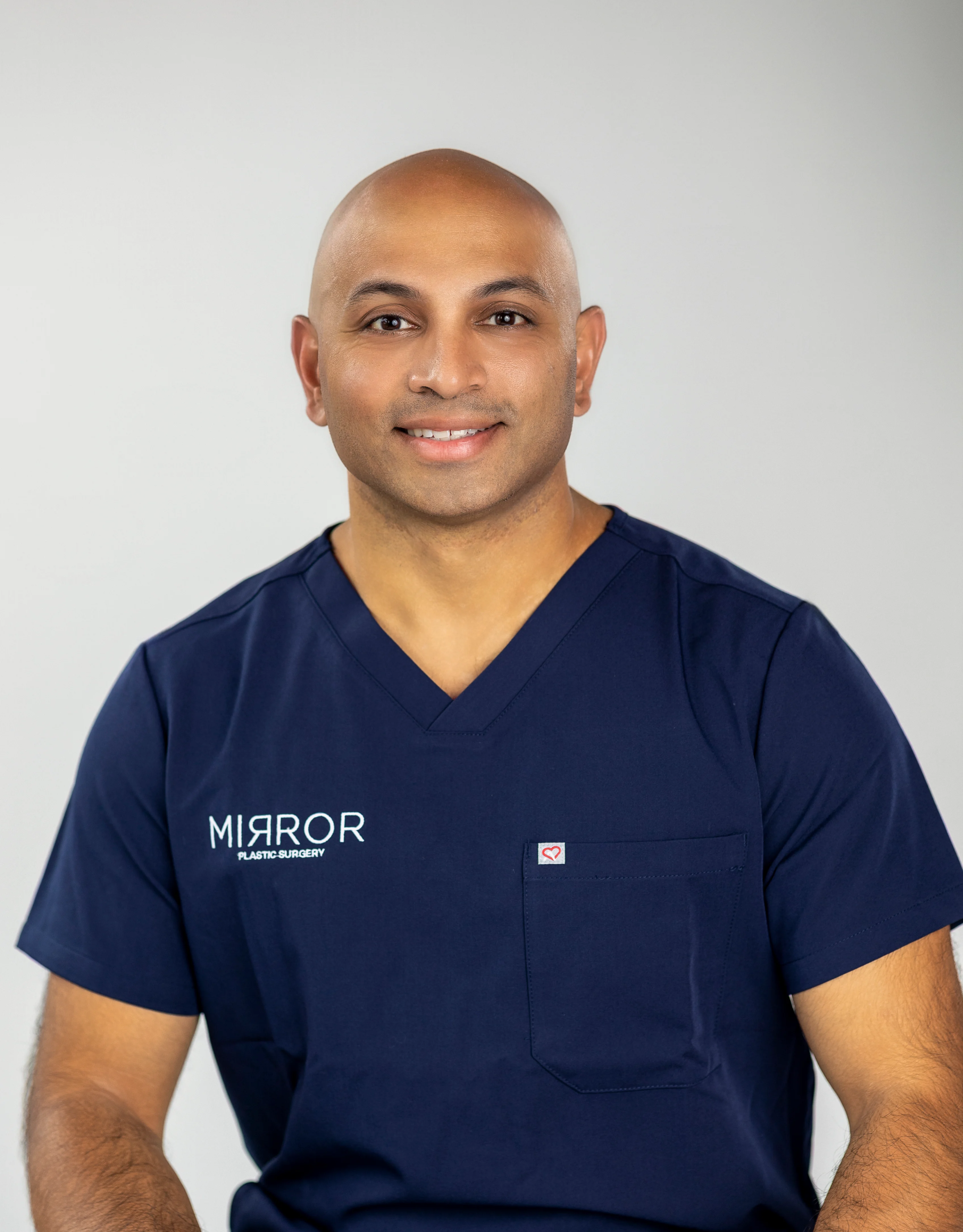
Mirror Plastic Surgery provides medically supervised peptide therapy in St. Petersburg and Tampa, Florida, and via telehealth across the United States. Every protocol is led by Dr. Akash Chandawarkar, MD.
Dr. Akash studied neuroscience and nuclear engineering at MIT, then graduated with Honors from Harvard Medical School through the Harvard-MIT Division of Health Sciences and Technology. His training includes a seven-year integrated plastic and reconstructive surgery residency at Johns Hopkins University, fellowship training in aesthetic surgery at the Manhattan Eye Ear & Throat Hospital/Lenox Hill Hospital, and the Stanford University Biodesign Innovation Fellowship.
Because Dr. Akash is a board-certified physician, every peptide protocol is designed around each client’s labs and physiology, rather than vendor marketing claims. Peptides come from reputable providers with rigorous batch testing, and patients receive 24/7 direct access to Dr. Akash during their protocol. Mirror Plastic Surgery’s Glow Stack, which combines GHK-Cu, BPC-157, and TB-500, illustrates a personalized approach to systemic inflammation, skin health, and hair and nail rejuvenation after a thorough consultation and lab review.
From inflammation and autoimmune conditions to weight management and anti-aging, Mirror Plastic Surgery offers advanced peptide therapies for a wide range of health and wellness goals. Schedule a consultation to see whether a personalized peptide protocol fits your needs.
Frequently Asked Questions
Is TB-500 FDA Approved for Hair Loss?
TB-500 is not FDA-approved for any use. As of 2026, it remains off the FDA’s 503A Bulks List, so pharmacies cannot legally compound it as a prescription product in the United States. A July 2026 advisory committee vote recommended adding TB-500 to the list, but, as described above, that non-binding recommendation does not change its current legal status. No peptide of any kind is FDA-approved for hair loss. Topical minoxidil and oral finasteride remain the only FDA-approved treatments for androgenetic alopecia.
What Peptide Is Best for Hair Growth?
Among peptides, GHK-Cu (copper peptide) has the strongest hair-specific evidence, with small controlled topical trials showing improved hair density. TB-500 has no human hair-growth data. BPC-157 has no hair-specific human trials and no published animal studies that directly measure hair growth. No peptide has been compared head-to-head against minoxidil or finasteride in a robust human trial, so none can be described as equivalent to FDA-approved treatments. For people seeking the most evidence-backed approach, minoxidil and finasteride remain the standard of care, with peptides serving as investigational adjuncts at most.
How Long Does It Take to See Results With TB-500?
No validated timeline exists because human clinical trials for TB-500 and hair growth have not been published. Anecdotal reports from biohacking communities often mention 8–16 weeks, but hair growth is slow by nature. Any meaningful effect would likely require at least one full hair cycle, typically 3–6 months, to become visible. In animal studies, hair growth effects from thymosin beta-4 returned to baseline within about two weeks of stopping treatment, which suggests treatment-dependent rather than permanent effects. These timelines come from rodent data and community reports, not clinical evidence.
What Are the Side Effects of TB-500?
Trials of full-length thymosin beta-4 for wound healing and corneal repair report mild, transient injection-site reactions as the most common adverse event, with no serious adverse events documented. Community reports for TB-500 describe fatigue, headache, and lightheadedness, usually during the first one to three injections and resolving within the first week. Long-term safety data is absent. The main theoretical concern involves TB-500’s pro-angiogenic mechanism. Because the peptide promotes new blood vessel formation, it could theoretically support growth of undiagnosed tumors, although no causal relationship has been shown in humans. People with active malignancy, a history of hormone-sensitive cancers, pregnancy, or breastfeeding should avoid TB-500. Medical supervision is essential before starting any peptide protocol.
Can I Buy TB-500 Online Safely?
Products sold as “research chemicals” lack FDA oversight, standardized third-party purity testing, and reliable sterility verification. As noted above, recent analyses highlight potency issues and contamination risks in compounded peptide products. Without medical supervision, there is no reliable way to verify product contents, confirm appropriate dosing, or screen for contraindications such as undiagnosed malignancy. The greatest risk of buying peptides online involves both product quality and the absence of a physician who can evaluate your health, order labs, and monitor your response. Medical supervision turns peptide use into a structured treatment rather than an experiment with unknown risk.
Conclusion: How To Move Forward With Hair Loss Treatment
The current science places TB-500 in the “promising but unproven” category for hair growth. Evidence comes from animal studies of a different molecule, while human data and long-term safety information remain missing.
For most people, a practical plan starts with proven options such as minoxidil and finasteride, then considers adjuncts like GHK-Cu or low-level laser therapy under medical guidance. TB-500 may become part of future hair-loss protocols if rigorous human trials support it, but today it remains an experimental choice.
If you are exploring peptide therapy for hair loss or broader health goals, a physician-led program offers the safest path. Book an appointment with Mirror Plastic Surgery to review your labs, discuss evidence-based options, and design a plan tailored to your physiology.
Disclaimers
This content is for informational purposes only and does not constitute medical advice. Results vary from person to person. Peptide therapies may not be FDA-approved and have limited long-term data. Always consult a qualified healthcare provider before starting any treatment.
1 Results may vary from person to person. Editorial content, before and after images, and patient testimonials do not constitute a guarantee of specific results.
Peptide therapy is intended for wellness and optimization purposes and is not prescribed to diagnose, treat, cure, or prevent disease unless specifically stated. Many peptides are not FDA-approved and may be used off-label. Some have limited long-term safety data, with a potential for unknown risks, complications, or desensitization with prolonged use.