
Written by: Dr. Akash Chandawarkar, Board Certified Plastic Surgeon, Mirror Plastic Surgery | Last updated: September 9, 2026
Key Takeaways
- Traditional primary care often feels rushed and impersonal, so many patients now look to membership-based models for better access and continuity.
- Concierge medicine costs significantly more than DPC and usually works alongside insurance, with a strong focus on prevention and care coordination.
- Direct primary care uses a flat monthly fee, removes insurance billing from primary care, and pairs well with high-deductible plans for predictable costs.
- Concierge medicine typically offers broader wellness and coordination services, while DPC concentrates on core primary care needs.
- Patients who want concierge-level care that also supports aesthetics and wellness can schedule a consultation with Mirror Plastic Surgery to explore a long-term, personalized plan.
What Is Concierge Medicine?
Concierge medicine is a membership model in which patients pay a recurring retainer fee directly to a practice for enhanced access and personalized care. The industry median sits at approximately $3,200 per year for an individual, with roughly 70% of practices charging between $1,800 and $5,500 annually, and premium tiers extending well beyond that. The fee covers longer appointments, direct physician access, and comprehensive preventive care, and insurance does not reimburse it.
About 64% of concierge practices still bill insurance for clinical services such as labs, imaging, and office visits on top of the retainer, so patients pay the membership fee in addition to their usual premiums, copays, and deductibles. Panel sizes are intentionally limited, typically 400 to 600 patients per physician, which supports unhurried, attentive care.
What Is Direct Primary Care (DPC)?
If concierge medicine keeps insurance in the picture, direct primary care removes it from primary care services. Direct primary care is a model in which patients pay a flat monthly fee directly to the practice for comprehensive primary care, with no insurance billing for those services. DPC memberships average $92 per month with a median of $80 per month as of 2026, with family plans typically ranging from $150 to $300 per month. The fee usually covers unlimited visits, same-day or next-day appointments, and direct communication with the physician.
The American Academy of Family Physicians (AAFP) defines direct primary care as a practice model in which physicians charge patients a periodic fee for a defined set of primary care services and do not bill third-party payers for those services. Because DPC removes insurance from primary care, patients still need a separate high-deductible health plan (HDHP) or health sharing ministry for hospitalizations, specialist visits, and emergency care.
Key Differences Between Concierge Medicine And DPC
| Factor | Concierge Medicine | Direct Primary Care |
|---|---|---|
| Annual Cost | Median ~$3,200/year; 70% of practices between $1,800–$5,500 | Average $92/month (~$1,104/year); median $80/month |
| Insurance Billing | ~64% of practices bill insurance for visits; retainer not covered | No insurance billing; membership covers all primary care |
| Typical Panel Size | 400–600 patients per physician | 300–800 patients per physician |
| Scope Of Services | Primary care plus executive physicals, care coordination, wellness programs, and specialist oversight | Primary care only; specialists, hospitalizations, and emergency care excluded |
Beyond the table, the philosophical distinction matters. DPC strips away insurance complexity to deliver affordable, accessible primary care. Concierge medicine layers premium access, proactive prevention, and comprehensive care coordination on top of traditional insurance, which creates a different value proposition for patients with more complex needs.
Talk With Ellie About Concierge Care Options to see how this model can support your health and wellness goals.
Insurance Involvement: How Each Model Works With Coverage
DPC operates entirely outside the insurance system for primary care. The membership covers services without claims, copays, or deductibles. Patients pair DPC with a high-deductible health plan or health sharing ministry for major medical events such as hospitalizations, specialist visits, and emergency care.
Concierge medicine keeps insurance in play. The membership fee is a direct payment to the physician practice, separate from and in addition to health insurance, which continues to cover laboratory tests, diagnostic imaging, specialist visits, hospitalizations, and emergency care. Patients still pay standard copays and deductibles for covered services.
Medicare treatment differs between the two models. Concierge membership fees are generally ineligible for reimbursement under Medicare or commercial plans, since they are viewed as non-medical amenities. DPC practices generally do not bill Medicare for membership care, and Medicare continues to cover services outside the DPC membership such as specialist visits, hospital care, and imaging. Because policies vary, patients should confirm any practice’s Medicare billing approach before enrolling.
A significant policy shift took effect in 2026. Under P.L. 119-21, effective January 1, 2026, a DPC membership of up to $150 per month for an individual no longer disqualifies a person from HSA eligibility, and those fees count as qualified medical expenses payable from an HSA. This change makes many DPC memberships more accessible for patients with high-deductible plans.
Pros And Cons Of Concierge Medicine
Concierge medicine offers clear advantages for patients who want time, access, and coordination.
- Extended Appointments: Visits typically last 30 to 60 minutes, with same-day or next-day availability and direct physician access by phone or text.
- Proactive Prevention: Concierge care emphasizes expanded preventive screening, cardiovascular risk assessments, metabolic health monitoring, and personalized prevention plans rather than reactive, symptom-driven treatment.
- Care Coordination: Concierge physicians handle coordination across specialists, reviewing notes and sometimes attending appointments with patients so patients no longer need to manage referrals and test results alone.
- Small Patient Panels: Capped panels enable appointments that start on time, direct lines to the physician, and strong continuity of care.
Patients also need to weigh the documented drawbacks.
- Cost: Membership fees do not cover hospital stays, specialist visits, lab tests, or emergency care, so patients still pay full insurance premiums, deductibles, and copays on top of the retainer.
- Access Inequality: Concierge medicine can create a two-tier system that favors higher-income patients, while others compete for shrinking availability in traditional primary care.
- Quality Variability: Some practices charge membership fees but still run high patient volumes or route patients mainly to non-physician providers.
Pros And Cons Of Direct Primary Care
DPC works well for patients who value simplicity, access, and affordability in primary care.
- Predictable Costs: A flat monthly fee with no surprise bills and no insurance billing for routine care.
- Longer Visits: DPC practices typically offer visits lasting 30 to 60 minutes with same-day or next-day access and direct physician communication by phone, text, or video.
- Physician Satisfaction: 94% of DPC physicians report satisfaction with their overall practice, compared with 57% of physicians not in DPC, according to the AAFP’s 2024 Direct Primary Care study.
- HSA Compatibility: HSA funds can support many DPC memberships for patients with qualifying plans (see Insurance section for details).
DPC’s limitations relate to scope and availability.
- Narrow Scope: Standard DPC memberships do not cover specialist referrals, hospitalization, emergency care, complex imaging, or most prescription medications.
- Geographic Availability: DPC is not available in all geographic areas, which limits access for some patients.
- Complexity Ceiling: Patients with chronic conditions that require ongoing specialist coordination may find DPC’s primary-care-only scope too limited for their full care needs.
Which Model Fits Your Health Needs?
The right model depends on your health status, budget, and how much you value extended time with your physician.
- Choose DPC If: You are generally healthy, want predictable low monthly costs, carry a high-deductible health plan, and need a primary care physician for routine and preventive care. DPC often suits families, self-employed individuals, and small business owners who want better access without insurance complexity.
- Choose Concierge Medicine If: You have chronic conditions requiring ongoing management, want comprehensive preventive care and executive-level physicals, value 24/7 direct physician access, and feel comfortable investing more for a premium, coordinated experience. Northwestern Medicine recommends concierge primary care for people with chronic diseases, busy schedules, frequent travel, and a desire for consistent care coordination.
- Review Your Total Costs: Concierge medicine often fits patients managing chronic conditions, busy professionals who value same-day access, and older adults focused on prevention.
Some concierge practices, such as Mirror Plastic Surgery, extend the model beyond primary care to include aesthetic and wellness services. This approach appeals to patients who want a single trusted physician to oversee both health and appearance.
Questions To Ask Before Joining Any Membership Practice
Clear questions help you understand exactly what you receive from a membership-based practice.
- What is the monthly or annual fee, and exactly what does it include?
- Do you bill insurance for visits, or is the fee all-inclusive?
- How many patients does the physician currently manage?
- What is the typical appointment length?
- How do I reach the physician after hours, and what is the usual response time?
- Are labs, basic procedures, and telemedicine included in the fee?
- Can I see the physician for non-primary care needs, such as aesthetic or wellness concerns?
- What is the practice’s Medicare billing policy, if applicable?
Meet With Ellie At Mirror Plastic Surgery to walk through these questions and explore a concierge model tailored to your goals.
Why Mirror Plastic Surgery’s Concierge Approach Stands Out
Mirror Plastic Surgery, located in St. Petersburg, Florida, shows how concierge care can look when a highly trained physician leads every step of the process. The practice is founded by Dr. Akash Chandawarkar, MD. He graduated from Harvard Medical School through the Harvard-MIT Division of Health Sciences and Technology, completed a seven-year integrated plastic surgery residency at Johns Hopkins, and was a fellow of the Stanford University Biodesign Innovation Fellowship. He is board-certified by the American Board of Plastic Surgery and completed additional fellowship training in aesthetic surgery at the Manhattan Eye Ear & Throat Hospital and Lenox Hill Hospital.
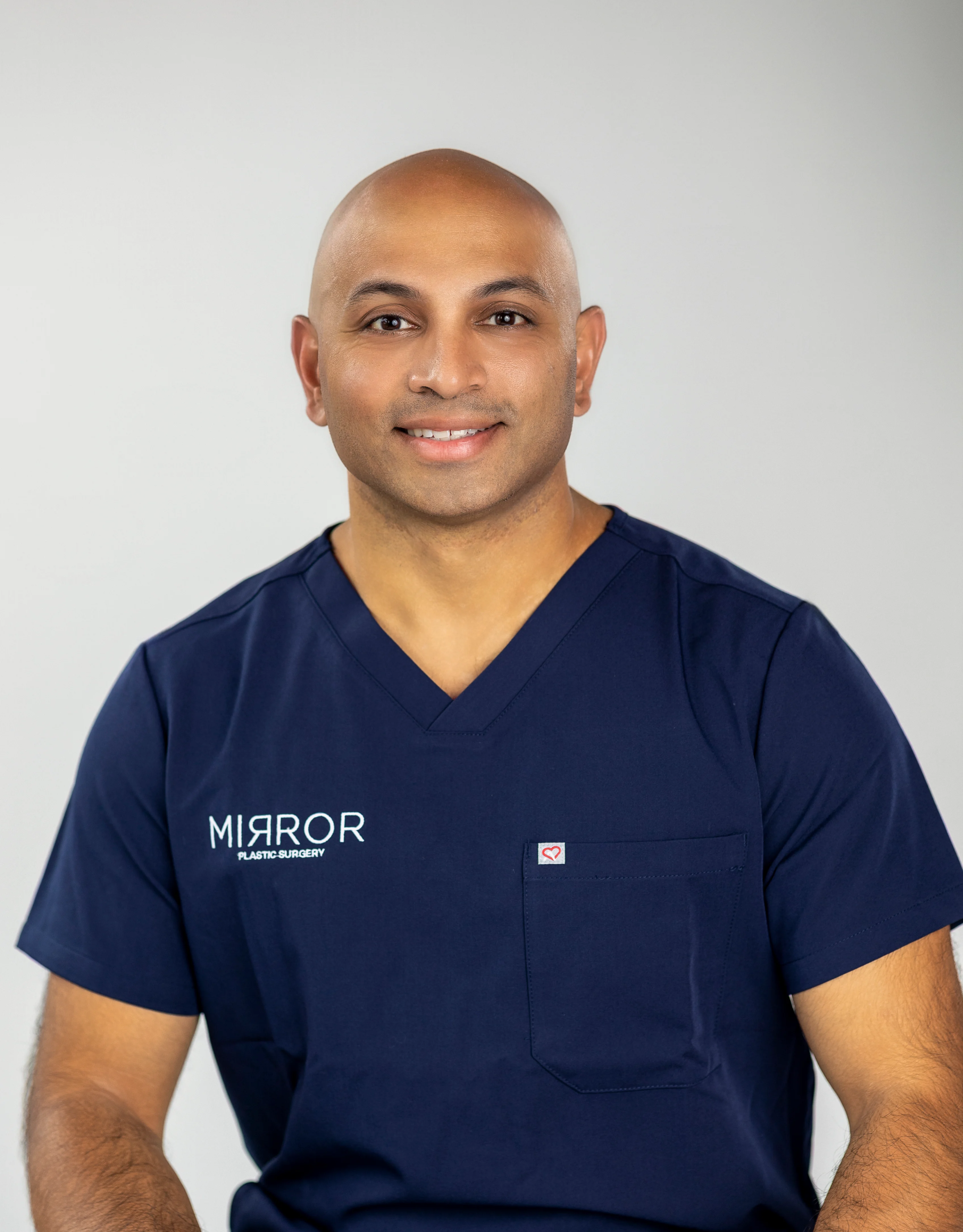
The practice’s guiding philosophy, “safety first, function second, aesthetics third,” shapes every patient interaction. Consultations run up to an hour. The team limits itself to one to two surgeries per day so the surgeon and staff can focus fully on each patient before, during, and after any procedure.
Mirror Plastic Surgery also broadens the typical concierge model. In addition to surgical and non-surgical aesthetic treatments, the practice offers advanced peptide therapies. These protocols address inflammation, autoimmune conditions, weight management, post-surgical recovery, collagen production, energy, and anti-aging, all supervised directly by Dr. Akash.1 Every protocol is designed around each patient’s labs and physiology, with 24/7 direct access to Dr. Akash by text for ongoing support. Patients build a long-term relationship with a physician who oversees both their medical and aesthetic well-being.
For patients seeking highly personalized care that blends health, recovery, and aesthetics, Mirror Plastic Surgery in St. Petersburg, FL, offers a comprehensive concierge experience. Schedule Your Concierge Consultation With Ellie to explore how this approach can support your long-term goals.
Frequently Asked Questions
What Is The Downside To Concierge Medicine?
The primary downside is cost. Membership fees are not covered by insurance and represent an additional out-of-pocket expense layered on top of existing premiums, copays, and deductibles. Patients still need insurance for hospitalizations, specialist visits, and emergencies, so the retainer functions as a supplement rather than a replacement. Quality also varies across practices, and some offices charge premium fees while still running high volumes or routing patients to non-physician providers. For patients on fixed incomes or those who rarely need primary care, the financial barrier may outweigh the benefits.
What Are The Downsides Of Direct Primary Care?
DPC does not cover specialist care, hospitalizations, or emergency services, so patients must maintain a separate insurance plan for major medical events. This structure means DPC members carry two costs: the membership fee and a health insurance premium. Availability is also limited in some geographic areas, particularly rural markets. The scope of services is narrower than concierge medicine, so patients with complex conditions that require specialist coordination, advanced diagnostics, or broader wellness services may find the model insufficient on its own.
How Does Concierge Medicine Work With Insurance?
Most concierge practices bill insurance for covered services such as office visits, labs, and procedures, but the membership retainer itself is not reimbursable by any health plan, including Medicare. Patients pay the retainer for enhanced access and amenities, then continue to pay their usual copays and deductibles for covered care. Some concierge practices have opted out of Medicare entirely, which means Medicare would not cover any services from that physician for at least two years. Patients should always confirm a practice’s insurance and Medicare billing structure before enrolling.
Is Direct Primary Care Worth It?
For generally healthy individuals who want predictable costs, longer appointments, and better access to their primary care physician, DPC often delivers strong value. The elimination of insurance billing for routine care removes administrative friction and surprise bills. Patients with complex conditions that require specialist coordination, advanced imaging, or intensive chronic disease management may feel that DPC’s primary-care-only scope leaves gaps. In those situations, concierge medicine’s broader coordination and preventive programs may provide greater long-term value despite the higher cost.
Do Concierge Practices Offer Services Beyond Primary Care?
Some concierge practices extend beyond primary care into aesthetics and wellness. Mirror Plastic Surgery is one such practice, offering advanced peptide therapies for inflammation, autoimmune conditions, weight management, anti-aging, and post-surgical recovery, all under the direct supervision of a board-certified plastic surgeon. This integrated approach allows patients to address both medical and aesthetic concerns with one trusted physician and to build a long-term health partnership that goes beyond a traditional annual checkup.1
Investing In Your Health Partnership
Concierge medicine and direct primary care both respond to the same problem in traditional primary care: rushed visits, limited access, and reactive care. They serve different needs, though. Many patients choose DPC when they want predictable monthly primary-care costs without insurance billing, and choose concierge medicine when they want premium access while keeping insurance in the mix.
The U.S. concierge medicine market is growing at a 6.88% CAGR and is projected to reach $11.97 billion by 2034, and DPC practices have grown from roughly 1,400 in 2018 to over 2,500 in 2026. These trends show that patients across income levels are actively seeking alternatives to traditional primary care.
Patients who value a deep, trusting relationship with their physician and want a proactive, holistic approach to health often gravitate toward concierge care, especially when it includes aesthetic and wellness medicine. Mirror Plastic Surgery exemplifies this model, pairing a Harvard-educated, Johns Hopkins-trained surgeon with a concierge structure that centers each patient’s long-term well-being. Arrange A Consultation With Ellie to experience how this level of care can support your health and appearance over time.
1 Results may vary from person to person. Editorial content, before and after images, and patient testimonials do not constitute a guarantee of specific results.
Peptide therapy is intended for wellness and optimization purposes and is not prescribed to diagnose, treat, cure, or prevent disease unless specifically stated. Many peptides are not FDA-approved and may be used off-label. Some have limited long-term safety data, with a potential for unknown risks, complications, or desensitization with prolonged use.