
Written by: Dr. Akash Chandawarkar, Board Certified Plastic Surgeon, Mirror Plastic Surgery | Last updated: September 9, 2026
Key Takeaways
Before you compare GLP-1 options in Tampa, keep these core points in mind about safe, physician-led care.
- Personalized GLP-1 programs tailor medication, dosing, and monitoring to your labs, physiology, and goals instead of using a generic protocol.
- Physician-led oversight manages dosing, side effects, medication interactions, and contraindications that unsupervised programs often miss.
- FDA-approved GLP-1 medications undergo rigorous testing and quality controls that compounded versions lack, so safety and sourcing matter.
- Tirzepatide generally produces greater average weight loss than semaglutide, but the right choice depends on your medical history and metabolic profile.1
- For truly personalized GLP-1 care in Tampa, schedule your consultation at Mirror Plastic Surgery and start a physician-supervised program designed around your needs.
Why Medical Supervision Matters More Than The Medication Itself
GLP-1 medications are prescription drugs that require full medical oversight from start to finish. They are not retail wellness products or quick fixes. Safe care begins with a detailed evaluation and continues with close monitoring throughout treatment.
Without that structure, patients face real risks. Incorrect dosing, unverified product quality, unmanaged gastrointestinal side effects, and missed contraindications can all lead to harm. Contraindications include a personal or family history of medullary thyroid carcinoma or pancreatitis, among others.
The consequences of unsupervised use are documented. As of May 31, 2026, the FDA reported 990 adverse-event reports associated with compounded semaglutide and more than 730 associated with compounded tirzepatide, including hospitalizations linked to dosing errors where patients accidentally administered five to twenty times the intended dose. Reported symptoms included nausea, vomiting, abdominal pain, dehydration, fainting, pancreatitis, and gallstones.
A qualified physician does far more than write a prescription. Ongoing monitoring of weight and metabolic labs, including renal and hepatic function, lipid levels, and HbA1c, is essential for assessing effectiveness and safety. Early follow-up is especially important during the first several months of treatment.
As weight decreases, other medications often require adjustment. Blood pressure drugs, thyroid hormones, and psychotropic medications may need new doses that only a physician can safely manage.
This level of supervision is exactly what Mirror Plastic Surgery provides. Every GLP-1 protocol is designed and supervised by Dr. Akash personally. His background in plastic and reconstructive surgery at Johns Hopkins provides deep expertise in metabolic health, physiology, and the body’s capacity for change. That foundation informs every dosing and titration decision. Patients have direct access to Dr. Akash via text for concierge-level support throughout treatment.
Compounded Vs. FDA-Approved GLP-1s: What Tampa Patients Must Know
The difference between FDA-approved GLP-1 medications and compounded versions has real clinical impact. FDA-approved medications such as Wegovy (semaglutide) and Zepbound (tirzepatide) have undergone rigorous multi-phase clinical trials. They are manufactured under current Good Manufacturing Practice standards with batch testing, stability data, and post-market surveillance required by the FDA. No randomized controlled trial evidence shows that compounded semaglutide or tirzepatide produces the same outcomes as branded versions; all major trials used FDA-approved branded formulations.
Compounded versions are prepared by pharmacies under 503A or 503B frameworks and are not FDA-reviewed for safety, efficacy, or quality before reaching patients. On April 30, 2026, the FDA announced it is considering removing semaglutide, tirzepatide, and liraglutide from the 503B bulks list, citing no current clinical need for pharmacies to compound these medications. The legal basis for large-scale compounding largely ended when the FDA removed semaglutide from its shortage list in February 2025 and tirzepatide in December 2024.
Several major medical societies, including the Obesity Medicine Association, have recommended against the use of compounded GLP-1 therapies. The American Diabetes Association also advises against compounded GLP-1 products, citing uncertainty about their content, safety, quality, and effectiveness.
Additional safety concerns involve unapproved salt forms. The FDA has warned that some compounded products have used semaglutide sodium or semaglutide acetate, which differ from the base form used in FDA-approved medications, and the FDA is not aware of a lawful basis for using these salts in compounding.
Mirror Plastic Surgery follows a safety-first approach. Whether using FDA-approved or compounded options, the practice sources exclusively from reputable providers with rigorous batch testing and provides physician oversight at every stage of treatment. Once you understand the safety differences between products, the next step is choosing which specific medication fits your biology.
Semaglutide Vs. Tirzepatide: Choosing The Right GLP-1 Medication
Semaglutide and tirzepatide are the two primary GLP-1 medications available today, and they differ in both mechanism and outcomes. Semaglutide is a GLP-1 receptor agonist. Tirzepatide is a dual GIP/GLP-1 receptor agonist that activates two hormonal pathways at the same time.
Clinical trial data highlights the difference in average weight loss. A 2021 trial in The New England Journal of Medicine found that semaglutide 2.4 mg weekly resulted in an average weight reduction of 14.9% from baseline over 68 weeks, compared to 2.4% in the placebo group.1 A 2022 study in the same journal reported that tirzepatide 15 mg weekly resulted in an average weight loss of 20.9% over 72 weeks in adults with obesity.1 The first head-to-head comparison, the SURMOUNT-5 trial, found that tirzepatide at maximum tolerated dose led to an average weight reduction of 20.2% versus 13.7% with semaglutide over 72 weeks.1
Tirzepatide’s greater average weight loss does not make it the right choice for every patient. It has a different side effect profile, and its long-term safety track record is shorter than semaglutide’s. Semaglutide has been in clinical use since 2017. Tirzepatide’s five-year cardiovascular and safety outcomes data will come from the SURMOUNT-CVOT trial, expected between 2025 and 2027.
The right medication depends on your medical history, tolerability, metabolic profile, and specific goals. Dr. Akash guides this decision based on your individual lab results and overall health picture. He uses clinical judgment rather than a standardized protocol applied to every patient. Once you understand how the medications differ, the next step is choosing a provider who can deliver this level of individualized care.
What To Look For In A Tampa GLP-1 Provider: A Practical Checklist
Tampa Bay residents comparing GLP-1 programs benefit from a clear, consistent framework. These criteria help you separate truly personalized medical care from one-size-fits-all injection services.
- Physician-led or physician-supervised care with a named medical director who personally reviews your case
- Comprehensive initial consultation lasting at least 30 minutes that covers medical history, current medications, contraindication screening, and health goals
- Baseline lab testing before prescribing, including HbA1c, a lipid panel, a comprehensive metabolic panel for kidney and liver function, and thyroid testing
- Customized dosing and titration based on your individual response rather than a fixed escalation schedule
- Ongoing monitoring with scheduled follow-up visits that track weight, blood pressure, heart rate, and metabolic labs
- Direct access to the physician for questions, side effect management, and dose adjustments
- Transparent sourcing of medications with quality verification, including Certificate of Analysis documentation for any compounded product
- Clear communication about risks, benefits, contraindications, and realistic expected outcomes
- A maintenance and discontinuation plan that helps prevent weight regain after treatment ends
Mirror Plastic Surgery meets every criterion on this list. Dr. Akash personally reviews each patient’s labs, designs the protocol, and remains accessible via text throughout treatment. Evidence-based guidance favors the slowest tolerated GLP-1 dose titration to let the GI tract adapt. In practice, this means extending a dose level when nausea persists or stopping escalation early when a lower dose is already working well. That kind of individualized decision-making defines physician-led care.
Muscle preservation deserves special focus. Reviews of trial data estimate that 25–39% of medically induced weight loss can come from lean mass without targeted countermeasures.1
Telehealth Vs. In-Person GLP-1 Care: Finding The Right Balance
Telehealth GLP-1 prescribing has expanded rapidly in Florida and offers real convenience for many patients. It can work well when it extends a complete medical program. Problems arise when telehealth replaces comprehensive care instead of delivering it.
Hani Charles Soudah, MD, PhD, associate professor of medicine at WashU Medicine, stated, “The problem isn’t telehealth itself; it’s telehealth as the sole modality for a complex chronic disease.” Specific gaps include the inability to perform a physical examination, assess body composition, or evaluate gallbladder tenderness. Providers also cannot easily identify dehydration risk, a contributor to acute kidney injury in patients with gastrointestinal side effects.
Mirror Plastic Surgery offers both in-person consultations at its St. Petersburg location and remote services across the United States, including Hawaii and Alaska. Every patient receives the same comprehensive care: baseline lab review, custom protocol design, and direct access to Dr. Akash throughout treatment. The practice’s concierge model uses telehealth as a delivery method for complete care rather than a shortcut around it.
Why Mirror Plastic Surgery Is Tampa’s Premier Choice For Personalized GLP-1 Care
Mirror Plastic Surgery applies one philosophy to every service it offers: safety first, function second, aesthetics third. This clinical operating principle shapes how Dr. Akash evaluates every patient and designs every protocol.
Dr. Akash’s training supports this approach at every level. He studied neuroscience and nuclear engineering at MIT before graduating with Honors from Harvard Medical School through the Harvard-MIT Division of Health Sciences and Technology. His clinical training included a seven-year integrated plastic and reconstructive surgery residency at Johns Hopkins University, which provided deep expertise in physiology and metabolic health. He then completed the Stanford University Biodesign Innovation Fellowship, a program that trains physician-innovators to identify unmet clinical needs and develop technological solutions.
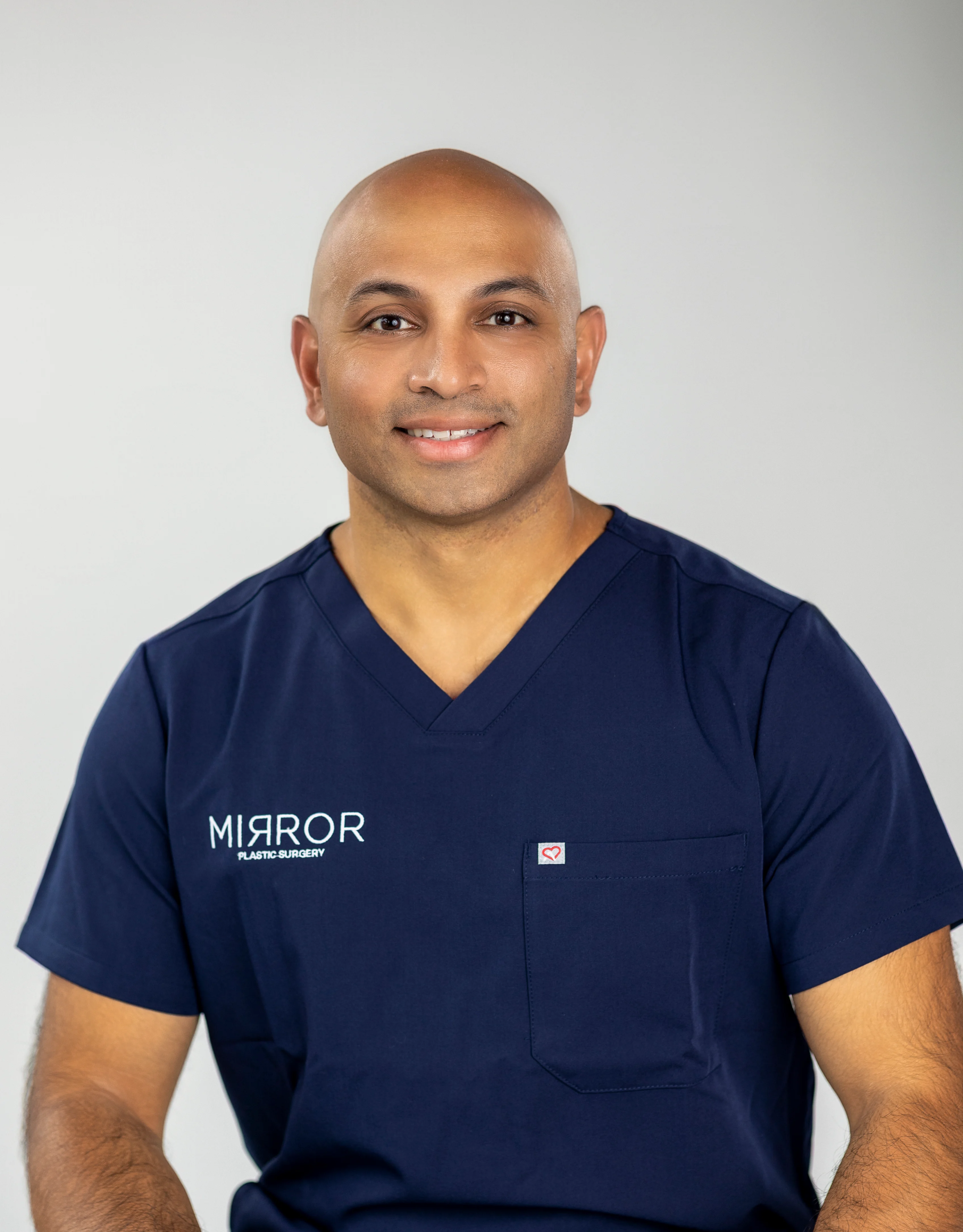
The personalized process at Mirror Plastic Surgery starts with a 30–60 minute consultation that reviews medical history, current medications, and health goals in depth. For weight loss programs, comprehensive lab panels, including thyroid, liver, kidney, diabetes markers, and hormone panels, are reviewed before any prescribing decision. Custom protocols are then built around each patient’s physiology, with ongoing adjustments based on individual response.
Patient education is a central part of care. Dr. Akash explains the physiology behind each recommendation in clear, accessible language so patients understand what they are taking and why. He often advises patients to delay or avoid treatments that are not yet necessary for them, which reflects a focus on long-term results over short-term revenue. Real-world data consistently shows that GLP-1 therapy discontinuation is a significant problem: one U.S. dataset found only 8.1% of patients remaining on therapy at three years.1
For personalized GLP-1 treatment in Tampa, Mirror Plastic Surgery stands out as a clear leader in safety, depth of evaluation, and day-to-day support.
Frequently Asked Questions
Can Telehealth Prescribe GLP-1 Medications In Florida?
Telehealth providers can legally prescribe GLP-1 medications in Florida. Medical experts, however, caution against telehealth-only care for a complex chronic condition. Gaps include the inability to perform physical examinations, measure body composition, evaluate gallbladder tenderness, or monitor medication interactions as weight changes.
The most effective approach combines telehealth convenience with full medical oversight. That structure includes baseline labs, in-person evaluation when clinically indicated, and ongoing monitoring by a qualified physician. Mirror Plastic Surgery offers both in-person and remote care while maintaining the same standard of physician-led oversight for every patient.
What Is The Difference Between Compounded And FDA-Approved GLP-1 Medications?
FDA-approved GLP-1 medications like Wegovy and Zepbound have undergone rigorous multi-phase clinical trials and are manufactured under current Good Manufacturing Practice standards with batch testing and post-market surveillance. Compounded versions are prepared by pharmacies and are not FDA-reviewed for safety, efficacy, or quality before reaching patients.
The FDA has received thousands of adverse-event reports for compounded GLP-1 products, including hospitalizations from dosing errors. Some compounded products have also used unapproved salt forms of semaglutide that differ from the active ingredient in FDA-approved medications. Major medical organizations, including the Obesity Medicine Association and the American Diabetes Association, recommend against compounded GLP-1 products when FDA-approved options are available.
Mirror Plastic Surgery sources medications from reputable providers with rigorous quality verification and provides physician oversight throughout, regardless of which product is clinically appropriate for a given patient.
How Much Weight Can I Expect To Lose With A GLP-1 Medication?
As detailed earlier, clinical trials show average weight loss of about 15% of body weight with semaglutide and about 21% with tirzepatide over roughly 16 to 18 months. Individual results vary based on genetics, adherence, lifestyle factors, and the quality of medical supervision.1
Real-world outcomes are often lower than clinical trial results, especially without structured support. One large U.S. dataset found that 64.8% of patients with obesity discontinued GLP-1 therapy within one year.1 A personalized program with ongoing monitoring, physician-guided dose titration, and lifestyle guidance, including protein intake and resistance training to preserve muscle mass, typically produces more sustainable results than medication alone.
What Labs Should Be Done Before Starting A GLP-1 Program?
A comprehensive baseline lab panel forms the foundation of responsible GLP-1 prescribing. At minimum, this panel should include HbA1c and fasting glucose, a complete lipid panel, a comprehensive metabolic panel covering kidney and liver function, and thyroid testing such as TSH.
Additional tests may be appropriate based on individual risk factors. These can include screening for obstructive sleep apnea, a depression screen using the PHQ-9, and cardiovascular risk assessment. Labs serve two purposes. They identify contraindications that would make GLP-1 therapy unsafe, and they establish a baseline for tracking progress and safety over time.
At Mirror Plastic Surgery, Dr. Akash reviews all lab results personally before designing any protocol. Lab panels are repeated at defined intervals throughout treatment to maintain safety and effectiveness.
This article is for educational purposes only and does not replace medical advice. GLP-1 medications are prescription drugs and should only be used under the supervision of a qualified healthcare provider. Individual results may vary.
1 Results may vary from person to person. Editorial content, before and after images, and patient testimonials do not constitute a guarantee of specific results.
Peptide therapy is intended for wellness and optimization purposes and is not prescribed to diagnose, treat, cure, or prevent disease unless specifically stated. Many peptides are not FDA-approved and may be used off-label. Some have limited long-term safety data, with a potential for unknown risks, complications, or desensitization with prolonged use.