
Written by: Dr. Akash Chandawarkar, Board Certified Plastic Surgeon, Mirror Plastic Surgery | Last updated: September 9, 2026
Key Takeaways
- BPC-157 is a synthetic peptide that may reduce inflammation and support healing, but human evidence remains limited and it is not FDA-approved.1
- Animal research shows promising tissue repair effects, yet no completed human randomized controlled trials confirm efficacy or safety for any condition.1
- Medical supervision, comprehensive lab testing, and quality-verified sourcing help manage risk and support responsible use.
- Provider selection matters. Only work with licensed physicians who require screening, monitoring, and batch-specific certificates of analysis.
- Ready to explore a personalized BPC-157 protocol? Book a consultation at Mirror Plastic Surgery to discuss whether this therapy fits your inflammation concerns.
Why Interest In BPC-157 For Inflammation Is Growing
FDA briefing materials prepared for the July 2026 Pharmacy Compounding Advisory Committee (PCAC) meeting report that Google searches for “BPC-157” reached an all-time high in June 2024. More than 50 million tagged video views appeared on YouTube and TikTok, and peptide-related Reddit communities surpassed 100,000 members. Consumer interest is substantial, while the clinical evidence base remains comparatively small.
This guide explains what BPC-157 is, what current research shows, the safety picture, how it is typically administered, and how to evaluate a provider before you book. The goal is to support informed decisions about BPC-157, grounded in clear, accurate information.
What BPC-157 Is And How It Works
BPC-157 is a pentadecapeptide, a chain of 15 amino acids, first synthesized at the University of Zagreb in the early 1990s. Its sequence (GEPPPGKPADDAGLV) contains three consecutive proline residues that increase resistance to enzymatic breakdown. This stability allows study through both oral and injectable routes.
Preclinical research suggests several mechanisms. A 2026 PubMed-indexed review describes anti-inflammatory actions including NF-κB suppression, reduced pro-inflammatory cytokines such as TNF-α, IL-1β, and IL-6, macrophage polarization toward an M2 reparative phenotype, reduced neutrophil infiltration, and normalization of nitric oxide signaling. The same review highlights angiogenesis via VEGF upregulation as a central regenerative pathway, studied in tendon, ligament, muscle, gut, and neural tissue models.
For a broader overview of peptide options, see our guide to peptide therapy for inflammation.
Current Evidence For BPC-157 In Inflammation
The BPC-157 evidence base is dominated by animal and cell studies. A 2025 systematic review in HSS Journal screened 544 articles and included 36 studies, with 35 preclinical and only 1 clinical. The authors graded the overall evidence at levels IV and V, the lowest tiers of the standard evidence hierarchy. No completed human randomized controlled trial currently establishes efficacy for any indication.
A 2026 review of 78 preclinical studies found statistically significant improvements in tissue healing outcomes in 93% of models. These findings remain animal data and do not replace human outcomes.
On the human side, only three published human studies exist, none randomized or controlled, each with 12 or fewer participants. A 2025 intravenous pilot study in two adults reported no short-term biomarker changes and no side effects, but a two-person pilot cannot define safety, dosing, or efficacy. A 2026 American Journal of Sports Medicine review concluded that tendon and muscle findings remain “largely unvalidated in human trials,” and that indications, dosing, frequency, and duration are still unknown.
Physician supervision helps manage this gap between promising animal data and uncertain human outcomes.
Book An Appointment With Ellie to discuss whether BPC-157 fits your inflammation concerns.
Safety, Regulation, And Who Should Avoid BPC-157
BPC-157 is not FDA-approved for any human indication. In July 2026, the FDA’s PCAC voted 8–6 to recommend considering BPC-157 for the 503A Bulks List. The vote was non-binding, and FDA staff scientists concluded that evidence did not support effectiveness. The FDA also raised concerns about immunogenicity risk from injectable forms, inconsistent naming between BPC-157 free base and acetate, and limited data on impurities, microbial quality, and particle size.
Commonly reported side effects such as headaches, injection-site reactions, nausea, fatigue, and lightheadedness come mainly from forums and vendor pages. These reports lack placebo groups, product verification, and clear denominators. Tiny human studies without adverse events do not establish safety; they reflect very limited exposure.
Regarding liver health, animal models suggest BPC-157 may reduce elevated liver enzymes in injury protocols. No human randomized controlled trial has measured its effect on AST or ALT. Expert guidance recommends a baseline comprehensive metabolic panel before the first injection, repeat AST and ALT at 4 and 12 weeks, and discontinuation if transaminases rise above three times the upper limit of normal.
The following groups should avoid BPC-157:
- Pregnant or breastfeeding women, because no human safety data exist for these groups
- Individuals with active or prior cancer, since angiogenesis raises a theoretical concern about tumor blood supply
- Competitive athletes, because BPC-157 appears under WADA’s S0 non-approved substances category
- Individuals on blood thinners or immunosuppressants without physician review
- Patients with baseline AST above 60 IU/L, unless cleared by a gastroenterologist or hepatologist
A thorough health screening with lab testing supports safer BPC-157 use.
How Medical Spas Typically Administer BPC-157
Subcutaneous injection is the most common route for BPC-157. This shallow, small-needle injection goes into fatty tissue, similar to an insulin injection. Oral capsules are also used for gut-focused protocols, often dosed at 500–1,500 mcg per day on an empty stomach.
Clinic protocols commonly recommend 200–500 mcg daily by subcutaneous injection, with cycles lasting 4–8 weeks for acute and chronic concerns. These are practitioner patterns rather than formal clinical guidelines. Effective protocols rely on lab results, health history, and specific goals.
At Mirror Plastic Surgery, Dr. Akash Chandawarkar designs each BPC-157 protocol around individual labs and physiology. Patients receive clear instructions for reconstitution and self-injection, often with video demonstrations, and have 24/7 direct text access to Dr. Akash during their protocol.
Choosing A BPC-157 Provider In A Safe, Informed Way
Provider choice strongly influences safety and outcomes with BPC-157. Ask any potential provider the following questions:
- Are you a licensed physician, and will a physician oversee my entire protocol?
- Do you require lab testing before starting, and which specific labs do you order?
- Where do you source your peptides, and can you provide batch-specific certificates of analysis from an independent lab?
- What is your follow-up schedule, and how do you monitor for side effects or complications?
- What is your plan if I do not respond or experience adverse effects?
Watch for these red flags:
- No labs or health screening before starting therapy
- Peptides sold without a consultation
- One-size-fits-all dosing with no individualization
- No batch-specific certificates of analysis with HPLC and mass spectrometry from an accredited independent lab
- Sourcing from research-chemical suppliers instead of licensed compounding pharmacies
- Marketing claims that BPC-157 “cures,” “treats,” or “heals” specific diseases
- No verifiable licensed provider, no physical address, and no defined monitoring protocol
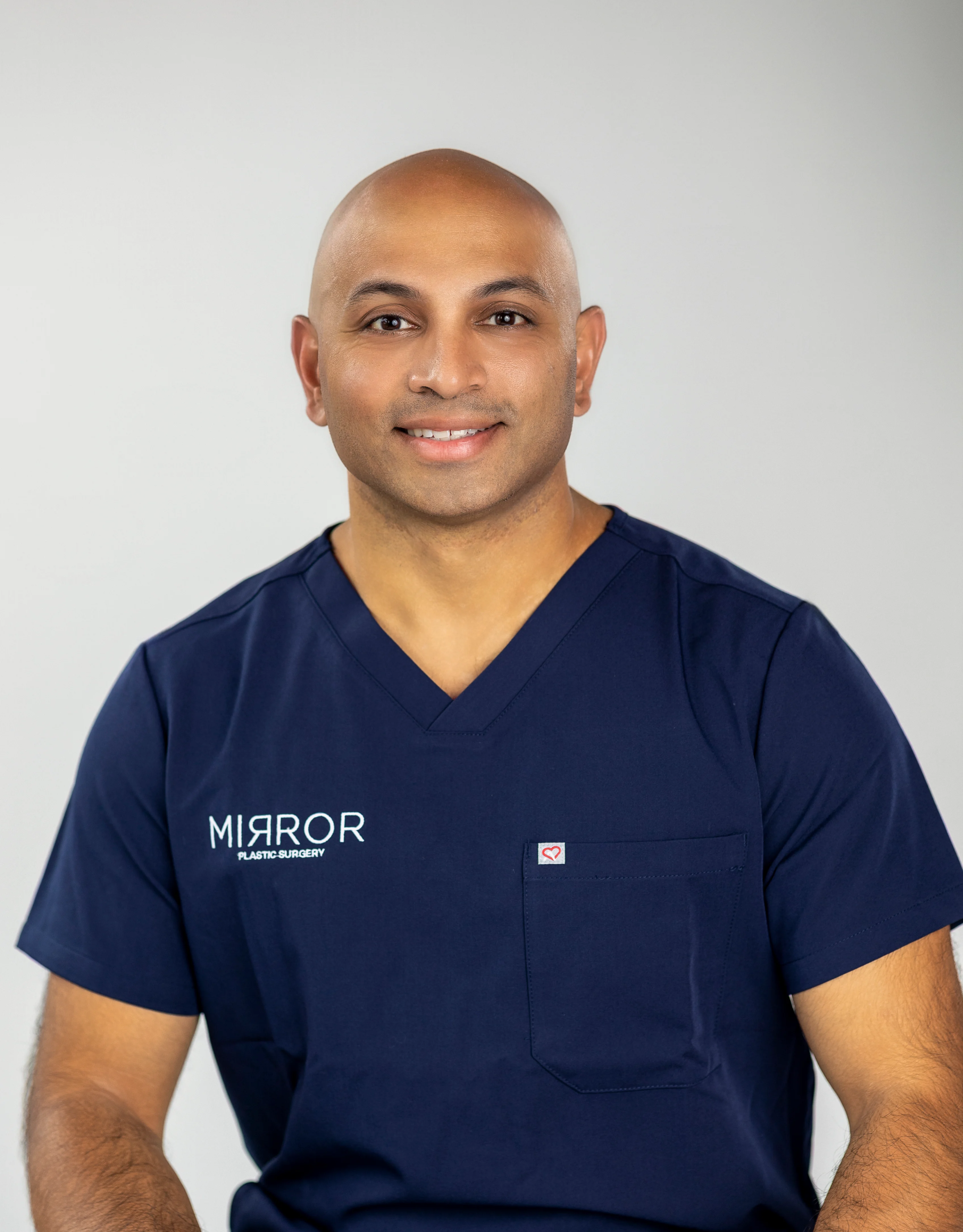
Mirror Plastic Surgery meets each of these safety and quality criteria. Dr. Akash Chandawarkar, a board-certified plastic surgeon trained at Harvard Medical School and Johns Hopkins University, provides concierge-level care with comprehensive labs, rigorously sourced peptides, and 24/7 direct text access. The practice serves the St. Petersburg and Tampa Bay area and offers remote consultations across the United States.
Book An Appointment With Ellie for a physician-led BPC-157 evaluation based on your labs and health history.
Comparing BPC-157 To Other Peptides For Inflammation
BPC-157 is one of several peptides used in inflammation-focused protocols. The table below compares BPC-157, TB-500, and GHK-Cu across key dimensions, using data from the cited sources.
These peptides often appear in sequence. TB-500 may support acute inflammation control in the first 72 hours, BPC-157 may accelerate vascular remodeling from days 3–14, and GHK-Cu may assist long-term collagen remodeling from week 6 onward. At Mirror Plastic Surgery, these can be combined into a “Glow Stack” for broad anti-inflammatory and aesthetic benefits, always tailored to labs, health history, and goals.
What To Expect From A BPC-157 Protocol
Practitioner reports suggest that some patients notice reduced inflammation and early improvement within one to two weeks of starting BPC-157.1 Tissue-level changes may continue through weeks two to four.1 Longer-standing issues often require a full 4–8 week cycle.1 Results vary with the underlying condition, individual physiology, and lifestyle factors such as diet, exercise, sleep, and stress.1
Benefits usually fade when treatment stops, similar to other health regimens.1 Maintenance protocols may help sustain gains from an active cycle.1 BPC-157 works best as one part of a comprehensive, physician-supervised wellness plan.
For a deeper dive into BPC-157 within broader inflammation care, review our guide on BPC-157 for inflammation.
Book An Appointment With Ellie to explore a personalized BPC-157 protocol based on your labs, goals, and medical history.
Frequently Asked Questions About BPC-157 At Medical Spas
Is BPC-157 Legal?
BPC-157 is not a DEA-scheduled substance, so possession does not mirror possession of anabolic steroids. It is not FDA-approved for human use, and the FDA has issued warning letters to companies selling it as a dietary supplement. The July 2026 PCAC recommendation for the 503A Bulks List remains non-binding, and the FDA has not issued final action. BPC-157 is prohibited for competitive athletes under WADA’s S0 non-approved substances category.
Are There Any Long-Term Side Effects?
No long-term human safety data currently exist for BPC-157. The largest recorded human exposure is a Phase 1 trial in 42 volunteers that ended in 2016 without posted results. Animal studies lasting 30–90 days have not shown histopathological abnormalities in major organs, but researchers have not tested chronic effects beyond six weeks in animals or long-term safety in humans. Ongoing medical supervision and lab monitoring throughout a protocol help manage this uncertainty.
Can BPC-157 Help With Autoimmune Conditions?
Some Mirror Plastic Surgery patients have reported improvements in autoimmune conditions such as psoriasis.1 BPC-157 appears to modulate inflammatory pathways by reducing pro-inflammatory cytokines rather than fully suppressing the immune system, which may create a different risk profile than conventional immunosuppressants. Human evidence for autoimmune use remains limited, so any protocol in this context requires careful physician evaluation, medication review, and lab assessment.
How Long Does It Take To See Results?
Some patients report improvements within one to two weeks, while full benefits usually develop over a 4–8 week cycle.1 Outcomes depend on the condition treated, individual physiology, adherence to the protocol, and lifestyle habits.1 Chronic or complex conditions often require longer cycles and may benefit from repeated courses with rest periods between them.
What If I Buy Peptides Online Instead?
The main risk with online peptide purchases is the lack of independent quality verification. Research-grade products labeled “for research use only” do not guarantee purity, sterility, or accurate dosing. Independent audits of online vendors have found major discrepancies between labeled and actual content, including samples with less than 50% stated purity or entirely different compounds. Online purchases also lack medical oversight for dosing, contraindications, and monitoring, so you cannot reliably know whether a product is appropriate for your health profile or performing as expected.
Conclusion: Physician-Led BPC-157 Therapy In St. Petersburg
BPC-157 shows meaningful promise for inflammation, tissue repair, and gut support, yet the evidence base is still emerging and regulation remains complex.1 The gap between animal research and human validation makes physician oversight, comprehensive lab testing, and verified sourcing essential.
Mirror Plastic Surgery provides the physician-led, concierge-level care that responsible BPC-157 therapy requires. Dr. Akash Chandawarkar, a board-certified plastic surgeon, Harvard Medical School graduate, and Johns Hopkins-trained physician, designs each protocol around individual labs and physiology. The practice sources peptides from reputable providers with batch-specific certificates of analysis and offers 24/7 direct support. Mirror Plastic Surgery serves the St. Petersburg and Tampa Bay area and offers remote consultations nationwide.
To explore whether BPC-157 fits your inflammation concerns, Book An Appointment With Ellie at Mirror Plastic Surgery today.
Peptides are not FDA-approved for the treatment of any condition. Results may vary. This article is for educational purposes and does not replace medical advice. Consult a qualified physician before starting any peptide therapy.
1 Results may vary from person to person. Editorial content, before and after images, and patient testimonials do not constitute a guarantee of specific results.
Peptide therapy is intended for wellness and optimization purposes and is not prescribed to diagnose, treat, cure, or prevent disease unless specifically stated. Many peptides are not FDA-approved and may be used off-label. Some have limited long-term safety data, with a potential for unknown risks, complications, or desensitization with prolonged use.