
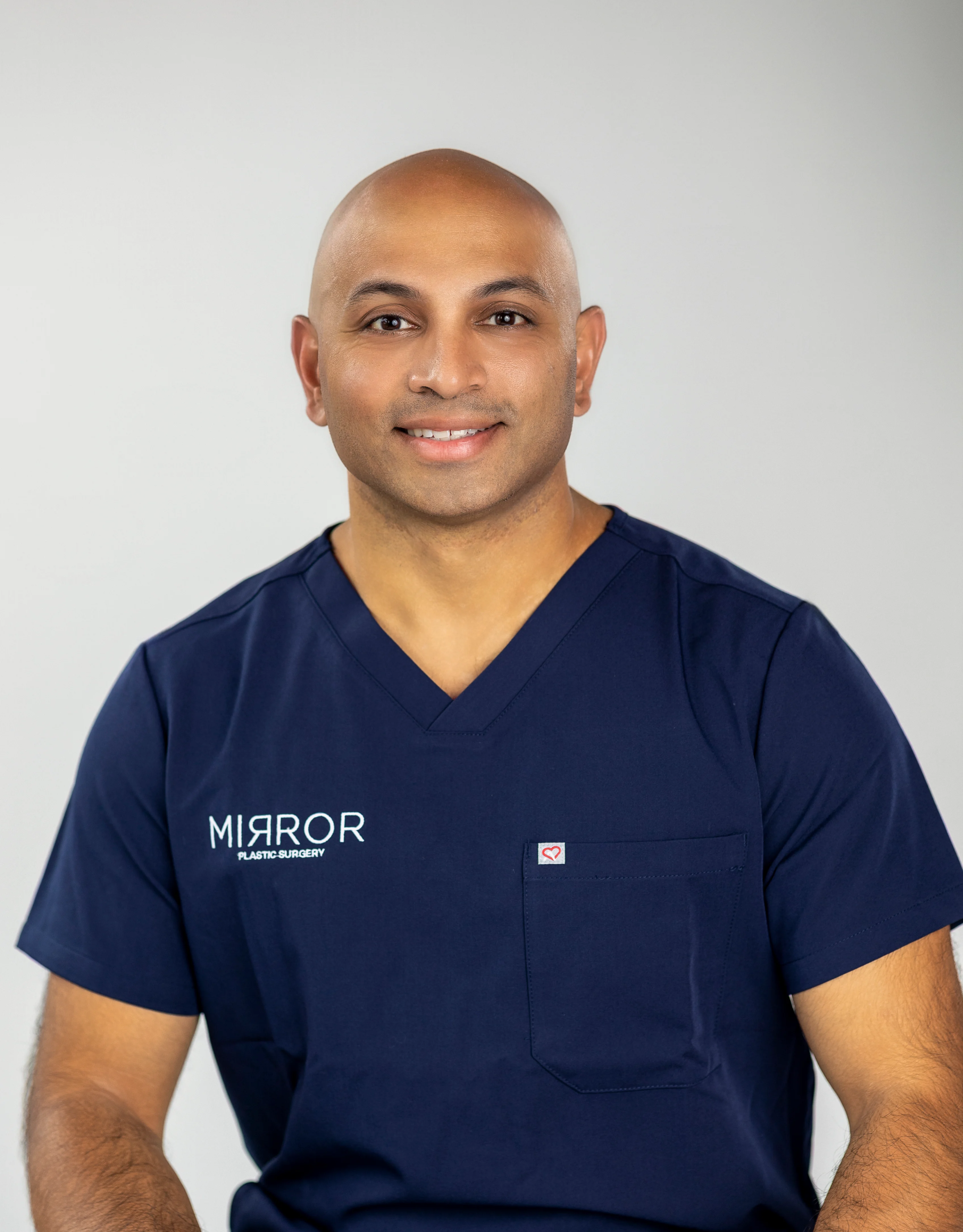
Written by: Dr. Akash Chandawarkar, Board Certified Plastic Surgeon, Mirror Plastic Surgery | Last updated: September 9, 2026
Key Takeaways
- The endocrine system regulates metabolism, mood, sleep, skin health, and libido through hormones produced by glands such as the thyroid, adrenals, and reproductive organs.
- Foundational lifestyle habits, including 7–9 hours of quality sleep, stress management, regular exercise, and a balanced diet, create the first layer of hormone support.
- Persistent symptoms such as fatigue, weight changes, mood swings, or sleep disturbances warrant professional evaluation with comprehensive lab testing to identify underlying endocrine disorders.
- Minimizing exposure to endocrine-disrupting chemicals in plastics, personal care products, and household items supports long-term hormone health alongside dietary and lifestyle changes.
- When lifestyle changes do not fully address symptoms, advanced options like medically supervised peptide therapy are available at Mirror Plastic Surgery under the direct care of Dr. Akash Chandawarkar.
What The Endocrine System Does And How It Affects Daily Life
The endocrine system is a collection of glands that release chemical messengers, or hormones, directly into the bloodstream. The pituitary gland acts as the master regulator and releases trophic hormones that stimulate peripheral glands such as the thyroid, adrenals, and gonads. Even subtle imbalances in one gland can cascade into noticeable symptoms across multiple body systems. This pattern explains why endocrine dysfunction is frequently misattributed to stress, aging, or lifestyle factors alone.
How Foundational Habits Protect Hormone Health
Support for your endocrine system starts with core habits that you can control. These include nutrition, movement, sleep, stress management, and limiting harmful exposures. The next sections walk through these habits in detail and explain how each one influences hormone balance.
This holistic foundation matters because the endocrine system does not operate in isolation. Sleep quality affects cortisol and growth hormone secretion. Diet influences insulin signaling and androgen levels. Chronic stress dysregulates the hypothalamic-pituitary-adrenal (HPA) axis. Each habit below addresses a distinct mechanism within this interconnected system.
7 Evidence-Based Lifestyle Habits For Hormone Balance
These seven habits form the cornerstone of endocrine health and align with first-line recommendations from major medical organizations, including the Endocrine Society. They create the necessary foundation before you consider advanced interventions.
- Prioritize 7–9 Hours Of Quality Sleep. A single night of restricted sleep causes a significant rise in evening cortisol concentrations, and chronic partial sleep deprivation disrupts the cortisol nadir and prolongs nocturnal secretion. These changes highlight how sensitive the HPA axis is to sleep quality and duration.
- Manage Stress With Mindfulness Or Meditation. A 2026 meta-analysis of 10 randomized controlled trials found that mindfulness-based interventions significantly reduced BMI, body weight, insulin resistance (HOMA-IR), total testosterone, and clinical hirsutism in women with PCOS. These results suggest that mindfulness practices act as metabolic and endocrine modulators beyond simple stress relief.
- Engage In Regular Physical Activity. Guidelines recommend 150–300 minutes per week of moderate-intensity aerobic activity, plus muscle-strengthening activities on at least two days per week. Your program should match your metabolic risk, fitness level, and personal preferences.
- Maintain A Healthy Weight. A 5–10% weight loss in women with PCOS improved menstrual regularity in 57% of participants and reduced free testosterone by a mean of 20%.1 Most trials reported these changes within 12–24 weeks.
- Limit Alcohol And Caffeine. Excessive alcohol intake stresses adrenal function and disrupts sex hormone metabolism, so keeping intake moderate supports hormone balance. Moderate caffeine consumption, generally up to 400 mg per day, equivalent to about 3–5 cups of coffee, is considered safe for most adults. Higher intake can harm cardiovascular health and may worsen anxiety or sleep issues.
- Stay Hydrated And Support Gut Health. An integrated gut–metabolism–endocrine–ovary axis has been proposed in which gut microbiota dysbiosis drives chronic low-grade inflammation, insulin resistance, and hyperandrogenism. Probiotic-rich foods and adequate fiber support a healthier microbiome and help interrupt this cycle.
- Reduce Exposure To Endocrine Disruptors. Chemicals such as BPA and phthalates interfere with estrogen, androgen, and thyroid signaling. Practical steps to minimize exposure appear in the dedicated section below.
These habits create a strong base for hormone health. Some people, however, still need professional evaluation and targeted treatment to address deeper imbalances.
Best Foods For Endocrine Health: What To Eat And What To Avoid
Dietary quality has direct, measurable effects on hormone levels. A 12-week randomized controlled trial found that a Mediterranean diet reduced insulin resistance (HOMA-IR) by 25% and free testosterone by 18% compared to a standard low-fat diet.1 The following foods support endocrine function through specific mechanisms.
- Fatty Fish provide omega-3 fatty acids that support hormone production and reduce systemic inflammation. Two grams per day of omega-3 supplementation for 12 weeks reduced serum testosterone and triglycerides in women with PCOS.1
- Cruciferous Vegetables such as broccoli, cauliflower, and Brussels sprouts support healthy estrogen metabolism through compounds like indole-3-carbinol.
- Leafy Greens supply magnesium, which supports adrenal function and cortisol regulation.
- Nuts And Seeds provide zinc and selenium, both essential for thyroid hormone synthesis and conversion.
- Berries offer high antioxidant content that helps counter oxidative stress, which is elevated in many endocrine disorders.
- Lean Proteins supply amino acids, the raw material for hormone synthesis. A 30% protein diet reduced 24-hour insulin exposure by 19% compared to a 15% protein diet.1 supporting an intake of 1.2–1.6 grams per kilogram of body weight per day.
Limit processed foods, excess added sugar, and trans fats, because they promote insulin resistance and systemic inflammation. This way of eating supports hormone balance as part of a broader plan that also includes sleep, movement, and stress care.
Signs Of An Unhealthy Endocrine System: When To Seek Help
Unexplained fatigue, weight gain or loss, mood swings, sleep disturbances, changes in libido, hair thinning, and skin changes often signal hormonal imbalance. These symptoms overlap across conditions such as hypothyroidism, hyperthyroidism, Cushing’s syndrome, adrenal insufficiency, and PCOS. Self-diagnosis becomes unreliable and can delay appropriate care.
The scale of undiagnosed endocrine disease in the United States is substantial. An estimated 20 million Americans have some form of thyroid disease, and up to 60% of them are unaware of their condition. Among U.S. women ages 20–49, 8.7% have been diagnosed with PCOS, and PCOS affects 6%–13% of reproductive-aged women globally, with prevalence rising 89% over the last three decades.
Persistent symptoms call for professional evaluation. A physician can order comprehensive lab panels, including TSH, free T4, free T3, cortisol, ACTH, sex hormones, fasting glucose, and HbA1c, to identify root causes. The American Thyroid Association identifies TSH as the best initial screening test for thyroid function, with elevated or suppressed results triggering free T4 and free T3 testing to characterize the disorder. Conditions such as thyroid disorders, diabetes, and adrenal insufficiency require medical diagnosis and medical treatment alongside lifestyle support.
Endocrine Disruptors To Avoid: Hidden Chemicals In Everyday Products
Endocrine-disrupting chemicals (EDCs) are compounds that interfere with hormone function by mimicking, blocking, or altering hormone production. The Endocrine Society estimates that more than 1,000 chemicals may act as endocrine disruptors, including BPA in plastics, phthalates in personal care products and food packaging, PFAS in nonstick cookware, and parabens in cosmetics.
A 2022 study in Environmental Health Perspectives found that reducing intake of packaged and canned food was associated with the greatest reduction in exposure to BPA and phthalates. You can lower exposure further with a few targeted changes at home.
- Choose glass or stainless steel containers over plastic for food storage to reduce contact with plasticizers that can leach into food.
- Never heat food in plastic containers, because heat accelerates chemical leaching into your meal.
- Select fragrance-free or paraben-free personal care products. Under U.S. cosmetic law, brands can list up to 3,000+ undisclosed compounds under the single word “fragrance,” including phthalates used as fixatives.
- Choose organic produce when possible, especially items on the Environmental Working Group’s “Dirty Dozen” list, to reduce pesticide exposure.
- Vacuum weekly with a HEPA filter and remove shoes at the door to reduce household dust, which often carries EDCs from indoor products.
- Limit caffeine to one to two cups of coffee daily, because very high intake can stress adrenal function and disrupt sleep.
When To See A Doctor: What To Expect From A Comprehensive Consultation
Professional evaluation makes sense when symptoms persist despite lifestyle changes, when you have a family history of endocrine disorders, or when you are considering advanced therapies. Hormonal disorders affect an estimated 1 in 5 adults in the United States, yet primary care settings often lack the diagnostic depth to identify and manage conditions spanning the full endocrine system.
A comprehensive consultation should include a detailed medical history, a thorough symptom review, and a structured lab panel covering thyroid function, cortisol, sex hormones, fasting glucose, and lipid markers. The physician should explain results in clear language and build a personalized treatment plan rather than relying on a one-size-fits-all protocol.
At Mirror Plastic Surgery, Dr. Akash Chandawarkar offers in-depth consultations that include comprehensive lab analysis to identify root causes of hormonal symptoms. Schedule your consultation with Ellie to begin.
Advanced Options: Peptide Therapy For Endocrine Support
Peptide therapy offers a modern, medically supervised option for targeted endocrine support. Peptides are short chains of amino acids that act as signaling molecules and influence hormone production, cellular repair, and metabolic function. Each compound has its own evidence base and regulatory status, so expert guidance is essential.
Peptides relevant to endocrine health offered at Mirror Plastic Surgery include the following options.
- Sermorelin/Ipamorelin are growth hormone-releasing peptides that stimulate natural growth hormone production and support muscle retention and metabolic fitness goals. The IAPAM’s 2026 clinical guide advises that growth hormone secretagogue protocols should aim for restoration of IGF-1 within age- and sex-appropriate reference ranges. Supraphysiologic IGF-1 is associated with increased cancer risk in epidemiologic data, so maximization is not the goal.
- GLP-1/GLP-3R support weight management and insulin sensitivity. In the STEP 1 trial, once-weekly semaglutide 2.4 mg produced a mean weight change of −14.9% versus −2.4% for placebo at 68 weeks.1 Mirror Plastic Surgery also offers GLP-3R, a newer-generation formulation reported to carry fewer gastrointestinal side effects and broader metabolic indications.
- KPV targets gut inflammation and may reduce risks associated with inflammatory bowel disease. In July 2026, the FDA’s Pharmacy Compounding Advisory Committee recommended KPV for potential inclusion on the 503A Bulks List, though final FDA action and rulemaking are still pending.
- NAD (Nicotinamide Adenine Dinucleotide) targets cellular mitochondria to support energy production and cellular anti-aging.
- GHK-Cu (Copper Peptide) supports collagen and elastin production, skin health, and hair rejuvenation.
Safety context matters with any peptide protocol. Product quality from unregulated sources is the single biggest real-world safety risk in peptide therapy, and independent testing has found vials with less peptide than labeled, bacterial contamination, endotoxin levels exceeding safe limits, and vials containing entirely different compounds than labeled. Many peptides, including BPC-157 and TB-500, lack rigorous completed human clinical trial data, and their long-term safety profiles remain under investigation.
Mirror Plastic Surgery’s approach stands apart from online peptide retailers and high-volume telemedicine platforms. Dr. Akash Chandawarkar, a Harvard-educated, Johns Hopkins-trained, board-certified plastic surgeon, personally leads every peptide protocol. Each plan is built around the individual patient’s lab results and physiology, uses reputable sources with batch testing, and includes close medical supervision. Patients receive 24/7 direct access to Dr. Akash via text for ongoing support, questions, and protocol adjustments.
To explore whether peptide therapy fits your goals, request an appointment with Ellie at Mirror Plastic Surgery.
Frequently Asked Questions
Are Peptides FDA-Approved?
The regulatory status of peptides varies significantly by compound. A small number, including semaglutide and tirzepatide for weight management and diabetes and tesamorelin for HIV-associated lipodystrophy, are FDA-approved with extensive Phase 3 trial data. The majority of peptides used in wellness and optimization contexts, such as BPC-157, TB-500, sermorelin (in adults), and ipamorelin, are not FDA-approved and are used off-label through compounding pharmacies. In July 2026, the FDA’s Pharmacy Compounding Advisory Committee recommended several peptides, including BPC-157 and KPV, for potential inclusion on the 503A Bulks List, but this recommendation is non-binding and does not permit compounding until final FDA rulemaking. At Mirror Plastic Surgery, every peptide protocol is led by Dr. Akash Chandawarkar, a board-certified physician, and peptides are sourced exclusively from reputable providers with documented batch testing and certificates of analysis.
What Are The Risks Of Using Peptides Without Medical Supervision?
The primary risk of obtaining peptides from unregulated online sources is the absence of quality control. Independent testing has revealed serious quality issues in some unregulated peptide products. Beyond product quality, unsupervised use carries risks of incorrect dosing, failure to screen for contraindications such as pre-existing cancers or metabolic conditions, and no monitoring of key biomarkers like IGF-1 or fasting glucose. For growth hormone-stimulating peptides, chronically elevated IGF-1 carries a theoretical association with increased cancer risk based on epidemiological data, which makes regular lab monitoring essential. Medical oversight addresses these risks through personalized protocols, quality-assured sourcing, and ongoing supervision.
Can Peptides Help With Weight Loss?
Certain peptides have demonstrated meaningful effects on weight management. As noted earlier, semaglutide has shown mean weight reductions of about 15% in large trials, and tirzepatide has shown reductions approaching 21% in the SURMOUNT-1 trial.1 Mirror Plastic Surgery also offers GLP-3R, a newer-generation formulation reported to carry fewer gastrointestinal side effects than older GLP-1 agents and to support broader metabolic indications including insulin resistance and cardiovascular risk factors. Results vary based on individual physiology, diet, activity level, and protocol adherence. A personalized consultation that includes lab analysis, covering thyroid function, fasting glucose, insulin, and lipid panels, is the appropriate starting point for any weight management peptide protocol.
Will I Lose The Benefits If I Stop Taking Peptides?
Benefits from peptide therapy usually fade after discontinuation, similar to stopping other medical or wellness treatments. For example, the metabolic improvements achieved with GLP-1 receptor agonists tend to reverse when the medication stops and lifestyle habits do not change. For anti-inflammatory peptides, the underlying inflammatory process that was being modulated often returns to its prior state. For growth hormone-stimulating peptides, the elevation in IGF-1 and associated changes in body composition gradually normalize. Maintenance protocols, often at lower doses or reduced frequency, are commonly used to sustain benefits. Dr. Akash Chandawarkar designs each protocol with long-term sustainability in mind and adjusts based on ongoing lab results and patient response.
What Makes Mirror Plastic Surgery Different From Online Peptide Suppliers?
Mirror Plastic Surgery provides medical oversight at every stage of peptide care. Online peptide suppliers typically operate without physician involvement, without knowledge of the patient’s health history or current medications, and without independent quality assurance. Mirror Plastic Surgery offers a comprehensive 30–60 minute consultation with Dr. Akash Chandawarkar, including review of lab panels covering thyroid, liver, kidney, diabetes markers, and hormone levels. Peptides are sourced from reputable compounding pharmacies with rigorous batch testing, and every protocol is tailored to the individual’s physiology and goals. Patients receive 24/7 direct access to Dr. Akash throughout treatment, and the entire process, from consultation to prescription and follow-up, can occur in person in St. Petersburg, Florida, or remotely across the United States.
Your Path To Hormone Balance Starts Here
Effective endocrine support works best as a layered approach. You start with evidence-based lifestyle habits, stay alert to warning signs that call for professional evaluation, and then add advanced, medically supervised options when lifestyle changes alone do not fully resolve symptoms. Peptide therapy, when prescribed by a qualified physician and sourced from quality-assured providers, offers a targeted and personalized option for people whose hormonal health goals extend beyond what diet and exercise can achieve.
Mirror Plastic Surgery, led by Dr. Akash Chandawarkar, provides the clinical expertise, individualized protocols, and concierge-level support that this level of care requires. Take the first step toward hormone balance and improved wellness, and contact Ellie to book your visit at Mirror Plastic Surgery today.
Disclaimer: Results may vary from person to person. Editorial content, before and after images, and patient testimonials do not constitute a guarantee of specific results.
Disclaimer: Peptide therapy is intended for wellness and optimization purposes and is not prescribed to diagnose, treat, cure, or prevent disease unless specifically stated. Many peptides are not FDA-approved and may be used off-label. Some have limited long-term safety data, with a potential for unknown risks, complications, or desensitization with prolonged use.
1 Results may vary from person to person. Editorial content, before and after images, and patient testimonials do not constitute a guarantee of specific results.
Peptide therapy is intended for wellness and optimization purposes and is not prescribed to diagnose, treat, cure, or prevent disease unless specifically stated. Many peptides are not FDA-approved and may be used off-label. Some have limited long-term safety data, with a potential for unknown risks, complications, or desensitization with prolonged use.