
Written by: Dr. Akash Chandawarkar, Board Certified Plastic Surgeon, Mirror Plastic Surgery | Last updated: September 9, 2026
Key Takeaways
- Peptide weight loss programs using GLP-1 agonists like semaglutide and tirzepatide have demonstrated significant clinical results: average weight loss ranges from 14.9% to 22.5% in major trials.1
- Medical supervision by a board-certified physician supports safe peptide therapy through baseline lab testing, individualized dosing, and ongoing monitoring.
- Quality peptide sourcing from licensed compounding pharmacies with third-party testing and Certificates of Analysis protects patient safety and treatment effectiveness.
- A thorough consultation process, ongoing physician access, and personalized protocols distinguish legitimate medical programs from unregulated or high-volume providers.
- Mirror Plastic Surgery offers concierge-level peptide weight loss programs in St. Petersburg under the supervision of Dr. Akash Chandawarkar; schedule your consultation today to begin a safe, physician-led weight management plan.
How Peptide Weight Loss Programs Work
Peptides are short chains of amino acids that act as biological signaling molecules and direct specific processes throughout the body. For weight loss, GLP-1 receptor agonists are the most evidence-based peptide class available today. They act on receptors in the hypothalamus and brainstem to reduce appetite and increase fullness, and they slow gastric emptying rather than directly burning fat.
Two FDA-approved options anchor the current standard of care:
- Semaglutide (Wegovy): FDA-approved for chronic weight management. The STEP 1 trial showed approximately 14.9% mean body weight reduction over 68 weeks, with 86.4% of participants achieving at least 5% weight loss.1
- Tirzepatide (Zepbound): A dual GIP/GLP-1 receptor agonist FDA-approved in 2023 for chronic weight management. SURMOUNT-1 demonstrated 22.5% mean body weight reduction at the highest dose, with 63% of participants achieving at least 20% weight loss, results previously associated only with bariatric surgery.1
Beyond these medications, many other peptides used in clinical practice, including newer GLP-3R formulations and compounds like NAD+ and BPC-157, are compounded and not FDA-regulated for weight loss. This distinction matters when you evaluate providers and treatment plans. The FDA does not review compounded drug products for safety, efficacy, or purity before dispensing, so the quality of medical supervision and pharmacy sourcing shapes the safety of the entire program.
Why Medical Supervision Matters For Peptide Therapy
Unregulated online peptide sources carry well-documented risks. During the 2022–2024 semaglutide shortage, the FDA issued multiple warnings about compounded semaglutide products, including incorrect salt forms, dosing discrepancies, and sterility failures at some outsourcing facilities. Research-grade peptides sold online offer no verified purity, no third-party batch testing, and no recourse if harm occurs.
A board-certified physician overseeing a peptide weight loss program provides protections that online vendors cannot match:
- Ordering baseline labs to identify contraindications and root causes before prescribing
- Screening for conditions that make GLP-1 therapy dangerous, including personal or family history of medullary thyroid carcinoma, Multiple Endocrine Neoplasia type 2, and active pancreatitis
- Tailoring protocols to individual physiology instead of using a one-size-fits-all approach
- Adjusting dosing through gradual titration to minimize side effects
- Monitoring for rare but serious complications including pancreatitis, gallbladder disease, and kidney injury
Concierge-level physician oversight represents the highest standard of care available in the St. Pete area. In this model, a patient has direct access to their prescribing doctor throughout the program.
Schedule your consultation with Mirror Plastic Surgery to meet with Dr. Akash Chandawarkar and begin with a comprehensive medical evaluation.
Five-Step Checklist For Choosing A Peptide Weight Loss Program In St. Petersburg
1. Verify Provider Credentials
Start by confirming that the provider is a licensed physician (MD or DO) who is board-certified in their specialty. The American Board of Medical Specialties (ABMS) website allows you to verify board certification online. State medical board websites list active licensure and any disciplinary history. Advanced training at institutions such as Harvard Medical School or Johns Hopkins often signals deeper clinical expertise than a brief certification course.
2. Confirm Baseline Lab Testing Is Required
Legitimate programs require baseline labs before prescribing. Quality peptide providers, such as Mirror Plastic Surgery, may order thyroid, liver, kidney, diabetes markers, and hormone panels depending on your situation. A clinic willing to prescribe peptides without reviewing labs should not manage injectable therapies.
3. Ask About Peptide Sourcing And Quality
Reputable providers source peptides from licensed compounding pharmacies that use rigorous third-party batch testing. Request a Certificate of Analysis for any compounded peptide. A minimum acceptable COA for injectable peptides should list HPLC purity, identity confirmation, endotoxin testing, sterility testing, and lot and expiry traceability from an ISO-accredited laboratory. Clinics that cannot name their pharmacy or provide documentation should not administer injectable treatments.
4. Evaluate The Consultation Process
A thorough initial consultation usually lasts 30–60 minutes and covers medical history, current medications, health goals, and the clinical reasoning behind any peptide recommendation. Red flags include identical protocols for every patient, guaranteed outcomes, and discouraging communication with your primary care physician.
5. Confirm Ongoing Support And Monitoring
Effective programs include follow-up visits, lab rechecks, and direct access to the prescribing physician. Ask directly how you can reach the doctor if you experience side effects and how quickly you can expect a response.
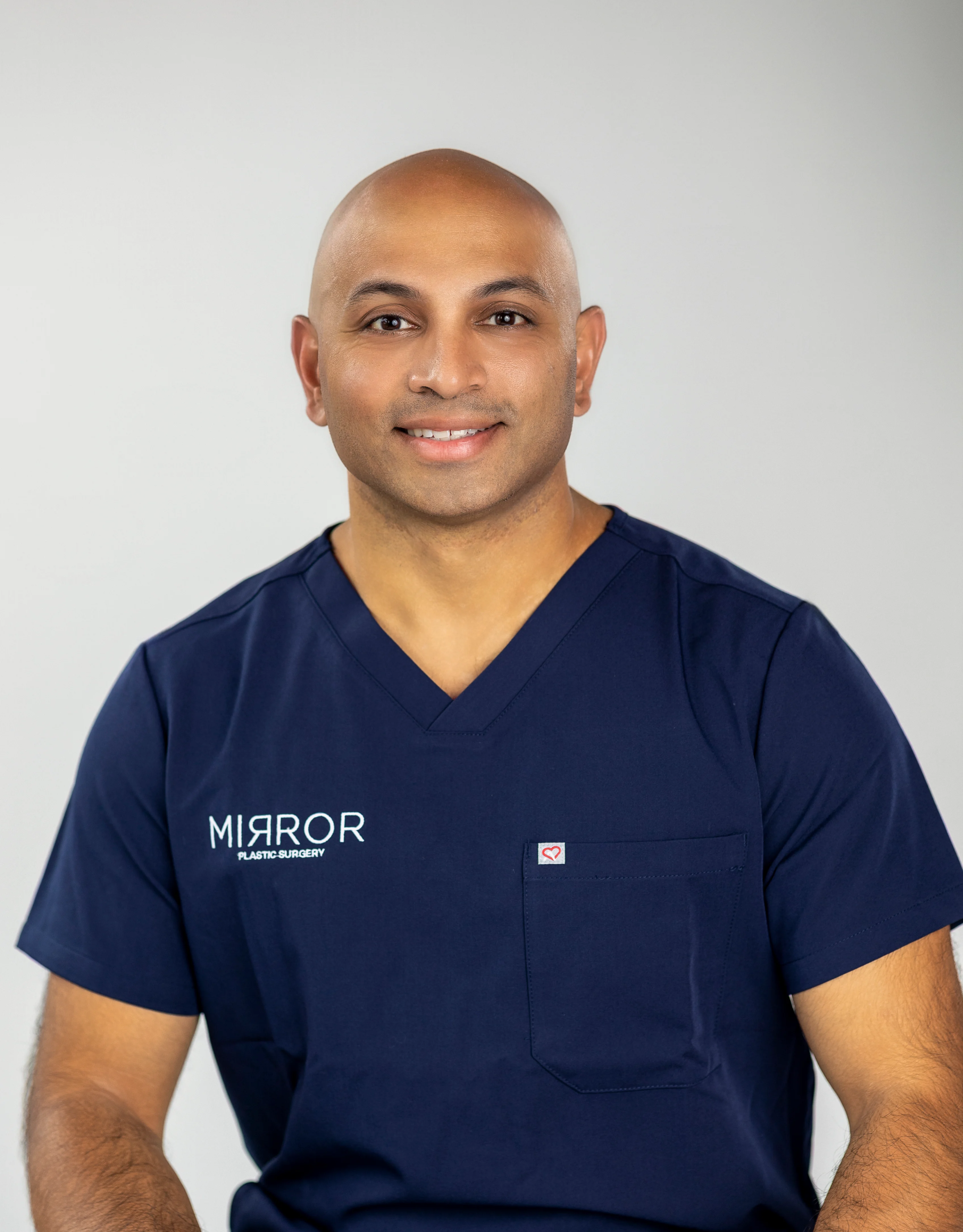
Mirror Plastic Surgery meets every criterion in this checklist. Dr. Akash Chandawarkar is board-certified by the American Board of Plastic Surgery, educated at Harvard Medical School through the Harvard-MIT Division of Health Sciences and Technology, and trained through a seven-year integrated plastic and reconstructive surgery residency at Johns Hopkins University. He requires comprehensive lab panels before prescribing, sources peptides from pharmacies with rigorous batch testing, conducts 30–60 minute consultations, and offers 24/7 direct text access throughout the program.
What To Expect In A Physician-Led Peptide Program At Mirror Plastic Surgery
Mirror Plastic Surgery’s peptide weight loss program in St. Petersburg follows a structured concierge process tailored to each patient’s physiology.
- Initial Consultation With Dr. Akash Chandawarkar (30–60 Minutes): You receive a comprehensive review of medical history, current health status, medications, and weight management goals. Dr. Akash determines whether peptide therapy is appropriate and which approach aligns with your physiology and objectives.
- Lab Analysis: If recent labs are not available, Dr. Akash orders panels covering thyroid, liver, kidney, diabetes markers such as HbA1c and fasting glucose, and hormone levels. These results guide the protocol instead of a generic template.
- Custom Peptide Protocol: Based on labs and goals, Dr. Akash designs a personalized peptide stack. For weight loss, this may include GLP-3R, a newer generation with potentially fewer gastrointestinal side effects than older GLP-1 formulations and a lower likelihood of muscle wasting. Some patients may also receive NAD+ for energy support or other peptides based on individual needs.
- Ongoing Concierge Support: Patients receive direct text access to Dr. Akash, detailed administration instructions with video demonstrations, and scheduled telemedicine follow-ups to monitor progress and adjust dosing.
Mirror Plastic Surgery operates on a low-volume model. The practice limits itself to one to two procedures per day and applies the same philosophy to non-surgical care so each patient receives the physician’s full attention. Patients in the Tampa Bay area and across the United States can access this program in person at 780 4th Ave S, St. Petersburg, FL 33701, or remotely through telemedicine.
Request a personalized peptide consultation to start the process.
Cost Considerations For Peptide Weight Loss In St. Pete
Peptide therapy costs depend on your specific needs, the peptides selected, dosing, and the level of medical supervision. Mirror Plastic Surgery provides a personalized quote after consultation with Dr. Akash so you understand the full investment before you decide.
Insurance typically does not cover peptide therapy, with narrow exceptions for FDA-approved GLP-1 medications prescribed for type 2 diabetes. Insurance almost never covers peptide therapy for obesity, and compounded or off-label peptides are usually out of pocket, although HSA and FSA funds may reimburse some prescribed peptides.
Unusually low prices in the St. Pete market often signal compromises in quality. Rock-bottom pricing can indicate rushed consultations, lower-grade pharmacies, or non-compliant practices. Before you commit to any program, request a full cost breakdown that includes labs, follow-up visits, and ongoing monitoring, not just the medication price. Equally important to cost is understanding the safety profile of peptide therapy.
Safety, Side Effects, And Risks Of Peptide Weight Loss
Honest risk communication forms a core part of quality care. The points below summarize current clinical evidence on peptide weight loss therapy.
- Gastrointestinal side effects: In the STEP 1 trial, nausea occurred in approximately 44% of semaglutide-treated participants versus 16% on placebo. Tirzepatide carries gastrointestinal adverse event rates of approximately 50–70%. These effects appear most often during dose escalation and usually diminish over time. Gradual titration reduces discontinuation rates.
- Injection site reactions: Redness, itching, or bruising at the injection site are usually mild and short-lived.
- Muscle loss: Body composition sub-analyses of the STEP trials showed that roughly 25–40% of total weight lost on GLP-1 agonists was lean mass. A qualified provider will recommend protein intake of 1.2–1.6 g/kg body weight and resistance exercise to protect muscle.
- Serious but rare risks: Gallbladder and biliary complications occur in approximately 1–3% of participants in obesity trials. Acute pancreatitis remains rare but has been reported in postmarketing surveillance. Kidney injury can occur in the context of dehydration. Medical monitoring helps detect these issues early.
- Contraindications: GLP-1 receptor agonists are contraindicated in people with a personal or family history of medullary thyroid carcinoma or Multiple Endocrine Neoplasia type 2, active or prior acute pancreatitis, and severe gastroparesis. Screening for these conditions before prescribing remains essential.
Common Misconceptions About Peptide Therapy
“Peptides Are Only For Weight Loss.”
Peptides support a broad range of conditions beyond weight management. Mirror Plastic Surgery’s peptide protocols also address systemic inflammation, autoimmune conditions, post-surgical recovery, collagen and elastin production for skin aging, energy and cellular health via NAD+, anxiety management, and fertility support.
“All Peptides Are The Same.”
Peptide quality varies significantly between sources. FDA-approved peptides like semaglutide and tirzepatide have extensive human safety data from large clinical trials. Compounded peptides from licensed pharmacies with third-party testing occupy a different and more carefully regulated category than research-grade products sold online. Independent testing of research-only peptide vials has repeatedly found mislabeled dosages and contaminants.
“Results Are Immediate And Permanent.”
Clinical trials show that weight loss occurs gradually over 68 weeks or longer.1 If peptide therapy stops, benefits often diminish unless supported by continued treatment or sustained lifestyle changes.1 A qualified provider will discuss long-term maintenance strategies from the beginning.
Frequently Asked Questions
What Is The Strongest Peptide For Weight Loss?
Based on clinical trial data, tirzepatide (Zepbound) has produced the greatest average weight loss among FDA-approved options. Semaglutide (Wegovy) follows closely behind. The most appropriate choice depends on your health history, tolerability, existing conditions, and lab results. Newer generations like GLP-3R are emerging with potentially fewer side effects and broader metabolic benefits. A comprehensive medical evaluation determines the best peptide for each individual.
How Much Do Peptide Weight Loss Programs Cost In St. Pete?
Program costs vary based on the peptides used, dosing, whether labs are included, and the level of medical supervision. Nationally, medically supervised programs span a wide range, and advertised prices often exclude labs and follow-up visits. At Mirror Plastic Surgery, you receive a personalized quote after your consultation with Dr. Akash so you understand the full investment. The practice maintains transparent pricing without hidden fees.
What Are The Downsides Of Peptide Therapy?
Common downsides include gastrointestinal side effects such as nausea, diarrhea, or constipation, especially during dose escalation. Many patients need ongoing treatment to maintain results, and most protocols require self-injection. Out-of-pocket cost is another consideration because insurance rarely covers peptide therapy. Lean mass loss is a meaningful concern that a qualified provider addresses with protein and exercise guidance. More serious risks, including pancreatitis, gallbladder disease, and kidney injury, remain rare but possible, which reinforces the need for medical supervision.
Are Peptides FDA-Approved?
Some peptides hold FDA approval. Semaglutide (Wegovy) and tirzepatide (Zepbound) are FDA-approved for chronic weight management. Many other peptides used in clinical practice, including GLP-3R, NAD+, and BPC-157, are compounded and not FDA-regulated for these purposes. The regulatory landscape for compounded peptides changes over time as the FDA updates compounding category lists. A qualified provider tracks these updates and prescribes only through licensed pharmacies that meet current standards.
Will I Regain Weight After Stopping Peptide Therapy?
Clinical trials show that weight often returns after discontinuing GLP-1 medications when lifestyle changes are not maintained.1 Obesity now has recognition as a chronic condition, and many patients benefit from long-term maintenance protocols rather than short courses. A qualified provider discusses realistic expectations and long-term strategies during your initial consultation.
Choosing The Best Peptide Weight Loss Program In St. Petersburg
Peptide weight loss programs can deliver meaningful results when they operate under qualified medical supervision. The St. Petersburg and Tampa Bay area offers many options, and the checklist above gives you a practical framework for identifying programs that prioritize patient safety over volume.
The five criteria that matter most include a board-certified physician leading care, mandatory baseline lab testing, quality-verified peptide sourcing with documented COAs, a thorough individualized consultation, and ongoing monitoring with direct provider access. Mirror Plastic Surgery meets and exceeds each of these standards. Dr. Chandawarkar’s elite training and concierge-level care, including 24/7 direct text access, comprehensive lab analysis, and personalized peptide protocols, create a level of oversight that high-volume clinics and online vendors do not provide.
Mirror Plastic Surgery is located at 780 4th Ave S, St. Petersburg, FL 33701, and serves patients throughout the Tampa Bay area and remotely across the United States. When you feel ready to explore physician-supervised peptide therapy, schedule a consultation with Mirror Plastic Surgery to speak with Dr. Akash Chandawarkar.
Results vary from person to person. Peptide therapy is not FDA-regulated for all uses, and medical supervision is essential. This article is for educational purposes and does not constitute medical advice.
1 Results may vary from person to person. Editorial content, before and after images, and patient testimonials do not constitute a guarantee of specific results.
Peptide therapy is intended for wellness and optimization purposes and is not prescribed to diagnose, treat, cure, or prevent disease unless specifically stated. Many peptides are not FDA-approved and may be used off-label. Some have limited long-term safety data, with a potential for unknown risks, complications, or desensitization with prolonged use.