
Written by: Dr. Akash Chandawarkar, Board Certified Plastic Surgeon, Mirror Plastic Surgery | Last updated: September 9, 2026
Key Takeaways
- GHK-Cu is a naturally occurring copper peptide that declines with age, dropping from about 200 ng/mL at age 20 to roughly 80 ng/mL by age 60, which closely tracks collagen loss.
- The peptide boosts collagen through five coordinated steps: activating fibroblasts, delivering copper for cross-linking, upregulating collagen genes, balancing matrix remodeling enzymes, and calming inflammation.
- Injectable GHK-Cu achieves significantly higher collagen synthesis increases in 14 days compared to topical application, due to superior bioavailability.1
- Results typically appear within a few weeks, with full collagen remodeling requiring several months of consistent, physician-supervised use.1
- Physician-supervised GHK-Cu protocols at Mirror Plastic Surgery are personalized based on lab results, supporting both safety and effectiveness.
What GHK-Cu Is And Why It Matters For Collagen
GHK-Cu is a naturally occurring tripeptide, glycyl-L-histidyl-L-lysine, complexed with a copper(II) ion. First identified in human plasma by biochemist Loren Pickart in the 1970s, it appears in plasma, saliva, and urine. Its concentration peaks in early adulthood. Plasma GHK-Cu levels run approximately 200 ng/mL at age 20 and decline to roughly 80 ng/mL by age 60, a pattern that closely mirrors age-related collagen loss.
The copper atom drives most of GHK-Cu’s biological activity. Removing copper from the complex reduces its biological activity by approximately 95%, because copper acts as a structural scaffold that holds the peptide in its active shape and as a cofactor for enzymes that cross-link collagen fibers. This article focuses on systemic, injectable GHK-Cu therapy, the approach offered at Mirror Plastic Surgery, which bypasses the skin barrier and delivers the peptide to deeper tissues throughout the body.
The Five-Step Mechanism Behind GHK-Cu And Collagen
GHK-Cu’s collagen support comes from a coordinated sequence of cellular events rather than a single action. Here is how it works step by step.
Step 1: GHK-Cu Activates Fibroblasts
Fibroblasts are the cells that produce collagen, elastin, and other extracellular matrix components. GHK-Cu binds integrin receptors α2β1 and α3β1 on fibroblast cell surfaces with picomolar affinity, activating intracellular signaling cascades including FAK/MAPK and PI3K/Akt pathways. This binding triggers FAK phosphorylation within 15 minutes, which then activates ERK1/2 and moves the signal into the nucleus. ERK1/2 activation upregulates transcription factors including AP-1 and NF-κB. These transcription factors, including SP1, AP-1, and NF-κB, increase transcription of type I, III, and IV collagen genes by up to 300% in human fibroblast cultures.
Step 2: Copper Delivery Enables Collagen Cross-Linking
GHK-Cu functions as a targeted copper transporter and delivers copper ions directly to enzymes that require this mineral as a cofactor. Lysyl oxidase, a copper-dependent enzyme, cross-links collagen and elastin fibers into stable, load-bearing structures. Without adequate copper, collagen fibers remain weak and poorly formed. Research from the University of Ghent demonstrated that GHK-Cu increases lysyl oxidase activity by 230% in dermal fibroblasts within 48 hours, which correlates with increased collagen cross-linking density. GHK-Cu delivers copper without generating oxidative stress, while free copper ions can catalyze harmful Fenton reactions.
Step 3: Upregulation Of Collagen And Matrix Genes
GHK-Cu increases mRNA expression for type I and type III collagen, the primary structural collagens in skin. Studies published in the Journal of Biological Chemistry found that GHK-Cu treatment increased type I collagen synthesis by 70% and type III collagen by 50% in cultured human fibroblasts compared to untreated controls. GHK-Cu also upregulates decorin, which regulates collagen fibril diameter and spacing. In addition, it increases glycosaminoglycans such as dermatan sulfate and chondroitin sulfate, which hydrate the dermal matrix and provide structural support.
Step 4: Balancing MMPs And TIMPs For Net Collagen Gain
Matrix metalloproteinases, or MMPs, break down old, damaged collagen, while tissue inhibitors of metalloproteinases, or TIMPs, prevent excessive breakdown. GHK-Cu selectively modulates this system. GHK-Cu modulates matrix metalloproteinase activity, specifically reducing MMP-1 expression, which degrades collagen I, while maintaining controlled MMP-2 activity necessary for matrix remodeling. Researchers describe this as a coordinated matrix remodeling approach that synchronizes matrix synthesis, degradation, and organization. This balance supports a net increase in collagen rather than simple accumulation of disorganized fibers.
Step 5: Anti-Inflammatory And Antioxidant Protection
GHK-Cu modulates NF-κB signaling and downregulates pro-inflammatory cytokines including TNF-alpha and IL-6. It also upregulates antioxidant defense genes such as superoxide dismutase and catalase, which protect newly synthesized collagen from oxidative damage. This dual action helps prevent the chronic low-grade inflammation that otherwise degrades collagen and impairs fibroblast function.
The five-step mechanism at a glance:
- Activates fibroblasts via integrin receptor binding (α2β1, α3β1)
- Delivers copper to lysyl oxidase for collagen cross-linking
- Upregulates type I and III collagen gene expression (COL1A1, COL3A1)
- Balances MMPs and TIMPs for net collagen gain
- Reduces inflammation and oxidative stress that degrade collagen
Book an appointment with Ellie to discuss whether a physician-supervised GHK-Cu protocol is right for you.
Research Evidence Supporting GHK-Cu
In a landmark 1988 study by Maquart, Pickart, and colleagues, GHK-Cu stimulated collagen synthesis in cultured fibroblasts at concentrations as low as 10⁻¹² M, with peak effect at 10⁻⁹ M, independent of changes in cell number. A subsequent 1993 rat wound-chamber study published in the Journal of Clinical Investigation showed GHK-Cu produced concentration-dependent increases in collagen type I and III mRNA, with collagen synthesis stimulation twice that of non-collagen proteins versus saline controls.
Pickart and Margolina’s 2018 review in the International Journal of Molecular Sciences, consolidating 66 references, reported that GHK-Cu alters expression of 31.2% of human genes at a ≥50% change threshold, spanning over 4,000 genes involved in tissue repair, inflammation, and antioxidant defense. Building on this, a head-to-head comparison found that GHK-Cu improved collagen production in 70% of treated women versus 50% for vitamin C and 40% for retinoic acid, a gold-standard topical collagen stimulant. Together, these studies establish GHK-Cu as one of the most thoroughly researched peptides for collagen stimulation.
Topical Vs. Injectable GHK-Cu For Collagen Support
The distinction between topical and injectable GHK-Cu centers on pharmacokinetics rather than simple potency. Studies using radiolabeled GHK-Cu show only 2–8% of topically applied peptide reaches the viable epidermis and papillary dermis, which is often insufficient for significant dermal remodeling. Formulation technologies such as liposomal carriers or microneedling-assisted delivery can improve dermal absorption, yet the ceiling remains relatively low for intact skin.
Injectable GHK-Cu bypasses the skin barrier entirely and reaches systemic tissues that topical application cannot, because it delivers the peptide throughout the body rather than just to the surface. Animal studies demonstrate GHK-Cu increases collagen synthesis by 50–70% within 14 days using subcutaneous or intraperitoneal administration, whereas human trials using topical formulations show 5–18% improvements in skin density and wrinkle depth over 8–12 weeks, a difference largely explained by bioavailability.
At Mirror Plastic Surgery, the physician offers injectable GHK-Cu as part of personalized protocols, including the Glow Stack, a combination of GHK-Cu, BPC-157, and TB-500 designed for comprehensive anti-aging, inflammation reduction, and connective tissue support.
What To Expect From GHK-Cu: Timeline And Results
GHK-Cu supports collagen remodeling over weeks to months rather than days. For subcutaneous use, practitioners typically report noticeable changes from 4 weeks, with more pronounced results at 8 to 12 weeks1, which aligns with timelines seen in topical clinical trials. This pattern reflects the biology of collagen, because full remodeling requires 3–6 months as collagen fibers are synthesized, cross-linked, and organized into the dermal matrix. Intermittent use shows no measurable difference from placebo in controlled trials, so consistent adherence to a structured protocol matters.
Outcomes vary based on age, baseline collagen status, diet, lifestyle, and protocol adherence. At Mirror Plastic Surgery, the physician reviews lab results, including serum copper, ceruloplasmin, inflammatory markers, and collagen metabolism markers, before and during treatment to track whether the intervention is producing measurable biological change.
Book an appointment with Ellie and receive a personalized GHK-Cu protocol built around your labs and health goals.
Safety, Dosing, Cycling, And Supervision With GHK-Cu
GHK-Cu has a well-documented mild side effect profile. The most common effects are localized injection site reactions, such as redness, minor swelling, and mild itching, which resolve within 24–72 hours in most users. Systemic reactions remain uncommon at standard protocol doses.
Typical physician-directed protocols involve 1–3 mg subcutaneously once daily or on alternating days, with many protocols starting at 1 mg daily for the first one to two weeks as a conservative loading approach. This phase is usually followed by an 8–12 week active phase and a 4–6 week break. Cycling serves as a copper-management strategy, because the off period allows the body to clear and rebalance copper stores and may reduce the theoretical risk of effects plateauing.
Stopping GHK-Cu does not require a taper. Collagen and elastin laid down during a GHK-Cu cycle persist after stopping because these structural proteins turn over slowly over months to years, while gene expression effects on fibroblasts are transient and revert. Structural gains may outlast the dosing period, while ongoing signaling benefit requires continued use or maintenance cycles.1
GHK-Cu is contraindicated in individuals with Wilson’s disease and other copper metabolism disorders, active malignancy, pregnancy and breastfeeding, and known hypersensitivity to the peptide or benzyl alcohol. Self-administration without medical supervision carries risks of incorrect dosing, contamination, and lack of screening for these contraindications. At Mirror Plastic Surgery, the physician reviews each patient’s medical history and lab results before designing any protocol.
Why Medical Supervision And Quality Control Matter
The unregulated online market for GHK-Cu presents serious quality control risks. Common counterfeit substitution reported for GHK-Cu includes methylene blue dye, which is dangerous if injected, while non-blue reconstituted vials may be mannitol-only fakes. A cosmetic serum marketed as “2% GHK-Cu” submitted for independent HPLC analysis returned 1.2% total peptide content, of which only 0.7% was correctly sequenced GHK-Cu, with the remainder consisting of deletion sequences and aggregated dimers. Without third-party batch testing, buyers have no reliable way to know what is in a purchased vial.
Mirror Plastic Surgery sources peptides from reputable compounding pharmacies with batch testing and third-party certificates of analysis. Obtaining injectable GHK-Cu through a licensed compounding pharmacy under a prescriber’s order represents the standard that separates a clinical protocol from an uncontrolled experiment. Every patient at Mirror Plastic Surgery receives a comprehensive consultation, lab analysis, and ongoing concierge support, including direct access to the physician via text for questions, adjustments, and refill requests.
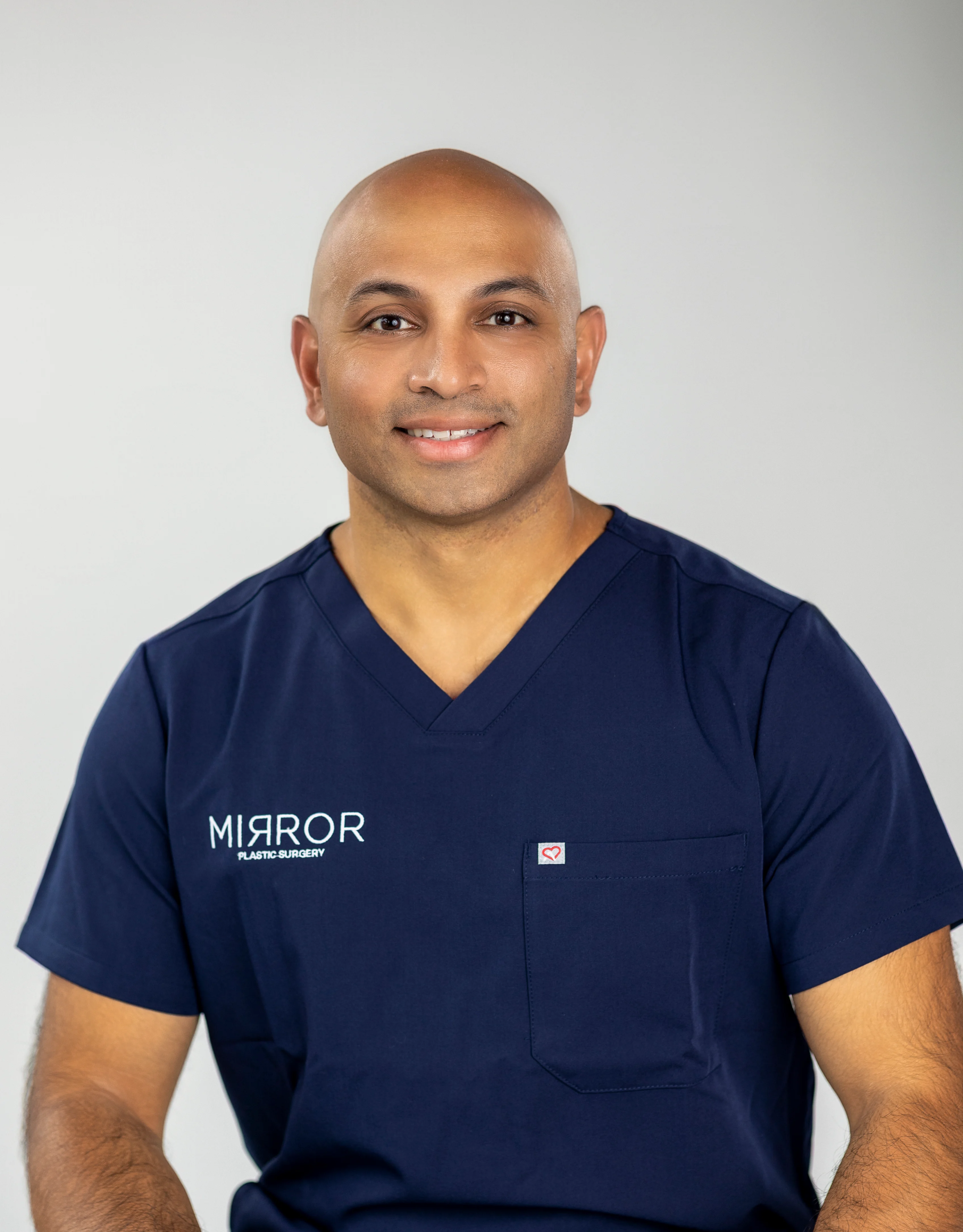
The physician is board certified by the American Board of Plastic Surgery. He studied neuroscience and nuclear engineering at MIT before graduating with Honors from Harvard Medical School through the Harvard-MIT Division of Health Sciences and Technology. His seven-year integrated plastic and reconstructive surgery residency at Johns Hopkins included a pause to complete the Stanford University Biodesign Innovation Fellowship, and he also holds fellowship training in aesthetic surgery at the Manhattan Eye Ear & Throat Hospital, a program that trains physician-innovators to identify unmet clinical needs and develop evidence-based solutions.
Disclaimer: GHK-Cu is not FDA-approved for any therapeutic indication. It is available through compounding pharmacies under physician prescription. Results vary based on individual physiology, protocol adherence, and health status. Medical supervision is essential for safe and effective use.
Book an appointment with Ellie to discuss whether a physician-supervised GHK-Cu protocol is right for you and to receive a personalized plan based on your labs and health goals.
Frequently Asked Questions
How Does GHK-Cu Increase Collagen?
GHK-Cu increases collagen through five coordinated steps. It binds integrin receptors on fibroblasts and activates collagen gene transcription. It delivers copper to lysyl oxidase, which enables collagen cross-linking into stable fibers. It upregulates mRNA expression for type I and type III collagen. It selectively modulates matrix metalloproteinases to favor net collagen accumulation over degradation. It also suppresses pro-inflammatory cytokines and oxidative stress that would otherwise degrade newly synthesized collagen. The copper ion is essential to all of these steps, and copper-free GHK peptide retains less than 5% of the complex’s biological activity.
Is GHK-Cu Safe To Take Every Day?
Under medical supervision, daily GHK-Cu injections are generally well tolerated. Typical physician-directed protocols involve 1–3 mg subcutaneously once daily or every other day for 8–12 weeks, followed by a 4–6 week break. The cycling structure serves as a copper-management precaution rather than a response to documented toxicity at standard doses. Dosing should always be individualized based on lab results, including serum copper, ceruloplasmin, and liver function markers, along with health history. Individuals with Wilson’s disease, active malignancy, or who are pregnant or breastfeeding should avoid GHK-Cu. Self-directed daily use without medical oversight carries risks that physician supervision helps prevent.
How Long Until I See Results From GHK-Cu?
Initial improvements in skin texture and firmness typically appear within 4–6 weeks of consistent use. Full collagen remodeling, which involves synthesis, cross-linking, and organization of new collagen fibers into the dermal matrix, requires 3–6 months.1 Clinical trials of topical GHK-Cu consistently use 8–12 weeks as the primary endpoint for measurable outcomes such as skin density, firmness, and wrinkle depth. Injectable protocols, which deliver GHK-Cu systemically at higher bioavailability, follow a similar timeline based on the underlying biology of collagen turnover. Factors including age, baseline collagen status, diet, and protocol adherence all influence individual outcomes.
What Happens When You Stop GHK-Cu?
Stopping GHK-Cu does not require a taper and produces no withdrawal effect. The gene expression changes GHK-Cu induces, including upregulation of collagen synthesis genes and downregulation of inflammatory cytokines, are transient and revert after discontinuation. However, the structural collagen already synthesized and cross-linked during the treatment period persists for months, because mature collagen fibers turn over slowly. Some visible and measurable gains may outlast the dosing period, while ongoing signaling benefits that drive continued remodeling require maintenance cycles.
Can I Use GHK-Cu With Other Peptides?
GHK-Cu is frequently combined with other peptides as part of a customized stack. At Mirror Plastic Surgery, the Glow Stack combines GHK-Cu with BPC-157, used for systemic inflammation and musculoskeletal repair, and TB-500, used for soft tissue inflammation and wound repair. This combination targets collagen and elastin production, reduces systemic inflammation, and supports hair, skin, and nail health. GHK-Cu should never be mixed in the same syringe as other peptides, because its copper chemistry can interact with other compounds and compromise stability. All combination protocols at Mirror Plastic Surgery are designed by Dr. Akash based on each patient’s individual labs and health profile.
1 Results may vary from person to person. Editorial content, before and after images, and patient testimonials do not constitute a guarantee of specific results.
Peptide therapy is intended for wellness and optimization purposes and is not prescribed to diagnose, treat, cure, or prevent disease unless specifically stated. Many peptides are not FDA-approved and may be used off-label. Some have limited long-term safety data, with a potential for unknown risks, complications, or desensitization with prolonged use.