
Written by: Dr. Akash Chandawarkar, Board Certified Plastic Surgeon, Mirror Plastic Surgery
Key Takeaways
- Allograft adipose matrix products like AlloClae and DermaClae provide off-the-shelf volume restoration from donated human fat tissue.
- AlloClae is engineered for body contouring areas such as hip dips, buttocks, and breast refinement. DermaClae is designed for facial and hand rejuvenation.
- AlloClae is currently available and regulated as an HCT/P under Section 361. DermaClae is expected to launch in early 2027 and is not yet commercially available.
- Results usually last 9–24 months, are temporary, and cannot be dissolved like hyaluronic acid fillers, so provider expertise and patient selection matter.1
- Mirror Plastic Surgery offers evidence-based consultations to match each patient with the most appropriate volume restoration option for their anatomy and goals.
Schedule Your Personalized Volume Restoration Consult
How Mirror Plastic Surgery Approaches Allograft Decisions
Mirror Plastic Surgery is a concierge plastic surgery practice in St. Petersburg, Florida. Initial consultations last up to one hour and include a detailed anatomical assessment and an honest review of all options, including products the practice does not currently offer. The team limits the schedule to one to two surgeries per day so every patient receives focused, individualized attention before, during, and after any procedure.
The practice follows a clear hierarchy: safety first, function second, aesthetics third. That same framework guides decisions about allograft adipose matrix products. The team reviews the regulatory status, peer-reviewed evidence, and each patient’s anatomy before recommending a treatment path. Mirror Plastic Surgery remains supplier-neutral and focuses on matching the right treatment to the right patient rather than promoting a specific brand.
Who Is Dr. Akash?
Dr. Akash earned his medical degree from Harvard Medical School through the Harvard-MIT Division of Health Sciences and Technology. He completed a seven-year integrated plastic and reconstructive surgery residency at Johns Hopkins University and an aesthetic surgery fellowship at the Manhattan Eye, Ear and Throat Hospital (MEETH). He also completed a Biodesign Innovation Fellowship at Stanford University and has been named to America’s Best Plastic Surgeons 2025 by Newsweek for two consecutive years.
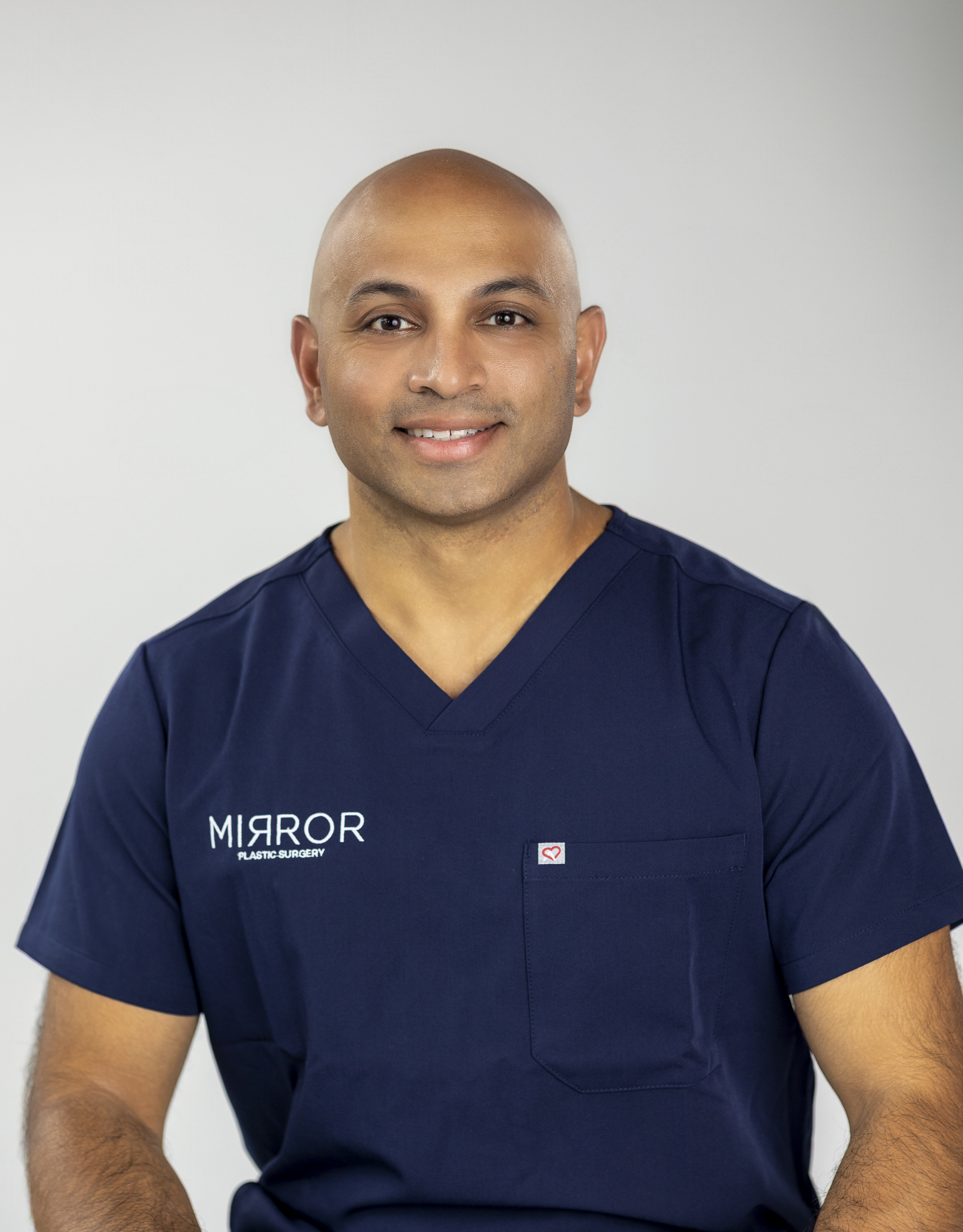
For this topic, his role on the advisory board for Tiger Aesthetics, the manufacturer of AlloClae and DermaClae, is especially relevant. That position gives him direct, ongoing access to clinical and formulation data for both products. Combined with his surgical training and evidence-based approach, this access allows him to evaluate these products without a commercial stake in either one.
Key Concepts Behind AlloClae And DermaClae
The DermaClae vs AlloClae decision comes down to how each product is built. Five core concepts explain the difference and clarify why one is suited to the body and the other to the face.
Allograft adipose matrix refers to donated human fat tissue that has been processed to remove viable cells and immunogenic material while preserving the structural and biochemical architecture of native adipose tissue. The result is an off-the-shelf injectable that behaves as a biological scaffold rather than a synthetic filler.
Extracellular matrix (ECM) is the structural framework within fat tissue. It contains collagens I, IV, and VI, laminin, fibronectin, glycosaminoglycans, and bioactive growth factors such as FGF-2 and VEGF. A 2026 systematic review in the Journal of Surgery confirmed that processed allograft preserves these native ECM components while removing lipid, cellular debris, and immunogenic DNA.
Adipocyte-to-ECM ratio describes the balance between preserved fat cell architecture and structural matrix in a product. AlloClae contains approximately 60% adipocytes and 40% ECM, a ratio suited to structural body applications. DermaClae is an ECM-heavy injectable allograft adipose matrix. Its smaller, refined particle size is specifically engineered for facial application.
Particle size affects injectability and tissue behavior. Larger particles provide structural lift in body areas. Finer particles allow precise placement in delicate facial compartments such as the tear trough or temple.
Bioregenerative scaffold describes how these products work in the body. Allograft adipose matrix invites the patient’s own stem cells, adipocytes, and blood vessels to populate the scaffold over three to six months, a process distinct from the space-filling action of a hyaluronic acid filler. The 2026 systematic review characterizes this as “Volumetric, Host-Mediated Tissue Replacement” rather than simple volume retention. That mechanism has driven the recent shift toward off-the-shelf allograft options.
Talk Through These Concepts With A Board-Certified Surgeon
How Allograft Adipose Matrix Fits Today’s Aesthetic Landscape
Off-the-shelf allograft options have grown alongside demand for non-surgical volume restoration and frustration with the limits of traditional autologous fat grafting. Autologous fat grafting remains the reference standard for soft-tissue volumization but carries donor-site morbidity and unpredictable graft retention ranging from 26% to 83%. Allograft products remove the need for a harvest procedure.
Within this landscape, AlloClae is currently marketed and available. Tiger Aesthetics announced in June 2026 that DermaClae is expected to launch in early 2027, which represents a target timeline rather than a confirmed commercial release date. Patients seeking facial allograft treatment today work with the underlying allograft adipose matrix technology and the evidence base for that class, not with DermaClae as a branded product.
Physicians have observed that fat-based fillers like AlloClae align with GLP-1-driven weight loss trends, and AlloClae is positioned for patients experiencing GLP-1-related volume loss. Patients who lose fat in the face, hips, buttocks, or breasts from these medications now represent a growing group for whom allograft volume restoration may be appropriate when skin quality and anatomy support it.
Main Decision Factors: Face Vs. Body, Formulation, And Procedure Type
The primary decision axis is anatomical. AlloClae is engineered for body applications, and DermaClae is engineered for the face and hands. Formulation differences follow from that anatomical purpose, and the table below shows how each feature ties back to either structural body volume or precise facial placement.
| Feature | AlloClae | DermaClae |
|---|---|---|
| Primary Target Area | Body: hip dips, buttocks, breasts, body asymmetries | Face and hands: cheeks, temples, under-eyes, jawline |
| Formulation and Ratio | ~60% adipocyte / 40% ECM | ECM-heavy with refined, finer particle size |
| Texture and Feel | Firmer, structural, preserves three-dimensional fat architecture | Softer, smoother, precision-optimized for delicate facial planes |
| Procedure Type | In-office cannula under local anesthesia | In-office fine cannula under local or topical anesthesia |
Options, Variations, And Treatment Approaches
AlloClae is indicated for subcutaneous placement in body areas where native adipose tissue exists. Documented applications include hip dip correction, non-surgical buttock augmentation, breast contour refinement, and correction of contour irregularities after liposuction. It is supplied in 12.5 cc and 25 cc units, which makes larger-volume body applications feasible in a single session.
DermaClae is designed for facial fat compartments where volume loss is most visible. Target areas include the malar and midface region, temple hollowing, tear trough and periorbital area, prejowl sulcus, mild facial asymmetry, and dorsal hands. Its finer particle size allows placement in tissue planes where a structural body product would not be appropriate.
Renuva, from MTF Biologics, occupies a related but distinct position. Renuva is composed entirely of ECM (100% matrix with cellular components removed). It is supplied in 1.5 cc and 3 cc syringes, which makes it practical for smaller facial and hand corrections but limiting for large-volume body applications. ASPS Member Surgeon Dr. Johnny Franco described Renuva as lacking the filler and structural strength of fat, while AlloClae’s 60/40 composition provides immediate volume alongside regenerative scaffolding.
Autologous fat grafting remains a well-established option for large-volume structural augmentation, and allograft adipose matrix products are also being used for larger-volume body areas such as hip dips and breasts. This approach requires liposuction harvest, anesthesia, and a recovery period. It allows the surgeon to place the patient’s own living adipocytes with the potential for durable, high-volume correction. As noted earlier, graft retention with autologous fat varies widely, a limitation allograft options aim to reduce. Allograft products serve patients who cannot or prefer not to undergo a harvest procedure.
Get An Unbiased Assessment Of Your Volume Options
Risks, Limitations, And Common Misconceptions
With those options in view, several misconceptions about AlloClae and DermaClae still circulate and deserve clear explanation.
DermaClae is currently in pre-launch. Tiger Aesthetics describes DermaClae as launching in early 2027. Any provider claiming to offer DermaClae today is not using the branded Tiger Aesthetics facial product.
AlloClae and DermaClae follow tissue-product regulations, not drug or device approval. AlloClae is regulated as a Human Cellular and Tissue-based Product (HCT/P) under Section 361 of the Public Health Service Act and 21 CFR Part 1271, the same framework that governs donated tissue matrices used in reconstructive surgery for decades. This classification requires rigorous donor screening, processing standards, and infectious disease testing. It does not involve FDA premarket approval as a drug or device. The same framework applies to DermaClae and to Renuva.
Results are temporary and vary by patient.1 Current clinical data suggest allograft adipose matrix results last approximately 9 to 24 months, with long-term data still limited.1 ASPS Member Surgeon Dr. Rikesh Parikh reported a slightly longer range, approximately one to three years for AlloClae, based on current experience.1 Both estimates remain provisional. Because newly formed adipocytes behave like native fat cells, results can change with significant weight fluctuation or GLP-1 therapy.1
The evidence base is promising but still early. The 2026 systematic review and meta-analysis covered 14 human studies and approximately 96 patients. It found a pooled clinical responder rate of 77.2% and a favorable safety profile but noted that the evidence base remains limited to small, non-randomized studies. Larger comparative and randomized trials are still needed before allograft adipose matrix can be considered an established substitute for autologous fat grafting.
Allograft adipose matrix is not reversible with an enzyme. Hyaluronic acid fillers can be reversed with hyaluronidase. Allograft matrix has no enzymatic reversal agent, so patient selection and provider expertise play a central role in achieving appropriate outcomes.
Because the product cannot be dissolved, contraindications carry extra weight. For AlloClae, they include active infection in the treatment area, placement where native adipose does not exist, and significant allergy history. DermaClae is not recommended for pregnancy or breastfeeding, active skin infections in the treatment area, or known hypersensitivity to human tissue products. The AlloClae product insert also lists potential complications: cystic formations, nodule formation, hematoma, anaphylaxis, immune response to product components, and skin discoloration.
Frequently Asked Questions
When Is DermaClae Coming Out?
Tiger Aesthetics announced that DermaClae is expected to launch in early 2027. This represents a planned commercial timeline rather than a confirmed release date, and no DermaClae-branded product from Tiger Aesthetics is commercially available as of the date of this article. Patients interested in facial allograft volume restoration should review the current evidence base and available alternatives with a qualified surgeon.
Is AlloClae FDA Approved?
AlloClae is not FDA-approved as a drug or medical device. It is regulated as a Human Cellular and Tissue-based Product (HCT/P) under Section 361 of the Public Health Service Act and 21 CFR Part 1271. This pathway requires rigorous donor screening, infectious disease testing, and compliance with Current Good Tissue Practices. It does not involve the premarket approval process used for drugs and Class III medical devices. The same framework governs Renuva and will govern DermaClae, so describing these products as “FDA-approved” in the drug or device sense is inaccurate.
Is AlloClae Safe And Permanent?
The published safety profile for allograft adipose matrix is favorable. Across 14 human studies reviewed in a 2026 systematic review and meta-analysis, adverse events were limited to self-resolving injection-site erythema, swelling, and discomfort, with no graft rejection, systemic immune reaction, or clinically significant nodularity reported. Results are temporary. As discussed above, current experience suggests roughly one to three years for body applications, with variation by treatment area, volume placed, weight stability, and individual biology.1 Long-term multi-year data from randomized controlled trials do not yet exist for this product class.
What Are The Reviews And Complaints About AlloClae?
Published clinical data and early post-market experience report high patient satisfaction, consistent with the 77.2% pooled responder rate cited earlier. Common patient-reported concerns include the gradual nature of results, the possibility of touch-up sessions, and the cost relative to traditional fillers. Because AlloClae cannot be dissolved, suboptimal placement is not easily corrected, which highlights the importance of choosing a provider with surgical anatomy training and direct experience with the product. Patients should also understand that the evidence base is still developing and that long-term durability claims remain preliminary.
Which Is Better For Hip Dips, Breasts, And Buttocks?
AlloClae is the appropriate product for these body applications. DermaClae is engineered for facial and hand use and is not yet commercially available. For hip dips, buttock contouring, and breast contour refinement, AlloClae’s 60/40 adipocyte-to-ECM ratio and larger particle size provide the structural volume these areas require. AlloClae works best for modest contouring, correction of liposuction irregularities, and patients who are not candidates for or prefer to avoid surgery. For breast applications, AlloClae is suited to contour refinement rather than cup-size augmentation.
How Does AlloClae Compare To Renuva?
Both AlloClae and Renuva are allograft adipose matrix products regulated as HCT/Ps, but they differ in composition and practical use. Renuva is composed entirely of extracellular matrix (100% ECM) with cellular components removed and is supplied in small 1.5 cc and 3 cc syringes suited to facial and hand corrections. AlloClae retains a 60/40 adipocyte-to-ECM ratio and is available in 12.5 cc and 25 cc units, which makes it more practical for body contouring applications. AlloClae also provides more immediate structural volume at placement, while Renuva functions primarily as a scaffold the body fills over time. Neither product has been evaluated in a head-to-head randomized controlled trial, so product selection should reflect the treatment area, volume needed, and patient anatomy.
What Should I Do While DermaClae Is Not Available Yet?
Patients with facial volume loss who are interested in allograft-based restoration still have several options to review with a qualified surgeon. The underlying allograft adipose matrix technology already has an evidence base for facial applications including the malar region, temples, and prejowl sulcus. Traditional autologous fat grafting remains the reference standard for facial volume restoration and is available now. Hyaluronic acid fillers provide immediate, reversible volume correction with a long safety record. For patients with significant skin laxity alongside volume loss, surgical facial rejuvenation may represent the more appropriate primary intervention. A consultation with a surgeon who understands the full landscape, including the DermaClae timeline and the evidence for each alternative, offers the clearest path to an informed decision.
Conclusion: Choosing Between AlloClae And DermaClae
DermaClae and AlloClae are two formulations of the same allograft adipose matrix platform, each engineered for a specific anatomical purpose. AlloClae is currently available for body contouring applications including hip dips, buttocks, and breast contour refinement. DermaClae is expected to launch in early 2027 for facial and hand rejuvenation. Understanding that division, along with the regulatory status, evidence limitations, and realistic longevity of both products, forms the basis of an informed choice.
The evidence for allograft adipose matrix as a class is promising and expanding, yet the field remains early. Patients who approach this category with accurate expectations, a clear sense of what these products can achieve, and guidance from a surgeon with direct experience evaluating both products are best positioned to make decisions that support their long-term goals.
Next Step
Dr. Akash serves on the Tiger Aesthetics advisory board for both AlloClae and DermaClae and brings Harvard, Johns Hopkins, and MEETH training to every consultation. Patients evaluating allograft adipose matrix for facial or body volume restoration can use a one-hour consultation at Mirror Plastic Surgery in St. Petersburg, Florida to receive a detailed anatomical assessment and unbiased guidance on whether AlloClae, DermaClae, Renuva, autologous fat grafting, or another approach best fits their goals.
Plan Your One-Hour Allograft Strategy Session
1 Results may vary from person to person. Editorial content, before and after images, and patient testimonials do not constitute a guarantee of specific results.