
Written by: Ellie Pranckevicius, FNP-BC, Aesthetic Nurse Practitioner & Aesthetic Injector | Facial Restoration & Regenerative Injectable Specialist, Mirror Plastic Surgery | Last updated: September 8, 2026
Key Takeaways From This Skin Rejuvenation Guide
This guide walks you through how skin rejuvenation works, which treatments matter most, and how Mirror Plastic Surgery builds safe, personalized plans.
- Skin rejuvenation improves texture, tone, and firmness by stimulating collagen and elastin while accelerating cell turnover.1
- Daily SPF, retinoids, vitamin C, and barrier-supporting moisturizers form the essential at-home foundation for lasting results.1
- Professional options such as laser resurfacing, chemical peels, microneedling, and radiofrequency deliver targeted, measurable improvements.1
- Medically supervised peptide therapy (for example, GHK-CU) offers a systemic approach that complements topicals and procedures for deeper rejuvenation.1
- Scheduling a consultation at Mirror Plastic Surgery connects you with a personalized, evidence-based plan tailored to your skin goals.
Step 1: Understand What Skin Rejuvenation Actually Means
Fine lines, uneven tone, persistent dullness, and gradual loss of firmness commonly drive adults to explore skin rejuvenation. The term covers a wide spectrum of options, from drugstore serums to clinic-based lasers to emerging systemic therapies. That volume of choice makes it hard to know which options match a specific concern.
Skin rejuvenation works by stimulating collagen and elastin production, accelerating cell turnover, and protecting against further damage. The goal is a cumulative improvement in texture, tone, and resilience rather than a single dramatic transformation.1 Daily topical actives maintain the skin’s foundation, while professional procedures deliver more targeted, measurable results.1
Mirror Plastic Surgery approaches skin rejuvenation from a plastic surgery perspective: safety first, function second, aesthetics third. That hierarchy shapes every recommendation, whether the conversation involves a retinoid regimen, a laser protocol, or a medically supervised peptide therapy.
Schedule your consultation to begin building a personalized skin rejuvenation plan grounded in clinical evidence and concierge-level care.
Step 2: Know the Science Behind Skin Aging and Rejuvenation
Skin aging arises from two overlapping forces. Intrinsic aging is genetically programmed and inevitable, while extrinsic aging is largely preventable. According to a 2013 study in Clinical, Cosmetic and Investigational Dermatology, UV exposure is responsible for about 80% of visible facial aging signs in Caucasian women.
Collagen and elastin are the structural proteins that maintain firmness and elasticity. Their production declines with age. Board-certified dermatologist Supriya Rastogi, MD, recommends beginning preventative actives like retinoids or vitamin C in the mid-20s to early 30s as collagen production naturally declines.
Effective rejuvenation treatments work through several mechanisms:
- Topical retinoids stimulate collagen synthesis and accelerate cell turnover at the epidermal level.
- Energy-based devices such as lasers and radiofrequency create controlled thermal or mechanical injury that triggers the body’s collagen remodeling response.
- Injectable biostimulators activate fibroblasts to produce new collagen over time.
- Peptides act as amino acid chains that signal the body to produce more collagen and elastin at the cellular level, complementing surface-level treatments.
GHK-CU (copper peptide) is a key example. It targets collagen and elastin production at the cellular level, contributing to improvements in skin, hair, and nail health. For a deeper look at the science behind peptides and collagen, see Mirror Plastic Surgery’s clinical report on Collagen Peptides in Aesthetic Medicine and the guide on How Peptides Improve Skin Health and Fight Aging.
Step 3: Build Your At-Home Foundation for Lasting Results
Professional treatments deliver more dramatic results when they sit on top of a consistent daily routine. Without that foundation, clinical gains are harder to sustain. A 2025 Delphi consensus study of 62 dermatologists at 43 centers, published in the Journal of the American Academy of Dermatology, identified retinoids, vitamin C, niacinamide, and mineral sunscreen among the recommended ingredients for fine lines and wrinkles (anti-aging), with most consensus ingredients supported by level 1b or 2b evidence. The 2024 AAD guidelines for the management of acne vulgaris recommend topical therapies such as benzoyl peroxide, topical retinoids, and topical antibiotics, often in combination, as the mainstay of acne treatment.
Based on these evidence-based recommendations, the core routine that dermatologists consistently advise for anti-aging includes:
- Sunscreen (SPF 30+ daily): The best anti-aging habit is daily sunscreen, starting as early as possible, according to Supriya Rastogi, MD. Retinoids increase photosensitivity, which makes rigorous photoprotection essential. Sunscreen should be applied generously 15 minutes before sun exposure and reapplied every 2–3 hours during prolonged outdoor exposure.
- Retinoids (retinol or prescription tretinoin): Because retinoids make skin more sun-sensitive, they pair naturally with sunscreen. A July 2025 network meta-analysis in Scientific Reports pooled 23 randomized controlled trials covering 3,905 participants and found that isotretinoin ranked highest for fine wrinkles, while retinol and tretinoin were superior for hyperpigmentation among the topical anti-aging interventions studied. Board-certified dermatologist Alexandra Bowles, DO, advises beginners to apply a pea-sized amount one to two nights per week, then gradually increase frequency as the skin adjusts, noting that consistency matters more than using the strongest product available.
- Vitamin C (antioxidant, applied in the morning): Vitamin C directly scavenges free radicals, protects against UV-induced oxidative damage, enhances collagen synthesis, and works synergistically with sunscreen. The most researched form is L-ascorbic acid at a concentration of 10 to 20 percent, packaged in a dark, airtight bottle, per Supriya Rastogi, MD.
- Moisturizer With Ceramides or Hyaluronic Acid: Ceramide levels decline with age, and sun or UV exposure alters the ceramide profile, shifting key subclasses and reducing very long-chain acyl moieties, which can weaken the skin barrier, though the effect on total ceramide levels may vary. Products combining multiple ceramides with cholesterol and fatty acids better mimic the skin’s natural barrier. Hyaluronic acid attracts and holds water, temporarily minimizing the appearance of fine lines caused by dehydration.
Step 4: Compare Professional Treatments and Downtime Trade-Offs
Professional treatments offer more measurable results than at-home care alone. According to the American Society of Plastic Surgeons (ASPS), 28.2 million non-surgical cosmetic procedures were performed in the U.S. in 2024, about 17.8 times the number of surgical procedures. Skin resurfacing treatments were the fastest-growing non-surgical category in 2024, rising 6% to 3.7 million procedures.
The table below compares common professional options across downtime and best-use cases. Treatments that involve more downtime, such as ablative lasers, tend to deliver deeper results, while low-downtime options, such as non-ablative lasers, offer subtler improvements and easier recovery.
| Treatment | What It Does | Downtime | Best For |
|---|---|---|---|
| Laser Resurfacing (Ablative) | Removes the outer skin layer to stimulate collagen remodeling. After ablative laser resurfacing, initial improvement begins with re-epithelialization within about 5–8 days, with more noticeable improvement typically seen within 2–4 weeks as new skin forms, and collagen remodeling continues for 3–6 months.1 | Downtime for fractional ablative CO2 laser resurfacing is typically 4–10 days, while full-field (non-fractional) CO2 laser resurfacing generally requires 14–21 days before returning to work | Deep wrinkles, acne scars, significant sun damage |
| Laser Resurfacing (Non-Ablative) | Delivers heat below the skin surface without removing the outer layer. It is less efficacious than ablative lasers but offers shorter recovery and lower risk of adverse effects. | Non-ablative laser resurfacing typically involves minimal downtime, with mild redness and swelling usually resolving within 1–3 days, though many patients can resume normal activities immediately or within a few hours | Mild texture irregularities, early photoaging, maintenance |
| Chemical Peels | Exfoliate the skin surface using acids to improve tone, texture, and pigmentation. Chemical peel results last 1–2 months for superficial peels, 6–12 months for medium-depth peels, and deep peels can produce long-lasting, sometimes near-permanent improvement.1 | Superficial: minimal; medium-to-deep: 5–10 days | Dullness, hyperpigmentation, mild acne scarring |
| Microneedling (With or Without RF) | Creates micro-injuries to trigger collagen production. RF microneedling adds thermal energy for enhanced remodeling. A 2026 study in Lasers in Medical Science reported high patient satisfaction at 24 weeks with RF microneedling, with minimal downtime typically ranging from 1 to 3 days.1 | 1–3 days | Acne scars, fine lines, skin laxity, all skin tones |
| Radiofrequency (RF) and Ultrasound Skin Tightening | Delivers energy to deeper tissue layers to stimulate collagen and elastin. Radiofrequency (RF) and ultrasound skin tightening results develop over 3–6 months, but the number of sessions needed for optimal outcomes varies by individual and technology, ranging from about 2 to 6 or more sessions.1 | Minimal to none | Mild-to-moderate skin laxity, jawline, neck |
| Neuromodulators (e.g., Botox) | Temporarily relax muscles that cause dynamic wrinkles. Results appear within 3–7 days and last 3–4 months.1 These address wrinkles caused by muscle movement rather than skin quality. | None | Forehead lines, crow’s feet, frown lines |
| Dermal Fillers (HA) | Restore volume and smooth static lines. While traditional clinical guidance holds that hyaluronic acid (HA) dermal filler effects generally last about 4–18 months depending on product, technique, and patient factors, recent MRI-based studies indicate that HA fillers often persist much longer, with detectable filler present for several years and in some cases up to 15 years.1 These address volume loss rather than skin texture. | Mild swelling or bruising 2–5 days | Volume loss, nasolabial folds, lip augmentation |
Step 5: Explore Peptide Therapy for Systemic Rejuvenation
Peptides represent a systemic approach to skin rejuvenation that operates differently from topical products or surface-focused procedures. Unlike creams that work on the skin’s outer layers, peptides like GHK-CU are bio-hacked to target collagen and elastin production at the cellular level. This improves skin, hair, and nail health from within.
Mirror Plastic Surgery’s Glow Stack, which includes GHK-CU, BPC-157, and TB500, is a personalized peptide protocol designed to reduce systemic inflammation and boost collagen. BPC-157 targets muscle, tendon, ligament, and joint repair. TB500 addresses soft tissue inflammation and wound repair. Both support overall skin health by reducing systemic inflammation.
Peptide therapy is not FDA-regulated, so medical supervision becomes critical. Mirror Plastic Surgery provides concierge-level care for every peptide protocol, including in-depth lab analysis, quality-assured sourcing from reputable suppliers with batch testing, and ongoing one-on-one support. This medically guided approach contrasts with purchasing unverified peptides online without professional guidance.
Peptide therapies at Mirror Plastic Surgery are led by a board-certified Family Nurse Practitioner whose background spans esthetician training, four years in the Neuroscience ICU at Tampa General Hospital, and advanced nursing credentials from the University of South Florida. That combination of aesthetic expertise and clinical depth supports both the cosmetic goals patients want and the safety standards required to reach them.
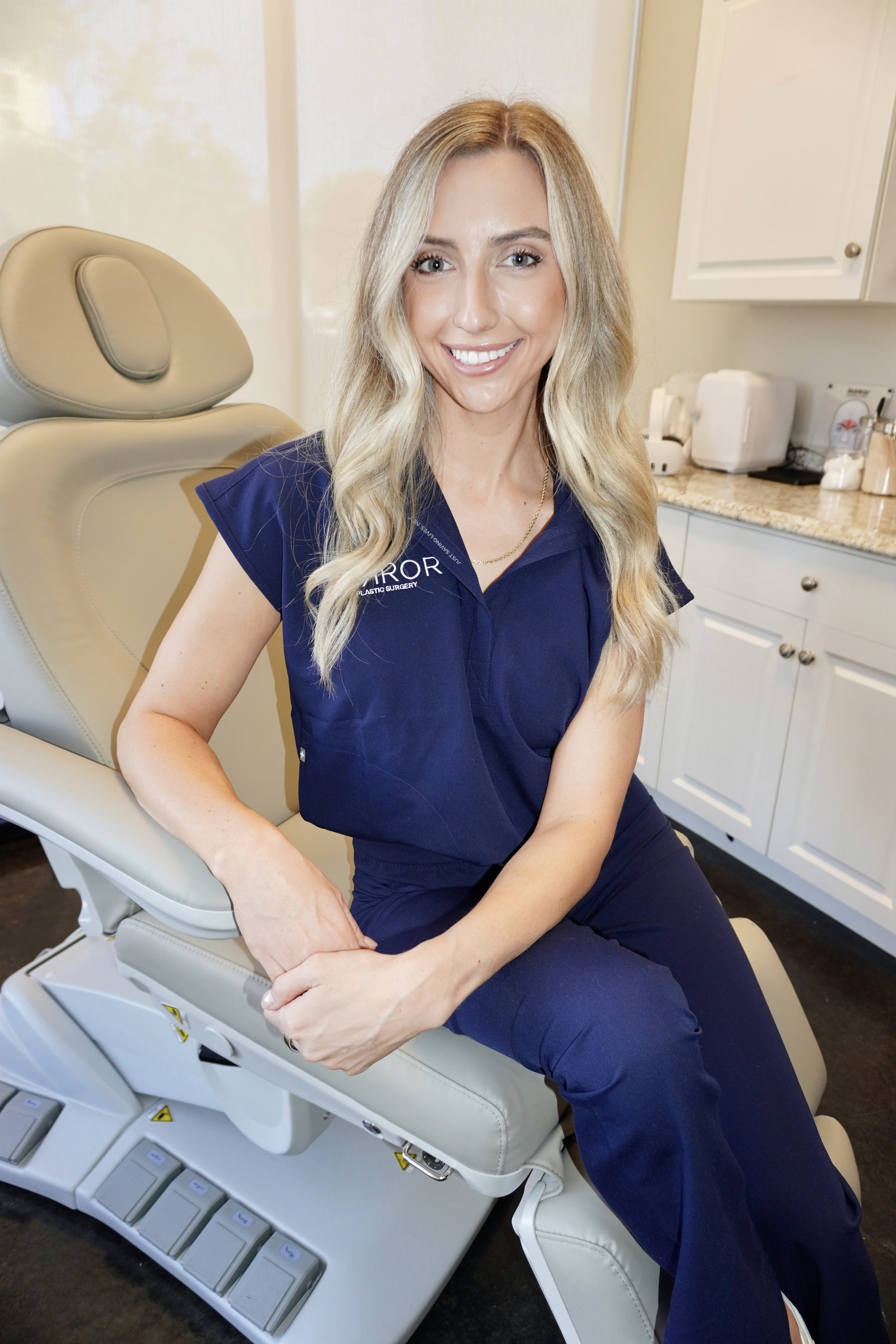
Dermatologists frequently recommend retinoids and SPF as the foundation of anti-aging care. Peptide therapy adds an emerging evidence-based option that can sit alongside professional treatments for deeper, systemic results, especially for patients seeking improvements in skin quality, inflammation, and cellular health that topicals alone cannot deliver.
Discuss peptide therapy in a consultation to see whether a personalized protocol belongs in your skin rejuvenation plan.
Step 6: Match Treatments to Your Specific Concerns
Once you understand the range of options, from topicals to procedures to systemic peptides, the next step is matching them to your unique concerns. The most effective skin rejuvenation strategies map specific treatments to specific issues rather than relying on a one-size-fits-all protocol. A personalized consultation is essential to determine the right combination for your skin type, goals, and downtime tolerance. Mirror Plastic Surgery dedicates up to an hour per consultation, prioritizing safety, function, and aesthetics in that order.
A general decision-support framework by concern:
- Fine Lines and Wrinkles: Retinoids, neuromodulators (Botox), laser resurfacing, peptide therapy (GHK-CU).
- Dullness and Uneven Tone: Vitamin C, chemical peels, laser resurfacing, microneedling.
- Sagging Skin: RF or ultrasound skin tightening, injectable fillers, and in more advanced cases, surgical options.
- Acne Scars: Microneedling (with or without RF), laser resurfacing, chemical peels.
- Overall Skin Health and Systemic Anti-Aging: Daily SPF, retinoids, and peptide therapy such as the Glow Stack.
Step 7: Choose a Qualified Provider and Set Realistic Expectations
Provider qualifications directly affect both safety and outcomes. Lasers, injectables, and energy-based devices carry real risks when undertrained practitioners perform them. The Swiss Federal Office of Public Health (FOPH) advises that laser and IPL treatments should be avoided in certain conditions, including pregnancy, Fitzpatrick skin types 4–6, active infections, and use of photosensitizing medications, and that patients should verify the practitioner holds the required certificate of competence.
Mirror Plastic Surgery’s team is led by a Harvard-educated physician, a Johns Hopkins-trained plastic surgeon, a fellowship-trained aesthetic surgeon at Manhattan Eye Ear & Throat Hospital (MEETH)/Lenox Hill Hospital, and a medical device innovation trainee at Stanford University, alongside a board-certified Family Nurse Practitioner. Patients in the St. Petersburg and Tampa Bay area, as well as those accessing care remotely across the United States, receive the same concierge standard of care.
Realistic expectations matter as much as technical skill. A 2026 study in Lasers in Medical Science found that RF microneedling for periorbital wrinkles required three sessions at 4-week intervals, with clinical downtime averaging just 1.5 days and 90.63% of patients satisfied at 24 weeks.1 Multiple sessions are standard for most energy-based treatments, and collagen remodeling continues for months after each session.
A combination of consistent sun protection, evidence-based topicals, professional treatments, and, where appropriate, medically supervised peptide therapy can yield significant, cumulative improvements over time.1 A personalized, layered strategy creates more durable change than any single intervention.
Request a comprehensive consultation at Mirror Plastic Surgery to receive a thorough, evidence-based assessment and a treatment plan tailored to your unique skin profile and long-term goals.
Frequently Asked Questions
What Does Skin Rejuvenation Do?
Skin rejuvenation restores a more youthful appearance by improving skin texture, tone, and firmness. It works by stimulating collagen and elastin production, accelerating cell turnover, and reducing fine lines, wrinkles, pigmentation, and dullness. Treatments range from daily topical actives like retinoids and vitamin C to professional procedures like laser resurfacing and microneedling, and extend to systemic approaches like medically supervised peptide therapy. The cumulative effect is a more radiant, resilient complexion.
What Is the Best Treatment for Skin Rejuvenation?
No single treatment works best for every person. The right approach depends on your specific concerns, skin type, Fitzpatrick phototype, and downtime tolerance. A combination strategy typically delivers the most comprehensive results. Daily SPF and retinoids form the non-negotiable foundation. Professional treatments such as laser resurfacing or RF microneedling address targeted concerns. Peptide therapy supports systemic, cellular-level change. A thorough consultation with a qualified provider is the essential first step to identifying the right combination for your individual profile.
Are Peptides Safe for Skin Rejuvenation?
Peptides like GHK-CU show significant promise for collagen production and skin health, but many are not FDA-regulated. The primary risk comes from obtaining them from unregulated sources without quality control or professional oversight. Mirror Plastic Surgery sources peptides from reputable providers with rigorous batch testing, conducts in-depth lab analysis before initiating any protocol, and provides ongoing concierge support throughout the patient’s journey. Medical supervision ensures appropriate dosing, quality assurance, and suitability for your individual health profile.
How Long Do Results Last?
Results vary significantly by treatment type. Neuromodulators typically last 3–4 months, hyaluronic acid dermal fillers 6–18 months, RF microneedling 12–18 months, and biostimulator fillers such as Sculptra up to 2 or more years.1 Chemical peel results vary by depth, as detailed in the comparison table in Step 4. Peptide therapy results can become noticeable within weeks, but a maintenance protocol is required to sustain benefits over time, similar to any ongoing health or fitness regimen.1
Do I Need a Consultation Before Treatment?
Yes. A thorough consultation is essential before any skin rejuvenation treatment. It allows the provider to assess your medical history, skin type, current medications, and aesthetic goals, and to identify any contraindications, particularly for laser and energy-based procedures. Mirror Plastic Surgery dedicates up to an hour to each consultation, following the same safety-first hierarchy described earlier. For peptide therapy, the consultation may also include comprehensive lab panels to ensure the protocol is appropriately tailored to your health profile.
Conclusion: Your Path to Radiant Skin
Skin rejuvenation functions as a journey rather than a single procedure. The most effective approach combines a consistent at-home foundation, including daily SPF, retinoids, vitamin C, and a barrier-supporting moisturizer, with professional treatments matched to specific concerns. For those seeking deeper systemic results, medically supervised peptide therapy can further enhance outcomes.
Mirror Plastic Surgery offers this kind of layered plan through a concierge, evidence-based approach to skin rejuvenation. Care is led by a board-certified Family Nurse Practitioner and a Harvard-educated, Johns Hopkins-trained plastic surgeon, serving patients in St. Petersburg, Tampa Bay, and remotely across the United States. Every protocol centers on safety, clinical evidence, and your individual goals rather than a generic menu.
Arrange your personalized skin rejuvenation consultation at Mirror Plastic Surgery today.
Mirror Plastic Surgery
780 4th Ave S, St. Petersburg, FL 33701
Phone: 727-361-6515
Email: [email protected]
Instagram: @mirrorplasticsurgery | @dr.akashplasticsurgery | @perfectlyplastics
Disclaimer: Results may vary from person to person. Editorial content, before and after images, and patient testimonials do not constitute a guarantee of specific results.
Disclaimer: Peptide therapy is intended for wellness and optimization purposes and is not prescribed to diagnose, treat, cure, or prevent disease unless specifically stated. Many peptides are not FDA-approved and may be used off-label. Some have limited long-term safety data, with a potential for unknown risks, complications, or desensitization with prolonged use.
1 Results may vary from person to person. Editorial content, before and after images, and patient testimonials do not constitute a guarantee of specific results.
Peptide therapy is intended for wellness and optimization purposes and is not prescribed to diagnose, treat, cure, or prevent disease unless specifically stated. Many peptides are not FDA-approved and may be used off-label. Some have limited long-term safety data, with a potential for unknown risks, complications, or desensitization with prolonged use.