
Written by: Dr. Akash Chandawarkar, Board Certified Plastic Surgeon, Mirror Plastic Surgery | Last updated: September 9, 2026
Key Takeaways
- Concierge plastic surgery focuses on extended consultations, limited daily surgical volume, and direct surgeon involvement throughout the patient journey.
- Board certification by the American Board of Plastic Surgery (ABPS) is the only recognized credential that confirms accredited plastic and reconstructive surgery training.
- You can verify credentials in minutes by confirming ABPS certification, cross-checking at certificationmatters.org, and reviewing facility accreditation through AAAASF, AAAHC, or The Joint Commission.
- Genuine concierge practices provide extended consultations, 24/7 direct surgeon access, and recovery plans that consider overall health alongside aesthetic goals.
- Explore a concierge-level experience with Dr. Akash Chandawarkar by scheduling a consultation at Mirror Plastic Surgery.
What Concierge Care Really Means In Plastic Surgery
Concierge plastic surgery is a practice model centered on individualized attention, extended consultation time, direct surgeon access, and comprehensive follow-up. Boutique and concierge practices prioritize time, direct surgeon involvement, and individualized planning rather than high-volume throughput. Many high-volume clinics perform five to ten surgeries daily, which structurally limits personalized care.
Concierge medicine appointments often run 30–60 minutes, compared to traditional appointments that last 12–18 minutes on average. This structural difference determines whether a surgeon can genuinely understand a patient’s anatomy, motivations, and long-term goals. This extended time is rarely available in a standard 15-minute visit, which is insufficient for thorough evaluation of complex health needs.
True concierge care reflects a philosophy of patient-centered safety and long-term partnership. The same surgeon who conducts the consultation also performs the procedure and oversees recovery. The concierge model features fewer patients per day, longer visits, and direct access to the physician between visits.
| Feature | Concierge Practice | High-Volume Practice |
|---|---|---|
| Consultation length | 45–60 minutes | 10–15 minutes |
| Daily surgical volume | 1–2 surgeries | 5–10+ surgeries |
| Post-op access | Direct surgeon 24/7 | Rotating staff or nurse line |
| Board certification | ABPS verified | May be vague or non-ABMS |
Why Board Certification Is Non-Negotiable
The American Board of Plastic Surgery (ABPS) is the only plastic surgery board recognized by the American Board of Medical Specialties (ABMS), the umbrella organization for recognized specialty certifications in American medicine. ABPS certification requires graduation from medical school, completion of an accredited six-plus-year plastic surgery residency, and passing comprehensive written and oral examinations.
The phrase “board certified” is not protected. The American Society of Plastic Surgeons notes that no ABMS-recognized certifying board includes cosmetic surgery in its name, and any licensed physician may legally use the title “cosmetic surgeon” without comparable specialty training. The American Board of Cosmetic Surgery (ABCS) requires only one year of training, no accredited residency, and a single weekend exam, which differs fundamentally from ABPS standards.
“Board eligible” is a real but time-limited status that means a surgeon has completed residency but not yet passed certifying exams. A surgeon who remains “board eligible” for many years usually has not passed those exams. Ask directly: “Are you certified by the American Board of Plastic Surgery?”
Additional credentials worth noting include membership in the American Society of Plastic Surgeons (ASPS). This organization requires all members to be ABPS board certified, trained in accredited programs, practicing in accredited facilities, and following strict safety and ethics standards.
How To Verify A Surgeon’s Credentials In Minutes
Patients can verify credentials quickly with a simple, stepwise process. Board certification remains the gold standard for identifying a qualified, rigorously trained aesthetic surgeon, and reputable concierge practices share their credentials transparently.
- Visit abplasticsurgery.org and use the “Verify Certification” tool to search the surgeon’s name.
- Cross-check at certificationmatters.org, the official ABMS physician certification database. If a physician claims ABPS certification but does not appear there, that physician is not certified, regardless of website claims.
- Check state medical board records for disciplinary actions through the Federation of State Medical Boards or your state medical board website.
- Confirm facility accreditation by AAAASF, AAAHC, or The Joint Commission, which are associated with serious complication rates below 0.5% and mortality rates below 1 in 57,000.1
- Verify hospital privileges, since hospital credentialing involves independent review of a physician’s training, outcomes, and competence.
Patients can also confirm ASPS membership at plasticsurgery.org as a secondary check of ABPS certification.
Hallmarks Of A True Concierge Plastic Surgery Practice
The structure of a practice reveals whether concierge care reflects a true philosophy or a marketing label. The following characteristics define genuine personalized plastic surgery care.
- Extended Consultations: Forty-five to sixty minutes with the surgeon, dedicated to thorough physical assessment and in-depth discussion of goals.
- Limited Daily Surgical Volume: One to two surgeries per day so the entire team can focus on each patient before, during, and after the procedure.
- Direct Surgeon Involvement At Every Stage: The same physician evaluates, plans, performs, and follows up on care, rather than handing off to a rotating team.
- Comprehensive Assessment: Providers review hormonal status, lab results, sleep quality, stress load, and dietary patterns alongside surface-level concerns to inform treatment plans.
- Safety-First Philosophy: Practices prioritize patient well-being over procedural speed and maintain clear protocols for complications and emergencies.
- 24/7 Direct Surgeon Access: Patients receive same-day or next-day access and round-the-clock availability for post-operative concerns, with the surgeon responding directly.
- Personalized Recovery Plans: Plans are tailored to individual anatomy, goals, and health status, with structured coordination and milestone check-ins.
Questions To Ask During Your Consultation
A consultation functions as a job interview in which the patient evaluates the surgeon. Surgeons who welcome thoughtful questions usually respect prepared patients. Surgeons who bristle at questions reveal their comfort level with transparency. Bring this list to every consultation.
- “How many surgeries do you perform per day?” High-volume practices may perform five to ten surgeries daily, which can reduce the personalized attention each patient receives.
- “Will you personally perform my procedure?” Patients should receive a clear, direct answer about who will operate before they feel ready to schedule.
- “What does your post-operative care include?” Concierge care includes direct surgeon access and structured follow-up that extends beyond the acute recovery phase.
- “Can you explain your approach to safety and complications?” Honest surgeons discuss complications fluently. The statement “complications basically do not happen in my hands” signals unsafe overconfidence.
- “Will I have direct access to you after my procedure?” The answer should specify the surgeon as the point of contact, rather than a nurse triage line or generic answering service.
- “How do you tailor your approach to each patient’s anatomy and goals?” Skilled surgeons speak with specificity and explain both what they recommend and what they would avoid in a particular case.
- “Can you show me before-and-after photos of similar cases?” Ask to see patients with similar body type, anatomy, and treatment areas, since this is more useful than a broad highlight reel.
Schedule a consultation with Ellie to experience a visit structured around your anatomy, goals, and timeline.
Red Flags And Green Flags When Evaluating Practices
Specific signals help distinguish genuine concierge plastic surgery from high-volume, transactional practices at a glance.
Red Flags:
- Brief consultations that do not allow time to review history and answer questions
- Pressure to book the same day or time-limited discounts
- “Board certified” listed without naming the specific board
- High daily surgical volume with rotating staff
- Inability to show relevant before-and-after photos
- No clear post-operative plan or after-hours contact
- A patient coordinator answering medical questions instead of the operating surgeon
- Discouraging second opinions
Green Flags:
- Ample, unhurried consultation time with the operating surgeon
- Thorough explanations of risks, alternatives, and realistic outcomes
- Transparent, verifiable ABPS credentials and an accredited facility
- Personalized attention to individual anatomy and motivations
- Direct, named after-hours access to the surgeon
- A comprehensive, itemized quote covering surgeon fees, anesthesia, facility charges, and ancillary expenses
- Active encouragement of second opinions
The Role Of Personalized Recovery And Follow-Up
Concierge care continues long after the procedure itself. A structured concierge recovery program includes pre-op preparation, surgical readiness support, nutrition counseling, stress and anxiety support, caretaker coordination, and 24/7 access for questions between visits.
Long-term follow-up, advanced skincare guidance, and regular check-ins distinguish practices that invest in long-term wellness from those that focus only on the acute recovery phase. In a true concierge model, recovery planning begins before the procedure and continues well beyond initial healing.
Personalized recovery can also include medically supervised adjunct therapies, such as peptide protocols designed to reduce inflammation and promote healing, as part of a comprehensive post-operative plan. At Mirror Plastic Surgery, these protocols are tailored to each patient’s labs and physiology and supervised throughout by Dr. Akash Chandawarkar.
How To Compare Practices Effectively
Visiting multiple practices and comparing experiences offers the clearest view of genuine concierge care. Use the following checklist as a consistent evaluation framework across every practice.
Concierge Care Checklist
- Verify ABPS certification at abplasticsurgery.org
- Confirm facility accreditation (AAAASF, AAAHC, or Joint Commission)
- Ask about daily surgical volume
- Request a consultation of at least 30 minutes with the operating surgeon
- Confirm direct 24/7 surgeon access post-op
- Ask for relevant before-and-after photos of comparable anatomy
- Request an itemized written quote
- Trust your instincts and avoid practices that rely on pressure tactics
Consulting with at least two to three board-certified surgeons provides useful comparison points and helps identify the surgeon whose aesthetic philosophy best matches the patient’s goals. The right choice feels substantively different from a sales appointment, and that difference deserves attention.
Why Mirror Plastic Surgery Sets The Concierge Standard
Mirror Plastic Surgery in St. Petersburg, Florida, follows a concierge medicine philosophy that structurally differs from high-volume competitors. The practice limits itself to one to two surgeries per day, dedicates up to an hour to each consultation, and provides patients with 24/7 direct access to Dr. Akash Chandawarkar instead of routing calls through a nurse line or answering service.
Dr. Chandawarkar’s credentials reflect the standards described in this guide. He is board certified by the American Board of Plastic Surgery, completed a seven-year integrated plastic and reconstructive surgery residency at Johns Hopkins University, graduated with Honors from Harvard Medical School through the Harvard-MIT Division of Health Sciences and Technology, and completed the Stanford University Biodesign Innovation Fellowship. He also holds specialized fellowship training in aesthetic surgery at the Manhattan Eye Ear & Throat Hospital (MEETH)/Lenox Hill Hospital.
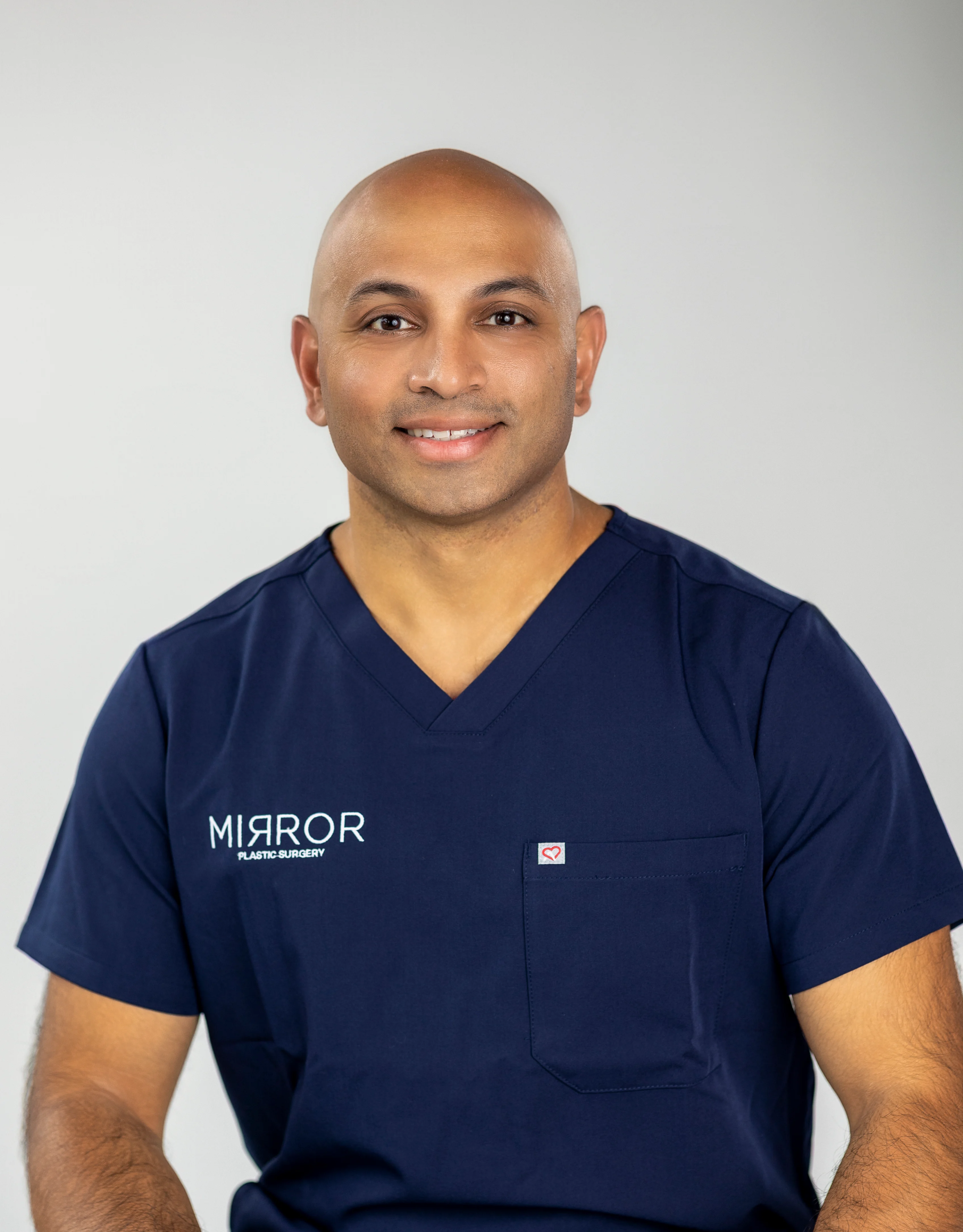
The practice follows a guiding principle of safety first, function second, and aesthetics third. Every surgical and non-surgical treatment is planned and executed with the patient’s well-being, anatomy, and motivations as central priorities. Personalized, medically supervised peptide therapies are available as part of Mirror Plastic Surgery’s concierge wellness approach, with each protocol designed around individual lab results and physiology.
Start your journey with Ellie and experience the Mirror Plastic Surgery concierge standard firsthand.
Frequently Asked Questions
What Is The Difference Between A Board-Certified Plastic Surgeon And A “Cosmetic Surgeon”?
The American Board of Plastic Surgery (ABPS) is the only plastic surgery board recognized by the American Board of Medical Specialties (ABMS). ABPS certification requires a minimum of six years of surgical training after medical school, completion of an accredited plastic surgery residency, and passage of comprehensive written and oral examinations. “Cosmetic surgeon” is not a protected title, and any licensed physician can use it regardless of specialty training or residency background. A dermatologist, OB/GYN, or family medicine physician can legally market themselves as a cosmetic surgeon without completing a plastic surgery residency. The American Board of Cosmetic Surgery (ABCS), which some providers cite as their credential, is not recognized by the ABMS and has substantially different and less rigorous training requirements than the ABPS. To verify ABPS certification independently, visit abplasticsurgery.org and use the “Verify Certification” tool, then cross-check at certificationmatters.org.
How Long Should A Plastic Surgery Consultation Last?
In a high-volume practice, consultations typically run 10–15 minutes, which barely allows time to review a patient’s medical history, conduct a physical assessment, and discuss goals, risks, and alternatives. In a genuine concierge plastic surgery practice, consultations often run 45–60 minutes and function as a comprehensive, collaborative dialogue. This extended time allows the surgeon to evaluate anatomy in depth, understand the patient’s motivations, explain realistic outcomes, and develop a personalized surgical plan. When a practice cannot commit to at least 30 minutes of dedicated consultation time with the operating surgeon, that limitation signals the level of individualized care the patient can expect throughout the surgical journey.
What Does 24/7 Access To A Surgeon Actually Mean?
In a true concierge plastic surgery practice, 24/7 access means direct contact with the surgeon by phone or text for post-operative concerns. This access differs from an answering service, a nurse triage line, or a general emergency room referral. Ask specifically, “Who answers after-hours calls, and what is the direct contact method?” A practice that routes after-hours concerns through a call center or sends patients to the ER for non-emergency questions does not provide concierge-level post-operative care. At Mirror Plastic Surgery, patients have direct text access to Dr. Akash Chandawarkar throughout recovery, with the same physician who performed the procedure available to assess concerns and adjust care plans in real time.
Are Concierge Plastic Surgery Practices More Expensive?
Concierge plastic surgery reflects a lower-volume, higher-touch model. Because the practice limits daily surgical volume and invests significantly more time per patient, the operational structure differs from a high-volume clinic. The value includes extended consultation time with the operating surgeon, direct 24/7 post-operative access, personalized recovery planning, and the assurance that the surgeon’s attention remains focused on your case rather than divided across many procedures in a single day. Every patient at Mirror Plastic Surgery receives a personalized quote during their consultation based on individual anatomy and goals. Always request an itemized written quote from any practice you evaluate so you understand exactly what appears in the total cost.
Conclusion: Your Path To Personalized Care
Finding a plastic surgeon who offers genuine personalized concierge care requires looking beyond marketing claims. The process involves understanding what concierge care structurally entails, verifying ABPS board certification through independent tools, asking specific questions about surgical volume and post-operative access, and recognizing the red flags that signal a high-volume, transactional practice.
As noted earlier, board certification is the gold standard for determining a rigorously trained aesthetic surgeon, yet it represents the floor rather than the ceiling. The ceiling is a practice that limits daily surgical volume, spends meaningful time understanding your goals, and remains directly accessible throughout your recovery. Mirror Plastic Surgery was built to meet that standard.
Begin your personalized consultation with Ellie to meet with Dr. Akash Chandawarkar at Mirror Plastic Surgery in St. Petersburg, Florida.
This article is for educational purposes and does not replace professional medical advice. Always consult a board-certified plastic surgeon to discuss your individual needs.
1 Results may vary from person to person. Editorial content, before and after images, and patient testimonials do not constitute a guarantee of specific results.
Peptide therapy is intended for wellness and optimization purposes and is not prescribed to diagnose, treat, cure, or prevent disease unless specifically stated. Many peptides are not FDA-approved and may be used off-label. Some have limited long-term safety data, with a potential for unknown risks, complications, or desensitization with prolonged use.