
Written by: Ellie Pranckevicius, FNP-BC, Aesthetic Nurse Practitioner & Aesthetic Injector | Facial Restoration & Regenerative Injectable Specialist, Mirror Plastic Surgery | Last updated: September 7, 2026
Key Takeaways
- Precision medicine replaces trial-and-error care by using DNA, biomarkers, and lifestyle data to match treatments to each person’s biology.
- The process follows three steps: collecting genomic and clinical data, analyzing it with advanced computing, and creating a targeted prevention or treatment plan.
- Applications now extend beyond oncology and rare diseases into pharmacogenomics, wellness, and anti-aging therapies such as personalized peptide protocols.
- Benefits include more effective treatments, fewer adverse reactions, earlier disease detection, and greater patient involvement through deeper biological insight.
- Precision medicine principles now guide wellness and aesthetic care, including peptide therapy programs that rely on individual lab results and health goals.
What Is Precision Medicine? A Clear Definition
Precision medicine customizes disease prevention, diagnosis, and treatment based on an individual’s genes, environment, and lifestyle. It aims to deliver the right intervention to the right patient at the right time and accounts for biological differences between people while respecting ethical and legal safeguards.
This definition reflects language adopted at the highest levels of global health governance. In May 2026, the Seventy-ninth World Health Assembly endorsed resolution WHA79.8, formally defining precision medicine as the use of clinical, molecular, genomic, and other health data to inform prevention, diagnosis, and treatment. The resolution gave global health leaders a clear mandate to act because, as WHO’s Director of Science for Health stated, precision medicine is already transforming lives across the world.
The National Human Genome Research Institute and the National Institutes of Health describe precision medicine as a move away from treatments designed for the statistically average person. Instead, clinicians use detailed biological data to predict which treatments will be most effective and safest for each individual.
How Precision Medicine Works In Practice
Conventional medicine often resembles an off-the-rack suit that fits most people well enough. Precision medicine functions more like a tailored suit measured and cut for your exact body. The process follows three core steps.
- Data Collection: A provider gathers detailed information, including genomic sequencing (reading your DNA), laboratory tests (blood work and biomarkers), and a thorough review of medical history, lifestyle, and environment.
- Analysis: Advanced computing and artificial intelligence analyze this data to identify specific genetic mutations, biomarkers, or risk factors that influence how your body functions and responds to treatments. Researchers in the field assert that “there is no precision medicine without AI,” because analyzing multidimensional datasets requires substantial computing power and self-learning algorithms.
- Targeted Plan: Based on this analysis, a provider develops a personalized prevention, diagnosis, or treatment plan designed for the patient’s specific biological profile.
Biomarkers sit at the center of this process. These measurable biological signals, such as genes, proteins, or metabolites, guide treatment decisions. When a clinician identifies a biomarker, they can select a therapy designed to interact with that specific biological target instead of relying on a broad-spectrum approach.
Where Precision Medicine Shows Up In Care
Oncology: The Pioneer. Precision medicine first proved its power in cancer care. HER2-positive breast cancer is a landmark example. Doctors test a tumor for the HER2 genetic marker and prescribe trastuzumab (Herceptin), a therapy engineered to attack that specific marker. The pivotal trastuzumab trial reported a 50% objective response rate in HER2-positive breast cancer, establishing the paradigm of co-developing a drug with its predictive biomarker assay. Today, testing rates for established predictive biomarkers in non-small cell lung cancer approach 95%, showing how deeply precision oncology has entered clinical practice.
Pharmacogenomics. Pharmacogenomics studies how a person’s genes influence their response to medications. Genetic testing can predict whether a standard dose of a blood thinner, antidepressant, or pain medication will be effective, ineffective, or likely to cause harmful side effects before the first pill is taken.
Rare Diseases. The average time to an accurate rare-disease diagnosis is 5–8 years and involves 8 or more specialists. Genome sequencing can identify the root genetic cause of rare conditions and end years of diagnostic odysseys. Over 250 new monogenic disorders are discovered per year as genomic testing becomes more affordable.
Wellness And Anti-Aging: The New Frontier. Precision medicine now extends into everyday health optimization. Clinicians use biomarkers and comprehensive lab data to tailor wellness protocols, including peptide therapies, as a direct application of precision principles outside the oncology clinic. At Mirror Plastic Surgery, individual lab results and health goals drive every peptide protocol decision.
Schedule A Precision Peptide Consultation With Ellie to explore how a data-driven, personalized peptide protocol could support your specific health goals.
The Benefits Of Precision Medicine
Precision medicine offers several clear advantages over conventional, one-size-fits-all approaches.
- More Effective Treatments: Clinicians choose therapies based on what is most likely to work for your specific biology, which reduces frustrating trial-and-error care.
- Fewer Adverse Reactions: By understanding genetic predispositions through pharmacogenomics, providers can avoid drugs that are more likely to cause harmful side effects in a given individual.
- Earlier Detection And Prevention: Genetic testing can reveal predispositions to certain diseases and support proactive screening and lifestyle changes before symptoms appear.
- Empowered Patients: Deeper insight into your own biology supports more informed conversations and shared decisions with your healthcare provider.
Challenges And Ethical Considerations
Precision medicine also brings real limitations and ethical questions that deserve clear discussion.
- Cost And Access: Cost, reimbursement uncertainty, and operational complexity remain major barriers to wider precision medicine adoption. Genetic testing and targeted therapies can be expensive, and insurance coverage is inconsistent. Oncology tests are more often reimbursed, while broader applications like pharmacogenomic testing outside oncology face weaker payment pathways.
- Data Privacy: Genomic information is inherently identifiable and biologically persistent, which makes privacy, data ownership, informed consent, and equitable access central ethical concerns. The Genetic Information Nondiscrimination Act (GINA) of 2008 offers some federal protection against discrimination in health insurance and employment, though these protections do not extend to life, disability, or long-term care insurance.
- Equity And Representation: Public repositories like TCGA predominantly contain data from individuals of European ancestry, which can limit model generalizability and perpetuate health disparities. The WHO resolution mentioned earlier highlights that many populations, particularly in low- and middle-income countries, remain underrepresented in data and research.
- Psychological Impact: Learning about genetic risks for diseases can cause anxiety, and not all findings are immediately actionable.
Researchers, policymakers, and health systems are actively addressing these issues. The WHO resolution mentioned earlier commits Member States to develop national policies, infrastructure, and governance frameworks that support safe, ethical, and equitable integration of precision medicine into health systems aligned with universal health coverage.
Precision Medicine Vs. Personalized Medicine: Key Distinctions
Precision medicine and personalized medicine often appear as interchangeable terms, yet they describe related but distinct concepts.
| Aspect | Precision Medicine | Personalized Medicine |
|---|---|---|
| Primary Focus | Grouping patients by shared biology, such as a specific genetic mutation, to target treatments with precision | Tailoring care to the whole individual, including preferences, values, and lifestyle |
| Data Emphasis | Molecular data, biomarkers, genomics, and advanced technologies | Genetics combined with environment, lifestyle, and personal context |
| Approach | Data-driven and technology-centric, often identifies patient subgroups | Broader concept that uses data within the context of the individual’s life and choices |
Precision medicine aims to identify groups of people who share certain biological characteristics and may respond similarly to a particular therapy, combining molecular technologies and biomarkers with data science. Truly personalized medicine would mean selecting the best treatment for each individual patient, including treatment selection, dose individualization, response-adaptive treatment changes, and integration of multimodal data to predict individual benefit and risk. In practice, precision medicine provides the data, and personalized medicine uses that data within the full context of a person’s life.
The Future Of Precision Medicine
Several converging technologies are rapidly expanding the reach of precision medicine.
- AI And Machine Learning: AI is becoming an indispensable partner in unraveling genomic complexity, improving variant detection, variant interpretation, polygenic risk prediction, disease subtyping, biomarker discovery, and treatment-response modeling. Future directions include interpretable models, collaborative learning, and open science practices.
- Liquid Biopsies: Liquid biopsy analyzes circulating molecular components such as cell-free DNA in bodily fluids and enables a continuum of precision clinical interventions from early detection to disease surveillance. Simple blood tests increasingly replace more invasive tissue biopsies for cancer monitoring.
- Gene Editing (CRISPR): AI is transforming gene therapy from an empirical, iterative process into a predictive, data-driven, and increasingly intelligent therapeutic development approach, with CRISPR-based therapies moving from experimental genome engineering toward routine clinical application.
- Expansion To Chronic Disease And Wellness: The global oncology precision medicine market alone is projected to grow from USD 82.4 billion in 2026 to USD 242.5 billion by 2036. The same principles now guide care for metabolic health, cardiovascular disease, and healthy aging.
Precision Medicine In Action At Mirror Plastic Surgery
Precision medicine now shapes wellness and aesthetic care at Mirror Plastic Surgery. The practice serves the St. Petersburg and Tampa Bay area of Florida and applies a structured precision framework to its peptide therapy program.
Nurse Practitioner Ellie Pranckevicius, FNP-BC, leads all peptide therapy consultations. She is a board-certified Family Nurse Practitioner with four years of experience in the Neuroscience ICU at Tampa General Hospital, esthetician training, and advanced nursing credentials from the University of South Florida. Ellie combines an understanding of aesthetic goals with the clinical science required to pursue those goals safely.
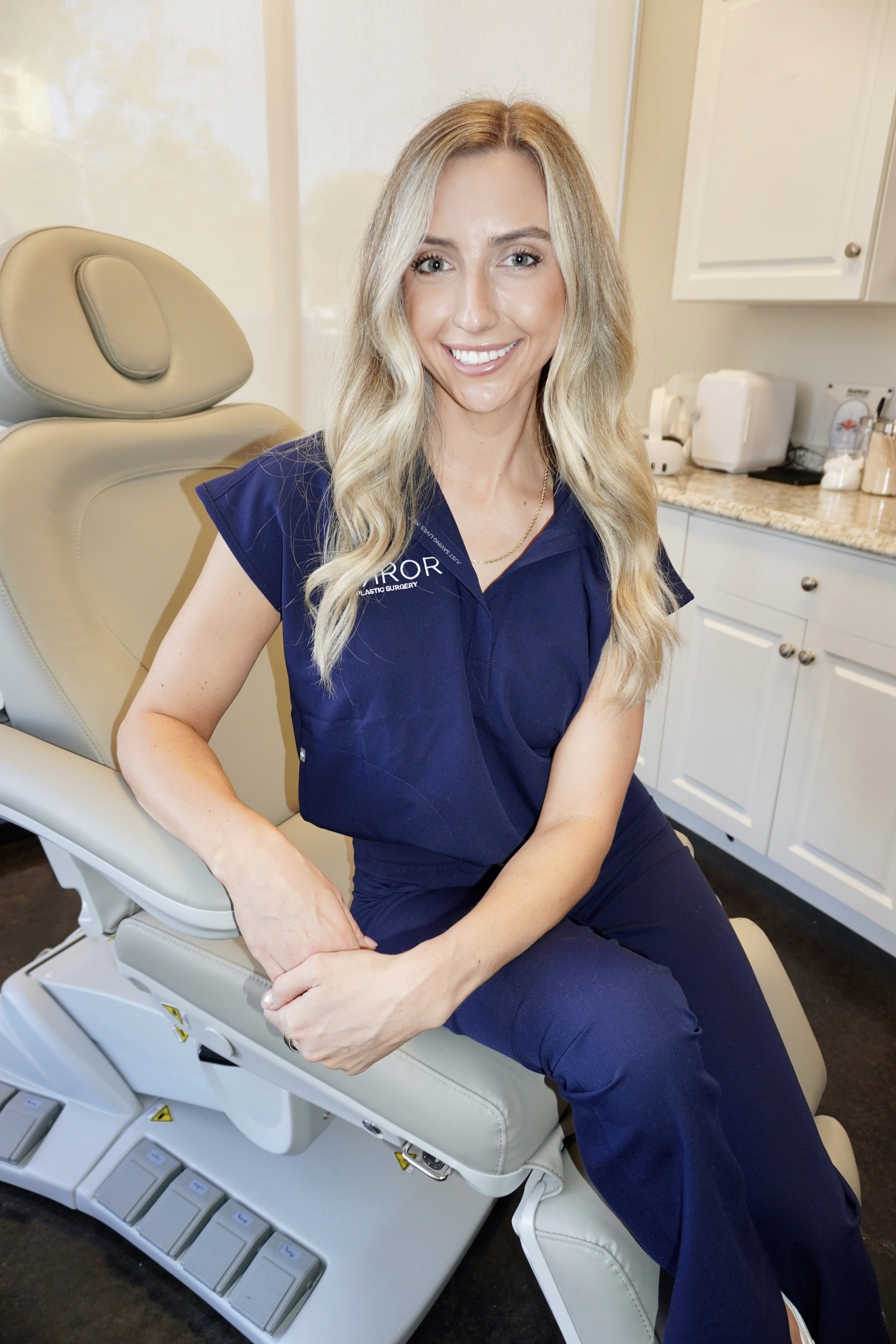
Every patient begins with a comprehensive 30–60 minute consultation. For weight management, inflammation, or hormonal concerns, Ellie reviews detailed lab panels, including thyroid, liver, kidney, diabetes markers, and hormone profiles, before designing any protocol. Based on this data, she builds a personalized peptide stack that targets the specific root causes identified in each patient’s biology.
The protocol is derived from individual lab results and health goals, not a generic menu. For example, systemic inflammation may be addressed with BPC-157 or TB500, collagen decline with GHK-CU, metabolic health with GLP-3R compounding, and cellular energy with NAD.
This approach contrasts sharply with purchasing peptides online without medical supervision, which often lacks third-party quality testing, dosing guidance, and screening for pre-existing conditions or medication interactions. Mirror Plastic Surgery sources peptides from reputable providers with rigorous batch testing and offers ongoing concierge support, including direct access to Ellie via text or telemedicine, throughout the patient’s journey. For patients who want a deeper comparison of care models, Mirror’s article on Personalized Concierge Peptide Therapy vs. Medical Spas explores the distinction further.
The entire process, from consultation to prescription and shipping, can take place in person in Tampa or remotely across the United States, including Hawaii and Alaska.
Talk With Ellie About A Precision Peptide Plan to see whether a precision-based peptide protocol aligns with your unique biology and health goals.
Conclusion: Your Role In The Future Of Medicine
Precision medicine represents a shift from reactive, one-size-fits-all care to proactive, data-driven, and individualized healthcare. It offers more effective treatments, fewer side effects, earlier disease detection, and a deeper understanding of the body’s own biology. Learning these principles helps you ask better questions and seek providers who look beyond symptoms to the underlying biology driving them.
The future of healthcare is personal. If you are in the Tampa Bay area or anywhere in the United States and feel curious about how a precision-based approach could support your wellness goals, book your precision medicine consultation with Ellie at Mirror Plastic Surgery to learn more.
Contact Information For Mirror Plastic Surgery
Mirror Plastic Surgery is located at 780 4th Ave S, St. Petersburg, FL 33701. Reach the practice by phone at 727-361-6515 or by email at [email protected]. Follow the team on Instagram at @mirrorplasticsurgery, @dr.akashplasticsurgery, and @perfectlyplastics.
Disclaimer: Results may vary from person to person. Editorial content, before and after images, and patient testimonials do not constitute a guarantee of specific results.
Disclaimer: Peptide therapy is intended for wellness and optimization purposes and is not prescribed to diagnose, treat, cure, or prevent disease unless specifically stated. Many peptides are not FDA-approved and may be used off-label. Some have limited long-term safety data, with a potential for unknown risks, complications, or desensitization with prolonged use.
Frequently Asked Questions
Are The Peptides Offered At Mirror Plastic Surgery FDA-Approved?
Many peptides are not FDA-regulated, yet they are used extensively around the world, with clinical research spanning over a decade. The primary risk associated with peptides often comes from obtaining them from unregulated sources without medical supervision. At Mirror Plastic Surgery, every patient undergoes a comprehensive consultation with Ellie Pranckevicius that may include detailed lab panels. Peptides are sourced exclusively from providers with known quality standards and rigorous batch testing. Medical support is provided before, during, and after therapy to ensure that each patient’s protocol aligns with their health profile and current medications.
How Is Precision Medicine Different From What Most Doctors Do Today?
Most conventional medicine is designed around population averages, and a drug is approved because it works for a statistically significant portion of a trial population. Precision medicine inverts this logic by starting with the individual. A precision approach collects detailed biological data first, such as genomic information, biomarkers, lab panels, and lifestyle factors, and uses that data to select the intervention most likely to work for that specific person instead of prescribing a standard treatment and adjusting based on response. The result is fewer side effects, less trial-and-error, and treatments that address root causes rather than symptoms. This philosophy guides Mirror Plastic Surgery’s peptide therapy program, where no protocol is created without first understanding the individual’s unique physiology.
What Conditions Can Peptide Therapy Address Under A Precision Medicine Framework?
Peptide therapy has a broad range of potential applications. Under a precision medicine framework, where protocols are built from individual lab results and health goals, peptides can support systemic inflammation and autoimmune conditions, weight management and metabolic health, post-surgical and injury recovery, collagen and elastin decline associated with aging, cellular energy and mitochondrial function, anxiety and mood support, sexual wellness, and fertility. Mirror Plastic Surgery offers peptide options such as BPC-157 and TB500 for inflammation and tissue repair, GHK-CU for skin and collagen health, NAD for energy and anti-aging, GLP-3R compounding for metabolic support, Selank for anxiety, and Sermorelin/Ipamorelin for natural growth hormone stimulation, among others. The specific peptide or combination selected depends entirely on each patient’s lab results, medical history, and goals.
What Are The Ethical Concerns Around Precision Medicine, And How Does Mirror Plastic Surgery Address Them?
The primary ethical concerns in precision medicine involve data privacy, equitable access, and the potential psychological impact of learning about genetic or biomarker-based risk factors. Genetic and biological data is deeply personal, and robust safeguards help prevent misuse. At Mirror Plastic Surgery, patient data is handled with strict confidentiality, and the consultation process is built on transparency and informed consent. Ellie Pranckevicius is known for her educational approach. She explains the physiology behind every recommendation in plain language, discloses risks honestly, and tells patients when a service or product is not yet necessary for them. This commitment to honesty over revenue forms a core part of the practice’s concierge philosophy.
How Long Does It Take To See Results From A Personalized Peptide Protocol?
The timeline for results varies significantly from person to person and depends on the specific peptides used, the condition being addressed, individual physiology, lifestyle factors, and adherence to the protocol. Some patients report initial changes within the first hours or week of use, particularly for concerns like inflammation or energy.1 Others may require several weeks to notice meaningful shifts.1 Because results are highly individual, Mirror Plastic Surgery emphasizes ongoing monitoring and direct communication with Ellie throughout the process. Patients have 24/7 access to Ellie via text for questions, adjustments, and support, which allows protocols to be refined as the body responds over time. Sustained benefits typically require a maintenance protocol, as discontinuing peptide therapy generally results in a gradual return to baseline, similar to stopping any consistent health regimen.1
1 Results may vary from person to person. Editorial content, before and after images, and patient testimonials do not constitute a guarantee of specific results.
Peptide therapy is intended for wellness and optimization purposes and is not prescribed to diagnose, treat, cure, or prevent disease unless specifically stated. Many peptides are not FDA-approved and may be used off-label. Some have limited long-term safety data, with a potential for unknown risks, complications, or desensitization with prolonged use.