
Written by: Dr. Akash Chandawarkar, Board Certified Plastic Surgeon, Mirror Plastic Surgery | Last updated: September 9, 2026
Surgical Vs. Non-Surgical Body Contouring: Key Differences
Body contouring reshapes specific areas of the body by removing fat, tightening skin, or both. Surgical options such as liposuction, tummy tuck (abdominoplasty), body lift, and arm lift involve incisions, anesthesia, and a defined recovery period. These procedures create more dramatic and immediate contour changes.1 Non-surgical options such as cryolipolysis, injectable fat reduction, radiofrequency skin tightening, and biostimulatory fillers use external devices or injections, require little to no downtime, and produce more modest changes over several sessions.1
The ASPS describes nonsurgical fat reduction candidates as adults near their ideal weight with pinchable, localized fat and good skin elasticity. Surgery generally suits patients who need more dramatic contouring or skin removal. The FDA notes that non-surgical body contouring technologies work externally and do not treat obesity or cause significant weight loss.
| Factor | Surgical Body Contouring | Non-Surgical Body Contouring |
|---|---|---|
| Invasiveness | Incisions and anesthesia required | No incisions, no anesthesia |
| Downtime | 1–6 weeks depending on procedure | Minimal to none, return to normal activities immediately |
| Results | Dramatic; MRI imaging shows ~45% fat-layer reduction with liposuction1 | Gradual; ~20–25% fat reduction per cryolipolysis session1 |
| Longevity | 10+ years with stable weight1 | 6 months to several years, maintenance sessions may be needed |
A thorough consultation with a board-certified plastic surgeon offers the clearest guidance on which approach fits your anatomy, lifestyle, and goals.
Schedule a personalized body contouring consultation with Dr. Akash Chandawarkar at Mirror Plastic Surgery in St. Petersburg.
Common Body Contouring Procedures At A Glance
Liposuction
Liposuction is the most performed cosmetic surgery in the United States, accounting for 45% of all body-contouring cases according to the 2024 ASPS Plastic Surgery Statistics Report. The procedure physically removes fat deposits through small incisions using a cannula, creating immediate, noticeable contour changes in a single session.1 Liposuction functions as a body-shaping procedure for patients who are at or near their goal weight with localized fat that does not respond to diet and exercise; it is not a method for weight loss.
Tummy Tuck (Abdominoplasty)
A tummy tuck removes excess skin and fat from the abdomen while tightening the underlying abdominal muscles, which non-surgical treatments cannot replicate. This procedure particularly benefits patients after pregnancy or significant weight loss who have loose or overhanging skin that liposuction alone cannot address. Initial recovery typically requires around 3 weeks, and full healing can take up to 6 months.
CoolSculpting (Cryolipolysis)
CoolSculpting is an FDA-cleared non-surgical fat-freezing technology that destroys fat cells through controlled cooling. Results are typically quoted at 20–25% fat-layer reduction per cycle1, and most patients require at least two sessions spaced 4 to 8 weeks apart.1
CoolSculpting’s popularity has declined in recent years because of a rare but concerning side effect called paradoxical adipose hyperplasia (PAH), where treated fat cells enlarge instead of shrink. Published estimates place PAH incidence at approximately 0.018%–0.048% per cycle in a recent large chart review, and corrective treatment often requires liposuction.
Non-Surgical BBL With Injectable Fillers
The non-surgical Brazilian Butt Lift uses biostimulatory fillers such as Radiesse or AlloClae to enhance the buttocks, smooth cellulite, reduce the appearance of stretch marks, and improve symmetry in the gluteal region. This approach offers an alternative to surgical fat transfer. It suits patients seeking modest enhancement without surgery or downtime. At Mirror Plastic Surgery, Dr. Akash Chandawarkar performs all non-surgical BBL treatments himself, integrating regenerative medicine principles and a surgeon’s command of subdermal anatomy to support safe, natural-looking results.
Kybella (Injectable Fat Reduction)
Kybella (deoxycholic acid) is an FDA-approved injectable treatment for reducing submental fat under the chin. A 2026 systematic review in the Journal of Cosmetic Dermatology reported a pooled responder rate of 70.8% across 8 clinical trials involving 1,547 participants.1 Multiple sessions are typically required, and the treatment works best for patients with good skin quality rather than significant laxity.
Energy-Based Skin Tightening And Cellulite Treatments
Radiofrequency, ultrasound, and laser-based technologies can provide modest improvements in skin laxity and texture for patients with mild to moderate concerns. RF treatments typically require 4–10 sessions, with average waist reduction of 1–2 cm.1 Cellulite treatments such as Avéli, available at Mirror Plastic Surgery, target the fibrous septa responsible for skin dimpling. A 2026 study published in Aesthetic Surgery Journal Open Forum found that combining subcision and helium plasma radiofrequency for cellulite showed improvement in 77–82% of treated thighs by Day 180, with only two mild, self-resolving adverse events.1
After you understand the main procedure types, the next step is knowing what results to expect and how long they last.
Benefits, Results Timeline, And What To Expect
Body contouring can improve body shape, increase confidence, and, when excess skin is removed, relieve physical discomfort such as chafing or rashes. Results do not appear overnight. Surgical swelling may take weeks to subside, and final surgical results may take up to 6 months to fully show as tissues settle.1 For non-surgical procedures, results appear gradually over 8–12 weeks1, and multiple sessions are often needed.
Maintaining a stable weight supports long-lasting outcomes. A long-term follow-up study of 5,620 post-weight-loss patients found that those who underwent body contouring maintained improved satisfaction with appearance and health-related quality of life for up to 10 years, while patients without body contouring experienced declines after one to two years.1 Remaining fat cells can still enlarge with weight gain, which can change your silhouette even after successful treatment.
Body Contouring Costs And Typical Price Ranges
Body contouring costs vary based on procedure type, surgeon expertise, geographic location, and the extent of treatment. Surgical procedures include surgeon fees, anesthesia, and facility costs. The ASPS 2024 data reports the average surgeon fee for liposuction at $3,637, with total patient costs typically ranging from $4,000–$10,000 depending on the number of areas treated. The ASPS lists the average surgeon fee for a tummy tuck at $8,174, with most patients paying between $6,000 and $20,000 total once all fees are included.
Non-surgical options may appear less expensive per session, but the total investment across multiple sessions can approach surgical costs while producing more modest results. A realistic total for CoolSculpting on the stomach is $5,600–$10,000, since most people need two to three sessions spaced over three to six months.
At Mirror Plastic Surgery, each patient receives a personalized quote during consultation, because every treatment plan reflects the individual’s anatomy and goals. Financing options are available at many practices.
Discuss pricing and treatment options during a private consultation and receive a transparent plan with no upselling.
While cost matters, understanding safety and potential risks matters just as much before you decide.
Risks, Side Effects, And Safety Considerations
Every body contouring procedure carries some degree of risk. Surgical procedures can involve infection, scarring, bleeding, and anesthesia complications. A retrospective study of 87 massive weight loss patients undergoing body contouring surgery found that about 65.5% experienced at least one complication, though many were minor. Smoking status and higher BMI were linked to significantly more wound healing problems.
Non-surgical options usually have lower risk profiles, with common temporary effects such as redness, swelling, bruising, and skin sensitivity. The rare but serious PAH complication associated with cryolipolysis requires careful discussion. The FDA recommends reviewing personal risk factors and device limitations with your provider before any body contouring treatment.
Choosing a board-certified plastic surgeon helps reduce risk across both surgical and non-surgical treatments. A comprehensive top-to-bottom assessment can identify individual risk factors before any procedure begins.
How To Choose The Right Body Contouring Provider
Selecting the right provider shapes your results, safety, and overall experience. Helpful factors include board certification, procedural experience, before-and-after photo portfolios, patient reviews, and the practice’s philosophy toward patient safety and ethics.
Board certification from the American Board of Plastic Surgery signals rigorous training, examination, and adherence to established safety standards. A surgeon’s command of anatomy matters for both surgical and non-surgical treatments, even when no incision is made.
Mirror Plastic Surgery is a premier practice in St. Petersburg serving the greater Tampa Bay area, led by Dr. Akash Chandawarkar, a Harvard-educated, Johns Hopkins-trained, board-certified plastic surgeon with fellowship training in aesthetic surgery at the Manhattan Eye Ear & Throat Hospital/Lenox Hill Hospital. Dr. Akash personally performs all injectable and non-surgical treatments, bringing a surgeon’s anatomical precision to every procedure.
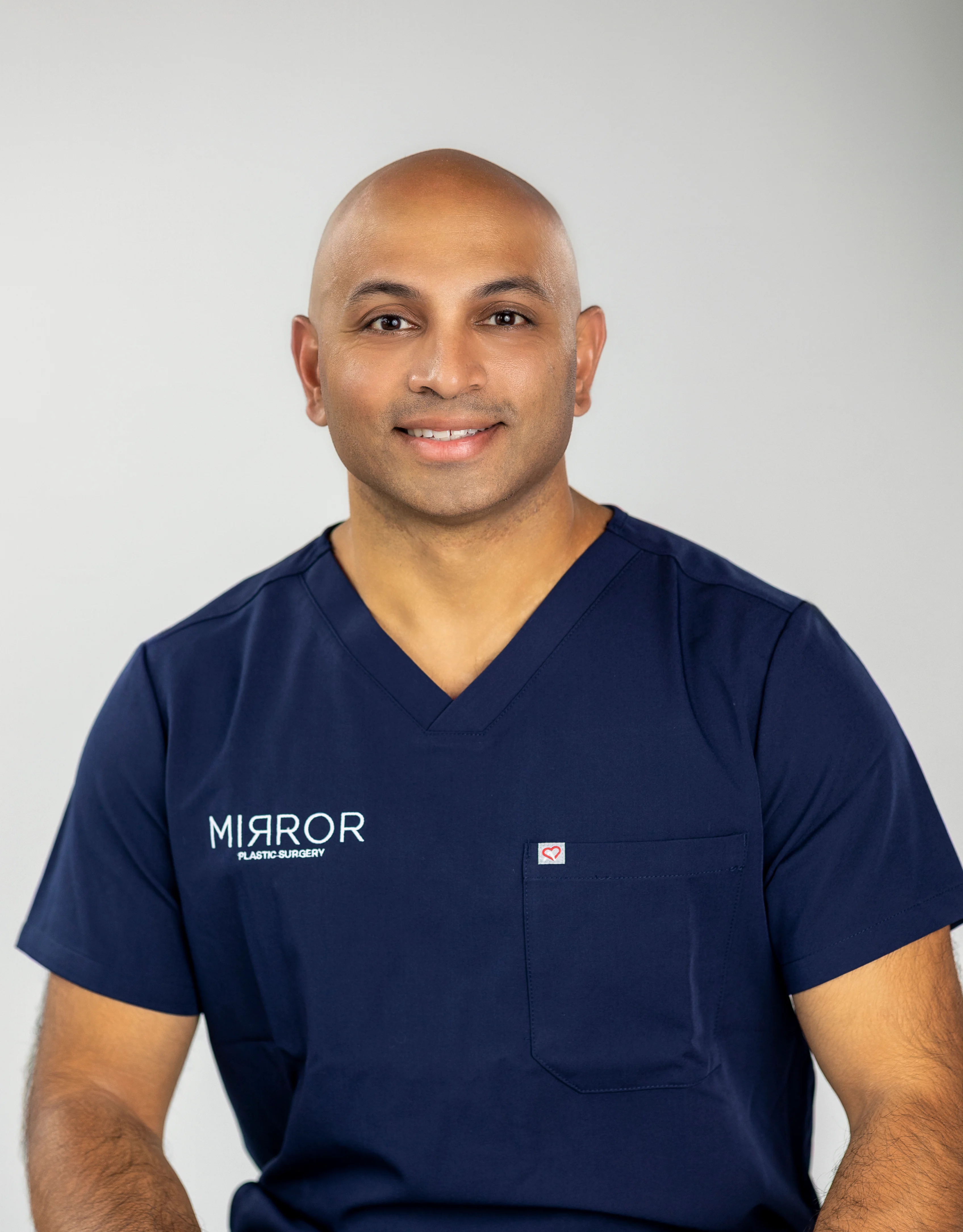
The practice follows a concierge medicine model. Consultations run up to an hour, every patient receives a comprehensive top-to-bottom assessment, and the guiding philosophy is safety first, function second, aesthetics third. Mirror Plastic Surgery remains supplier-neutral, so product recommendations reflect each patient’s anatomy and goals rather than commission structures.
Dr. Akash serves on advisory boards for Merz Aesthetics (Radiesse) and Tiger Aesthetics (AlloClae and Avéli), which keeps the practice at the forefront of evidence-based innovation in body contouring.
Arrange a consultation with Mirror Plastic Surgery to receive honest guidance, surgical expertise, and a treatment plan built around your anatomy and long-term goals. Reach the team at 727-361-6515, [email protected], or visit 780 4th Ave S, St. Petersburg, FL 33701.
Frequently Asked Questions About Body Contouring
What Exactly Does Body Contouring Do?
Body contouring reshapes specific areas of the body by removing stubborn fat, tightening loose skin, or both. These procedures refine contours in patients who are at or near their goal weight but have areas that do not respond to diet and exercise. Depending on the procedure, results may come from physical fat removal, fat cell destruction, skin excision, muscle tightening, or a combination of these approaches.
How Long Do Body Contouring Results Last?
As shown in the comparison table above, surgical results can last 10 years or more with stable weight, because removed fat cells do not regenerate. Non-surgical results vary from about 6 months to several years, depending on the technology used and lifestyle maintenance. Significant weight gain can enlarge remaining fat cells and change the visible result over time.
How Many Sessions Do You Need For Body Contouring?
Surgical procedures such as liposuction usually achieve results in a single session. Non-surgical fat reduction treatments typically require 1–3 sessions per area, while skin tightening and muscle toning protocols may require 4–6 sessions spaced several weeks apart. The exact number depends on the technology, the treatment area, and your individual response.
Is Body Contouring Safe?
Both surgical and non-surgical body contouring have established safety profiles when qualified providers perform them. Surgical procedures carry higher inherent risk, including infection, bleeding, and anesthesia complications. Non-surgical options are generally lower risk, with temporary local effects being most common. Choosing a board-certified plastic surgeon and undergoing a thorough pre-treatment assessment are effective ways to minimize risk for either category of treatment.
What Are The Downsides Of Body Contouring?
Surgical body contouring involves a recovery period measured in weeks, carries risks of infection and scarring, and requires anesthesia. Non-surgical options produce more modest results, often require multiple sessions, and, in the case of cryolipolysis, carry a rare risk of paradoxical adipose hyperplasia. Neither category replaces weight loss, and results in both cases depend heavily on maintaining a stable weight after treatment.
Why Is CoolSculpting Not As Popular Anymore?
CoolSculpting’s popularity has declined for the same reasons outlined earlier in this guide. Results are modest and typically require multiple sessions, and the procedure carries a rare risk of paradoxical adipose hyperplasia (PAH), which often requires corrective liposuction. Many patients now explore alternatives such as surgical liposuction or other non-surgical modalities that offer more predictable outcomes.
Can Body Contouring Help With Cellulite?
Some treatments can improve the appearance of cellulite. Biostimulatory injectable fillers used in the non-surgical BBL can smooth cellulite in the gluteal region. Energy-based devices and mechanical subcision treatments like Avéli address the fibrous septa responsible for skin dimpling. Results vary by patient and treatment, and multiple sessions may be needed to achieve and maintain improvement.
Disclaimer: Results may vary from person to person. Editorial content, before and after images, and patient testimonials do not constitute a guarantee of specific results.
1 Results may vary from person to person. Editorial content, before and after images, and patient testimonials do not constitute a guarantee of specific results.