
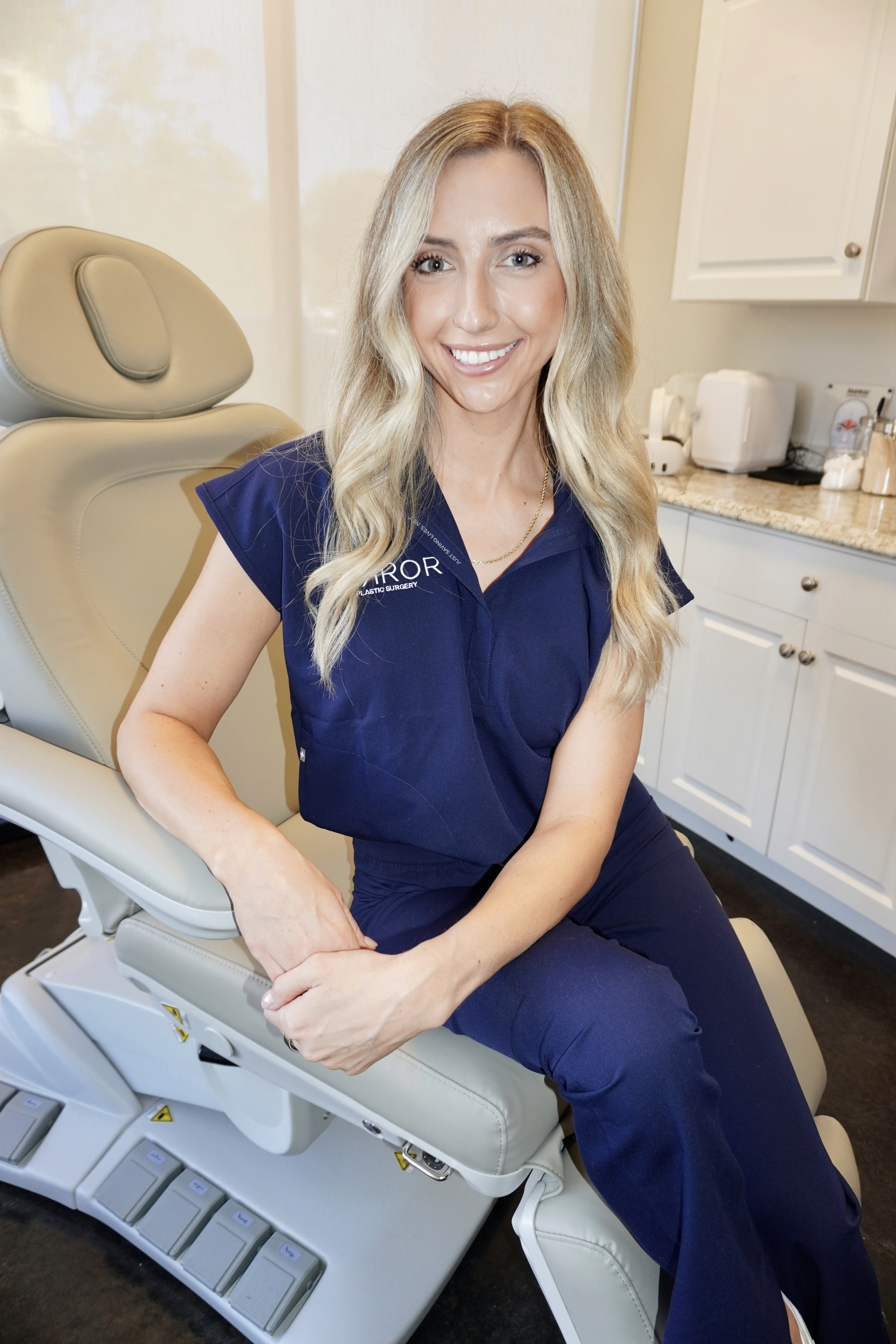
Written by: Ellie Pranckevicius, FNP-BC, Aesthetic Nurse Practitioner & Aesthetic Injector | Facial Restoration & Regenerative Injectable Specialist, Mirror Plastic Surgery
Key Takeaways
- Natural-looking lip filler depends more on the injector’s skill, anatomical knowledge, and conservative technique than on the specific filler brand.
- Define “natural” for your own face by focusing on conservative dosing, strategic placement along the vermilion border, and a filler texture that suits your lips.
- Techniques such as microdroplet placement, border definition, and gradual layering over multiple sessions prevent an overfilled or “duck-lip” appearance.
- Prepare for your consultation with targeted questions about volume, technique, asymmetry correction, and complication management so you can choose a qualified provider.
Step 1: Define What “Natural-Looking” Means For Your Face
Natural-looking lip filler enhances your lips’ shape and volume subtly so you look refreshed and like yourself. It respects your facial anatomy and maintains proportion with your other features. It also avoids overfilling, distortion, or an unnatural pout.
“Natural” is not a universal standard. It depends on your baseline anatomy, age, facial proportions, and aesthetic goals. A natural result for a 28-year-old with thin lips differs meaningfully from a natural result for a 52-year-old managing age-related volume loss. Three pillars guide every natural outcome:
- Conservative Dosing: Use less product initially, often half a syringe, and build gradually over sessions rather than chasing dramatic change in a single visit.
- Strategic Placement: Respect the vermilion border, Cupid’s bow, and natural lip proportions instead of injecting indiscriminately into the lip body.
- Product Selection: Choose a filler with the right texture, flexibility, and water-attraction properties for your specific lip structure and goals.
Natural results are fundamentally about balance and harmony with the entire face. For example, overfilling the upper lip relative to the lower lip is described as the most common error producing an “overdone” appearance. This reinforces that lips must be treated as part of a cohesive facial landscape, never in isolation.
Step 2: Understand Your Filler Options With HA Fillers
Most FDA-approved lip fillers are formulated with hyaluronic acid (HA), a naturally occurring sugar molecule that attracts and holds water to provide volume and hydration. However, not all fillers are HA-based; for example, Radiesse is a non-HA filler. HA fillers are considered the safest option for lip enhancement because they occur naturally in the body, carry a low risk of allergic reactions, and are reversible with hyaluronidase. The choice of filler matters less than the injector’s skill, but understanding the differences helps you have an informed consultation.
Juvéderm Family (Allergan Aesthetics)
- Juvéderm Volbella XC: The softest product in the Juvéderm family, designed for subtle lip enhancement and fine lines around the mouth, with results lasting up to 12 months.1 Its low-firmness Vycross gel spreads smoothly, which makes it ideal for first-time patients seeking barely-there improvement.
- Juvéderm Ultra XC: A medium-firmness filler using Hylacross technology, FDA-approved for lip augmentation and perioral lines, with an expected duration of about 12 months.1 It suits patients who want balanced fullness rather than dramatic change.
Restylane Family (Galderma)
- Restylane Kysse: Engineered with XpresHAn Technology, this filler is designed to stretch and flex with natural facial expressions, which is critical for lips that move constantly. It integrates softly into lip tissue and avoids a stiff, “done” look, with results lasting up to one year.1
- Restylane Silk: A finer NASHA filler used for subtle contouring, lip border definition, and smoothing superficial vertical lines, with a typical duration of 6 to 9 months.1
RHA Collection (Revance)
- RHA 3: FDA-approved for lip augmentation, RHA fillers use Preserved Network Technology to maintain the natural long-chain structure of HA, creating a gel that adapts dynamically to facial movement, which suits the expressive lip area.
- RHA Redensity: The first FDA-approved filler specifically for perioral rhytids (lipstick lines), with the lowest modification rate in the RHA collection. It spreads smoothly in the superficial dermis for fine-line correction without adding bulk.
Versa (Revanesse)
There is no single “best” filler for natural results. The right choice depends on your lip anatomy, skin quality, desired outcome, and the injector’s assessment of which product will behave most naturally in your lips. At Mirror Plastic Surgery, Ellie Pranckevicius works with all major FDA-approved brands and selects the most appropriate product for each patient’s unique structure. Her recommendations remain independent of commissions or supplier quotas.
Step 3: Learn The Techniques That Prevent An Overdone Look
<pnatural-looking results="" depend="" heavily="" on="" technique.="" the="" following="" approaches="" separate="" a="" skilled,="" natural-focused="" injector="" from="" high-volume="" provider.
Microdroplet Technique
The microdroplet technique involves placing many tiny, precise deposits of hyaluronic acid throughout the lip rather than one long thread. This gives the injector meticulous control over shape and prevents filler migration or lump formation. It also allows the filler to blend seamlessly with surrounding tissue for a soft, natural feel and appearance.
Border Definition (Vermilion Border Enhancement)
Targeted filler placement along the vermilion border creates greater definition of the lip border or Cupid’s bow without substantially increasing overall lip size. This defines the lip’s shape and creates a subtle lift without adding bulk. It preserves the natural Cupid’s bow and avoids the flat, featureless upper lip that characterizes overfilled results.
Conservative Layering Over Multiple Sessions
A conservative, gradual approach, starting with a small amount, often 0.5 mL to 1 mL, and building gradually if needed, produces the most natural results. Expert injectors often start with half a syringe, then assess the result after swelling subsides before adding more. This approach prevents overstretching tissue and lets you adjust to your new appearance incrementally.
Full-Face Harmonization
Isolated lip treatment often causes unnatural results. Ellie Pranckevicius takes a holistic, full-face approach and assesses how the lips relate to surrounding features before recommending any treatment. A lower-to-upper lip volume ratio of approximately 1.6:1 received the highest attractiveness ratings across observer groups. The right proportion for any individual still depends on their unique facial geometry, which makes full-face assessment essential.
“Natural results come from understanding the patient’s anatomy and goals, then using the least amount of product to achieve a balanced, refreshed look. My job is to give you the best version of the lips you already have.” — Ellie Pranckevicius, FNP-BC, Mirror Plastic Surgery
Step 4: Prepare For Your Consultation With Smart Questions
Walking into a lip filler consultation prepared greatly improves your chances of a natural result. The following questions help you identify a thoughtful, skilled injector instead of a high-volume provider:
- “How many syringes do you typically use for a natural look?” A natural-focused injector often recommends starting with half a syringe or one syringe maximum, with the option to add more later.
- “What technique do you use to avoid overfilling?” Listen for mentions of microdroplet placement, border definition, or conservative layering.
- “Can you show me before-and-after photos of patients with similar lip structure to mine?” This reveals both the injector’s aesthetic and their experience with lips like yours.
- “What is your approach to correcting asymmetry?” Natural results require thoughtful correction of existing asymmetry rather than creating new imbalances.
- “How do you handle complications like lumps or overfilling?” A qualified injector should have a clear protocol, including access to hyaluronidase for dissolving HA filler if needed.
- “What product do you recommend for my anatomy, and why?” The answer should reference your specific lip structure instead of only the injector’s preferred brand.
Red flags when choosing an injector include no visible credentials, refusal to name the product being used, pressure to decide quickly, or treatment offered in a non-medical setting. A reputable injector spends significant time assessing your facial anatomy, discussing your goals, and setting realistic expectations.
At Mirror Plastic Surgery, consultations can last up to an hour, reflecting a concierge philosophy that prioritizes understanding over speed. This unhurried approach is why Ellie can be honest, sometimes advising patients that a treatment is not necessary yet, which builds trust and ensures you only receive treatment that genuinely serves your goals.
Schedule your consultation to discuss your lip goals with Ellie and experience what a thorough, unhurried lip filler assessment feels like.
Step 5: Understand Safety, Reversibility, And What To Expect
HA Fillers Are Reversible
Unlike permanent fillers, hyaluronic acid fillers can be dissolved with hyaluronidase, an enzyme that breaks down HA. Hyaluronidase is used both electively for overfilling or contour problems and urgently when vascular occlusion is suspected, and HA complications benefit from this enzymatic reversibility. This reversibility is a key reason HA fillers are the gold standard for lip augmentation.
Common Side Effects And How To Minimize Them
Most side effects are mild and temporary, including swelling, bruising, redness, and tenderness at injection sites. Patients are advised to avoid alcohol, aspirin, and blood-thinning supplements for a week before treatment to minimize bruising. Swelling can be pronounced in the first 24–72 hours. This reaction is normal and does not reflect your final result.
The “Stage Of Regret”
Many patients experience what experts call the “stage of regret” in the first 48 hours after treatment, when swelling makes lips look larger than intended. Final results typically settle by two weeks, when swelling has fully subsided and the filler has integrated with surrounding tissue.1
How Long Do Results Last?
A meta-analysis of hyaluronic acid lip augmentation studies found that 74% of participants still qualified as responders at six months, falling to 46% at 12 months. This shows that longevity varies meaningfully by individual. Most patients return for a maintenance appointment every 9–12 months.1
The Importance Of Choosing A Qualified Provider
Vascular occlusion from HA fillers is rare, with incidences below 0.1%, yet it requires a provider with deep anatomical knowledge and emergency protocols. At Mirror Plastic Surgery, Ellie Pranckevicius’s background includes four years in the Neuroscience ICU at Tampa General Hospital. This experience gives her clinical judgment that extends far beyond aesthetic training. The practice’s “safety first, function second, aesthetics third” philosophy ensures your well-being is prioritized at every step.
Common Myths About Lip Filler
Several myths still surround lip filler, even with modern HA products and advanced techniques. Understanding the facts helps you make confident, informed decisions.
- Myth: “All lip fillers look fake.” When a skilled injector uses conservative technique, lip filler should be undetectable. People notice that you look refreshed, not that you have had work done.
- Myth: “More filler is better.” A 2023 study found that while thinner lips improved in attractiveness after filler, fuller lips actually scored lower after treatment. This confirms that moderate enhancement consistently outperforms volume-first approaches.
- Myth: “Lip filler is permanent.” HA fillers typically last 6–18 months and can be dissolved with hyaluronidase, although complete removal is not always guaranteed.1
- Myth: “Anyone can inject lips.” A qualified injector must have training in facial anatomy, complication management, and emergency preparedness, and a certificate alone does not guarantee skill.
These myths often arise from experiences with high-volume, technique-poor providers. The steps above, from defining “natural” to choosing the right filler, mastering technique, preparing for consultation, and understanding safety, form the foundation of a natural result. The right injector applies all of these principles consistently.
Why Mirror Plastic Surgery Is The Premier Choice For Natural Lip Fillers In St. Petersburg
Mirror Plastic Surgery’s approach to lip augmentation reflects a core belief: natural results require unhurried, personalized care. Several elements of the practice support that standard.
- Concierge Medicine Philosophy: Consultations lasting up to an hour allow for a comprehensive top-to-bottom assessment. Ellie takes time to understand not just your aesthetic goals but also the emotional drivers behind them, which helps align treatment with your overall well-being.
- Safety-First Approach: The practice’s guiding principle, “safety first, function second, aesthetics third,” ensures every treatment is planned with your health as the primary concern.
- Expert Injector: Ellie Pranckevicius, FNP-BC, combines esthetician training with advanced nursing expertise. This dual background gives her a rare understanding of both skin physiology and subdermal anatomy. As mentioned earlier, her ICU experience further sharpens her clinical judgment.
- Supplier-Neutral Recommendations: Mirror is not tied to any filler manufacturer’s commissions. Ellie selects the best product for each patient’s unique anatomy and goals, providing unbiased, evidence-based recommendations.
- Full-Face Harmonization: Ellie’s holistic approach ensures your lips complement your entire face and helps prevent the “overdone” or “isolated” look that often results from single-area treatments.
Located at 780 4th Ave S in St. Petersburg, Mirror Plastic Surgery welcomes patients from across the Tampa Bay area who want natural, sophisticated aesthetic results.
Experience the Mirror difference and book your consultation today to see what is possible when artistry meets anatomy and your safety and satisfaction come first.
Frequently Asked Questions
What Is The Most Natural-Looking Lip Filler?
The most natural-looking lip filler depends on your individual anatomy and goals. Soft, flexible hyaluronic acid fillers, such as Juvéderm Volbella XC, Restylane Kysse, and RHA 3, are designed for subtle enhancement. For example, Restylane Kysse is designed to move naturally with facial expressions, Juvéderm Volbella XC is the softest option for barely-there improvement, and RHA 3 mimics the behavior of natural HA in dynamic areas. Each offers a different balance of softness and structure. Ultimately, the injector’s technique matters more than the specific brand, and a skilled injector will select the product best suited to your lip structure and goals.
How Can I Make My Lip Filler Look Natural?
Choose an injector who prioritizes conservative dosing, strategic placement, and facial harmony. Ask specifically about microdroplet technique and border definition that preserves your Cupid’s bow. Request a gradual approach that builds volume over multiple sessions rather than all at once. Starting with half a syringe and assessing the result after swelling fully subsides, typically two weeks, is one of the most reliable ways to support a natural outcome. Avoid providers who recommend large volumes in a single session without a clear anatomical rationale.
Can Lip Filler Look Natural If I Have Thin Lips?
Lip filler can look natural in thin lips when applied with patience and a conservative strategy. Patients with naturally thin lips may need two to three sessions to achieve their goal while maintaining structural integrity. Placing too much filler into thin lips at once creates the “duck” look that most patients want to avoid. A skilled injector builds volume gradually and allows tissue to adapt naturally between sessions. The goal is to enhance what you have rather than create an entirely different lip shape.
What Are The Downsides To Lip Fillers?
The main downsides include temporary swelling and bruising in the days following treatment, the cost of periodic maintenance as results last 6–18 months, and the risk of unnatural results if an inexperienced injector performs the procedure. More serious complications, such as vascular occlusion, are rare but possible, which makes choosing a qualified provider with emergency protocols essential. As discussed earlier, HA fillers are reversible with hyaluronidase, which provides a safety net if you are unhappy with your results or a complication arises. Choosing a conservative, anatomically knowledgeable injector minimizes these risks significantly.
How Do I Know If An Injector Is Qualified To Do Lip Filler?
A qualified lip filler injector should be a licensed medical professional with specific training in facial anatomy, injectable techniques, and complication management, including access to hyaluronidase on-site. Ask about their credentials, how long they have been injecting, and whether they treat lips regularly. Review before-and-after photos of real patients with lip structures similar to yours and look for results that appear balanced and natural rather than overfilled. A trustworthy injector welcomes your questions, explains their product selection rationale, and avoids pressuring you to commit to more volume than your anatomy supports. Red flags include refusal to name the product being used, no visible credentials, and treatment offered outside a professional medical setting.
Disclaimer: Results may vary from person to person. Editorial content, before and after images, and patient testimonials do not constitute a guarantee of specific results.
1 Results may vary from person to person. Editorial content, before and after images, and patient testimonials do not constitute a guarantee of specific results.