
AlloClae (Breasts)
Written by: Dr. Akash Chandawarkar, Board Certified Plastic Surgeon, Mirror Plastic Surgery | Last updated: September 28, 2026
Key Takeaways
AlloClae is an FDA-regulated, donor-derived structural adipose filler that adds subtle breast volume without liposuction or fat harvesting.
Most patients see about half to one cup size of improvement per treatment, which works well for natural enhancement and fine-tuning.
Ideal candidates include lean patients, people with volume loss from weight changes or GLP-1 medications, and those wanting implant rippling softened without surgery.
Current evidence suggests results may last one to three years, with limited long-term human data and the possibility of future touch-up treatments.
Mirror Plastic Surgery Med Spa offers surgeon-led AlloClae breast consultations with detailed candidacy reviews and concierge-level follow-up.
Book Your AlloClae Consultation
What AlloClae Actually Is and How It Differs From Your Own Fat
AlloClae is composed of approximately 60% adipose components and 40% extracellular matrix (ECM), processed from donated human adipose tissue. The tissue comes from deceased donors under the Uniform Anatomical Gift Act and is regulated as a human cell and tissue product. In AlloClae, the preserved extracellular matrix scaffold, including collagen networks, structural proteins such as elastin and laminin, and growth factors, provides immediate volume and supports host-cell infiltration, new blood vessel formation, and adipose tissue remodeling over time, as shown in a 6‑month mouse survival study in which the new adipose tissue and blood vessels originated from the host. This is not breast-specific human outcomes data.
The key mechanical difference from traditional autologous fat transfer is the absence of liposuction. The procedure harvests no fat, creates no donor site, and requires no general anesthesia. AlloClae contains no viable cells and does not depend on the metabolic activity of living cells for its primary function, so it does not follow the same early ischemic survival window that governs autologous fat grafts. AlloClae still relies on vascular ingrowth to supply oxygen, nutrients, immune cells, and progenitor cells for long-term integration.
The in-office breast procedure follows these steps:
Consultation and Marking: Anatomy is assessed and target areas are mapped.
Local Anesthesia: The treatment area is numbed.
Cannula Injection: AlloClae is delivered subcutaneously through small access points using a blunt-tip cannula.
Immediate Assessment: Volume distribution and symmetry are evaluated.
Aftercare: Activity guidance is provided; most patients return to normal daily activities within 24 to 48 hours after AlloClae breast treatment, though some sources report a same-day return and others a few days.
Breast tissue, indications, and volume limits differ meaningfully from the buttock. For AlloClae non-surgical BBL and hip dip applications, see Mirror’s dedicated non-surgical BBL content.
Realistic Results and Candidacy for AlloClae Breasts
According to board-certified plastic surgeon Dr. Sarah Mess, AlloClae breast enhancement is designed for natural, proportional enhancement. She reports a typical change of about half to one full cup size per treatment. Other practitioners cite ranges from no more than half a cup size up to about 1½ cup sizes, depending on the number of syringes and the patient’s anatomy. Patients who want more than one cup size of enlargement usually do better with implants or a hybrid implant-plus-fat approach, because fat transfer alone typically tops out around one cup per session.
Good candidates for AlloClae breast treatment include:
Lean or athletic patients with insufficient donor fat for traditional fat transfer
Patients seeking asymmetry correction or contour refinement of an existing breast result
Patients with visible implant rippling or edge visibility who want a less invasive alternative to revision surgery
Poor candidates, who should usually be redirected, include:
Major Enlargement Seekers: AlloClae does not create the same predictable enlargement, projection, or shape as a breast implant. Implants remain the better choice when a significant, reliable size increase is the main goal.
Patients With Significant Ptosis: AlloClae adds localized volume but does not reposition the breast, tighten loose skin, or correct an implant pocket, although it may soften implant rippling or help with contour concerns after implant removal. A breast lift addresses the underlying droop.
Patients With Active Breast Infection or Unresolved Breast-Health Concerns: AlloClae should not be used in the presence of active infection. It is not recommended for patients with known or suspected breast malignancy or certain breast conditions without clearance from their oncologist or breast surgeon. Pregnancy and breastfeeding appear on the list of conditions that make patients unsuitable candidates.
Patients Expecting Permanent, Guaranteed Volume: Long-term breast-specific data remain limited, and results depend on biological tissue remodeling and integration.
Patients With Adequate Donor Fat Who Want Broader Natural Augmentation: When usable donor fat exists and the patient is a good surgical candidate, autologous fat transfer is generally preferred for larger-volume body contouring because it provides permanent living-tissue results, decades of clinical track record, and lower cost than allograft products like AlloClae.
AlloClae does not replace surgery when the main issue is implant position, capsule, skin quality, breast position, or substantial volume deficiency, although it may be used selectively during breast augmentation as an internal support matrix to reinforce soft tissue and support implant positioning. A thorough consultation clarifies which category each patient falls into.
Schedule Your AlloClae Candidacy Assessment
Longevity, Settling, and Maintenance
Current knowledge places AlloClae longevity at approximately one to three years based on practice reports. Published allograft adipose matrix studies show partial volume retention over months, such as roughly 59% in the cheek and 37% in the prejowl area at 24 weeks. As of mid‑2026, no extensive published human data describe AlloClae outcomes at three, five, or ten years after treatment, and a 2026 systematic review found only 10 small human studies with follow-up not exceeding 24 weeks.
Initial volume appears immediately after treatment. Mild swelling and bruising usually resolve within one to two weeks, and many providers report full results around three to six months as tissue integration and collagen production progress. Some surgeons note that the final result is generally visible at four to six weeks once residual swelling settles and the product has integrated.
Large-scale human studies on AlloClae retention, resorption patterns, palpability, nodularity, calcification, asymmetry, and revision outcomes across different anatomical locations and patient populations are not yet available. Experts currently describe AlloClae as a product in early adoption with meaningful unanswered long-term questions. This reflects limited data, not proven harm.
Additional treatment may be considered in the future if volume decreases, the breasts change with age or weight, or the patient’s goals evolve. AlloClae breast treatment works best when framed as long-term breast maintenance rather than a single, permanent procedure.
Safety, Side Effects, and Rejection Risk
According to the manufacturer’s Important Safety Information, AlloClae is intended for subcutaneous use in localized areas where adipose tissue naturally exists. It contains no viable cells, has no systemic effect, and does not rely on living-cell metabolism for its primary function.
Named potential complications include:
Cystic or nodule formations
Pain or infection
Hematoma
Anaphylaxis or other allergic or immune responses
Discoloration of the skin at the procedure site
The manufacturer notes that complications are possible, although not everyone experiences them. Because AlloClae is placed in breast soft tissue, patients should maintain routine breast-health screening and inform future radiology providers about the treatment. Any new lump, persistent pain, skin change, nipple discharge, or swelling deserves evaluation.
AlloClae’s donor adipose tissue undergoes washing and gamma irradiation that lowers DNA content to below 50 ng DNA per mg of tissue, which reduces antigenic properties and lowers immune rejection risk. The product should not be used in patients with severe allergen sensitivities or a history of anaphylaxis. A surgeon-level injector with deep knowledge of breast tissue planes further reduces risk through precise placement, careful patient selection, and strict sterile technique.
A real-world complication has been reported. One woman who paid roughly $14,000 developed painful, lumpy breasts with oil cysts and fat necrosis after AlloClae breast augmentation, with ultrasound and MRI imaging performed in the months after treatment. Tiger Aesthetics attributed this outcome to injection technique. Fat necrosis also appears as a known risk with traditional autologous fat transfer. No direct head-to-head comparison studies between AlloClae and traditional autologous fat transfer currently exist, and the AlloClae characterization study instead compares AlloClae to a decellularized adipose allograft while describing autologous fat grafting as the current gold standard.
AlloClae vs. Fat Transfer vs. Implants for Breasts
The table below compares AlloClae, autologous fat transfer, and breast implants on anesthesia, liposuction needs, typical volume change, and how long results tend to last.
Attribute | AlloClae | Autologous Fat Transfer | Breast Implants |
|---|---|---|---|
Anesthesia | Typically local, with light sedation or monitored anesthesia care for larger or combined cases | Most commonly general, though select cases may use sedation or local anesthesia | |
Liposuction Required | Typically yes, most often via liposuction, with tissue resection or hand aspiration as alternatives | No, although optional fat injection via liposuction can complement implants | |
Typical Volume Change* | Subtle increase of up to about half to one cup size per treatment | Realistically no more than half to one cup size per session, with larger gains requiring multiple sessions | About one to three or more cup sizes, depending on implant volume, band size, and starting tissue |
Duration of Results | Roughly one to three years per provider reports, with limited long-term data | Permanent for surviving fat, with roughly 20% to 80% of grafted fat resorbed | Typically 10 to 20 years before revision or replacement, since implants are not lifetime devices |
AlloClae vs. Fat Transfer: The main difference is the lack of a donor site. AlloClae suits patients who want to avoid general anesthesia and significant downtime, because it is an in-office treatment under local anesthesia that usually allows a return to normal activity within 24 to 48 hours, with tenderness for several days and full exercise around two weeks. When adequate donor fat exists, autologous fat transfer offers permanent living volume with stronger durability evidence. A 2023 systematic review of 35 studies and 3,757 women found an average volume retention of 58% for breast fat grafting, and another 2023 meta-analysis of 25 studies reported a pooled retention rate of 54% at the latest follow-up.
AlloClae vs. Breast Implants: Implants work best when a predictable, significant increase in size, projection, or upper-pole fullness is the main goal. AlloClae fits patients who want contour refinement, asymmetry correction, or modest volume restoration without surgery.
AlloClae vs. Sculptra for Breasts: Sculptra (poly-L-lactic acid) is a biostimulatory filler that stimulates collagen production over time, creating gradual volume through neocollagenesis rather than immediate structural fill. AlloClae provides immediate volume through its adipose ECM scaffold and supports host-cell infiltration and adipose remodeling. Sculptra has more than 25 years of clinical use and an extensive published safety record. AlloClae offers a fat-like feel that Sculptra does not replicate, while Sculptra offers a longer track record and gradual change.
Syringe Size and Volume: AlloClae is available in 12.5 cc and 25 cc volumes, packaged in an open-bore container, with the 25 cc product containing two 12.5 cc containers. Renuva’s maximum syringe size is 3 cc, while AlloClae is supplied in larger sizes such as 25 cc, 50 cc, and 100 cc vials. Typical AlloClae breast augmentation treatments most often use about 100 cc per side to create a noticeable change, so multiple containers are usually required. The exact number is set during consultation.
Cost and Syringe Economics
AlloClae breast treatment pricing depends on total product volume, number of syringes, provider expertise, geographic market, and whether AlloClae is combined with another breast procedure. Because anatomy and goals vary widely, a meaningful cost estimate requires a personalized consultation. A specialized visit at Mirror Plastic Surgery provides a tailored assessment and individualized treatment plan for your AlloClae breast contour options*.
Choosing a Provider and What a Proper Consultation Looks Like
A thorough AlloClae breast consultation includes a full review of breast health, tissue thickness, skin quality, symmetry, prior surgery, and breast imaging history. The provider should offer an honest discussion of candidacy and limitations, including clear explanations of when AlloClae is not appropriate, along with risks, benefits, alternatives, and a personalized plan.
Tiger Aesthetics does not permit nurse practitioners to inject AlloClae into the breast, reflecting the complexity of breast anatomy. Board-certified plastic surgeon involvement is a requirement for this indication. Dr. Akash evaluates breast anatomy like a surgeon, assessing tissue planes, vascular supply, implant status, and skin quality before placing a cannula.
Patients who want a larger change in cup size often benefit more from implants, which must still be matched to chest width, body proportions, and existing tissue. A provider who omits this discussion leaves out key information. Mirror Plastic Surgery’s concierge model prioritizes that level of honesty, including recommending a different procedure if AlloClae does not fit your anatomy or goals.
Plan Your Breast Enhancement Consultation
What Sets Mirror Plastic Surgery Apart
Mirror Plastic Surgery follows a concierge medicine philosophy that emphasizes time, access, and continuity. Consultations can run up to an hour. The practice limits itself to one to two procedures per day. Communication continues before, during, and after every treatment, which contrasts with high-volume centers that may perform many procedures daily.
The guiding framework places safety first, function second, and aesthetics third. That hierarchy shapes product selection. Mirror describes itself as supplier-neutral, meaning choices are based on patient anatomy and clinical evidence rather than portfolio quotas or manufacturer incentives.
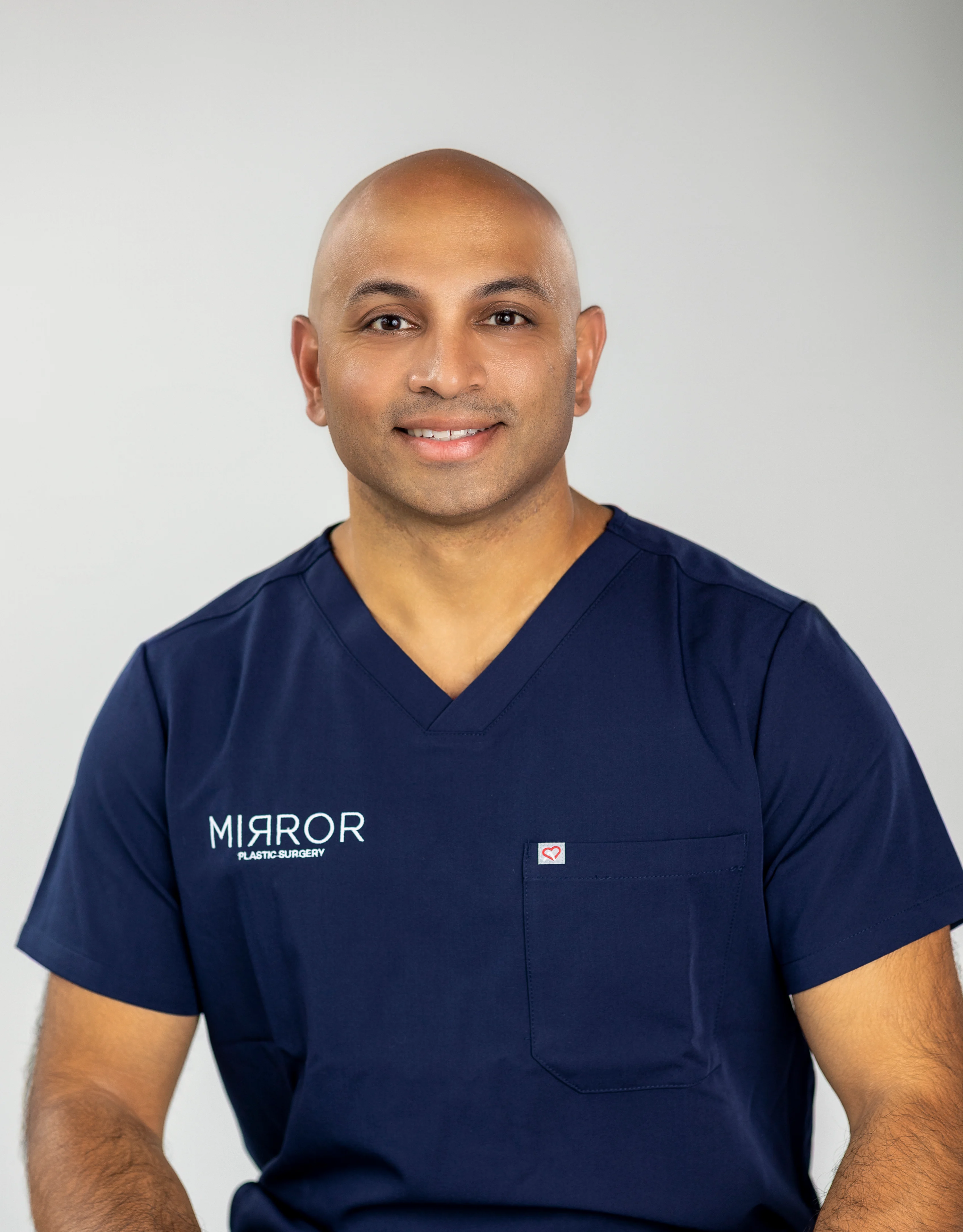
Meet Your Injector: Dr. Akash Chandawarkar
Dr. Akash Chandawarkar, MD, performs AlloClae breast treatments at Mirror Plastic Surgery. He is board-certified by the American Board of Plastic Surgery, Harvard-educated, and Johns Hopkins-trained, with aesthetic surgery fellowship training at Manhattan Eye, Ear & Throat Hospital and Lenox Hill Hospital, plus medical innovation training at Stanford University. He serves on the advisory board of Tiger Aesthetics, the maker of AlloClae. Because Dr. Akash is a plastic surgeon with detailed knowledge of facial, breast, and subdermal anatomy, each AlloClae injection is placed with surgical precision. At ACR-accredited facilities, physician assistants and radiologist assistants may not independently perform stereotactic breast biopsy procedures, and a qualified physician must be in the room during the procedure.
Meet With Dr. Akash About AlloClae
Frequently Asked Questions
Is AlloClae Safe for Breasts?
AlloClae is regulated by the FDA as a Section 361 Human Cells, Tissues, and Cellular and Tissue-Based Product under 21 CFR Part 1271. This category requires rigorous donor screening, serological testing, and sterility standards, including terminal sterilization with gamma radiation. The manufacturer lists potential complications such as cystic or nodule formations, pain or infection, hematoma, anaphylaxis or other allergic or immune responses, and skin discoloration. It should not be used in patients with severe allergen sensitivities, a history of anaphylaxis, or active infection. Any injected material can create benign imaging findings on mammogram or MRI, so patients must tell their radiologist about prior AlloClae treatment. Published data on fat-based breast procedures generally show no increased risk of adverse oncologic outcomes, although follow-up remains limited and one early matched cohort initially suggested higher local recurrence after lipofilling for in situ carcinoma, which later equalized with extended follow-up. Long-term breast-specific safety data for AlloClae are still developing.
How Long Does AlloClae Last in the Breasts?
Current experience suggests AlloClae may last about one to three years in the breasts. The same 10-study systematic review referenced earlier found only short-term human follow-up, with no extensive data beyond 24 weeks. Patients should view AlloClae as a long-lasting but not permanent option and plan for possible touch-ups as volume and anatomy change.
Can Your Body Reject AlloClae?
AlloClae’s donor adipose tissue is minimally manipulated with detergent and sodium chloride rinses plus gamma irradiation to remove lipids and cellular debris and to minimize DNA content. These steps reduce immunogenicity and lower rejection risk. The manufacturer still lists anaphylaxis and other allergic or immune responses as possible complications and contraindicates the product in patients with severe allergen sensitivities or a history of anaphylaxis. Careful screening and technique by an experienced injector help reduce this risk, but no injectable procedure eliminates immune response risk entirely.
How Much Is in One Syringe of AlloClae?
AlloClae comes in 12.5 cc and 25 cc volumes from Tiger Aesthetics Medical, packaged in an open-bore container with one or two 12.5 cc units. As noted above, the most common breast treatment uses about 100 cc per side to create a noticeable change, so multiple containers are usually needed. The exact amount depends on anatomy, goals, and the specific indication.
How Long Does It Take for AlloClae to Settle?
Initial volume appears right after treatment. Swelling and bruising usually improve within one to two weeks. Most patients see their near-final result at four to six weeks, with deeper tissue remodeling and collagen production continuing for three to six months. Light activity typically resumes within 24 to 48 hours, while vigorous exercise should wait about two weeks. Patients should evaluate their AlloClae result once swelling resolves and the product has integrated with surrounding tissue.
Book a Consultation
Dr. Akash Chandawarkar offers personalized AlloClae breast consultations at Mirror Plastic Surgery in St. Petersburg, Florida. Each visit includes a full assessment, an honest discussion of candidacy and limitations, and a plan tailored to your anatomy and goals. If AlloClae is not the right procedure for you, you will hear that clearly.
Mirror Plastic Surgery is located at 780 4th Ave S, St. Petersburg, FL 33701. Reach the practice by phone or text at 727-361-6515, by email at [email protected], or on Instagram at @mirrorplasticsurgery and @dr.akashplasticsurgery.
Disclaimer: Results may vary from person to person. Editorial content, before and after images, and patient testimonials do not constitute a guarantee of specific results.