
AlloClae (Buttocks)
Written by: Dr. Akash Chandawarkar, Board Certified Plastic Surgeon, Mirror Plastic Surgery | Last updated: September 28, 2026
Key Takeaways
AlloClae is a non-surgical injectable structural adipose allograft that adds immediate gluteal volume and supports natural tissue integration without liposuction or general anesthesia.
It works best for subtle to moderate projection, asymmetry correction, or hip-dip improvement and does not replace a surgical BBL for large-volume goals.
Results develop gradually over 4–12 weeks as the matrix integrates and collagen remodels, with reported longevity of 12–18 months or longer.
Ultrasound-guided placement by a board-certified plastic surgeon helps minimize risks and supports accurate delivery into the subcutaneous plane.
Mirror Plastic Surgery Med Spa offers personalized AlloClae buttocks consultations with Dr. Akash Chandawarkar in the St. Petersburg and Tampa area.
Get Started With a Private AlloClae Consultation
Why Mirror Plastic Surgery Is a Strong Choice for AlloClae
Mirror Plastic Surgery follows a concierge model with hour-long consultations and a limit of one to two surgeries per day. The practice focuses on safety first, function second, and aesthetics third. Recommendations are supplier-neutral and evidence-based, so your plan reflects your anatomy and goals, not quotas or commissions. For AlloClae buttocks treatment in the St. Petersburg and Tampa area, you receive a thoughtful assessment and a plan centered on your long-term well-being.
Schedule Your Personalized AlloClae Assessment
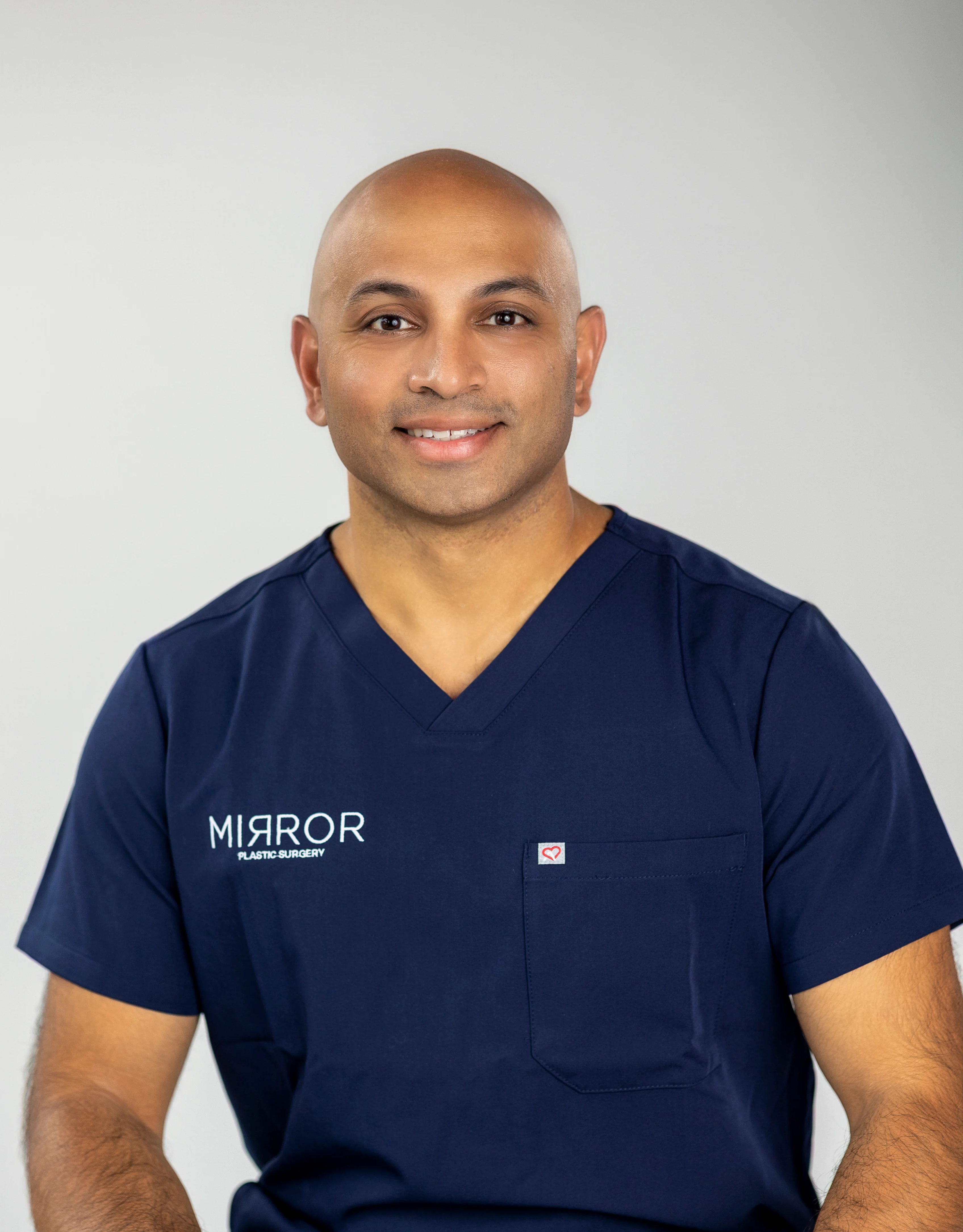
Meet Your Injector: Dr. Akash Chandawarkar
Dr. Akash Chandawarkar is board certified by the American Board of Plastic Surgery, Harvard-educated, Johns Hopkins-trained, and fellowship-trained in aesthetic surgery at Manhattan Eye Ear & Throat Hospital/Lenox Hill Hospital. He serves on the advisory board for Tiger Aesthetics, the maker of AlloClae, which gives him a detailed perspective on adipose matrix technologies. He personally performs the practice's injectable and non-surgical treatments and leads the non-surgical injectable offerings. Every procedure benefits from his surgeon-level understanding of subdermal anatomy.
How AlloClae Works in the Gluteal Region
The gluteal region includes skin, subcutaneous fat, and the gluteal muscles. AlloClae is placed in the subcutaneous plane, the layer where fat naturally exists, using a cannula. The adipose matrix acts as a scaffold that integrates into your existing tissue and supports collagen production over time. Unlike temporary volume fillers, AlloClae functions as a structural treatment that provides immediate volume and then supports your body's own tissue remodeling.
Histologic studies demonstrate progressive host-cell infiltration, neovascularization, and adipocyte formation within the graft scaffold by 3–6 months. This pattern supports a mechanism of host-mediated tissue remodeling rather than survival of transplanted living fat cells.
AlloClae contains no viable cells and has no systemic effect on the body. It is neither a stem cell product nor a synthetic filler.
Good candidates for AlloClae buttocks treatment include:
People seeking subtle to moderate gluteal volume or improved projection
People who prefer to avoid surgery, liposuction, and general anesthesia
AlloClae does not treat cellulite or stretch marks. It is designed to provide structural volume and support in localized areas where adipose tissue naturally exists.
Poor candidates include:
Patients with significant volume goals who may benefit more from a surgical BBL
Those with unrealistic expectations about what AlloClae can achieve
Patients with severe allergen sensitivities or a history of anaphylaxis
AlloClae buttocks treatment takes place in an office-based setting under local anesthesia. Real-time ultrasound visualization allows continuous tracking of the cannula tip to confirm delivery into the optimal tissue plane above the gluteal fascia while avoiding major vessels. The procedure typically takes 30 to 90 minutes, depending on the volume and number of areas treated.
Initial volume is visible immediately, with final results developing over roughly 4 to 12 weeks (some sources cite 3 to 6 months) as the matrix integrates and collagen remodels.* Once you and your surgeon decide that AlloClae fits your goals, preparation for the appointment becomes the next step.
How to Prepare for Your AlloClae Appointment
Mirror Plastic Surgery's consultation style includes a comprehensive top-to-bottom assessment and open-ended dialogue about your goals and motivations. Before your AlloClae buttocks treatment, you may be asked to avoid blood-thinning medications and supplements. Plan for a cushion for your car ride and work chair during the first few days. Set up pillows so you can sleep on your side or stomach for the first nights. Your surgeon will review the timeline and what to arrange for afterward in detail during your consultation.
Recovery and Aftercare After AlloClae
Sitting, Sleeping, and Early Movement
Direct sitting on the treated area is limited for the first two weeks. During that period, sit on a cushion and avoid placing direct pressure on the treated area. Sleeping on your side or stomach for the first nights helps protect the graft. Long car rides should be avoided early on, while daily walking is encouraged to help manage swelling.
Key healing milestones include:
Swelling typically peaks on days 2–3 and improves within 3 to 7 days
Mild bruising, tenderness, and temporary firmness are common, and firmness can last 1 to 4 weeks
Heavy lower-body lifting often remains restricted until weeks 4–6
Activity restrictions often include:
Swelling, tenderness, and temporary firmness are expected during early healing. As noted earlier, final results develop over 4 to 12 weeks as the matrix integrates and collagen remodels.*
Plan Your AlloClae Recovery With Our Team
How Long AlloClae Lasts in the Buttocks
Current clinical data and post-market experience suggest AlloClae results last 12 to 18 months or longer, with variation based on treatment area, volume used, and patient factors such as metabolism and lifestyle.
Published multi-year volumetric imaging trials are not yet mature enough to support definitive retention percentages. The available evidence base is promising but limited by small samples and shorter follow-up periods. Longevity appears to depend on host integration and remodeling rather than on permanent implanted adipocytes. Touch-up treatments may help maintain or enhance volume over time.
Is AlloClae Permanent?
AlloClae works differently from a surgical BBL using your own living fat, which can produce permanent results. Reported results hold well past a year and the tissue appears to integrate rather than break down like a standard filler, though long-term imaging studies remain early and no honest surgeon will promise a permanent result. Significant weight changes can affect results because the stabilized tissue behaves like native fat.
AlloClae Side Effects and Safety
Common side effects include:
Potential complications include:
Ultrasound-guided placement by a qualified physician is critical to confirm delivery into the optimal tissue plane and avoid major vessels. AlloClae is regulated as a Section 361 Human Cell/Tissue Product (HCT/P) under 21 CFR Part 1271. It is not FDA-approved or FDA-cleared as a drug or medical device. AlloClae is contraindicated in patients with severe allergen sensitivities, a history of anaphylaxis, or active infection.
AlloClae vs. Traditional BBL
The comparison below highlights how AlloClae's in-office, low-downtime profile contrasts with the higher-volume potential and surgical nature of a traditional BBL.
Attribute | AlloClae | Traditional BBL |
|---|---|---|
Liposuction Required | ||
Anesthesia | ||
Volume Ceiling | ||
Downtime | ||
Reversibility |
AlloClae vs. Sculptra for Buttock Enhancement
This table compares AlloClae with Sculptra, focusing on mechanism, timing, and longevity of results for body contouring.
Attribute | AlloClae | Sculptra |
|---|---|---|
Mechanism | Human adipose tissue; adds soft contour immediately and supports tissue integration | Synthetic poly-L-lactic acid biostimulator; triggers collagen production over multiple sessions |
Longevity | ||
Onset of Results | First noticeable improvement between weeks 8 and 12; full results over 3–6 months | |
Reversibility |
Hyaluronic acid fillers can be reversed with hyaluronidase, but they are not designed for large-volume body contouring and become cost-prohibitive and physically insufficient for areas like the buttocks.
What to Look Out For and Avoid
Several misconceptions surround AlloClae, and clarifying them helps set realistic expectations.
AlloClae does not replace a surgical BBL for large-volume goals
AlloClae is not a stem cell treatment and contains no viable cells
When selecting a provider for AlloClae buttocks treatment, consider the following:
A board-certified plastic surgeon who takes time for a comprehensive evaluation
A provider who explains the reasoning behind recommendations and remains transparent about regulatory status and limitations
Use of ultrasound-guided technique to confirm safe placement
Dedicated support before, during, and after the procedure
Frequently Asked Questions
Can You Sit After AlloClae Buttock Injections?
Direct sitting on the treated area is limited for the first two weeks. During that time, use a cushion and avoid direct pressure on the treated area. Sleeping on your side or stomach is recommended for the first nights. Most patients return to normal sitting at weeks 2–3.
How Long Does AlloClae Last in the Buttocks?
As discussed earlier, results typically last 12–18 months or longer, depending on the treated area, volume used, and individual factors such as metabolism and lifestyle. Published multi-year volumetric imaging trials remain early, so exact retention percentages are not yet established. Longevity relates to how well the scaffold supports host cell infiltration and remodeling at the treated site.
Is AlloClae Permanent?
AlloClae works differently from a surgical BBL using your own living fat, which can create permanent fat-cell survival. The decellularized matrix integrates with your tissue and supports collagen production, and some structural benefit may be lasting. Significant weight changes can affect results because the stabilized tissue behaves like native fat.
What Are AlloClae Side Effects?
As detailed in the Side Effects section, common side effects include swelling, bruising, tenderness, and temporary firmness. Potential complications include nodules, infection, hematoma, allergic or immune reactions, and discoloration at the procedure site. AlloClae is contraindicated in patients with severe allergen sensitivities, a history of anaphylaxis, or active infection.
How Does AlloClae Compare to Sculptra and a Surgical BBL?
AlloClae provides immediate structural volume and supports tissue integration, while Sculptra acts as a biostimulator that triggers collagen production over multiple sessions without immediate volume. AlloClae requires no liposuction and has minimal downtime. A surgical BBL can achieve dramatic volume but requires general anesthesia and 2 to 6 weeks of downtime. Neither AlloClae nor Sculptra can be dissolved on demand, and a surgical BBL using your own fat produces results that are not reversible because surviving fat becomes a lasting part of your body.
Book a Consultation
If you are considering AlloClae buttocks treatment in the St. Petersburg or Tampa area, you can book a consultation with Dr. Akash Chandawarkar at Mirror Plastic Surgery. During your visit, you receive a comprehensive assessment, clear guidance about whether AlloClae fits your goals, and a personalized treatment plan designed for your anatomy and lifestyle.
Address: 780 4th Ave S, St. Petersburg, FL 33701
Phone: 727-361-6515
Email: [email protected]
Request Your AlloClae Consultation
*Disclaimer: Results may vary from person to person. Editorial content, before and after images, and patient testimonials do not constitute a guarantee of specific results.