
AlloClae (Hip Dips)
Written by: Dr. Akash Chandawarkar, Board Certified Plastic Surgeon, Mirror Plastic Surgery | Last updated: September 28, 2026
Key Takeaways
AlloClae is a sterilized donor fat matrix that adds immediate structural volume and creates a scaffold for tissue integration without liposuction or donor-site surgery.
Good candidates have mild-to-moderate hip dips, adequate soft-tissue coverage, and realistic expectations. Poor candidates include those seeking dramatic BBL-like projection or whose depressions are primarily skeletal.
Results often last 1–3 years, and many patients choose touch-ups every 1–2 years. Longevity depends on placement technique, volume, tissue quality, and individual biology.
Most patients experience 2–3 days of mild swelling and a quick return to daily activities, which makes AlloClae a lower-downtime alternative to surgical fat transfer for lean patients.
Mirror Plastic Surgery Med Spa offers physician-led AlloClae treatments with clear candidacy assessment and personalized planning.
Schedule Your AlloClae Consultation
How AlloClae Works As A Donor Fat Matrix
AlloClae is an adipose filler used for buttocks and hip dips. During manufacturing, fat cells and immunogenic cellular components, including DNA, are removed through proprietary decellularization. This process leaves an extracellular matrix scaffold of collagen, connective tissue, growth factors, and residual lipids. The product then undergoes terminal sterilization via gamma radiation.
AlloClae is supplied in 12.5 cc or 25 cc syringes and is regulated by the FDA under 21 CFR Part 1271 as a Human Cell and Tissue Product (HCT/P). It is FDA-compliant under tissue product regulations rather than FDA-approved as a drug or medical device.
Hyaluronic acid fillers occupy space as a gel until absorbed. AlloClae instead provides a structural scaffold. The body’s own cells and blood vessels grow into this matrix over time, creating natural volume. Biostimulatory fillers such as Sculptra trigger collagen production but do not add structural volume. AlloClae provides immediate structural support and a scaffold for tissue integration.
Because all fat cells have been removed, AlloClae does not depend on living cell survival for its effect. This feature distinguishes it from autologous fat grafting, where graft retention depends heavily on cell viability.
AlloClae contains both fat cells and extracellular matrix, with a composition of approximately 60 percent cells and 40 percent matrix, and acts as a scaffold on which collagen can regrow and stem cells can migrate.
Get Started With An AlloClae Assessment
Who Makes A Good Candidate For AlloClae Hip Dips
Candidacy for AlloClae hip dip correction depends on anatomy, tissue quality, and expectations grounded in reality rather than marketing claims.
Good candidates generally include:
Lean patients who lack sufficient donor fat for traditional fat transfer or a Brazilian Butt Lift
Patients who want to avoid surgery, general anesthesia, and the recovery associated with a surgical BBL
Patients with realistic expectations of contour improvement rather than dramatic skeletal reshaping
Poor candidates include:
Patients expecting dramatic volumetric change or BBL-like projection. AlloClae functions as a contouring tool rather than a volume-replacement surgery.
Patients whose hip dip is primarily skeletal with minimal overlying tissue, where bone geometry drives the depression and filler alone cannot eliminate it
Patients with severe skin laxity after massive weight loss, in whom filler may drag sagging tissue further downward
AlloClae works best when the anatomy can support it and when expectations match what the product can deliver. Dr. Akash Chandawarkar at Mirror Plastic Surgery is known for direct, transparent guidance and will advise when a service does not fit a patient’s needs.
The AlloClae Hip Dip Procedure Step By Step
The procedure takes place in-office under local anesthesia. The surgeon creates a small entry point and uses a blunt-tipped cannula to place the product into the subcutaneous plane over the lateral hip. The area is then massaged after injection to encourage even distribution.
A typical session lasts 30 to 90 minutes, depending on the number of areas treated. For body treatments, providers often use 30 cc to 50 cc of AlloClae per session, while facial areas require much less. Most patients experience mild swelling and return to normal daily activities within 2 to 3 days. Initial volume appears immediately, and full results develop over 3 to 6 months as tissue integration progresses.
Because Dr. Chandawarkar is a board-certified plastic surgeon, injectable treatments at Mirror Plastic Surgery are performed by Dr. Akash Chandawarkar, a physician with a surgeon’s command of subdermal anatomy. That level of precision matters when placing product in the adherent lateral hip tissue.
How Long AlloClae Lasts In Hip Dips
Longevity for AlloClae in hip dips depends on emerging data and real-world experience rather than long-term trials alone.
Current published human longevity data for AlloClae are still maturing, and there are no published multi-year volumetric imaging trials establishing long-term retention. An ASPS Member Surgeon has noted that results appear to last about one to three years, with limited long-term data so far.
Clinical experience suggests results may last approximately 1 to 3 years, with some patients maintaining volume for 12 to 18 months or longer. Longevity depends on several factors, including placement technique, treatment area, injected volume, and individual biology such as metabolism and lifestyle. More mobile areas like the buttocks tend to resorb faster than less mobile areas like the breasts.
Because AlloClae provides a scaffold that the body populates with its own tissue, the result does not follow the same predictable metabolic countdown as hyaluronic acid fillers. The scaffold still remodels over time, and touch-up sessions may be recommended every one to two years to maintain a preferred contour.
Dr. Chandawarkar evaluates each patient’s tissue quality and anatomy during consultation and creates a personalized treatment plan rather than a fixed schedule.
Reserve Your Personalized Treatment Plan
Comparing AlloClae, Sculptra, And Surgical Fat Transfer
No single treatment works for every hip dip concern. The comparison below outlines how AlloClae, Sculptra, and surgical fat transfer differ in mechanism, longevity, and recovery.
Attribute | AlloClae | Sculptra | Surgical Fat Transfer (BBL) |
|---|---|---|---|
Mechanism | Structural adipose matrix scaffold; body’s own cells grow into matrix | Poly-L-lactic acid biostimulator; triggers collagen production over 3–6 months | |
Longevity | |||
Recovery |
In prose terms, AlloClae provides immediate structural volume and a scaffold for tissue integration. Sculptra offers no immediate volume and relies entirely on collagen production over months, and the sterile water absorbs within 1 to 2 weeks so hip dips may briefly appear to return to baseline before new collagen builds. Surgical fat transfer delivers the greatest volume correction but requires liposuction, anesthesia, and a significantly longer recovery, and it carries the risk profile of a surgical procedure, including an estimated mortality rate of 1 in 3,000 to 1 in 15,000 surgeries when fat is placed in deep gluteal planes.
AlloClae often suits lean patients who lack donor fat. Sculptra often suits patients who prefer gradual, natural-looking change. Surgical fat transfer often suits patients with adequate donor fat who want dramatic, permanent augmentation. A thorough consultation with a board-certified plastic surgeon helps match anatomy and goals to the right option.
Risks, Limitations, And Realistic Expectations
AlloClae does not replace a surgical BBL. It smooths contour rather than creating dramatic projection. Patients who consume heavily filtered social media content benefit from understanding that visible results depend on depression depth, overlying tissue volume, and individual biology.
Potential risks include:
Inability to dissolve AlloClae the way hyaluronic acid fillers can be dissolved, so correction for an unsatisfactory result may require aspiration or surgical removal
Results vary from person to person based on anatomy, tissue quality, and injected volume. Early experience suggests lasting but variable results, with remodeling over months. Planning for individual variation during consultation helps set realistic goals.
Dr. Chandawarkar’s practice philosophy places safety first, function second, and aesthetics third. When AlloClae does not fit a patient’s anatomy or goals, he states that clearly. Mirror Plastic Surgery remains supplier-neutral and does not upsell.
Why Mirror Plastic Surgery Is A Strong Choice For AlloClae Hip Dips In Tampa Bay
Dr. Akash Chandawarkar is a Harvard-educated, Johns Hopkins-trained, board-certified plastic surgeon with aesthetic fellowship training at the Manhattan Eye Ear and Throat Hospital (MEETH)/Lenox Hill Hospital and medical innovation training at Stanford University. He personally performs every injectable treatment at Mirror Plastic Surgery, applying a surgeon’s understanding of subdermal anatomy to each procedure.
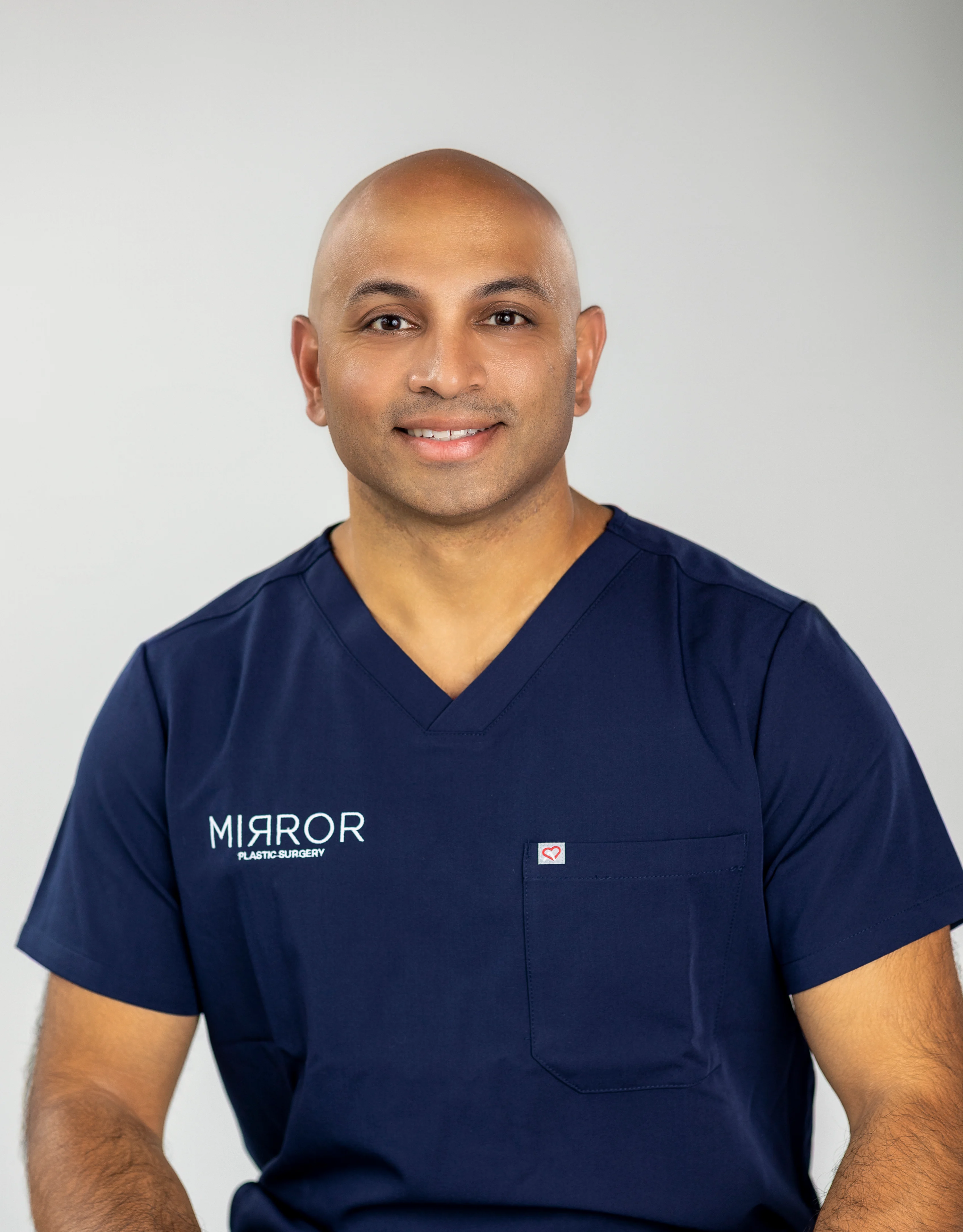
Dr. Chandawarkar also serves as an advisory board member for Tiger Aesthetics, the manufacturer of AlloClae. This role gives him direct familiarity with the product’s behavior, best-practice injection techniques, and the clinical context needed for honest candidacy assessment.
Mirror’s concierge medicine model limits the practice to one to two procedures per day and includes up to an hour-long consultation. That time supports a thorough, anatomy-based assessment rather than a sales pitch. Patients leave understanding whether a treatment is appropriate, what realistic results look like, and how a maintenance plan might work.
Mirror serves patients throughout the St. Petersburg and Tampa Bay area. For full procedure details, visit the Mirror Plastic Surgery AlloClae Buttock Enhancement service page.
Frequently Asked Questions
Is AlloClae A Good Filler For Hip Dips?
AlloClae is a structural adipose filler designed for body contouring, including hip dip correction. It provides immediate volume and a scaffold for tissue integration, which makes it a meaningful option for patients with mild-to-moderate lateral trochanteric depressions and adequate soft-tissue coverage. It does not suit patients expecting dramatic BBL-like projection, patients with minimal overlying tissue, or patients whose hip dip is primarily driven by skeletal geometry. A physician-led consultation remains the best way to determine whether AlloClae fits a specific patient’s anatomy.
How Long Does AlloClae Last In Hip Dips?
As discussed in the longevity section, results often last 1–3 years for many patients. Published multi-year volumetric imaging data are still maturing, so all longevity figures function as estimates rather than guarantees. Individual factors such as tissue quality, placement technique, and lifestyle influence how long results remain visible.
What Is The Most Effective Treatment For Hip Dips?
The most effective treatment depends on the patient’s anatomy and goals. AlloClae suits lean patients who lack sufficient donor fat for surgical fat transfer and who want non-surgical contour improvement with minimal downtime. Sculptra suits patients who want gradual, collagen-based volume and feel comfortable with a multi-session plan and a result that builds over months. Surgical fat transfer suits patients with adequate donor fat who want dramatic, permanent augmentation and accept the recovery and risk profile of surgery. A board-certified plastic surgeon can match these options to each patient’s situation.
Can You Fix Hip Dips Naturally?
Hip dips represent a skeletal feature determined by the relationship between the iliac crest and the greater trochanter of the femur. Exercise cannot fill a hip dip because the muscles overlying it, the gluteus medius and tensor fasciae latae, are flat and modest in cross-section, and the lowest point of the dip lies over the iliotibial band and the trochanter, which are tendon and bone. Tendon does not hypertrophy. Targeted exercises such as fire hydrants and clamshells may modestly improve overall hip tone, but they cannot change the underlying skeletal geometry that creates the depression.
AlloClae BBL Vs. Surgical BBL – What Is The Difference?
AlloClae BBL uses injectable donor fat matrix to add volume and smooth contour without surgery. It requires no liposuction, no donor site, and no general anesthesia, and most patients return to normal activities within 2 to 3 days. Surgical BBL uses the patient’s own fat harvested via liposuction and reinjected into the buttocks and lateral hips. It offers greater volume correction and permanent results for surviving fat, with approximately 60 to 70 percent retention, and requires anesthesia, a liposuction donor site, and a 6 to 8 week recovery with significant activity restrictions. AlloClae often fits lean patients who lack sufficient donor fat for a surgical BBL, while surgical BBL often fits patients with adequate donor fat who want dramatic, permanent augmentation.
Book A Consultation With Dr. Akash Chandawarkar
Dr. Chandawarkar is currently welcoming new patients seeking non-surgical BBL services at Mirror Plastic Surgery in St. Petersburg, Florida. Consultations run up to an hour and include a thorough, anatomy-based assessment with direct guidance on the right approach for each patient’s goals.
Mirror Plastic Surgery is located at 780 4th Ave S, St. Petersburg, FL 33701. To secure an appointment, call or text 727-361-6515, or email [email protected].
Book Your Personalized Assessment
Results may vary from person to person. Editorial content and patient information do not constitute a guarantee of specific results.