
Cellulite Treatment
Written by: Dr. Akash Chandawarkar, Board Certified Plastic Surgeon, Mirror Plastic Surgery | Last updated: September 28, 2026
Key Takeaways
Cellulite comes from fibrous septae that tether the skin to deeper fascia, rather than from fat volume or lifestyle factors.
Subcision procedures such as Avéli and Cellfina have the strongest evidence for long-lasting improvement by physically releasing those bands.
Topical creams, massage, and non-invasive energy devices cannot sever fibrous septae and provide only temporary or modest results.
Patient selection based on cellulite grade and skin quality is essential. Subcision works best for discrete, tethered dimples visible when standing.
Mirror Plastic Surgery Med Spa offers physician-performed Avéli treatments with a concierge consultation model focused on evidence-based, individualized care.
Start Your Cellulite Consultation At Mirror Plastic Surgery Med Spa
What Cellulite Actually Is: The Fibrous Septae Mechanism
Cellulite reflects a structural problem in the tissue, not a simple fat problem. Fibrous connective tissue bands, called fibrous septae or retinacula cutis, run from the underside of the skin down through the subcutaneous fat layer and anchor to the deeper fascia. As fat cells push upward, the taut bands pull downward, creating the quilted, dimpled surface. In women, these bands run perpendicular to the skin surface. In men they angle at roughly 45 degrees in a crisscross pattern that resists herniation, which explains why cellulite is far more common in women.
Because the mechanism is structural rather than volumetric, fat-removal procedures do not fix dimpling. The American Society of Plastic Surgeons notes that liposuction removes soft fatty tissue without altering the fibrous bands, leaving the mechanism that produces cellulite entirely intact. Thinning the fat layer can even make dimpling more visible, because the fat that previously softened the tethering points is gone. The Cleveland Clinic and the American Academy of Dermatology (AAD) reach the same conclusion: treatments targeting only fat volume leave the fibrous architecture untouched.
Cellulite Stages And Grades
The accepted clinical grading system is the Nürnberger–Müller scale, which classifies severity from Grade 0 (smooth skin with no visible or palpable changes) through Grade III (pronounced dimpling visible in both standing and supine positions). Grade I dimples appear only when the skin is pinched. Grade II shows an orange-peel appearance without manipulation while standing.
A more granular tool, the validated Cellulite Severity Scale (CSS), scores five features independently: number of depressions, depth of depressions, appearance of raised areas, presence of flaccidity, and overall grade, each rated 0 to 3 for a composite range of 0 to 15. The CSS can detect improvements that the Nürnberger–Müller grade misses entirely.
Grade helps determine the treatment path. A patient with advanced fibrotic cellulite is a first-line candidate for procedures targeting the dermal–subcutaneous fibrous architecture, such as subcision or septal-lysis devices. Patients with mild, diffuse surface texture and no discrete tethered dimples may respond modestly to energy-based skin treatments. Patients with primarily skin laxity from collagen and elastin loss are better matched to skin-tightening modalities than to subcision, which addresses bands rather than laxity.
Evidence-Ranked In-Office Treatments
The treatments below appear in order of evidence strength, from strongest to most limited, based on peer-reviewed data and regulatory clearance history. Subcision sits at the top, followed by laser-assisted treatment, then non-invasive energy options.
Subcision: Cellfina And Avéli
Subcision physically severs the fibrous bands beneath individual dimples, allowing the skin to rise and smooth out. Because a cut band retracts and does not reattach, the structural correction tends to be durable. The American Society for Laser Medicine and Surgery (ASLMS) reports 85% patient satisfaction at three months, 94% at one year, and 96% at two years in peer-reviewed studies of mechanical band lysis.
Cellfina used a vacuum-stabilized motorized microblade to cut bands at a fixed depth. It held FDA clearance for up to five years of improvement, the longest durability claim ever granted to a cellulite treatment, before being discontinued for commercial rather than safety reasons. Cellfina now has limited availability.
Avéli is the current standard-bearer for subcision. It received FDA 510(k) clearance K221336 in August 2022 for long-term reduction of cellulite in the buttocks and thighs. Unlike Cellfina’s fixed-depth blind cut, Avéli uses an integrated LED transillumination system that lets the provider hook, visually verify, and confirm the release of each individual fibrous band in real time. This approach reduces collateral tissue disruption. The CONFFIRM pivotal trial found the clinically significant improvement in CSS scores achieved at three months was sustained through twelve months, with patient satisfaction commonly reported around 90% at one year. Avéli works especially well for thigh cellulite and complex dimples where vacuum-chamber placement is difficult.
Both Cellfina and Avéli target the same fibrous septae through subcision. Cellfina used a motorized vacuum-assisted blade at a fixed depth, while Avéli uses a manual, light-guided hook with real-time confirmation. Avéli’s typical recovery is one to two weeks versus two to four weeks for Cellfina, and its seroma risk is very low (under 1%) compared with Cellfina’s approximate 10%.
Laser-Assisted Treatment: Cellulaze
Cellulaze (FDA clearance K102541) uses a 1440 nm side-firing laser fiber passed under the skin to thermally sever fibrous septae, melt herniated fat lobes, and heat the reticular dermis to stimulate collagen remodeling. Compared with subcision, Cellulaze combines septal disruption with dermal heating and collagen stimulation, while subcision focuses on mechanical band release. A single Cellulaze session produced 92% patient satisfaction at one year in peer-reviewed studies. The AAD lists Cellulaze among treatments with the best results, with effects lasting a year or longer. Its evidence base is smaller than that of subcision devices, and its published durability falls below the multi-year claims supported by Cellfina and Avéli data.
Acoustic Wave Therapy
The AAD states that studies show acoustic wave therapy can reduce the appearance of cellulite, though multiple sessions are needed. A 2024 systematic review of 24 randomized controlled trials found shock wave therapy among the most promising non-invasive options. Results are temporary and require ongoing maintenance. Acoustic wave therapy does not sever fibrous bands but partially disrupts them through mechanical energy. It offers a reasonable option for needle-averse patients with mild to moderate cellulite.
Radiofrequency
The AAD rates radiofrequency as having only some evidence of a small, short-lived improvement in cellulite. Radiofrequency heats tissue to stimulate collagen remodeling and can improve skin firmness, but it does not release fibrous bands. Mayo Clinic notes that nonablative radiofrequency typically requires several sessions and must be repeated more often than ablative treatments. It fits best for diffuse mild cellulite with a skin-laxity component rather than discrete tethered dimples.
Cellulite Treatment Comparison
The table below summarizes how these options differ on mechanism and downtime, the two factors that most often guide real-world treatment choices.
Procedure | Mechanism | Typical Downtime |
|---|---|---|
Subcision / Cellfina | Mechanical lysis of fibrous septae via vacuum-assisted motorized microblade | Two to four weeks of bruising; return to desk work within one to two days |
Avéli | Manual light-guided hook subcision with real-time band-release confirmation | One to two weeks of bruising; most patients return to normal activities within a few days |
Cellulaze | 1440 nm laser fiber severs septae, melts fat lobes, and heats dermis to stimulate collagen | |
Acoustic Wave Therapy | Acoustic pulses partially disrupt fibrous septae and stimulate circulation | |
Radiofrequency | Thermal energy stimulates collagen remodeling and improves skin firmness |
What Does Not Work And Why
The treatments above all target the fibrous bands in some way. The options below do not, which explains why they consistently disappoint. If you have spent money on creams, massage, dry brushing, and detox supplements without lasting results, the explanation is anatomical rather than personal. The fibrous septae sit one to two centimeters below the skin surface, whereas a well-formulated cream penetrates only about one millimeter. No topical product can reach the bands, let alone release them. The frustration many patients feel is entirely valid.
Can You Massage Out Cellulite On Thighs?
Massage cannot release fibrous septae. The AAD states that cellulite tends to return within about one month of stopping Endermologie treatments. Manual massage stimulates blood flow and temporarily reduces fluid retention, which can create short-term skin smoothing. Because the structural bands remain intact, any improvement reverses within hours to weeks of stopping treatment.*
Can Cellulite In Your Legs Go Away?
Discrete tethered dimples caused by fibrous bands can be significantly reduced* through subcision-based procedures that physically sever those bands. Diffuse surface texture may soften modestly with energy-based treatments or strength training. No diet, no matter how healthy, can eliminate cellulite because cellulite is not caused by poor nutrition, and weight loss alone does not reliably remove it. In some women, weight loss makes dimpling more visible as surrounding fat volume decreases.
Hormones, Lymphatic Drainage, And Other Myths
Does Cellulite Mean High Estrogen?
Cellulite does not simply reflect high estrogen levels. Mayo Clinic states that hormonal factors play a large role in cellulite development, but the relationship is more nuanced than a single hormone level. During menopause, falling estrogen levels increase vascular permeability, impair skin microcirculation, and reduce collagen and elastin production. These changes worsen the skin’s ability to stay smooth over tethered tissue. Estrogen influences septal architecture and fat distribution, yet cellulite does not serve as a direct sign of hormonal excess.*
Does Cellulite Mean Poor Lymphatic Drainage?
Lymphatic drainage does not cause cellulite. Cellulite is a structural condition caused by fibrous septae tethering the dermis to underlying fascia. Lymphatic massage may temporarily reduce fluid retention and soften the appearance of cellulite, but it produces no structural change to the bands. Detox teas and supplements marketed for cellulite have no clinical data supporting their use.
How Can I Break Cellulite Bands?
Fibrous septae require a procedural release. At-home techniques cannot make significant changes to the underlying tissues because the bands sit well below the reach of any topical, massage, or mechanical surface treatment. Subcision, whether with Avéli or a related device, physically severs the band from below the skin under local anesthesia. No at-home equivalent exists.
At-Home Support That Actually Helps
Two at-home strategies have meaningful evidence as adjuncts to in-office treatment and can support smoother-looking skin over time.
Strength training targeting the lower body increases dermal thickness and can modestly reduce cellulite grade. A 2020 study found that 12 weeks of progressive lower-body resistance training reduced Nürnberger–Müller grade by a mean of 0.6 points, while aerobic exercise alone did not produce significant cellulite improvement. Squats, lunges, and hip bridges two to three days per week offer a cost-effective way to extend the benefit of device-based treatments.*
Topical retinol at 0.3% or higher thickens the dermis over time by stimulating collagen production. Mayo Clinic states that any effect from 0.3% retinol will not be noticeable for six months or longer. Retinol can realistically improve skin quality but does not treat the fibrous bands themselves.
Neither strategy replaces in-office treatment for discrete tethered dimples. Both work best as support for procedural intervention rather than as stand-alone solutions.
Avéli Cellulite Treatment At Mirror Plastic Surgery In St. Petersburg And Tampa
Mirror Plastic Surgery offers Avéli cellulite treatment at its St. Petersburg location, serving patients throughout the Tampa Bay area. The practice is located at 780 4th Ave S, St. Petersburg, FL 33701, and can be reached by phone or text at 727-361-6515 or by email at [email protected].
What the Avéli procedure involves: Avéli is performed as a single in-office session under tumescent local anesthesia. A standing assessment and dimple mapping come first, because dimples visible while standing often disappear when lying down as tissue tension changes. The Avéli probe, a thin handheld device with an integrated LED at its tip, is inserted through a small entry point and used to hook, visually confirm, and sever each fibrous band responsible for a specific dimple. The transillumination system allows Dr. Akash to see the device’s position beneath the skin in real time and verify that each band has been fully released before moving to the next. The procedure typically takes 30 to 90 minutes depending on the number of dimples treated.
Who is a good candidate: Avéli suits patients with distinct, clearly defined cellulite dimples on the buttocks or thighs that are most visible when standing, who are at or near a stable goal weight, and who hold realistic expectations about dimple reduction rather than total surface smoothing.* Patients with primarily skin laxity without a fibrous tethering component, or those with diffuse orange-peel texture without discrete dimples, may be better matched to alternative modalities. Dr. Akash explains these distinctions clearly during consultation.
What to expect before, during, and after: Before the procedure, a thorough assessment establishes which dimples are driven by fibrous bands and which are not. During treatment, the tumescent anesthesia, often the most uncomfortable part, is administered over 10 to 15 minutes. The subcision itself is usually well-tolerated. After treatment, bruising typically peaks at days three to five and resolves over two to three weeks. Patients wear compression garments for one to two weeks and avoid strenuous lower-body activity for two weeks. Most patients return to desk work within a few days. Initial improvement is visible within two to four weeks, and final results* are fully apparent at three months once all swelling has resolved.
The concierge consultation process: Every Avéli patient at Mirror Plastic Surgery begins with a comprehensive consultation of up to an hour with Dr. Akash. The assessment covers anatomy, cellulite grade, skin quality, and individual goals, and leads to an honest, personalized recommendation. That recommendation may be Avéli, a combination approach, or a candid explanation of why treatment is not yet warranted. To book, patients can call or text 727-361-6515, email [email protected], or use the link below.
What Sets Mirror Plastic Surgery Apart
Mirror Plastic Surgery follows a low-volume, high-attention model that centers each patient’s safety and goals. The practice limits itself to one to two surgical procedures per day. This schedule ensures that every patient, surgical or non-surgical, receives the team’s full, undivided attention before, during, and after their procedure. Consultations run up to an hour and include a top-to-bottom assessment that explores anatomy, goals, and the emotional context behind a patient’s decision to seek treatment.
The guiding philosophy follows a clear order: safety first, function second, and aesthetics third. That sequence shapes every recommendation. Treatments are selected because they fit the patient’s needs and evidence base, not because they fill a schedule. Dr. Akash Chandawarkar often tells patients when an expensive service is not yet necessary, which builds trust and long-term relationships.
Mirror Plastic Surgery remains supplier-neutral. Recommendations are driven by evidence and individual anatomy, rather than by product quotas or commission structures. That independence supports an honest cellulite assessment and helps match each patient with the right procedure for their dimple pattern, skin quality, and goals, including the option of no procedure at all.
Meet Your Physician: Dr. Akash Chandawarkar
Dr. Akash Chandawarkar, MD, is the founder of Mirror Plastic Surgery and is board certified by the American Board of Plastic Surgery. He is a Harvard-educated physician and a Johns Hopkins-trained plastic surgeon, followed by a specialized aesthetic surgery fellowship at the Manhattan Eye, Ear & Throat Hospital (MEETH)/Lenox Hill Hospital in New York. Dr. Akash serves on the advisory board of Tiger Aesthetics, makers of Avéli, giving him direct access to the clinical and technical development of the device he uses in practice. He personally performs all injectable and non-surgical treatments at Mirror Plastic Surgery, including cellulite treatment with Avéli. Every procedure is physician-performed and never delegated.
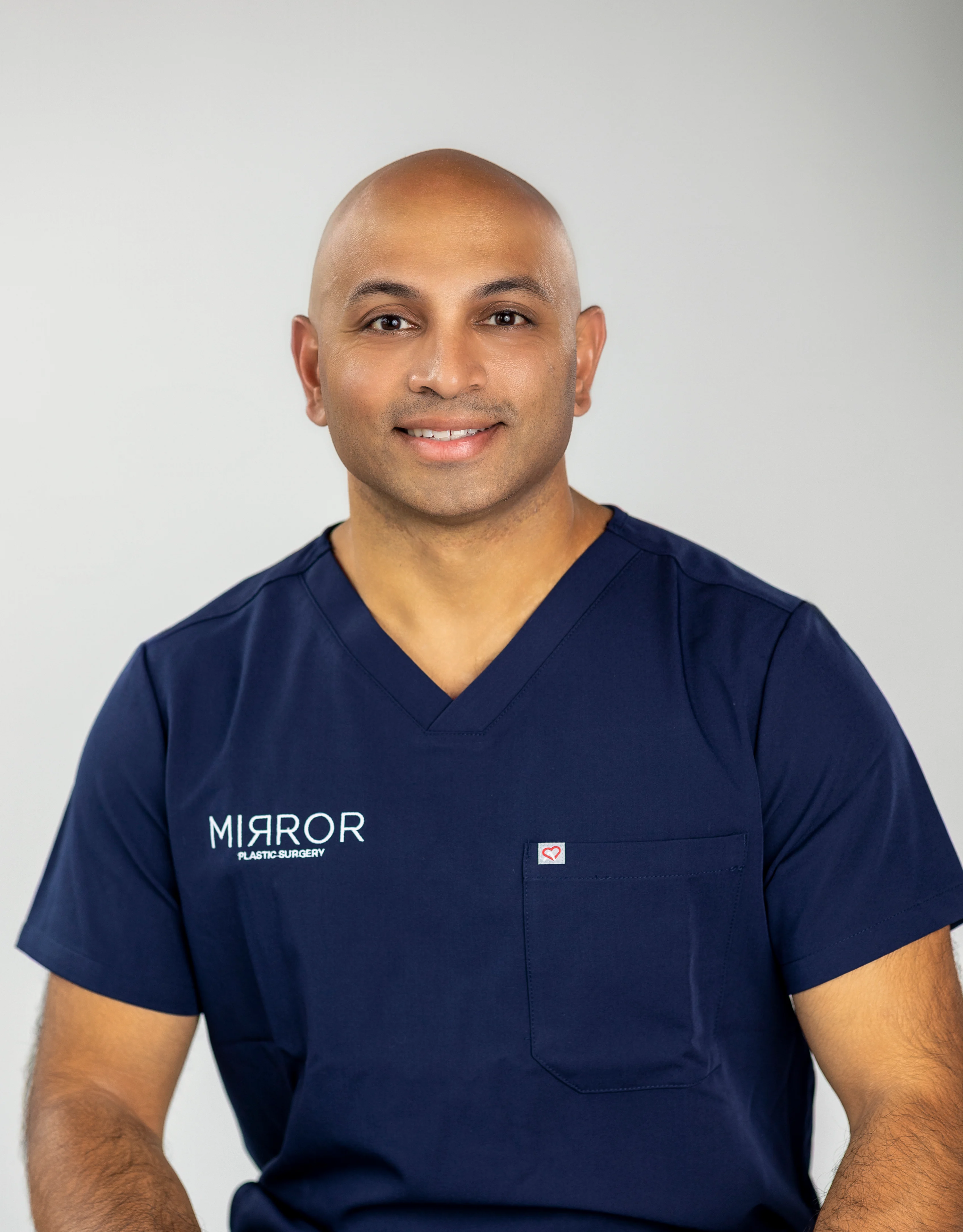
Meet Dr. Chandawarkar In Person
Frequently Asked Questions
What Is The Main Cause Of Cellulite?
Cellulite develops because fibrous connective tissue bands called septae tether the underside of the skin to the deeper fascia. Fat pushes upward between these bands while the bands pull the skin downward, producing the dimpled surface. It is a structural, architectural problem, which is why it appears in lean, athletic women and why fat-removal procedures do not fix it.
What Is Stage 4 Cellulite?
The most widely used clinical grading system, the Nürnberger–Müller scale, classifies cellulite in four grades from 0 to III, rather than four numbered stages. Grade III, sometimes colloquially called “stage 4,” is the most severe. It involves pronounced dimpling with deep depressions visible in both standing and supine positions, often accompanied by skin laxity. At this severity, subcision-based procedures targeting the fibrous architecture are the primary in-office option, though skin laxity may require separate treatment.
Does Avéli Work For Cellulite On The Thighs?
Avéli is FDA-cleared for cellulite on both the buttocks and thighs and is particularly well-suited to thigh cellulite because its manual, light-guided design allows precise band release on curved surfaces where vacuum-chamber devices are difficult to position. The CONFFIRM pivotal trial’s durable results, described above, apply to thigh treatment as well. Results* depend on individual anatomy and dimple pattern.
How Many Sessions Of Avéli Are Needed?
Avéli is designed as a single-session procedure. Because the device physically severs each fibrous band under real-time visual confirmation, the structural release is achieved in one treatment. Treated bands do not reattach. Avéli does not prevent new dimples from forming in previously untreated areas over time due to aging, hormonal shifts, or weight changes, so some patients return for additional treatment of new dimples years later.
Is Cellulite Treatment Covered By Insurance?
Cellulite treatment is not covered by health insurance because cellulite is classified as a cosmetic condition rather than a medical one. This applies to all in-office options, including Avéli, Cellulaze, and acoustic wave therapy. Every person’s anatomy and goals differ, and a personalized consultation is the appropriate starting point for understanding which options are right for a given patient.
Book A Consultation
Every person’s cellulite pattern, skin quality, and goals differ, so no single protocol fits everyone. An honest assessment, including the possibility that treatment is not yet necessary, offers the most responsible starting point. At Mirror Plastic Surgery, Dr. Akash Chandawarkar provides a thorough, evidence-based evaluation under a concierge model that prioritizes your well-being over procedure volume.
To schedule a consultation, contact Mirror Plastic Surgery directly:
Address: 780 4th Ave S, St. Petersburg, FL 33701
Phone / Text: 727-361-6515
Email: [email protected]
An expert assessment will guide you through personalized options to achieve your cellulite treatment goals.*
Schedule Your Cellulite Assessment
Mandatory Disclaimer
Disclaimer: Results may vary from person to person. Editorial content, before and after images, and patient testimonials do not constitute a guarantee of specific results.