
Dermal Fillers (Hands Contouring)
Written by: Dr. Akash Chandawarkar, Board Certified Plastic Surgeon, Mirror Plastic Surgery | Last updated: September 28, 2026
Key Takeaways
Dermal fillers for the hands restore lost volume on the back of the hand, soften visible veins and tendons, and can improve skin quality. They do not reverse sun damage or skeletal changes.
The dorsal hand has three distinct laminae. The safest injection plane is the avascular dorsal superficial lamina, and blunt cannulas further reduce vascular risk.
Radiesse (CaHA) and Restylane Lyft (HA) are the only FDA-approved fillers for hand augmentation. Product choice depends on skin thickness, vein prominence, and whether reversibility is a priority.
Results typically last 12–18 months for CaHA and 6–12 months for HA. Longevity depends on filler type, volume, metabolism, sun exposure, and hand mobility.
Mirror Plastic Surgery Med Spa offers concierge-level hand rejuvenation. Board-certified plastic surgeon Dr. Akash Chandawarkar personally performs every injection under a safety-first protocol.
Book Your Hand Rejuvenation Consultation at Mirror Plastic Surgery Med Spa
Why Mirror Plastic Surgery’s Approach To Hand Fillers Feels Different
Mirror Plastic Surgery follows a concierge medicine model that differs from high-volume aesthetic practices. Each consultation can last up to an hour and covers a top-to-bottom assessment of anatomy, motivations, and long-term goals. The practice limits itself to one to two surgeries per day so the clinical team can focus fully on each patient before, during, and after treatment.
The practice’s guiding hierarchy places safety first, function second, and aesthetics third. This matters in the dorsal hand, where thin skin, a dense venous network, and superficial extensor tendons demand precise anatomical knowledge. Mirror Plastic Surgery is supplier-neutral. Product selection follows the patient’s anatomy and goals, so a patient may receive a hyaluronic acid filler, a calcium hydroxylapatite filler such as Radiesse, or poly-L-lactic acid (PLLA) based on their tissues and medical history, not purchasing agreements.
Meet Dr. Chandawarkar For A Hand Rejuvenation Plan
Meet Your Injector: Dr. Akash Chandawarkar
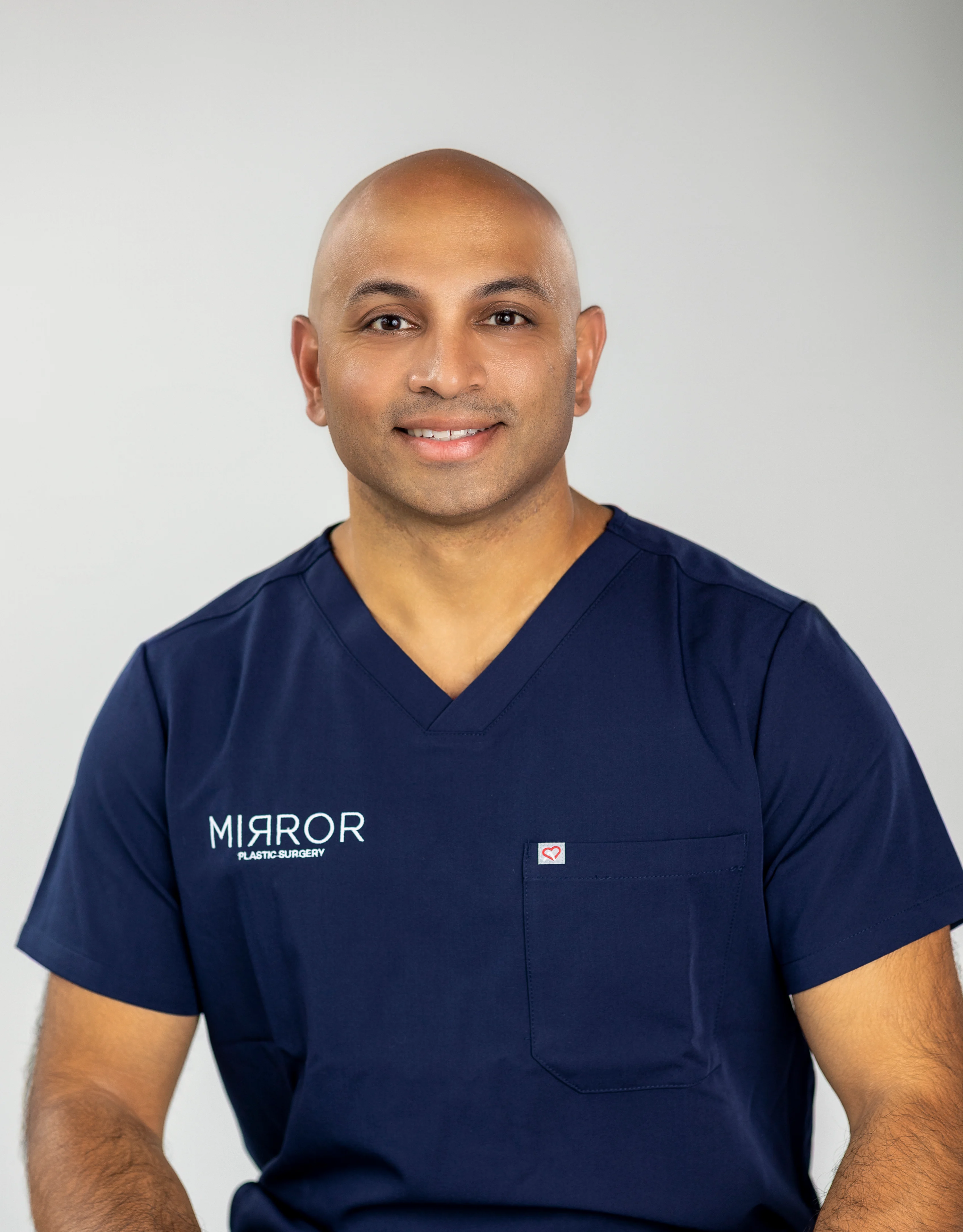
Dr. Akash Chandawarkar is a Harvard-educated physician and Johns Hopkins-trained plastic surgeon, board-certified by the American Board of Plastic Surgery, with aesthetic surgery fellowship training at Manhattan Eye Ear & Throat Hospital (MEETH)/Lenox Hill Hospital. He personally performs every injectable treatment at Mirror Plastic Surgery, bringing a surgeon’s command of subdermal anatomy to each injection. His advisory board role with Merz Aesthetics, makers of Radiesse, keeps him at the forefront of biostimulatory filler innovation and protocol development.
A 2024 study co-authored by Dr. Chandawarkar and colleagues, published in the Journal of Cosmetic Dermatology, examined the dilutional rheology of Radiesse and its implications for regeneration and vascular safety. That research directly informs his clinical approach to hand filler.
The Dorsal Hand Layers And How Filler Creates Volume
The dorsal hand is a technically demanding injection environment because its skin is ultrathin (dermis 0.2–0.9 mm), the dorsal venous plexus and sensory nerves lie in the intermediate lamina, and the extensor tendons lie in the deep lamina close to the surface. The dorsal hand consists of skin overlying subcutaneous tissue divided into three fatty laminae separated by fascial layers.
The dorsal superficial lamina lies between the dermis and dorsal superficial fascia and contains no important structures. The dorsal intermediate lamina lies between the dorsal superficial and dorsal intermediate fasciae and contains the dorsal venous network and cutaneous sensory nerves. The dorsal deep lamina lies between the dorsal intermediate and dorsal deep fasciae and contains the extensor tendons. The dorsal deep fascia overlies the interosseous muscles and metacarpal bones.
These layers form three distinct laminae relevant to injection technique:
Deep Lamina: This layer is associated with the extensor tendons and bone. Injectors generally avoid this depth for volumizing.
Injection depth determines both safety and result. The dorsal superficial lamina (DSL) is the safe target plane because it is a thin fatty layer containing no major veins, nerves, or tendons, so filler placed there conceals prominent veins and tendons by adding soft-tissue volume above the deeper laminae. Go too shallow and nodules can form from uneven distribution. Go too deep into the intermediate lamina and you risk the large dorsal veins and sensory nerves located there.
For hand filler injection, blunt-tipped cannulas are often preferred over sharp needles for deep subdermal bulk volume restoration, while sharp needles remain valuable for precise, superficial, or focal injections. Clinical consensus recommendations state that a blunt microcannula of 27 gauge or above is unlikely to penetrate blood vessels or nerves and instead pushes them aside, reducing the risk of inadvertent intravascular injection and ecchymosis when used with appropriate technique. For hand volumization, a 25G or 23G 2-inch (50 mm) blunt cannula is recommended. A 2026 letter by Chuan-Yuan Lin in the Journal of Cosmetic Dermatology reinforces that needle versus cannula choice, injection plane, and volume per pass are all critical variables for hand filler safety and outcomes.
Technique and instrument choice matter only if the patient is a suitable candidate in the first place. Good candidates for hand filler are adults with visible dorsal volume loss and prominent veins or tendons, though the FDA-approved RADIESSE label notes that patients with very severe fatty tissue loss and marked visibility of veins and tendons have not been studied, and those with hand diseases, injuries, or disabilities require caution.
The following patients are generally not appropriate candidates:
Active infection on the hands
Certain autoimmune or vascular conditions
Bleeding disorders or anticoagulant therapy that cannot be paused
Pregnancy or breastfeeding
Unrealistic expectations about what filler can achieve
The procedure typically includes consultation and assessment, topical numbing, and injection using cannula or needle technique based on the physician’s plan, with the injection itself taking about 15 to 20 minutes split across both hands. Expected outcomes include improved dorsal contour and a smoother, fuller, more youthful hand appearance. Results are temporary and usually last 12–18 months, and fillers cannot correct all age-related changes such as sun damage or significant skin laxity. Fillers do not reverse sun damage or bone changes, and while they may improve skin quality and thickness, they do not fully reverse skin thinning.
Best Filler For Hands: Radiesse Vs. Hyaluronic Acid Vs. PLLA
Two dermal fillers are FDA-approved for hand augmentation under product code PKY (Dermal Implant for Hand Augmentation), a distinct regulatory category from the general facial filler code LMH: Radiesse (calcium hydroxylapatite) and Restylane Lyft (hyaluronic acid). PLLA is used off-label for the hands. The table below compares these three options by mechanism, longevity, and reversibility.
Filler Type | Mechanism | Typical Longevity | Reversibility |
|---|---|---|---|
Radiesse for hand volumizing has an average longevity of 12–18 months, with reports of up to two years post-injection. FDA-approved labeling supports hand volumizing effects through 12 months, and safety beyond 1 year in the hand has not been investigated in clinical trials. | |||
PLLA (e.g., Sculptra) | PLLA works through fibroblastic stimulation and neocollagenesis rather than a true filler effect. Initial volume comes from edema and carrier fluid, which resolve within days, and PLLA particles then trigger a subclinical foreign-body inflammatory response that stimulates new type I collagen production over a series of sessions. | PLLA’s duration of action is typically 12 to 24 months, with some reports of effects lasting up to 3 years. |
Radiesse and Restylane Lyft both hold FDA approval for the dorsum of the hand, and there is no single best product. In patients with extreme skin thinning, Restylane Lyft can provide a softer, more natural result because firm CaHA microspheres may be visible as a pale discoloration, and Radiesse is more likely to cause swelling. In patients with pronounced veins and tendons, Radiesse offers strong structural lift and opacity that can camouflage dark blue dorsal veins more effectively than translucent hyaluronic acid. HA fillers like Restylane Lyft can also reduce the appearance of veins and tendons but carry a risk of the Tyndall effect in very thin skin.
The non-reversibility of CaHA and PLLA increases the importance of injector selection. If accidental intravascular injection of Radiesse occurs, supportive measures must begin immediately because the CaHA embolus cannot be easily dissolved, although a few reports suggest sodium thiosulfate may help disperse calcium hydroxylapatite. PLLA carries a documented nodule risk that is highest in the hand among injection sites. A retrospective, single-center study of 130 HIV-negative patients treated with PLLA from 2003 to 2008 (Palm et al.) found an overall nodule formation rate of 8.5%, with the highest incidence of post-treatment nodules in the hands (12.5%) and cheeks (7.2%).
How Long Dermal Fillers Typically Last In Hands
Hand filler longevity connects directly to the product comparison above. Different fillers behave differently in the highly mobile, sun-exposed environment of the hands. The following factors affect how long results are maintained:
Volume Injected: Conservative initial treatment may require a touch-up sooner than fuller correction.
Sun Exposure: UV exposure accelerates collagen breakdown and speeds the visible return of volume loss.
Lifestyle Factors: Smoking, rapid weight change, and strenuous hand use can all influence how quickly results fade.
Biostimulatory fillers such as Radiesse may produce longer-lasting collagen effects because the stimulated scaffold persists after the gel carrier has been absorbed. The collagen and elastin scaffold produced by Radiesse (CaHA-CMC) can persist for roughly 18–24 months or longer, outlasting the CaHA microspheres, which are gradually degraded by phagocytes over approximately 12–18 months. HA fillers are typically re-treated sooner and offer the advantage of reversibility.
How Many Syringes You May Need For Hand Contouring
Both hands are treated together to maintain symmetry. The number of syringes depends on the degree of volume loss, the product chosen, and the patient’s goals. Radiesse is typically dosed at 1.5 mL (one syringe) per hand for moderate volume deficit, with severe deficits requiring up to 3.0 mL per hand. Volumes over 3 cc per hand in a treatment session have not been studied, and clinical studies averaged 2.5 mL per hand. Restylane Lyft is typically dosed at 1.0 mL to 2.0 mL per hand, and the FDA-labeled maximum recommended dose for dorsal hand volume deficit is 3.0 mL per hand.
A conservative approach, starting with less and adding volume over subsequent visits, is generally preferred. Overfilling hands with dermal filler can look unnatural, feel heavy, or cause prolonged swelling, and many patients achieve a more elegant result with subtle correction. FDA labeling for RADIESSE warns against overcorrecting a contour deficiency, notes that volumes over 3 cc per hand per session have not been studied, and states that re-treatment with volumes greater than approximately 1.6 cc per hand can increase adverse events such as redness, pain, swelling, and difficulty performing activities. This is why a personalized assessment determines the plan and why price-shopping for hand filler is risky in such an anatomy-sensitive area.
Is Hand Filler Safe? Risks And Who Should Avoid It
The dorsal hand is one of the more technically demanding areas for dermal filler injection. Filler-associated vascular occlusion affects approximately 0.015% of patients overall, though the true incidence may be underestimated because mild or misdiagnosed cases often go untracked. In the hand, the dense dorsal venous network and thin tissue envelope make injection depth and technique central to safety.
Documented risks of hand filler include:
Vascular Occlusion: Intravascular injection can lead to severe complications including localized tissue necrosis. With non-reversible fillers such as CaHA, management relies on supportive care rather than enzymatic dissolution.
Nodules: Radiesse labeling reports nodules, bumps, or lumps in the dorsum of the hand in 12% of study patients, with effects lasting up to 1 year. In the clinical study, subjects who experienced nodules, bumps, or lumps reported a duration ranging from 17 to 312 days. PLLA carries the highest nodule risk of any filler class in the hand.
Bruising, Swelling, And Temporary Activity Difficulty: Forty-eight percent of study patients reported temporary difficulty performing activities after Radiesse hand injection.
Cannula technique can reduce but not eliminate vascular risk. Recent reports of blindness following nasal injections despite cannula use emphasize that technique, including low pressure, constant movement, and perpendicular vessel approach, remains paramount regardless of instrument. Cadaveric studies indicate that even small filler aliquots can completely block the ophthalmic artery, so small-volume injection alone does not guarantee safety. Deep anatomical knowledge of the dorsal hand laminar planes remains the primary safety variable.
The following patients should avoid hand filler or require additional assessment before proceeding:
Active infection on the hands
Certain vascular or autoimmune conditions
Bleeding disorders or anticoagulant therapy that cannot be paused
Pregnancy or breastfeeding
Known allergy to filler components
Patients who cannot commit to follow-up care
Radiesse (calcium hydroxylapatite, product code PKY) is FDA-approved for hand augmentation to correct volume loss in the dorsum of the hands, while hyaluronic acid fillers and PLLA are commonly used off-label for hand volumization. The American Academy of Dermatology and the American Society for Dermatologic Surgery both state that filler administration is safest in the hands of physicians with specific training in anatomy, injection technique, and complication management, though the AADA notes that non-physician personnel may inject under direct, on-site physician supervision.
Choosing A Provider For Dermal Fillers Contouring Hands
Provider choice directly affects both safety and aesthetic outcome. The key questions to ask before hand filler include who personally performs the injection, what their board certification and surgical training are, what specific experience they have with dorsal hand anatomy and laminar planes, and what protocol they follow if a vascular complication occurs.
For hand filler safety, the injector’s specific injectable training, volume of cases, and knowledge of local anatomy matter most because complications closely track injector technique and experience. Plastic surgery residency training requires residents to master the anatomy, physiology, and embryology of the upper extremity, including detailed knowledge of the muscles, tendons, ligaments, bones, and vascular tree of the hand. Inexperience contributes substantially to filler complications, and aesthetic medicine remains inadequately regulated in many jurisdictions, including the UK and many US states, leading to inconsistent training standards.
At Mirror Plastic Surgery, Dr. Akash Chandawarkar personally performs all injectable and non-surgical treatments. His assessment follows the practice’s safety-first, function-second, aesthetics-third hierarchy, and his product selection is anatomy-driven. The concierge model, which includes up to an hour of consultation time, direct physician access before and after treatment, and a limit of one to two procedures per day, applies to hand rejuvenation as it does to every other service at the practice.
Schedule Your Anatomy-First Assessment
Personalized Assessment For Hand Rejuvenation
Every person’s hands age differently, so a personalized consultation shapes the safest and most natural-looking plan. During this visit, Dr. Chandawarkar evaluates skin thickness, vein and tendon prominence, medical history, and lifestyle. He then recommends specific products, volumes, and staging to match your goals and risk profile.
Frequently Asked Questions
How Long Do Dermal Fillers Last In Hands?
Longevity depends on filler type, volume injected, metabolism, sun exposure, and lifestyle. As outlined above, CaHA often lasts about 12–18 months in the hands, HA about 6–12 months, and PLLA 12–24 months or longer. Because the hands experience constant movement and higher metabolic activity, hand fillers typically last around 12–15 months, and individual results vary.
What Is The Riskiest Place For Fillers?
The highest-risk anatomical zones for filler injection are areas with dense arterial supply and proximity to the ophthalmic circulation. The glabella, nose, and forehead carry the greatest risk of vision-threatening vascular occlusion because embolic material can travel retrograde through the supratrochlear, supraorbital, or dorsal nasal arteries toward the ophthalmic and retinal arteries, while the temple is considered a moderate-risk site. The dorsal hand is technically demanding because its intermediate lamina contains a dense venous network and sensory nerves, and its dermis is thin and becomes more attenuated with age.
Where Should You Not Put Fillers?
Fillers should not be injected into areas with active infection, open wounds, or known allergy to the product’s components. Patients with an ongoing skin infection in or near the treatment area should not be treated. In the face, the glabella, nasal tip and dorsum, periorbital region, and forehead require extreme caution and should only be approached by highly experienced injectors because of the proximity of end-arterial vessels. In the hand, injectors avoid the intermediate lamina, which contains large dorsal veins and sensory nerves, and the deep lamina, which contains the extensor tendons, and instead target a safer superficial subdermal plane such as the dorsal superficial lamina. Fillers are contraindicated or discouraged in patients with bleeding disorders, during pregnancy or breastfeeding, and in certain autoimmune or vascular conditions, especially during active disease.
Which Fillers Are Best For Hands?
As of current FDA records, only two dermal fillers hold approval specifically for dorsal hand augmentation: Radiesse (calcium hydroxylapatite), approved June 4, 2015 under PMA P050052/S049, and Restylane Lyft with Lidocaine (hyaluronic acid), approved May 18, 2018 under PMA P040024/S099. Product selection depends on anatomy, skin quality, and goals. Radiesse provides immediate structural volume plus long-term collagen stimulation and is often chosen for patients with prominent veins and tendons who want longer intervals between treatments, but it cannot be dissolved if a complication occurs, and its use in patients with very severe loss of fatty tissue and marked visibility of veins and tendons has not been studied. Restylane Lyft is a firm hyaluronic acid gel with high lift capacity that is often used when the skin is very thin or when reversibility with hyaluronidase is a priority.
Book A Consultation
Dr. Akash Chandawarkar at Mirror Plastic Surgery in St. Petersburg, Florida, personally performs dermal fillers contouring hands for patients throughout the Tampa Bay area. Consultations are comprehensive, anatomy-grounded, and conducted without pressure or quota-driven product recommendations. To schedule a top-to-bottom assessment, contact the practice directly.
Address: 780 4th Ave S, St. Petersburg, FL 33701
Phone: 727-361-6515
Email: [email protected]
Instagram: @mirrorplasticsurgery and @dr.akashplasticsurgery
Meet Dr. Chandawarkar For A Hand Rejuvenation Plan
Mandatory Disclaimer
*Disclaimer: Results may vary from person to person. Editorial content, before and after images, and patient testimonials do not constitute a guarantee of specific results.