
Dermal Fillers (Upper Knees Contouring)
Written by: Dr. Akash Chandawarkar, Board Certified Plastic Surgeon, Mirror Plastic Surgery | Last updated: September 28, 2026
Key Takeaways
Here are the core points to know about upper knee filler before you decide whether to move forward.
Dermal fillers for upper knee contouring are used off-label to improve crepey texture, hollowing, and mild volume loss above the kneecap, with no FDA approval for body contouring applications.
The upper knee is a higher-risk injection zone due to complex neurovascular anatomy, so safe treatment requires physician expertise and precise anatomical knowledge.
Biostimulatory fillers like Sculptra and Radiesse have the strongest support for improving crepey texture and skin quality, while hyaluronic acid fillers address localized hollowing and offer the advantage of reversibility.
Good candidates have mild-to-moderate volume loss or crepiness with realistic expectations; patients with severe sagging, significant laxity, or excess skin need different treatments.
Mirror Plastic Surgery Med Spa provides the anatomical expertise and honest guidance this higher-risk treatment requires through comprehensive consultations and evidence-based care.
Get Expert Guidance on Knee Filler
What Sets Mirror Plastic Surgery Apart
Choosing the right injector matters as much as choosing the right product. Mirror Plastic Surgery operates on a concierge medicine model with up to an hour-long, top-to-bottom assessment, only one to two surgeries per day, and a philosophy of long-term care over one-off procedures. The practice prioritizes safety and function before aesthetics. As a supplier-neutral, evidence-based practice, Mirror uses the right amount of the most appropriate product rather than quota-driven upselling. For patients seeking dermal fillers contouring upper knees in the Tampa/St. Petersburg area, Mirror Plastic Surgery offers the anatomical expertise and honest guidance this higher-risk treatment demands.
Schedule Your Personalized Knee Assessment
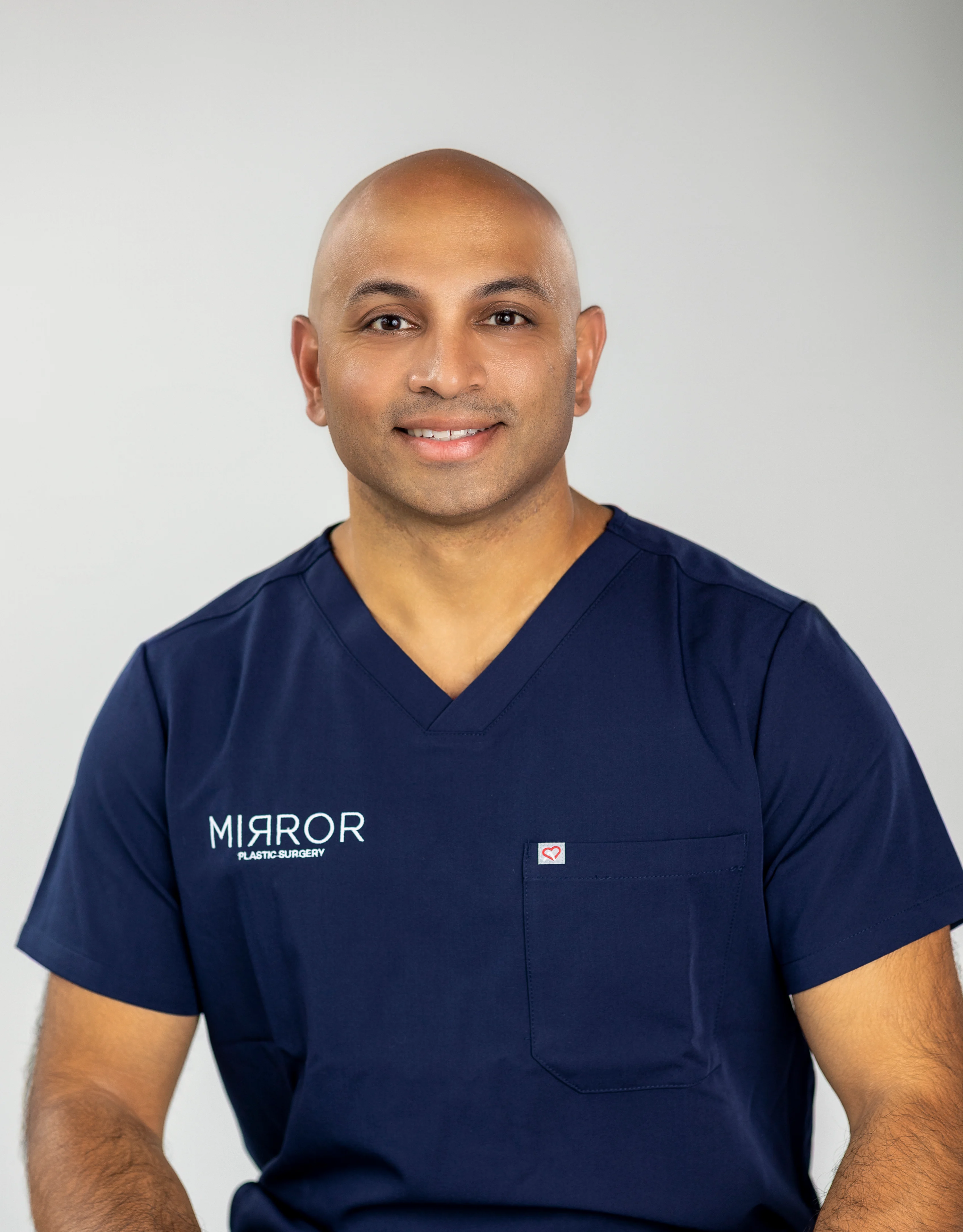
Meet Your Injector: Dr. Akash Chandawarkar
Dr. Akash Chandawarkar, MD is a Harvard-educated physician and Johns Hopkins-trained plastic surgeon, board certified by the American Board of Plastic Surgery, with aesthetic surgery fellowship training at Manhattan Eye Ear & Throat Hospital (MEETH)/Lenox Hill Hospital. He personally performs every neuromodulator and dermal filler treatment and brings a surgeon's command of facial and subdermal anatomy to injectable care. Dr. Akash serves on advisory boards for companies developing aesthetic products, including Merz Aesthetics (biostimulatory fillers such as Radiesse) and Tiger Aesthetics (AlloClae adipose fillers and Avéli for cellulite), which keeps him at the forefront of injectable innovation. A 2024 study by McCarthy, Soares, Chandawarkar et al. published in Plastic and Reconstructive Surgery Global Open compared the rheology of hyaluronic acid fillers, poly-L-lactic acid, and varying dilutions of calcium hydroxylapatite. That research directly informs how these products behave in body contouring applications like the upper knee.
With that expertise in mind, it helps to look at the anatomy of the upper knee and what filler can realistically address.
Upper Knee Anatomy and What Filler Can Address
Upper knee contouring targets the area above the kneecap where crepey texture, hollowing, and mild volume loss develop with age, weight fluctuation, and collagen depletion. Filler can improve crepey texture, hollowing above the kneecap, and mild volume loss. Filler cannot fix severe sagging, significant fat pockets, or true laxity that requires skin tightening or surgery.
The upper knee is a higher-risk injection zone. The knee is the most commonly injected joint in outpatient medicine, and its dense neurovascular anatomy, including the popliteal artery and vein posteriorly, the common peroneal nerve laterally, and the saphenous nerve and artery medially, makes precise anatomical knowledge essential. The area directly above the knee is excluded from standard subcutaneous injection guidelines because the fat layer is thinner there, which increases the risk of unintended deeper placement. Thin overlying skin, superficial vasculature, constant flexion, tendon structures, and lymphatic drainage considerations all compound the risk profile. A 2026 review in the Journal of Cosmetic Dermatology confirms that filler placement is more dangerous in regions where vascular anatomy is complex and tissue planes are less forgiving, a principle that applies directly to the upper knee.
Good candidates have mild-to-moderate volume loss or crepiness, good skin quality, realistic expectations, and no active infection or vascular concern. For those who qualify, treatment typically involves topical anesthetic and precise injection technique. Most patients need two to four sessions spaced one to two months apart, and results can last two to five years depending on the product and individual response. Results may vary from person to person.
Is Knee Filler FDA-Approved? The Off-Label Reality
No. The FDA has approved numerous injectable dermal fillers for treatment localized to the face to smooth wrinkles and folds, correct contour deficiencies, and augment lips, but not for body contouring. As mentioned in the Key Takeaways, upper knee treatment is off-label.
Once the FDA approves a medical product, health care providers generally may prescribe its use for a purpose outside the product labeling when they judge it medically appropriate for their patient, a practice referred to as off-label use. Off-label use is legal and common across medicine. Informed consent for off-label treatment should disclose that the treatment is off-label, explain that the FDA did not evaluate that specific application, and discuss material risks, expected results, and alternatives in plain language.
In an off-label area, physician expertise matters even more. There is no standardized protocol to fall back on, only anatomical knowledge and clinical judgment. This is precisely why Dr. Akash's surgeon-level training is the differentiator for safe upper knee treatment at Mirror Plastic Surgery.
Now that the regulatory context is clear, it becomes easier to compare the products available for upper knee contouring.
Product and Treatment Comparison: What Actually Works for Saggy Knees
When you consider treatment, it helps to compare options based on their mechanisms, evidence, and best-use cases. The following sections break down each product category and where it fits.
Sculptra for Knees
Sculptra is a poly-L-lactic acid (PLLA) biostimulator that triggers a controlled inflammatory response and activates fibroblasts to produce new collagen over several weeks to months. A 2024 international expert consensus panel concluded that PLLA has meaningful evidence supporting its use across the upper arms, abdomen, thighs, knees, and décolletage for crepey body skin. A 2026 randomized trial published in Frontiers in Surgery demonstrated that Sculptra Body treatment on the upper arm increased skin thickness from 1.80mm to 2.70mm at day 120, with significant increases in skin thickness and elasticity. Most patients require two to three sessions spaced four to six weeks apart, with results lasting up to 24 months or longer. Dilution protocol, injection technique, reconstitution method, and injection depth are the key modifiable factors linked to PLLA nodule formation, which underscores why experienced technique is non-negotiable.
Radiesse for Knee Skin
Radiesse consists of calcium hydroxylapatite (CaHA) microspheres suspended in a gel carrier. When hyperdiluted (1:2 to 1:6 with saline and lidocaine), it acts as a pure biostimulator for skin tightening rather than volumization. A 2018 international consensus panel concluded that CaHA biostimulation improves laxity and skin quality across the mid and lower face, neck, décolletage, upper arms, abdomen, upper legs, and buttocks, with adverse events limited to injection-related bruising, swelling, mild pain, and induration. Radiesse results typically last 12 to 18 months in facial treatment areas, but can last two years or more when used for body contouring. Unlike hyaluronic acid fillers, Radiesse cannot be dissolved with hyaluronidase, so injector experience and precise treatment planning become especially important.
Hyaluronic Acid Fillers
HA fillers provide immediate volume and can be dissolved with hyaluronidase if needed, which makes them the only filler category with a reliable reversal agent. HA filler complications benefit from enzymatic reversibility with hyaluronidase, which underpins established treatment algorithms for vascular occlusion, Tyndall effect, chronic edema, and nodules. HA fillers are best suited for localized hollowing above the kneecap where immediate structural support is the goal rather than broad crepey texture improvement across the region.
Most Effective Treatment Options for Saggy Knees
The most effective treatment depends on the primary concern. For crepey texture and dermal thinning, hyperdiluted biostimulators such as Sculptra and Radiesse are best supported by evidence. For volume loss and hollowing, HA fillers or fat grafting provide structural support. For true laxity without volume loss, energy-based skin tightening is the appropriate tool. Clinical best practices increasingly favor combining energy-based devices with hyper-diluted biostimulators for moderate to severe body laxity, yielding more dramatic and long-lasting results than either treatment alone. For severe sagging or excess skin, surgical contouring may be the only effective option.
Mirror Plastic Surgery offers HA and biostimulatory fillers, fat grafting, and energy-based skin tightening. This range allows product selection based on the individual patient rather than a limited portfolio.
Plan Your Custom Knee Contouring Treatment
Who Is Not a Candidate and What to Do Instead
Some presentations do not respond well to upper knee filler and need different solutions.
Patients with the following presentations are not good candidates for upper knee filler:
Severe sagging or significant excess skin above the kneecap
Significant localized fat deposits (fat reduction is the appropriate tool)
True laxity requiring structural skin tightening
Active infection, vascular compromise, or lymphatic dysfunction in the lower extremity
Unrealistic expectations about what injectable treatment can achieve
When severe laxity, major descent, or poor tissue quality is present, clinicians should avoid escalating filler volume and instead consider surgery, biostimulation, energy-based treatment, or no treatment. Injecting filler into severely lax skin will not tighten it and may worsen the appearance by adding volume without support.
For these patients, alternative treatments may be more appropriate. Alternatives for non-candidates include energy-based skin tightening (radiofrequency, ultrasound, laser), liposuction for localized fat deposits, or surgical contouring for significant excess skin. Ultherapy PRIME received FDA clearance to improve the appearance of skin laxity on the knees, which makes it a non-invasive option specifically cleared for this area. Dr. Akash will tell patients when filler is the wrong tool. That approach reflects Mirror Plastic Surgery's honest, education-first philosophy.
Aesthetic Knee Contouring vs. Knee Replacement
Dermal fillers contouring upper knees are purely cosmetic and unrelated to orthopedic knee replacement surgery. Knee replacement is a surgical procedure to resurface the damaged joint surfaces of the knee, typically performed for advanced osteoarthritis. Aesthetic knee contouring addresses the skin and soft tissue above the kneecap, not the joint itself. Patients researching knee replacement need an orthopedic surgeon. Patients concerned about crepey or hollowed skin above the kneecap are in the right place with an aesthetic injector.
Preparation and Recovery
Preparation and recovery follow a structured but straightforward process at Mirror Plastic Surgery. The consultation style is comprehensive, with up to an hour focused on understanding the patient's goals and anatomy before any treatment is recommended.
Pre-treatment instructions include:
Avoiding blood-thinning medications and supplements (aspirin, ibuprofen, fish oil, vitamin E) for seven to ten days prior
Arriving with clean skin free of lotions or creams
Disclosing any history of vascular, lymphatic, or autoimmune conditions
During recovery, patients can expect mild swelling, bruising, and tenderness that typically resolve within one to two weeks. Activity restrictions include avoiding strenuous lower-body exercise and prolonged kneeling for the recommended period. Results may vary from person to person.
What to Look Out For and Avoid
Several misconceptions surround upper knee filler, including beliefs that it is FDA-approved for body contouring, that it can fix severe sagging, and that any injector can safely treat this area. These assumptions create unrealistic expectations and can increase risk.
Vascular occlusion is a major safety concern with fillers because inadvertent arterial injection can cause tissue damage, scarring, visual loss, stroke, and skin necrosis. Thorough knowledge of three-dimensional, injection-related anatomy and vascularity is essential for safe filler placement. The knee is not a classic high-risk facial site, but filler injection still carries vascular and inflammatory complication risks, which is directly relevant when counseling about off-label body injections. Aesthetic medicine is inadequately regulated in many countries, resulting in inconsistent training standards and qualifying requirements, and inexperience contributes substantially to complications.
Patients should seek providers who conduct comprehensive evaluations, present recommended procedures with clear reasoning, and remain available for dedicated support before, during, and after the procedure.
Frequently Asked Questions
How Do You Fix Saggy Skin Above the Knees?
Treatment depends on the underlying cause. For crepey texture and dermal thinning, hyperdiluted biostimulators such as Sculptra or Radiesse can stimulate collagen and improve skin quality over several months. For volume loss and hollowing above the kneecap, hyaluronic acid fillers or fat grafting can restore structural support. For true laxity where skin has lost its elasticity, energy-based skin tightening devices such as radiofrequency or micro-focused ultrasound are more appropriate. For significant excess skin, surgical contouring may be the only option that produces a meaningful result. A comprehensive consultation is essential to determine which approach fits your specific anatomy and concern.
What Is the Most Effective Treatment for Saggy Knees?
No single treatment works best for every patient. The best option depends on whether the primary concern is crepiness, volume loss, or laxity. Biostimulators are best supported by evidence for crepey texture and dermal thinning. Hyaluronic acid fillers or fat grafting address localized hollowing. Energy-based devices target laxity. Many patients benefit from a combination approach tailored to their specific anatomy. A physician assessment provides a personalized recommendation rather than a one-size-fits-all answer.
What Knee Injection Lasts 3 Years?
Biostimulatory fillers such as Sculptra (poly-L-lactic acid) can produce results lasting up to 24 months or longer, with some patients reporting persistent improvement beyond that timeframe as the newly stimulated collagen becomes part of their own tissue. Hyaluronic acid fillers typically last 6 to 18 months depending on the product and individual metabolism. No injectable treatment is permanent, and maintenance sessions are typically needed to sustain results. Longevity varies from person to person and depends on product choice, injection technique, and individual biology.
Is Knee Filler FDA-Approved?
No. Dermal fillers are FDA-approved for facial use, not for body contouring. As noted earlier, upper knee treatment is off-label, meaning a physician may use an FDA-approved product for a purpose outside its labeling when they judge it medically appropriate for their patient. This is a legal and common practice across medicine. Informed consent should clearly disclose the off-label nature of the treatment, explain that the FDA did not evaluate that specific application, and discuss material risks, expected results, and alternatives in plain language. In an off-label area, physician expertise and anatomical knowledge become even more critical to safe outcomes.
What Do Realistic Results Look Like?
Realistic results include improved skin texture, reduced crepiness, and subtle restoration of volume above the kneecap. With biostimulators, results are gradual and develop over two to six months as new collagen forms rather than appearing immediately. Hyaluronic acid fillers provide more immediate volume improvement. Filler cannot fix severe sagging, significant laxity, or excess skin, and results vary from person to person. The goal is a natural improvement in skin quality and contour, not a dramatic transformation. Results may vary from person to person.
Book a Consultation
Patients considering dermal fillers contouring upper knees can schedule a consultation with Dr. Akash Chandawarkar at Mirror Plastic Surgery in St. Petersburg/Tampa. The practice offers comprehensive, hour-long assessments and personalized treatment plans tailored to each patient's anatomy and goals.
Mirror Plastic Surgery is located at 780 4th Ave S, St. Petersburg, FL 33701. Call or text 727-361-6515, or email [email protected]. Follow the practice on Instagram at @mirrorplasticsurgery and @dr.akashplasticsurgery.
Schedule Your Knee Contouring Consultation
Disclaimer: Results may vary from person to person. Editorial content and patient information do not constitute a guarantee of specific results.