
Dermal Fillers (Earlobes)
Written by: Dr. Akash Chandawarkar, Board Certified Plastic Surgeon, Mirror Plastic Surgery | Last updated: September 28, 2026
Key Takeaways
Earlobe filler uses hyaluronic acid injections to restore lost volume, improve shape, and soften visible aging and earring wear in thin, deflated, or mildly sagging earlobes.
The treatment addresses four distinct problems: volume loss, mild elongation, stretched piercing holes with intact skin, and torn lobes, and filler is appropriate only for the first three.
Results typically last 6–18 months depending on product, volume, metabolism, and skin quality, and maintenance treatments are part of the long-term plan.
Earlobe filler is generally safe when performed by a board-certified plastic surgeon, and vascular occlusion remains the most serious risk and requires immediate management if suspected.
Mirror Plastic Surgery Med Spa provides anatomy-led assessments and personalized treatment plans that prioritize safety, function, and natural aesthetics for earlobe rejuvenation.
Book Your Earlobe Consultation At Mirror Plastic Surgery Med Spa
What Earlobe Filler Is And The Four Problems It Addresses
Earlobes contain only skin, subcutaneous fat, and delicate fibrous connective tissue, with no cartilage. With age, the earlobe loses subcutaneous fat and collagen, skin thins, and years of earring wear add cumulative mechanical stress. The lobe can then look deflated, crepey, or elongated, and earrings may sit lower or droop. Earlobe rejuvenation with dermal fillers addresses this volume deficit directly. The right treatment depends on which of four distinct problems is present.
Volume Loss (Deflated, Thin, Crepey Earlobes)
Age-related adipose loss leaves earlobes flat, wrinkled, and unable to support earrings upright. Micro-injections of cohesive hyaluronic acid filler restore a firm structural cushion to the lobule. This added support tightens lax skin, smooths vertical lobe creases, and provides a base that holds heavy studs upright. For this problem, filler is typically a well-matched tool.
Sagging Or Elongation (Lobes Lengthening And Drooping With Age)
Gravitational stretching and downward mechanical shear from earring weight cause earlobes to lengthen over time. Filler can add structural support and improve projection in mild cases. Severe elongation, where the lobe has substantially lengthened and lost its natural contour, may require surgical reduction and reshaping rather than volume replacement alone. A thorough assessment determines which approach fits a specific anatomy.
Stretched Piercing Holes (Earring Sits Lower, Hole Looks Elongated But Skin Is Intact)
When a piercing hole has stretched into an oval or vertical slot but the inferior rim of the lobe remains intact, filler can add volume around the tract and improve the overall appearance of the lobe. It cannot, however, close a piercing tract that has healed open. The hole itself does not shrink or close with filler. Patients should understand this limitation clearly before proceeding.
Torn Lobes (The Piercing Has Ripped Through The Lobe Edge)
A complete tear or split earlobe requires surgical repair, and filler cannot close it. No injectable, cream, ointment, adhesive tape, or device can close a torn or stretched piercing hole. Filler can add a small amount of volume to a thin, deflated lobe, but it cannot repair a split edge or shrink an enlarged opening. Once the torn edges heal over with a layer of skin, the two separate leaves remain permanently divided. The healed skin lining must be surgically excised to create fresh wound edges that can stitch and fuse together. Filler may be considered after surgical repair for volume restoration, and it always follows the repair itself. This approach is the starting point for every assessment at Mirror Plastic Surgery.
Once a patient is confirmed as a good candidate for filler, the next question usually focuses on how long the result will last.
How Long Do Earlobe Fillers Last?
A 2026 narrative review by Alizadeh et al. in Plastic and Reconstructive Surgery Global Open reports that the clinical effect of hyaluronic acid gels generally lasts 4–18 months, depending on product, injection technique, treatment area, mechanical stress, and patient factors such as metabolism, diet, and lifestyle. Filler in the earlobe can last up to 16 months or sometimes longer. Low-movement areas like the earlobes tend to hold filler longer than higher-movement treatment areas.
Several factors influence how long results last in any individual patient:
Filler Type: Hyaluronic acid fillers are biodegradable and temporary. Biostimulatory fillers such as Radiesse stimulate collagen production and may provide longer-lasting structural support.
Product Volume: The amount of filler placed affects both the initial result and the duration.
Individual Metabolism: Patients metabolize filler at different rates based on physiology, activity level, and lifestyle.
Skin Quality: Thinner, more crepey skin may respond differently than denser tissue.
Injector Technique: Precise, anatomy-led placement affects both outcome and longevity.
Mirror Plastic Surgery plans for long-term care rather than one-off procedures. Maintenance is expected, and the treatment plan accounts for it from the outset.
Safety Profile Of Earlobe Fillers
Hyaluronic acid fillers rank among the most studied injectable aesthetic products in the world. HA-based gels were the most used injectable aesthetic products in 2023, with more than 5.5 million procedures. In the decade leading up to 2023, HA was the most researched facial treatment in the scientific literature. The evidence base for earlobe filler specifically is smaller than for facial filler. Earlobe filler remains a legitimate, low-downtime treatment, and it has not been studied as extensively as cheek or lip filler.
The most important risk to understand is vascular occlusion. Inadvertent injection of hyaluronic acid dermal filler into a blood vessel can cause vascular occlusion, which may lead to hypoperfusion, distal tissue hypoxia, skin necrosis, blindness, and stroke. The ear has a compact vascular territory. A surgeon’s command of subdermal anatomy makes injectable treatment both safer and more precise. A case report published in The BMJ (2026;393:e087189) documented a woman who developed a swollen, erythematous, and painful earlobe five days after cosmetic earlobe augmentation with 0.5 mL of hyaluronic acid filler per earlobe. This case shows that even small-volume earlobe filler procedures carry real local risks.
A 2026 scoping review by Ferreto, Santos, and Sarkis-Onofre in the Brazilian Dental Journal analyzed 55 studies and found that the most frequently reported adverse reactions from facial HA fillers were bruising (56.4%), ischemia (45.4%), and edema (41.8%). The most severe complications were tissue necrosis (29.1%) and tissue embolism (20%). Common, expected, and typically transient side effects of earlobe filler include temporary swelling, bruising, tenderness, and mild redness.
Facial overfilled syndrome, often called the “pillow face” or “overdone” appearance, is driven by inadequate anatomical knowledge, inaccurate pretreatment assessment, improper injection technique, inappropriate product choice, and overfilling. Inherent filler properties do not create this look on their own. A conservative, anatomy-led approach supports natural results.
Earlobe filler does not suit every patient. Patients who should avoid earlobe filler include:
Those with active infection or inflammation at the injection site
Those with a known allergy to filler components
Pregnant or breastfeeding individuals
Those with active skin infection in the area
Those with unrealistic expectations about what filler can achieve
Those with torn lobes, because this condition requires surgical repair first
Schedule Your Earlobe Assessment
Earlobe Filler Vs. Earlobe Repair Surgery
The comparison below shows which earlobe concerns respond to filler and which require surgery, so you can see the pattern at a glance.
Condition | Recommended Approach | Filler Role |
|---|---|---|
Volume loss (thin, deflated lobe) | Filler | Primary treatment; restores cushion and shape |
Mild sagging or elongation | Filler | Adds structural support and improves projection |
Stretched piercing hole (skin intact) | Filler (with limitations) | Improves lobe appearance; does not close the tract |
Torn or split lobe | Surgery first | Filler cannot repair a split edge; surgery required |
The decision framework is straightforward. Filler is the right tool for volume loss, mild sagging, and some stretched piercing holes where the skin is intact. Surgery is the right tool for torn lobes, severely elongated lobes, and stretched piercing holes where tissue reconstruction is needed rather than volume addition. When a lobe is both torn and thin, surgical repair comes first. Volume restoration with filler is considered only once the lobe has healed. A good provider explains clearly which category applies to a specific patient.
What Not To Do After Earlobe Fillers
Aftercare directly affects both safety and the quality of results. The key restrictions after earlobe filler include the following steps.
Avoid strenuous exercise and heavy lifting for the first 24–48 hours, because elevated heart rate and blood pressure increase swelling and bruising.
Avoid alcohol and blood-thinning medications or supplements as advised by your provider in the days following treatment.
Do not rub, massage, or press on the treated area unless specifically instructed, because this pressure can displace filler before it has integrated with surrounding tissue.
Avoid sleeping on the treated side for the first one to two nights, and sleep on the back to reduce pillow pressure on freshly placed product.
Avoid saunas, hot tubs, and extreme heat for the first 48 hours, because heat substantially increases swelling.
Keep the area clean and avoid earrings and tight headwear until cleared by your provider.
For earlobe rejuvenation specifically, patients should avoid heavy jewelry immediately after treatment and expect full settling within one to two weeks. Swelling typically peaks on day two rather than the day of treatment and substantially resolves within one to two weeks. Final results settle over a few weeks as the filler integrates with surrounding tissue.
Contact the office immediately, or seek emergency care, if any of the following occur: severe or worsening pain, skin that turns white, pale, grey, or develops a blotchy mottled net-like pattern, vision changes, or any sign of vascular compromise. These symptoms are not normal side effects and require prompt evaluation.
Why Earlobes Fit Into A Full-Face Volume-Restoration Plan
Earlobes age alongside the face, neck, hands, and décolleté. Treating them as a disconnected vanity fix can miss the broader picture. A patient who restores earlobe volume without addressing adjacent areas of volume loss may see a result that looks inconsistent rather than refreshed. Mirror Plastic Surgery frames earlobe rejuvenation as one part of a whole-body volume-restoration philosophy. The same philosophy guides treatment of the neck, hands, and décolleté.
For product selection, the key distinction is between hyaluronic acid and biostimulatory fillers. Hyaluronic acid gels are biodegradable and temporary, with in vivo data showing progressive gel resorption over one year accompanied by replacement with new functional tissue. They can be reversed with exogenous hyaluronidase. Biostimulatory fillers such as Radiesse stimulate the body’s own collagen production over time and provide structural support that builds gradually. The right choice depends on the patient’s anatomy, skin quality, and goals. For a full overview of filler types and their properties, see Mirror’s Dermal Fillers: Types, Safety, And Natural Results article.
What Sets Mirror Plastic Surgery Apart
Mirror Plastic Surgery is a concierge aesthetic medicine and plastic surgery practice serving the St. Petersburg and Tampa Bay area of Florida. The practice limits itself to one to two surgeries per day so that the entire team’s focus remains on each patient before, during, and after every procedure. Initial consultations extend up to an hour and cover a top-to-bottom assessment that addresses anatomy, goals, and the emotional context behind a patient’s decision to seek treatment. This structure contrasts with high-volume “mill” practices that may perform five to ten surgeries daily with less individualized attention.
All injectable treatments, including dermal fillers for ear lobes, are performed by Dr. Akash Chandawarkar himself. Because Dr. Akash is a board-certified plastic surgeon with a surgeon’s command of facial and subdermal anatomy, every injection is placed with the precision and anatomical awareness that injectable treatment requires. He serves as an advisory board member for Merz Aesthetics (biostimulatory fillers such as Radiesse) and Tiger Aesthetics (AlloClae and Avéli), which keeps him at the forefront of injectable innovation. His supplier-neutral approach ensures that product recommendations are driven by patient anatomy and evidence rather than by quotas or commissions.
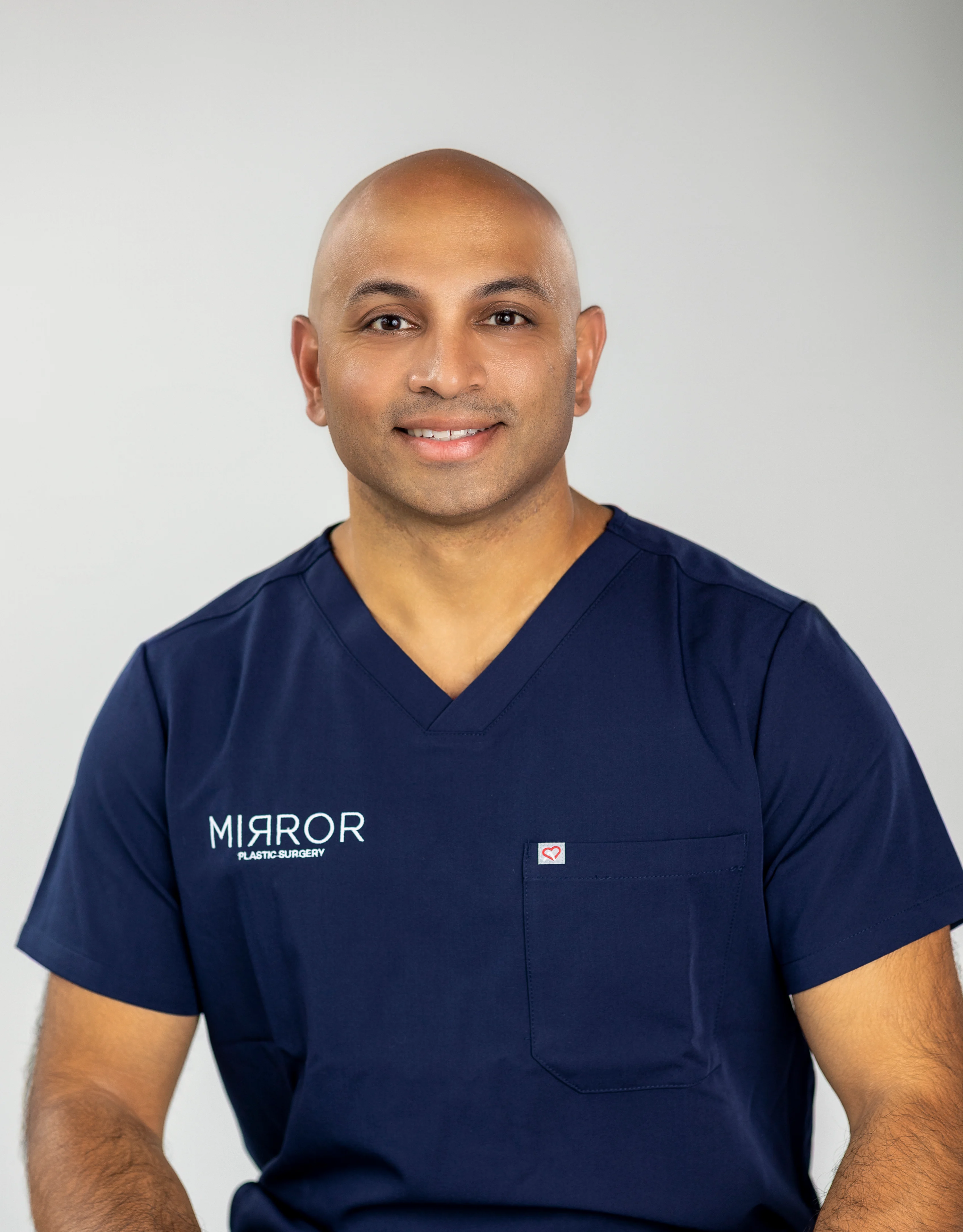
The guiding principle at Mirror is safety first, function second, aesthetics third. That principle means telling a patient when filler is the wrong answer and when surgery is the right one. It also means recommending the right amount of the best product for a patient’s specific anatomy and building a long-term care relationship rather than delivering a one-off procedure.
Plan Your Visit To Mirror Plastic Surgery
Frequently Asked Questions
How Long Do Earlobe Fillers Last?
As noted above, results typically last 6–18 months. The earlobe’s low movement helps explain why retention often falls toward the longer end of that range. Mirror Plastic Surgery plans maintenance visits as part of the initial treatment discussion.
Are Earlobe Fillers Safe?
Earlobe filler is a legitimate, low-downtime treatment when performed by an experienced, anatomy-trained injector. Common side effects such as temporary swelling, bruising, and tenderness are usually mild and short-lived. Vascular occlusion remains the most serious risk and requires immediate management if suspected. A board-certified plastic surgeon’s command of subdermal anatomy supports both safety and precision.
Can Fillers Fix Stretched Or Torn Piercing Holes?
Filler can improve the appearance of a stretched piercing hole when the surrounding skin remains intact, and it does not close or shrink the hole itself. A torn or split lobe, where the piercing has ripped through the lobe edge, requires surgical repair first. Filler may be considered afterward for volume restoration and contour.
What Should I Avoid After Earlobe Fillers?
Patients should avoid strenuous exercise, heavy lifting, alcohol, and extreme heat for the first 24–48 hours. They should not rub, press, or massage the treated area and should sleep on their back rather than on the treated side for the first night or two. Earrings and tight headwear should stay off until the provider clears them. Any severe pain, skin blanching, mottled discoloration, or vision change needs urgent evaluation.
How Do I Know Whether I Need Filler Or Surgery?
Filler suits volume loss, mild sagging, and stretched piercing holes where the skin remains structurally intact. Surgery suits torn or split lobes, severely elongated lobes, and stretched holes that require tissue reconstruction. In some cases, the two treatments are sequenced, with surgical repair first and filler later for volume and shape. A thorough assessment by a board-certified plastic surgeon provides the most reliable recommendation.
Book A Consultation
Dr. Akash Chandawarkar and the team at Mirror Plastic Surgery welcome patients from across the St. Petersburg and Tampa Bay area who are considering earlobe rejuvenation or earlobe repair. Every consultation begins with a thorough, unhurried assessment that gives patients the honest, anatomy-based guidance they need to make an informed decision.
Mirror Plastic Surgery is located at 780 4th Ave S, St. Petersburg, FL 33701. Reach the practice by phone or text at 727-361-6515, by email at [email protected], or on Instagram at @mirrorplasticsurgery and @dr.akashplasticsurgery.
Request Your Earlobe Consultation
Disclaimer: Results may vary from person to person. Editorial content, before and after images, and patient testimonials do not constitute a guarantee of specific results.