
Dermal Fillers (Face)
Written by: Dr. Akash Chandawarkar, Board Certified Plastic Surgeon, Mirror Plastic Surgery | Last updated: September 28, 2026
Key Takeaways
Dermal fillers restore volume and structure with hyaluronic acid, calcium hydroxylapatite, or poly-L-lactic acid. Neuromodulators relax muscles. Each treats different concerns and they are often combined.
Facial zones connect to one another. Temples, midface, folds, lips, and jawline work best when planned together for balanced, natural results.
Product choice and injection depth change by zone. Firmer fillers support structural areas like temples and jawline. Soft HA suits lips. Biostimulators stay out of the lips.
Longevity ranges from about 6 months in the lips to 12–24 months in the midface and jawline. Product type, depth, movement, and lifestyle factors such as UV exposure all influence duration.
Mirror Plastic Surgery Med Spa provides physician-led, anatomy-first filler treatments with detailed planning and a full range of HA and biostimulatory products.
Start Your Personalized Filler Consultation
How Dermal Fillers Differ From Neuromodulators
Dermal fillers restore volume and structural support by occupying space within facial tissue. Neuromodulators, including Botox, Dysport, Xeomin, Daxxify, and Jeuveau, all carried at Mirror Plastic Surgery, relax specific muscles to soften dynamic lines. The two categories correct different concerns and often work together in one treatment plan. A forehead line reflects muscle movement, while a hollow temple reflects volume loss. Using the right tool for each concern produces a more natural result.
Filler Types Compared: HA, Calcium Hydroxylapatite, And Poly-L-Lactic Acid
The FDA's dermal filler registry recognizes four material classes: hyaluronic acid (HA), calcium hydroxylapatite (CaHA), poly-L-lactic acid (PLLA), and polymethylmethacrylate (PMMA) microspheres with bovine collagen. The three absorbable categories most relevant to facial rejuvenation differ in how long they last and where on the face they work best, which guides product selection more than brand name alone.
Filler Category (Real Products) | FDA-Referenced Longevity | Best Suited For On The Face |
|---|---|---|
Hyaluronic acid — Juvederm, Restylane, RHA, Versa, Evolysse | Approximately 6–12 months for cross-linked HA per FDA description, with product-specific ranges up to about 18–24 months in structural areas | Lips, folds, cheeks, temples, tear troughs; the only category reversible with hyaluronidase |
Calcium hydroxylapatite — Radiesse | About 12–18 months per FDA Summary of Safety and Effectiveness Data | Midface, cheeks, nasolabial folds, jawline; provides immediate volume plus collagen stimulation |
Poly-L-lactic acid — Sculptra | Results build over months, with effects commonly cited at 2+ years | Broad facial volume restoration and collagen rebuilding; not used for lips or periocular skin |
Plan Your Full-Face Filler Treatment
How Mirror Plastic Surgery Matches Fillers To Each Facial Zone
The most consequential decision in filler treatment is which zone to treat, and then which product, depth, and sequence to use for that zone. Each structural area of the face has distinct anatomy, movement patterns, and volume-loss characteristics that shape the plan.
Temples
The temples are among the earliest areas to show age-related volume loss, and their deflation affects the entire upper face, though some clinical evidence suggests that in midlife the periorbital and malar fat pads may age first, with the temporal zone following later. Because the deficit in the temples is structural, the correction must be structural as well. Firmer product placed deep against bone restores lost volume, can lift the lateral brow, and improves upper-face contour. Juvéderm Voluma XC holds the first FDA-labeled temple indication, so it often serves as the reference product for this zone. A 2026 systematic review and meta-analysis in the Journal of Cosmetic Dermatology reported an overall pooled responder rate of 86.3% across filler types for temporal augmentation, with both HA and CaHA performing comparably.
Cheeks And Midface
The lateral midface functions as the structural anchor of the face. Restoring lateral zygomatic and SOOF-related support may reduce the need for central volumization and create a more favorable lifting vector. Firmer HA or calcium hydroxylapatite placed deeply provides this structural lift. A PMC-cited study found that 79% of patients rated cheek volume as improved at two years after midface HA filler. In a 2017 open-label study of 18 patients, injecting CPM-HA-VL volumizer into the upper or lower cheeks reduced nasolabial fold wrinkle depth by up to 30.4% at 3 months without direct injection into the folds, though other studies suggest this effect may be modest or partly illusory.
Nasolabial Folds
Direct fold correction with HA or calcium hydroxylapatite addresses the crease itself. In many patients, however, the fold represents a downstream consequence of midface descent. Restoring nearby cheek support may soften the nasolabial fold through a different anatomical approach, which often produces a more natural result than filling the fold in isolation. Product choice and depth match the severity of the fold and the patient’s existing tissue.
Lips
Soft, low-viscosity hyaluronic acid fillers are typically used for the lips, where a softer product may lose visible effect sooner than a larger volume correction. Biostimulators are never appropriate for the lips, because the tissue is dense orbicularis oris muscle covered by vermilion mucosa with no native subcutaneous fat. The lips also move constantly, which accelerates breakdown of any product placed there. Lip augmentation at Mirror Plastic Surgery focuses on preserving the natural architecture of the Cupid's bow, the vermilion border, and the upper-to-lower lip ratio. Disproportionate lip augmentation occurs when filler volume is placed without adequate respect for natural shape and proportions relative to the rest of the face.
Chin And Jawline
Firm gels placed deeply along the lower face provide projection and definition. Calcium hydroxylapatite is well suited to structural support in this zone. Jawline fillers usually remain visible for 12 to 18 months after a well-planned initial treatment, with longevity shaped by product firmness, volume, and lower-face movement. Clinicians should reassess profile balance before maintenance rather than reflexively adding volume.
The anatomy-first approach replaces a menu-driven, one-size-fits-all model. Facial aging is a multilayered process involving skeletal remodeling, fat compartment deflation and descent, dermal thinning, and changes in ligament-associated support systems. Thoughtful treatment planning accounts for all of these layers, not only the feature a patient notices in the mirror.
How Long Dermal Fillers Typically Last
Dermal filler longevity varies by area, product, injection depth, and individual metabolism. The following ranges reflect FDA-referenced data and peer-reviewed clinical evidence:
Lips: approximately 6 months, because constant movement and rich blood supply accelerate breakdown.
Nasolabial Folds: commonly 6–18 months depending on product and movement.
Temples: typically 12–18 months, helped by minimal movement and good tissue coverage.
Cheeks/Midface: 12–24 months depending on product firmness and depth.
Chin/Jawline: generally 12–18 months with firm, deeply placed product.
Calcium Hydroxylapatite (Radiesse): approximately 12–18 months per FDA data.
Poly-L-Lactic Acid (Sculptra): results build over months and can last 2+ years.
Several factors shorten or extend these ranges. UV exposure breaks down hyaluronic acid and collagen, and intense cardiovascular exercise may metabolize filler faster due to increased blood flow and higher metabolic rates. Smoking, injection depth, product cross-linking, and individual metabolism also influence duration. Visible cosmetic results and detectable filler material can tell different stories. Peak results reflect several inputs at once: injected gel, early swelling, tissue support, water binding, and surrounding anatomy. As swelling settles, visible improvement can decrease even though filler material remains detectable beneath the skin.
Age-Stage Strategy For Dermal Fillers
Longevity explains how long results last, while age-stage strategy explains how to plan treatment over time. Meta-regression analysis found that filler effectiveness for temporal augmentation was not related to age, with acceptable results observed in older patients. Candidacy remains broad. What changes with age is strategy.
30s: Less is more. Small-volume, support-oriented treatment addresses early contour changes while elasticity remains strong.
40s: Deeper wrinkles and early volume loss make fillers more common, often in combination with neuromodulators.
50s: Restoration and structural support become the primary goals. Facial cosmetic surgery more commonly enters the discussion depending on anatomy.
60s+: Structural support and restoration still help, while advanced laxity may call for surgical lifting or combined treatment rather than filler alone.
For older skin, biostimulators such as Sculptra and Radiesse address diffuse collagen loss and structural support, while HA fillers provide targeted precision and reversibility. Patients in their mid-40s and beyond with broad midface deflation and skin quality decline often respond more authentically to a biostimulator protocol than to large volumes of HA filler, because the underlying deficit is collagen loss. Honest planning also respects limits. Trying to correct advanced ptosis with hyaluronic acid alone can increase heaviness and overfilling risk.
See If Fillers Fit Your Age-Stage Plan
Natural Vs. Overdone: How Technique Shapes Results
Overdone filler results come from technique, volume, product choice, and planning, not from the fillers themselves. When filler results appear overdone or distorted, the cause is almost never the filler itself. The issue is typically the way the filler was placed, the amount of volume delivered, or the absence of a thoughtful, customized treatment tailored to each patient.
The specific mechanisms behind an overdone result include:
Additive layering without accounting for existing filler, which produces a puffy or overly rounded appearance over time.
Chasing a single feature without balancing temples, jaw, and lower face.
Using volume to solve a problem that is not about volume, such as a tired, heavy look driven by skin quality or muscle movement rather than missing volume.
Filler migration away from its intended placement site due to incorrect initial placement or mechanical forces.
A natural result preserves the underlying bone structure, natural shadow and contour, and the patient’s own proportions. HA filler can usually be corrected with hyaluronidase, often with visible improvement within a day or two. Non-HA fillers cannot be enzymatically reversed and rely on gradual absorption or supportive management.
Safety, Risks, And Why Injector Credentials Matter
Natural versus overdone outcomes depend on technique, and technique also separates safe treatment from dangerous treatment. The FDA identifies unintended vascular injection as the most serious risk of dermal fillers because it can cause tissue death, blindness, or stroke. Vascular occlusion occurs when filler is injected into an artery or compresses it from outside. Risk is markedly higher in anatomically risky regions such as the glabella, forehead, and nose, where direct anastomoses with the ophthalmic artery exist. The nasolabial fold is also a high-risk zone.
Across all event categories, the dominant determinants of harm are operator training, regulatory environment, and clinic-level protocol. Product brand and patient demographics matter far less, and anatomical site alone rarely explains the outcome.
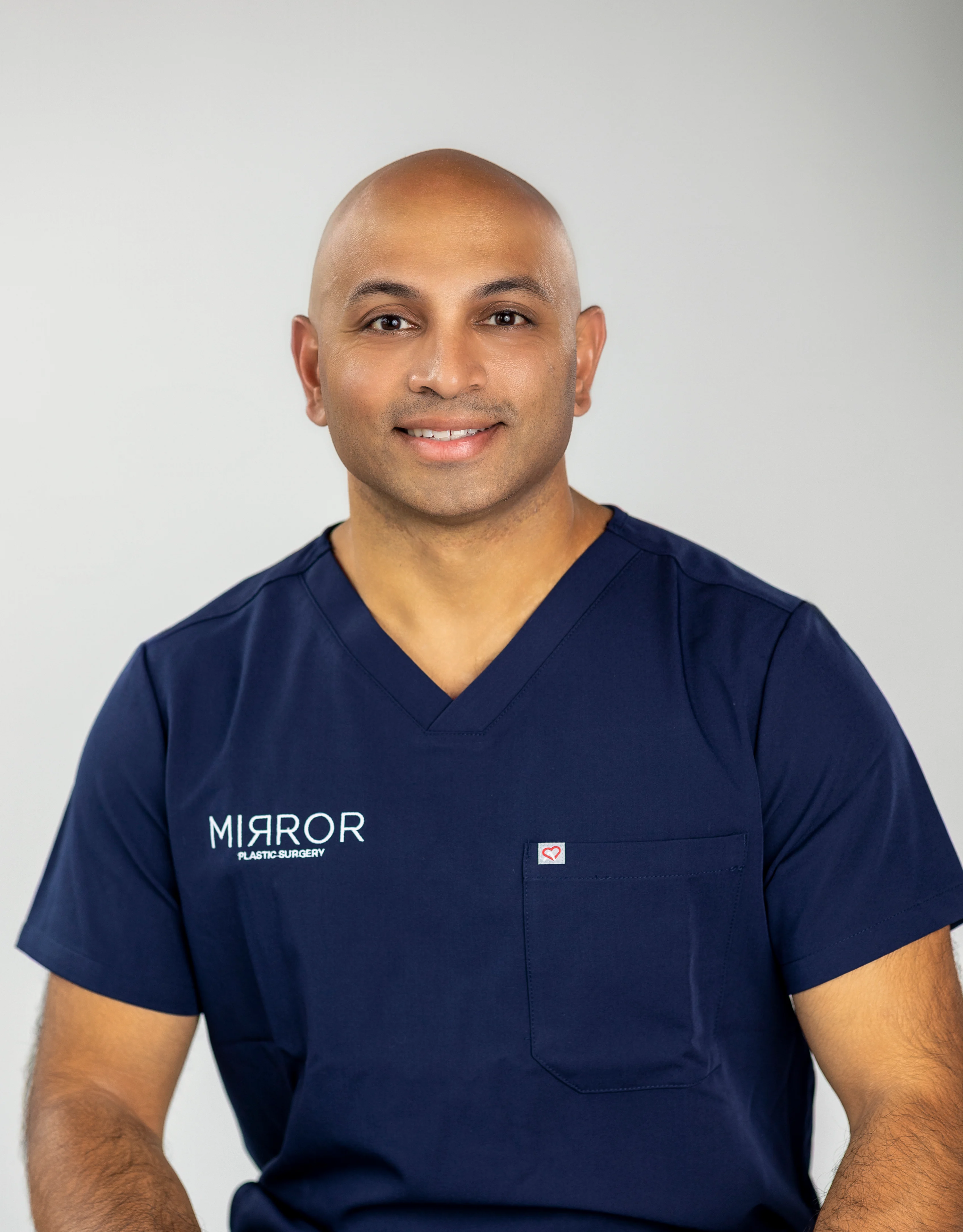
At Mirror Plastic Surgery, every injectable treatment is performed personally by Dr. Akash Chandawarkar, a Harvard-educated physician, Johns Hopkins-trained plastic surgeon, and fellowship-trained aesthetic surgeon at Manhattan Eye Ear & Throat Hospital (MEETH)/Lenox Hill Hospital. He is board certified by the American Board of Plastic Surgery and serves as an advisory board member for Merz Aesthetics (Radiesse) and Tiger Aesthetics. Because he is a board-certified plastic surgeon, every neuromodulator and dermal filler is placed by a physician with a surgeon's command of facial and subdermal anatomy. That level of expertise makes injectable treatment both safer and more precise.
Why Mirror Plastic Surgery Is The Right Choice For Dermal Fillers
Mirror Plastic Surgery follows a concierge medicine philosophy that contrasts with high-volume clinic models. Consultations can extend up to an hour and include a top-to-bottom assessment that evaluates the whole face, explores the emotional drivers behind a patient’s goals, and produces a personalized, evidence-based treatment plan. The practice limits itself to one to two procedures per day so that every patient receives the team’s full attention before, during, and after treatment.
Product selection at Mirror remains supplier-neutral. Dr. Chandawarkar selects the right product for the right zone based on anatomy and evidence, not quotas or brand relationships. The practice carries Juvederm, RHA, Versa, Restylane, Radiesse, and Evolysse, which provides a full range of HA and biostimulatory options to match each patient’s specific structural needs.
Mirror Plastic Surgery serves the St. Petersburg and Tampa Bay area. New patients can schedule a consultation at 780 4th Ave S, St. Petersburg, FL 33701. Reach the practice by phone or text at 727-361-6515 or by email at [email protected].
Schedule Your Filler Consultation In St. Petersburg
Before And After: What Realistic Results Look Like
Realistic dermal filler outcomes show restored contour and proportion, not a different face. Results from hyaluronic acid filler injections are visible almost immediately, with final outcomes typically apparent within one to two weeks once any mild swelling has resolved. Sculptra results build gradually from around one month. Before-and-after examples are reviewed during consultation at Mirror Plastic Surgery. Results may vary from person to person and do not constitute a guarantee of specific outcomes.
What To Expect At Your Filler Consultation
Your consultation begins with a full-face assessment that evaluates which zones have lost volume, how they interact, and which sequence of treatment will produce the most natural result. Dr. Chandawarkar then builds a personalized plan using the product type and injection depth best suited to your anatomy. You will have time to review before-and-after examples, discuss longevity expectations, and ask detailed questions about safety and recovery.
Frequently Asked Questions
How Long Do Dermal Fillers Last In Your Face?
The zone-by-zone ranges above provide the main answer. Lips tend to fade fastest at about 6 months, while midface and jawline often hold longest at 12–24 months. Product type, depth, and lifestyle factors such as UV exposure, smoking, and exercise patterns shift those numbers for each person.
What Is The Best Filler For Older Skin?
The best filler for older skin depends on anatomy and the specific deficit, rather than age alone. Biostimulators often support broad collagen rebuilding, while HA fillers refine specific features and add reversibility. Many patients in their 50s and 60s benefit from a combination approach that rebuilds the foundation first, then fine-tunes contours on top of that support.
Is 60 Too Old For Dermal Fillers?
Age 60 still falls within a common treatment range for fillers. The meta-analysis cited above found no age-related difference in temporal augmentation outcomes. Strategy shifts toward restoration, structural support, and, when needed, a discussion of surgical options for advanced laxity.
Do Fillers Ruin Your Face?
Fillers themselves do not ruin faces. Overfilled or distorted results come from poor planning, excessive volume, or treating one feature without balancing the rest of the face. Anatomy-led, full-face planning and conservative dosing help maintain a natural look, and HA fillers can usually be adjusted with hyaluronidase if needed.
Which Filler Is Used For Which Part Of The Face?
Temples and cheeks typically use firmer HA or calcium hydroxylapatite placed deeply for structural support and lift. Nasolabial folds may receive HA or calcium hydroxylapatite, while cheek support often softens the fold indirectly. Lips use soft, low-viscosity HA only. Chin and jawline rely on firm gels placed deeply for projection and definition, with specific products chosen around your anatomy and goals.
Conclusion
Clear, clinically grounded information about dermal fillers helps research-stage patients make confident decisions. Patients benefit most when a physician treats the face as connected structural zones and explains what fillers can and cannot achieve.
At Mirror Plastic Surgery, Dr. Akash Chandawarkar personally performs every injectable treatment, plans the whole face around each patient’s anatomy, and brings a board-certified plastic surgeon’s command of facial structure to every consultation. That combination of surgical expertise, concierge attention, and honest communication supports results that look like you, only more rested and balanced.
Design Your Personalized Filler Plan
Disclaimer: Results may vary from person to person. Editorial content, before and after images, and patient testimonials do not constitute a guarantee of specific results.