
Dermal Fillers (Neck)
Written by: Dr. Akash Chandawarkar, Board Certified Plastic Surgeon, Mirror Plastic Surgery | Last updated: September 28, 2026
What You Will Learn About Neck Filler
Neck filler can soften horizontal lines and mild volume loss, but it does not solve every neck concern. This guide explains where filler helps, where it does not, and how Mirror Plastic Surgery approaches safety-first treatment planning.
Dermal fillers for the neck are a precise, non-surgical tool for specific issues like horizontal ring lines and mild volume loss.
The neck is one of the highest-risk areas for injectables because of thin skin, complex anatomy, and nearby structures for swallowing and speech.
Four distinct neck concerns exist: horizontal ring lines, crepey skin, vertical platysmal bands, and true sagging. Each needs a different primary treatment.
Good candidates have early horizontal lines, good skin quality, and realistic expectations of subtle improvement. Significant laxity or sagging usually requires surgery.
Mirror Plastic Surgery Med Spa offers supplier-neutral, physician-led assessments to match each patient with the safest, most appropriate treatment.
Schedule A Neck Rejuvenation Consultation
Why The Neck Is One Of The Riskiest Areas For Injectables
The dermal layer of neck skin is thinner than that of the face, and its elasticity, wrinkles, and transepidermal water loss are more highly correlated with age, so errors in product selection, placement depth, or volume become visible faster in the neck than almost anywhere else on the body.
The platysma, the largest and most inferior depressor muscle of the face, comprises two superficial, thin muscles at the anterolateral aspect of the neck, with a mean depth of approximately 3.71 mm. Beneath and around it lie the omohyoid and sternohyoid muscles, which are critical for swallowing and speech. Injecting near these structures without a thorough anatomical assessment carries dysphagia risk, and pre-existing swallowing difficulty increases the risk of pneumonia, weight loss, dehydration, and reduced quality of life.
The FDA lists unintended injection into a blood vessel as the most concerning risk associated with dermal fillers, with consequences including tissue death, vision abnormalities including blindness, and stroke. The neck’s vascular field, while not as directly anastomosed with the ophthalmic artery as the glabella or nose, is highly vascular and anatomically variable.
At Mirror Plastic Surgery, the guiding philosophy is safety first, function second, and aesthetics third. That sequence is the clinical framework that determines whether filler is offered at all. Mirror is a supplier-neutral practice, so product selection is based entirely on a patient’s anatomy and goals, rather than quotas or manufacturer commissions. High-volume clinics performing five to ten procedures daily rarely provide the same anatomical assessment, individualized product selection, or dedicated follow-up that this level of care requires.
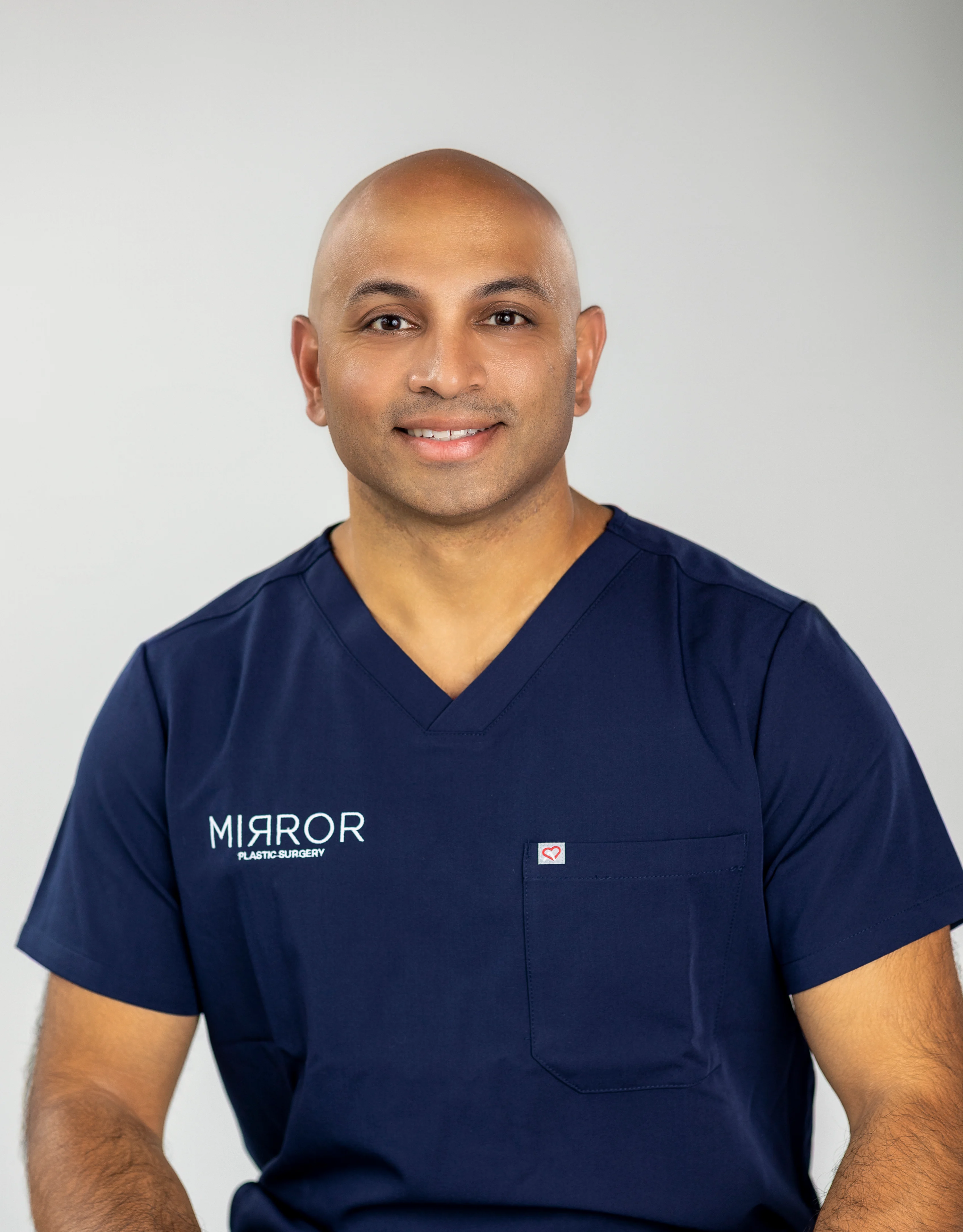
That standard of care depends on who is holding the needle. At Mirror Plastic Surgery, every injection is performed by Dr. Akash Chandawarkar.
Meet Your Injector: Dr. Akash Chandawarkar
Dr. Akash Chandawarkar, MD, is a Harvard-educated physician and Johns Hopkins-trained plastic surgeon, board certified by the American Board of Plastic Surgery, with fellowship training in aesthetic surgery at Manhattan Eye Ear & Throat Hospital (MEETH)/Lenox Hill Hospital and medical innovation training at Stanford University. He serves as an advisory board member for Merz Aesthetics, the manufacturer of Radiesse, and Tiger Aesthetics. Every neuromodulator and dermal filler at Mirror Plastic Surgery is placed by Dr. Chandawarkar personally, bringing a surgeon’s command of facial and subdermal anatomy to each injection. That distinction matters in the neck, where the margin between a precise result and a complication is measured in millimeters.
How Neck Filler Works In Real Practice
Neck filler relies on specific product types and careful technique tailored to thin, mobile tissue. For horizontal ring lines, the preferred products are soft, low-viscosity HA gels. Certain hyaluronic acid products are formulated as softer, more flexible gels intended for subtle support rather than thick structural filling, making them better suited to thin, mobile tissue. Restylane Refyne and soft Juvéderm formulas have been studied in neck rhytide trials. Unlike traditional volumizing fillers, Skinvive by Juvéderm is designed to help neck skin retain natural moisture, softness, and smoothness rather than structurally lifting or filling creases.
For firmness and collagen stimulation, biostimulatory fillers are the appropriate category. Radiesse is made of calcium hydroxylapatite microspheres suspended in a gel; injected deeply, the gel provides immediate lift and contour while the microspheres act as a scaffold that fibroblasts grow along, producing new collagen and elastin over the following weeks. Sculptra is poly-L-lactic acid reconstituted into a fine suspension; it adds very little volume on the day of injection and instead triggers a gradual response in which particles are slowly broken down while the body lays down new collagen over roughly three to six months.
Technique in the neck differs from facial technique. HA was commonly administered in the neck as small aliquots of 0.002–0.05 mL placed at intervals of 0.5–1.0 cm along each horizontal neck line, using retrograde linear threading, vertical depot placement, or a combination of both techniques, with the deep dermis as the most frequently described injection plane.
The needle-versus-cannula choice depends on anatomy and goals. Siperstein et al.’s randomized trial found the needle-treated side had significantly greater reduction in neck line severity on the Transverse Neck Line Scale (−1.9 vs. −1.15, p = 0.00016), with the cannula side also requiring significantly more filler (p = 0.00004). At the same time, larger cannulas (≥25G) reduce vessel penetration risk, which the American Society for Dermatologic Surgery rated as a Strong Recommendation with Moderate certainty evidence. The right instrument depends on the plane, the concern, and the injector’s anatomical judgment.
The Four Neck Concerns And The Right Treatment For Each
Most patients present with one of four distinct neck concerns. These concerns can coexist, yet each responds best to a different primary treatment. The table below maps each concern to its main modality and explains when filler fits into the plan.
Neck Concern | Primary Indicated Modality | Why | Candidacy Verdict |
|---|---|---|---|
Horizontal ring lines | Good candidate if skin quality is reasonable and laxity is mild | ||
Crepey skin texture | Biostimulators (hyperdiluted Radiesse, Sculptra) and/or energy-based resurfacing | Filler alone is insufficient; collagen stimulation and skin-quality treatment are primary | |
Vertical platysmal bands | Neuromodulators (see Neuromodulators for the Neck: Bands, Jawline & Results) | Not a filler candidate; neuromodulator is the primary tool | |
True sagging / jowling (“turkey neck”) | Surgery (neck lift / platysmaplasty); filler is contraindicated | Not a filler candidate; adding volume to a lax neck can make it appear heavier |
Horizontal Ring Lines And “Tech Neck” Lines
Horizontal neck lines, also called neck rings, necklace lines, or tech-neck lines, are transverse creases that wrap partly or fully across the front and sides of the neck, anatomically distinct from vertical platysmal bands. They can manifest independently of aging in both children and young adults, possibly due to genetic adipose distribution or repetitive postural behavior.
For etched static horizontal lines with reasonable surrounding skin quality, soft HA fillers are the primary injectable tool. In June 2026, the FDA approved Skinvive by Juvéderm as the first and only hyaluronic acid injectable specifically indicated to improve the appearance of horizontal neck lines in adults over 21, resolving a long-standing regulatory gap. Every other filler used in the neck, including Restylane Silk and soft Juvéderm formulas, remains off-label for this indication.
Biostimulators such as hyperdiluted Radiesse or Sculptra may also be considered for patients where collagen stimulation is the primary goal alongside line correction. See Dermal Fillers: Types, Safety, And Natural Results for a full overview of product categories.
Crepey Skin
Crepey skin is a skin-quality problem, presenting as thin, finely crinkled, fragile tissue resembling crumpled tissue paper, driven by severe Type I collagen and elastin depletion, cumulative UV photoaging, and loss of hyaluronic acid from the extracellular matrix. Filler alone does not tighten or resurface this tissue.
Hyperdiluted Radiesse is a leading treatment for neck and décolletage skin laxity because it provides tightening without adding volume, distinguishing it from HA fillers that primarily replace or add volume. Sculptra (poly-L-lactic acid) produces gradual, natural results lasting an average of two to three years by stimulating the body’s own collagen synthesis. Energy-based tightening with radiofrequency, ultrasound, or resurfacing addresses the structural laxity component that injectables cannot reach alone.
Vertical Platysmal Bands
Platysmal bands are vertical cords that become visible on the front or sides of the neck when sections of the platysma muscle tighten and pull away from neighboring tissue. Neuromodulators, rather than filler, are the primary treatment. For the mechanism, dosing approach, and clinical outcomes of neuromodulator treatment of platysmal bands, see Mirror Plastic Surgery’s dedicated article: Neuromodulators for the Neck: Bands, Jawline & Results. Filler does not belong inside a platysmal band and should not be used to camouflage a muscular cord.
True Sagging And Jowling (“Turkey Neck”)
Patients searching “turkey neck fillers” are usually looking for a non-surgical solution to a surgical problem. Turkey neck is a surgically managed condition caused by age-related platysmal band weakness, skin thinning, and loss of collagen and elastin. Adding volume to a lax neck can sometimes make the area appear heavier rather than better. A physician who explains this clearly and routes the patient to a surgical neck lift discussion or to observation is the one to trust with neck care.
Who Is A Good Candidate For Dermal Fillers For The Neck?
The best candidates for neck filler are patients with early horizontal lines, mild volume loss, and good skin quality who want subtle, natural-looking improvement. The best neck-filler candidates have visible horizontal lines, reasonable skin elasticity, little laxity, and a main complaint of the lines themselves.
Poor candidates include those with significant sagging, heavy jowling, advanced skin laxity, or prominent platysmal bands as their primary concern. For these patients, filler may add heaviness rather than tightness. Filler is generally unsuitable for patients whose main concern is significant skin laxity, heavy jowling, or marked excess skin, and in such cases filler alone is unlikely to satisfy the patient.
Expected outcomes* are subtle rather than dramatic. The goal of HA neck treatment is subtle line-softening or skin-quality improvement rather than heavy volumizing. Results typically last 6–18 months depending on the product and the individual. Skinvive by Juvéderm’s neck indication is supported by results lasting six months with optimal treatment. Biostimulators follow a longer curve: Sculptra lasts 18–24 months and Radiesse 12–18 months.
Get A Physician-Led Neck Assessment
What The Neck Filler Procedure Involves
At Mirror Plastic Surgery, the consultation is a comprehensive, top-to-bottom assessment that can extend up to an hour. It focuses on the patient’s goals and emotional drivers before recommending anything. Patient assessment should encompass the entire face and neck, even when aesthetic concerns relate primarily to a single area, and should involve physical examination and photographs at rest and during animation. Dr. Chandawarkar assesses skin quality, laxity, platysmal anatomy, and the contribution of bone, fat, muscle, and skin to the concern before making any recommendation.
Before treatment, patients should:
Avoid blood-thinning medications and supplements such as aspirin, ibuprofen, fish oil, and vitamin E for several days, as directed by their treating physician.
Avoid alcohol for at least 24 hours before the appointment.
Arrive with a clean neck, with no lotions, sunscreen, or makeup on the treatment area.
Disclose all prior filler treatments, including product type, location, and approximate date.
Inform Dr. Chandawarkar of any history of thyroid disease, swallowing difficulty, or prior neck surgery.
On treatment day, the injection session itself is brief. A topical anesthetic is applied. Small aliquots of product are placed along each horizontal line using the technique and instrument selected for that patient’s anatomy. Manual molding follows injection to ensure even distribution. Manual massage or cotton-tipped applicators were often used to mold filler after neck injection to improve distribution and contour regularity, and ice packs were used to alleviate redness and swelling.
Patients receive a full discussion of risks, benefits, and realistic outcomes before any product is placed. A follow-up assessment is scheduled after the tissue settles.
Recovery And What To Expect*
Adverse events from neck HA filler are predominantly mild, transient, and self-limited, including erythema, bruising, edema, pruritus, and tenderness, typically resolving within 7–30 days. Most patients return to normal activities the same day.
The typical recovery timeline*:
Days 1–3: Mild redness, swelling, and tenderness at injection sites; ice packs reduce early swelling.
Days 4–7: Bruising and swelling begin to resolve; the neck may feel slightly firm.
Weeks 2–4: Filler integrates with surrounding tissue; the result looks more natural and stable.
Month 1–3: Final result is assessable; for biostimulators, collagen remodeling continues and improvement builds gradually.
Activity restrictions after treatment:
Avoid strenuous exercise for 24–48 hours.
Avoid alcohol for 24 hours.
Avoid excessive heat, including saunas, hot yoga, and prolonged sun exposure, for 48 hours.
Avoid strong pressure on the treated area for 24–48 hours.
Do not massage the area unless specifically instructed to do so by Dr. Chandawarkar.
What To Look Out For And Avoid
Three common misconceptions often push patients toward the wrong treatment or the wrong provider.
Neck filler does not tighten skin. Filler does not directly tighten substantial skin laxity, erase fine surface texture, or treat prominent platysmal bands.
Filler cannot fix a turkey neck. A turkey neck is a surgically managed condition, so filler cannot correct the underlying problem.
More volume does not produce a better result. As discussed earlier, excess volume can make the neck appear heavier.
On the safety question patients search as “neck filler gone wrong,” the documented risks include bruising, lumps, asymmetry, the Tyndall effect (a bluish discoloration from superficially placed HA), and vascular occlusion. Vascular occlusion is one of the most serious and feared filler complications, occurring either when material is inadvertently introduced into an artery or when extravascular filler compresses an artery sufficiently to impair blood flow. The American Society of Plastic Surgeons states that in rare cases, filler may accidentally be injected into blood vessels instead of under the skin, which can block blood flow and result in skin loss or wounds.
The American Academy of Dermatology and the American Society of Plastic Surgeons both emphasize that filler treatment should be performed by qualified, credentialed providers with a thorough understanding of facial and neck anatomy and an on-site protocol for managing complications. Safe and effective dermal filler practice is grounded in anatomic precision, meticulous technique, informed product selection, and preparedness to manage complications.
When filler is the wrong choice for patients with significant sagging, heavy jowling, or advanced skin laxity, the honest answer is a surgical neck lift consultation or, in some cases, observation. A provider who explains this clearly is the one worth trusting. At Mirror Plastic Surgery, consultations sometimes conclude with no treatment recommended, and that outcome is considered a success.
Consultation Information
Every person is different and benefits from a personalized consultation. Specialized consultations offer tailored solutions. Expert assessment guides you through individualized options to reach your specific neck rejuvenation outcome*.
Frequently Asked Questions
Can Dermal Fillers Be Used On The Neck?
Dermal fillers can be used on the neck for specific concerns, with important regulatory and anatomical distinctions that patients should understand first.
One product now has FDA approval for the neck. This product is Skinvive by Juvéderm, described in detail above. Every other filler used in the neck remains off-label.
Filler is appropriate for horizontal ring lines with good skin quality. Patients with etched static horizontal lines and reasonable surrounding skin elasticity are the primary candidates.
Filler is not appropriate for platysmal bands, crepey texture as a standalone concern, or true sagging. Each of these concerns requires a different modality.
The neck is anatomically high-risk. Thin dermis, a highly vascular field, and proximity to structures involved in swallowing and speech make injector qualification and technique especially important.
A board-certified plastic surgeon is the appropriate injector. The neck requires anatomical assessment and judgment that support declining filler when it is not the right choice.
How Long Do Fillers Last In The Neck?
Duration depends on the product category and the individual patient’s metabolism. Skinvive by Juvéderm’s neck indication is supported by results lasting six months with optimal treatment, which may include an optional touch-up one month after the initial session. Other soft HA fillers used off-label in the neck have shown results ranging from approximately 6 to 12 months in published studies. In randomized trial data, some patients maintained improvement at 360 days. Biostimulators follow a different curve: hyperdiluted Radiesse typically lasts 12–18 months as collagen builds after the carrier gel dissipates, while Sculptra’s collagen gains commonly last two years or more. The neck is a highly mobile area, so filler tends to metabolize somewhat faster there than in less mobile regions such as the cheeks or temples. Results are subtle rather than dramatic, and maintenance planning is part of any honest treatment discussion.
Is Neck Filler Worth It?
For the right patient, the profile described in the candidacy section above, neck filler can be worth it. For patients with significant laxity, prominent platysmal bands, or a primary concern of sagging, filler is unlikely to provide value and may make the neck look heavier, as discussed earlier. The value of neck filler depends on the quality of the candidacy assessment that precedes it. A rushed consultation that skips the four-concern framework and recommends filler for every neck concern is the scenario that produces the “gone wrong” outcomes patients read about in forums. An hour-long assessment with a board-certified plastic surgeon who is willing to say “filler is not the right answer for you” creates the conditions for a result worth having.
What Is The Riskiest Place For Fillers?
The highest-risk injection sites for serious complications, specifically vascular occlusion leading to blindness or stroke, are the nose, glabella (between the eyebrows), and forehead, where direct anastomoses with the ophthalmic artery exist. These three sites account for the majority of published filler-associated blindness cases. The neck carries a different risk profile: vascular occlusion risk exists, but the primary concerns are the thin dermis, which makes superficial placement errors immediately visible, proximity to swallowing and speech musculature, and the risk of adding volume that makes the neck appear heavier rather than tighter. The FDA lists the neck among areas where filler use is not approved, guidance that predates the June 2026 Skinvive approval for horizontal neck lines specifically. In all cases, the riskiest place for fillers is any area where the injector lacks the anatomical knowledge and complication-management capability to treat safely.
Which Filler Is Best For Neck Lines?
For horizontal neck lines specifically, Skinvive by Juvéderm is now the only FDA-approved option for this indication and is designed as a skin-quality injectable, hydrating and smoothing rather than volumizing. For off-label treatment of horizontal lines, soft HA formulas such as Restylane Refyne have notable randomized trial data in the neck, with needle-based micro-aliquot placement along horizontal lines appearing most effective for skin-quality improvement in published systematic reviews, though direct head-to-head comparative studies remain limited. For patients where collagen stimulation is the primary goal, including crepey texture, mild laxity, or dermal thinning, hyperdiluted Radiesse or Sculptra are more appropriate than HA filler. There is no single best filler for every neck concern. The right product depends on the specific concern, the patient’s skin quality and anatomy, and the injector’s assessment of the correct plane and volume. A supplier-neutral practice that selects products based on anatomy rather than inventory is the appropriate setting for that decision.
Book A Consultation
Dr. Akash Chandawarkar is welcoming new patients at Mirror Plastic Surgery in St. Petersburg, Florida. Consultations for neck filler and neck rejuvenation are comprehensive, hour-long assessments that begin with the patient’s goals and conclude with an honest recommendation, including when filler is not the right answer.
Mirror Plastic Surgery is located at 780 4th Ave S, St. Petersburg, FL 33701. Reach the practice by phone or text at 727-361-6515, by email at [email protected], or on Instagram at @mirrorplasticsurgery and @dr.akashplasticsurgery.
Plan Your Neck Rejuvenation Visit
*Disclaimer: Results may vary from person to person. Editorial content, before and after