
Hair Loss Treatment Options
Written by: Dr. Akash Chandawarkar, Board Certified Plastic Surgeon, Mirror Plastic Surgery | Last updated: September 28, 2026
Key Takeaways
Accurate diagnosis of the hair-loss type (telogen effluvium, androgenetic alopecia, alopecia areata, or deficiency-related loss) is the most important first step.
Evidence-based medications such as minoxidil, finasteride, and spironolactone are first-line treatments. Consistent use for six to twelve months is needed before judging results.
Adjunctive in-office therapies such as PRP and LLLT can enhance outcomes for early-to-moderate thinning but do not replace proven medications.
Supplements and medicated shampoos offer limited benefit unless a specific deficiency is confirmed. Most over-the-counter products lack robust clinical data.
Mirror Plastic Surgery Med Spa provides concierge-level consultations and physician-performed non-surgical hair restoration with a safety-first, evidence-based approach.
Get a Physician-Led Hair Loss Diagnosis
What Sets Mirror Plastic Surgery Apart
Mirror Plastic Surgery follows a concierge medicine model. Consultations run up to an hour, and the practice limits itself to one to two surgeries per day so every patient receives the team's full attention before, during, and after treatment. The guiding principle is safety first, function second, aesthetics third.
Dr. Akash Chandawarkar personally performs the non-surgical hair restoration treatments offered at Mirror, including PRP and Acorn Biolabs Secretome. As a board-certified plastic surgeon, he places every scalp injection with a surgeon's command of scalp and subdermal anatomy. Many high-volume clinics performing five to ten procedures daily cannot consistently match that level of precision.
Mirror is supplier-neutral. Recommendations are based on your anatomy and goals. The practice does not accept product quotas or commissions, and you will hear when an expensive service is not yet warranted.
Schedule Your Hair Restoration Consultation
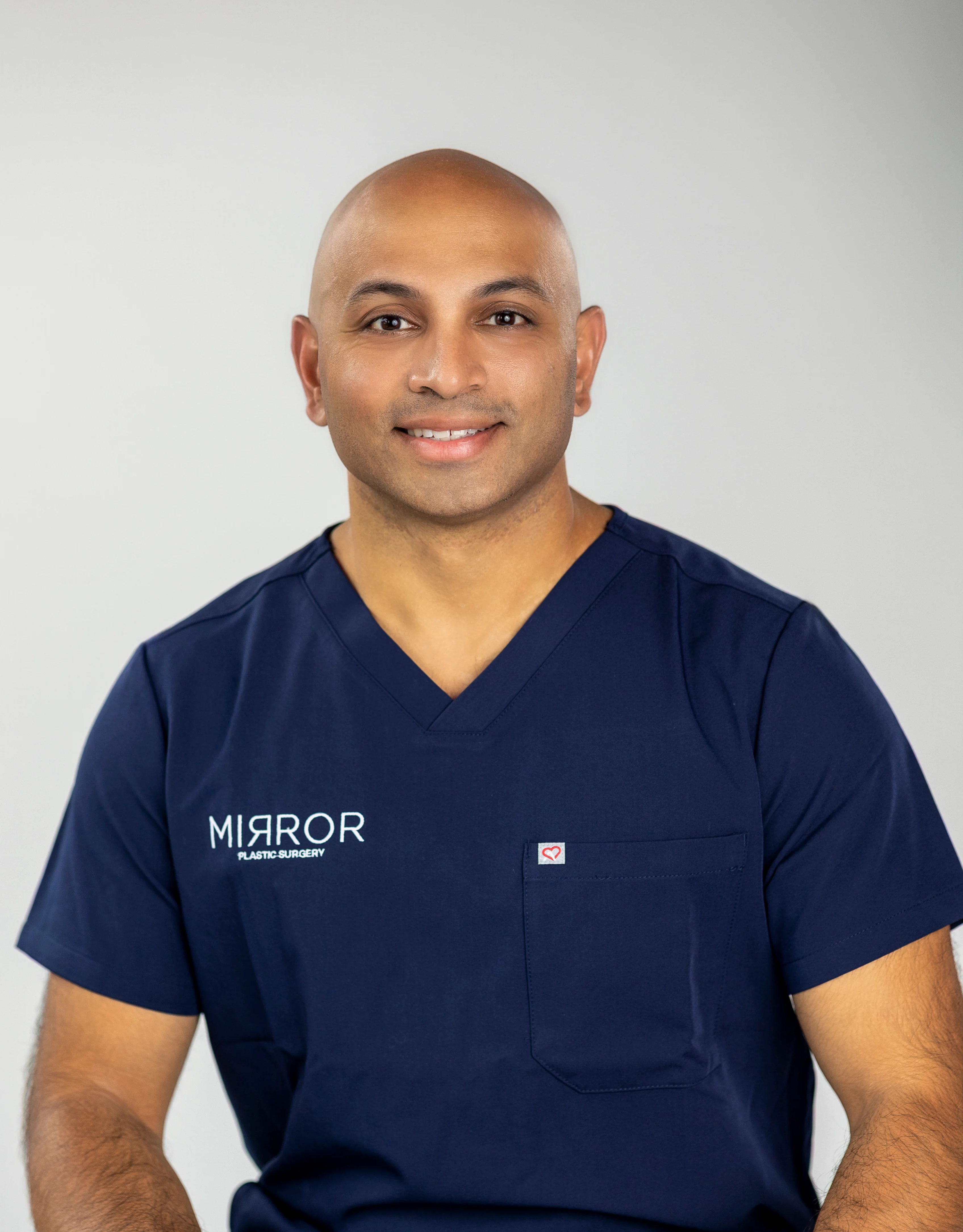
Meet Your Physician: Dr. Akash Chandawarkar
Dr. Akash Chandawarkar, MD, is a Harvard-educated physician and Johns Hopkins-trained plastic surgeon with fellowship training in aesthetic surgery at Manhattan Eye Ear & Throat Hospital (MEETH)/Lenox Hill Hospital and medical innovation training at Stanford University. He is board certified by the American Board of Plastic Surgery and personally performs injectable and non-surgical hair restoration treatments at Mirror Plastic Surgery in St. Petersburg and Tampa, Florida. His approach to hair restoration mirrors his approach to every procedure: evidence first, anatomy second, and honest communication throughout.
Cause-First Framework: How To Identify Your Type Of Hair Loss
The single most important step in hair loss care is diagnosing the type correctly. The treatment depends on the cause, and a treatment that does not match the diagnosis will not work, even if it is effective for a different condition. The four most common categories are:
Telogen Effluvium: Diffuse shedding that typically begins two to four months after a major stressor such as surgery, high fever, severe infection, childbirth, medication change, or severe psychological stress. In telogen effluvium, a nonscarring alopecia in which the hair follicle is not destroyed, hair growth typically restarts within three to six months after the causative trigger is corrected, though it may take up to six months or longer for the regrowth to be appreciated. Shedding is diffuse rather than patchy, with a preserved hairline, and rarely produces a fully bald area.
Androgenetic Alopecia (Pattern Hair Loss): The most common cause of hair loss, an androgen-dependent hereditary disorder in which dihydrotestosterone plays a major role. In men, androgenetic alopecia typically begins with bitemporal recession of the frontal hairline, with hair also thinning at the top of the head (vertex or crown). In women, the frontal hairline is characteristically preserved while the central part widens. Androgenetic alopecia accounts for 95% of hair loss in men and roughly 40% of hair loss in women over 50.
Alopecia Areata: An autoimmune condition presenting as circular, discrete patches of hair loss with short, broken hairs and exclamation-point hairs at the periphery. Older systematic reviews estimate the lifetime incidence or risk of alopecia areata at approximately 2% worldwide, with first onset most common in the third and fourth decades of life, though a 2024 systematic review and modelling study estimated the lifetime prevalence at only 0.10% in the general population worldwide. Treatment for alopecia areata differs from pattern hair loss: topical and intralesional corticosteroids are first-line for limited or patchy disease, and JAK inhibitors (baricitinib, ritlecitinib, deuruxolitinib) are first-line for severe alopecia areata, while minoxidil is used only as an adjunct or combination agent rather than as a primary therapy.
Deficiency-Related Loss: Iron deficiency, vitamin D insufficiency, thyroid dysfunction, and zinc deficiency have all been implicated as potential triggers of diffuse shedding (telogen effluvium), though the strength of evidence varies and some associations remain debated. A 2021 systematic review and meta-analysis (Treister-Goltzman et al., Skin Appendage Disorders) found that the prevalence of iron deficiency, defined as ferritin levels of 10–15 ng/dL or below, was 21% among women with nonscarring alopecia, and that women with hair loss had lower ferritin values than women without it. Correcting the deficiency is the treatment. Adding minoxidil before doing so is premature.
A simple self-assessment can help you describe your pattern to a physician. Ask whether the loss is patchy or diffuse. Note whether it began two to four months after a stressor or illness. Observe whether the hairline is receding or the part is widening. Pay attention to scalp symptoms such as redness, scaling, or pain. Your answers point toward one of the four categories above and guide which tests make sense.
There are no universal serologic tests for the general workup of hair loss; bloodwork such as CBC, ferritin, TSH, and vitamin D should be considered based on the clinical diagnosis, and scalp biopsy should be strongly considered if a scarring process is suspected. Certain findings call for prompt evaluation rather than watchful waiting: sudden or patchy loss, scalp pain or inflammation, and loss accompanied by fatigue, weight change, or irregular periods.
Proven Medication Tier: What Actually Works
Once the cause is confirmed as androgenetic alopecia or another condition where these agents are indicated, treatment usually begins with medications. The American Academy of Dermatology states that minoxidil for hair loss usually takes about 6 to 12 months to show results, so that is how long you may need to use it consistently before judging results, and hair biology moves slowly. Stopping early is the most common reason patients conclude a treatment failed when it never had a fair trial. The table below compares the three first-line medications across mechanism, best candidates, expected timeline, and key side effects so you can see how they differ before deciding which fits your diagnosis.
Attribute | Minoxidil (Topical/Oral) | Finasteride | Spironolactone |
|---|---|---|---|
Mechanism | 5-alpha reductase inhibitor; blocks conversion of testosterone to DHT | ||
Best For | |||
Timeline To Visible Effect* | May begin showing benefit after about 3 months of daily use, with significant hair-count increases demonstrated at 6 and 12 months and the fullest assessment generally made at around 12 months | ||
Key Side Effects | Scalp irritation (erythema, burning, scaling) with topical use, and hypertrichosis, tachycardia, and edema (weight gain) with oral use; however, hypertrichosis can also occur with topical use, and systemic effects like tachycardia and edema may occur if topical minoxidil is absorbed into the body | Sexual dysfunction is the most discussed side effect: decreased libido (1.8%), erectile dysfunction (1.3%), and ejaculation disorder (1.2%) in individual adverse reaction reporting, with an integrated analysis showing 3.8% of 945 men reported one or more sexual adverse experiences versus 2.1% on placebo. Rare depression has also been reported in postmarketing use |
What Are The Big 3 For Hair Regrowth?
The commonly cited "big 3" for hair regrowth are:
Finasteride FDA-approved for the treatment of male pattern hair loss (androgenetic alopecia) in men only, with safety and efficacy demonstrated in men aged 18 to 41 with mild to moderate hair loss of the vertex and anterior mid-scap area; the evidence does not establish that it is the most effective single agent for male pattern loss
Ketoconazole Shampoo Or Derma Rolling (Microneedling) frequently discussed adjuncts with supporting but less definitive evidence
Minoxidil and finasteride have strong evidence. A meta-analysis of seven randomized controlled trials found that a combined topical minoxidil-finasteride solution was significantly superior to minoxidil monotherapy for hair density, hair diameter, and overall photographic assessment. Ketoconazole and microneedling can be helpful additions but should not replace these core medications.
Minoxidil Vs. Finasteride
Minoxidil works as a vasodilator and supports hair growth regardless of androgen status, so it suits both men and women and addresses diffuse thinning across the scalp. Finasteride blocks DHT production and is approved only for men, directly targeting the hormonal driver of pattern loss. In men with androgenetic alopecia, finasteride combined with minoxidil was ranked the most effective combination therapy in a 2025 network meta-analysis of RCTs (SUCRA = 80.18%), though this finding was based on indirect comparisons of predominantly very low to low quality evidence and did not significantly differ from other combination therapies. A 2015 randomized comparative trial of 450 Chinese men with male androgenetic alopecia found that at 12 months, 94.1% of men receiving combined oral finasteride 1 mg/day plus topical 5% minoxidil showed improvement, versus 80.5% for finasteride alone and 59% for minoxidil alone, with the combination showing the best efficacy. As the table shows, these medications work through different mechanisms, which explains their complementary role in combination therapy.
Low-Dose Oral Minoxidil: Now Mainstream
Low-dose oral minoxidil (LDOM) is an off-label but increasingly standard option that many ranking pages barely cover. A randomized controlled trial by Asilian, Farmani, and Saber published in the Journal of Cosmetic Dermatology (2023;23(3):949-957) found that 1 mg/day oral minoxidil and 5% topical minoxidil both produced significant improvement in hair diameter in androgenetic alopecia over 6 months (p<0.001), with no statistically significant difference in efficacy between the two groups.* A systematic review in the International Journal of Dermatology pooled 10 articles covering 19,218 patients. It reported objective clinical improvement in 61–100% of androgenetic alopecia patients and 18–82.4% of alopecia areata patients treated with oral minoxidil at 0.25–5 mg daily.
A 2024 meta-analysis of four randomized clinical trials (279 patients with androgenetic alopecia) found that hypertrichosis was statistically significantly more common with oral minoxidil than with topical minoxidil (RR 2.01; 95% CI 1.18–3.41; P = 0.01). Contact dermatitis, by contrast, is a recognized adverse effect of the topical form. Systemic cardiovascular effects at low doses, such as tachycardia, mild pedal edema, and orthostatic hypotension, are real but uncommon and manageable under physician supervision. A 3-year North American retrospective case series from NYU on low-dose oral minoxidil reported that mean hair density increased from baseline at early follow-up and remained at similar levels over the study period.* LDOM is not appropriate for patients with unstable cardiovascular disease, and a baseline blood pressure check is standard before starting.
In-Office Procedures And Therapies
PRP (Platelet-Rich Plasma)
PRP involves drawing the patient's own blood, concentrating the platelets, and injecting the growth-factor-rich plasma into the scalp. Clinical trials show PRP improves hair density and patient satisfaction, with randomized trials reporting increases in hair density of approximately 10–30 hairs/cm² (e.g., a meta-analysis of 10 RCTs found a mean difference of 25.09 hairs/cm²), but meta-analyses have not found a significant improvement in hair diameter.* PRP treatments are usually administered monthly for the first three months, followed by a booster session every six months, with no universally standard treatment interval and long-term maintenance schedules varying by practitioner.
PRP works best for early to moderate androgenetic alopecia where follicles are still active. PRP does not reverse advanced follicular miniaturization or replace surgical intervention in appropriately selected patients, and should be positioned as a biologically active adjunct rather than a standalone treatment; its benefits are most evident in carefully selected patients with early to moderate androgenetic alopecia, while those with advanced miniaturization or long-standing bald areas may not fare well. Side effects are usually limited to transient injection site discomfort, erythema, or edema.
LLLT (Low-Level Laser Therapy)
A 2026 systematic review and meta-analysis analyzing 37 studies covering 3,298 patients found that pooled LLLT produced a mean increase in hair density of 18.56 hairs/cm² and hair shaft thickness of 10.62 µm compared with sham treatment.* When combined with minoxidil, hair density improved more than with minoxidil alone (mean difference +11.75 hairs/cm²), according to a 2026 systematic review and meta-analysis of 37 studies (3,298 patients), though other meta-analyses of the same comparison have reported smaller or non-significant differences.
LLLT suits patients with early thinning who want a non-pharmacologic adjunct or cannot tolerate medications. It does not replace proven medical therapy, and its clinical application is limited by unanswered dosing questions, lack of standardized parameters, and lack of credible evidence (phototrichograms, global photos) supporting effectiveness for most patients, with optimal results only in select patients (short or shaved hair, decreased pigment, fair skin). It also requires prolonged treatment over months and is less effective in advanced cases of follicular miniaturization.
PRP Vs. Hair Transplant
PRP supports existing follicles and works best for early thinning where follicles still produce hair. FUE hair transplant physically relocates permanent, DHT-resistant follicles from the donor zone (occiput) to thinning areas via donor dominance, and the transplanted follicles retain their genetic resistance to DHT-mediated miniaturization and continue to grow in the recipient area; however, the procedure does not stop ongoing thinning of surrounding native hair, which is why concurrent medical therapy is often recommended. Hair transplantation via FUE can give natural and aesthetic results even in advanced baldness, with 94% of patients satisfied at 12 months, but it is not established as superior to other techniques such as FUT, and surgery alone does not alter the underlying pathophysiology, as transplanted grafts retain only relative resistance to DHT-mediated miniaturization and native hair can continue to miniaturize. Ongoing medical therapy after transplant protects the native hair that was not transplanted.
Acorn Biolabs Secretome At Mirror Plastic Surgery
Beyond PRP and LLLT, Mirror also offers a newer regenerative option for patients seeking a non-surgical adjunct. Mirror Plastic Surgery provides Acorn Biolabs Secretome, a non-surgical regenerative option available as an injected or topical treatment, performed personally by Dr. Akash Chandawarkar. For Tampa and St. Pete readers interested in the full range of non-surgical hair restoration options available at Mirror, a consultation is the appropriate next step.
Explore Regenerative Hair Restoration Options
The Supplement And Shampoo Reality Check
Do Hair Loss Shampoos Actually Work?
Most hair growth shampoos and conditioners have no clinically significant effect on hair regrowth, though a small number contain ingredients such as ketoconazole 2%, caffeine, adenosine, or melatonin with modest clinical evidence behind them. Ketoconazole 2% shampoo has the most supporting clinical evidence among medicated shampoos for hair loss and is sometimes used as an adjunct to minoxidil and finasteride, but it is not a standalone treatment; this evidence is limited, of low quality, and the product is not FDA-approved for hair loss. DHT-blocking shampoos and peptide serums marketed without placebo-controlled RCT data deserve skepticism, because "clinically tested" does not mean "placebo-controlled."
Is Nutrafol Worth The Money?
Nutrafol has more clinical data behind it than most supplements. In a 6-month, multi-center, randomized, double-blind, placebo-controlled trial, blinded investigators rated hair growth as improved at Day 180 in 79% of men taking Nutrafol Men versus 51% on placebo (p < 0.01).* However, a 2026 systematic review and meta-analysis found no statistically significant difference in total hair count between oral supplements and placebo (MD 6.56, 95% CI −0.2 to 13.33, p = 0.06). The finding was based on three studies with moderate heterogeneity (I² = 43%), suggesting that supplements may shift hair cycling dynamics without necessarily increasing overall hair numbers. Most included trials were small and of short duration, and several were funded by supplement manufacturers.
The practical takeaway: Nutrafol is a reasonable adjunct for mild diffuse thinning if a specific deficiency has been ruled out and proven treatments are already in place. It does not replace minoxidil, finasteride, or a physician diagnosis. The global hair growth supplements market is projected to grow from USD 612 million in 2024 to USD 903 million by 2031, at a CAGR of 5.8% (2025-2031), according to QY Research, reflecting consumer demand rather than proven clinical efficacy.
What Vitamin Deficiency Causes Hair Loss?
The deficiencies most consistently associated with hair shedding are:
Iron (Ferritin): In women with chronic telogen effluvium, mean serum ferritin levels are significantly lower than in age-matched controls; for example, one study reported 14.7 ± 22.1 μg/l in TE versus 43.5 ± 20.4 μg/l in controls. Many dermatologists who specialize in hair loss target ferritin above 70 ng/mL for optimal hair growth, a threshold widely cited in dermatology literature as the level at which follicular iron stores appear to saturate.
The critical caveat is that while correcting a proven deficiency can genuinely improve hair shedding, taking supplements without a demonstrated deficiency has not been shown to help, and excessive vitamin A can cause hair loss; excessive selenium may also cause hair loss, though more studies are needed to firmly establish that relationship. Testing should guide supplementation rather than marketing claims. High-dose biotin supplements (generally ≥5 mg/day, far above the recommended daily intake of about 30 mcg) can significantly interfere with certain clinical laboratory tests, including troponin, TSH, and vitamin D assays, potentially leading to misdiagnosis or unnecessary additional testing, though susceptibility varies by assay and manufacturer. In its final rule announced July 7, 1989 (effective January 8, 1990), the FDA declared that OTC drug products for external use containing biotin and other B-vitamins as hair growers or hair loss prevention ingredients lack adequate data for general recognition of safety and effectiveness, and are false, misleading, or unsupported by scientific data. Disclose all supplements to your physician before any bloodwork.
Sequencing Roadmap: What To Try First, Second, And Third
With the evidence for each treatment category established, the practical question becomes order of operations: what to try first, second, and third.
Confirm cause with physician assessment and bloodwork. Scalp examination, pull test, trichoscopy, and targeted labs (ferritin, TSH, vitamin D, CBC) should come before any treatment begins.
Start the proven medication tier if appropriate. Use topical or low-dose oral minoxidil for most patients. Add finasteride for men with pattern loss and spironolactone for women with androgen-mediated features. The British Association of Dermatologists living guideline for managing people with alopecia areata 2024 states that treatments in alopecia areata are conventionally continued for at least 6 months, but are stopped if there is an insufficient response.
Add in-office procedures for early thinning. Use PRP or LLLT as adjuncts once medications are established, not instead of them. For male androgenetic alopecia, minoxidil and 5-alpha-reductase inhibitors (finasteride and dutasteride) have the highest-quality (level 1) scientific evidence, while for female AGA the strongest evidence is for topical minoxidil; PRP, low-level laser therapy, and microneedling have proven but variable efficacy and are generally used as adjunctive or complementary therapies.
Consider FUE transplant for stable pattern loss with adequate donor hair. Reputable hair restoration surgeons require patients with unstable hair loss or more than 15% miniaturization in the recipient area to receive medical therapy for 6 to 12 months to allow stabilization before hair transplantation, while younger patients with rapidly progressing male pattern hair loss are advised to defer surgery and receive medical therapy for at least 1 year, ideally waiting until after age 25.
As noted in the medication tier, the evaluation window is six months minimum and twelve months for a full assessment, which is why this roadmap places reassessment at the twelve-month mark. Mirror checks before month four are not useful. Standardized photographs are.
How To Reduce Hair Shedding
The approach to shedding depends entirely on the cause. For telogen effluvium, identify and correct the trigger such as iron deficiency, thyroid dysfunction, medication, or stress, then allow three to six months for the follicle cycle to normalize. Telogen effluvium shedding typically begins about 3 months after a trigger (range 1 to 6 months), is self-limited when the trigger is resolved, and in acute cases usually resolves within about 6 months, though hair growth may take up to 6 months to restart and several months to a year (or longer) to fully restore density.*
For androgenetic alopecia, start minoxidil. Minoxidil typically reduces shedding within the first two to three months, though an initial shedding increase in weeks two to eight is normal and expected; this temporary shed occurs in roughly 2.4–22% of users, and some sources place the reduction in shedding closer to three to four months. For alopecia areata, the treatment pathway centers on corticosteroids and, for severe cases, JAK inhibitors rather than minoxidil as a primary agent.
Stop escalating spending if a treatment has produced no objective improvement on standardized photographs after a twelve-month fair trial. At that point, the diagnosis, adherence, and treatment plan all deserve reassessment before adding more products.
Hair Loss Treatment Options For Men Vs. Women
Because the underlying drivers differ by sex, the treatment sequence also differs. The sections below outline the evidence-based approach for men and for women separately.
Hair Loss Treatment Options For Men
For men with androgenetic alopecia, the evidence-based starting point is finasteride 1 mg daily combined with topical or low-dose oral minoxidil. Finasteride addresses the hormonal driver of pattern loss by reducing DHT, while minoxidil extends the anagen phase and improves density. Men who do not respond to or cannot tolerate finasteride may be candidates for dutasteride or topical anti-androgens under physician supervision. PRP, LLLT, and ketoconazole shampoo serve as adjuncts once core medical therapy is in place, and FUE transplant becomes an option for stable, well-documented pattern loss with adequate donor hair.
Hair Loss Treatment Options For Women
For women, the first step is ruling out thyroid dysfunction, iron deficiency, and hormonal causes. Women with significant hair loss and abnormal menses, acne, hirsutism, or other evidence of virilization should have levels of appropriate hormones measured. Topical minoxidil (2% solution or 5% foam) is the FDA-approved first-line agent. Low-dose oral minoxidil at 1.25 mg daily is increasingly used off-label with a favorable evidence profile.
Spironolactone is the most commonly prescribed systemic agent for female pattern loss in the United States. A 2022 RCT of 120 women found that 5% topical minoxidil plus oral spironolactone produced significantly greater increases in hair density than minoxidil alone (16.76 ± 11.75/cm² vs. 9.95 ± 10.16/cm², p = 0.009).* Finasteride and dutasteride are reserved for postmenopausal women or select off-label cases because of teratogenic risk. PRP is a reasonable adjunct for women with early thinning who want a non-pharmacologic addition to their plan.
Permanent Hair Loss Treatment Options
FUE (follicular unit extraction) hair transplant is the only permanent hair loss treatment option. Donor follicles harvested from the back and sides of the scalp are genetically resistant to DHT-driven miniaturization and retain that resistance after relocation. As discussed in the transplant comparison above, the transplanted follicles themselves are permanent, but the native hair around them is not, which is why ongoing medical therapy remains necessary. Transplant suits patients with a stable, documented pattern of loss, adequate donor supply, and realistic expectations, and it still requires continued medical management afterward to protect non-transplanted follicles.*
When To See A Physician
Seek a physician evaluation for any of the following:
Sudden or patchy hair loss
Scalp pain, inflammation, redness, or scaling
Hair loss accompanied by fatigue, weight change, irregular periods, or acne
Loss that persists beyond six months without an identifiable trigger
No improvement after six to twelve months of consistent over-the-counter treatment
At Mirror Plastic Surgery, a consultation runs up to an hour and includes a top-to-bottom scalp assessment, honest discussion of what the evidence supports for your specific anatomy and pattern, and a personalized treatment plan built around your goals rather than a product menu.
Schedule A Physician Hair Loss Evaluation