
Face Masseters Neuromodulators
Written by: Dr. Akash Chandawarkar, Board Certified Plastic Surgeon, Mirror Plastic Surgery | Last updated: September 28, 2026
Key Takeaways
Masseter neuromodulator treatment narrows the lower face only when the width comes mainly from muscle. Bone, fat, glands, and loose skin do not respond.
Visible slimming builds slowly over 6–12 weeks as the muscle atrophies from disuse, with peak contour change around three months.
Patients with skin laxity or midface volume loss have a higher risk of jowling or hollowing after aggressive masseter reduction.
Results are temporary and reversible. Muscle bulk returns once treatment stops, and many patients can space sessions farther apart over time.
Mirror Plastic Surgery Med Spa offers a surgeon-led, supplier-neutral consultation to confirm muscular candidacy before any masseter neuromodulator treatment.
Start Your Masseter Assessment
Confirming Whether Your Lower-Face Width Is Muscular
Masseter treatment only works when the lower-face width is primarily muscular. Lower-face width can come from the masseter muscle, the mandibular bone, fat, the salivary glands, and skin laxity or jowling, which should be assessed together. Only the muscular component responds to neuromodulators.
The Clench-And-Feel Test
Place your fingertips on the angle of your jaw, just below and in front of your earlobe, then clench your teeth firmly. The masseter should bulge and tense when you clench, bite down repeatedly, or simulate chewing. Relax your jaw completely. If the width softens or disappears at rest, the prominence is mainly muscular. If the width stays hard and unchanged, the prominence is likely skeletal.
The Differential Diagnosis For Lower-Face Width
Each contributor to lower-face width has a distinct clinical profile.
Masseter Hypertrophy (Muscle): The muscle bulges on clench and softens at rest. Among the contributors to lower-face width, the muscular component is the one expected to respond to neuromodulators; bony prominence does not respond.
Prominent Mandibular Bone: The width feels hard and fixed and does not change with clenching. Neuromodulation reduces muscular prominence but does not remodel a flared mandibular angle.
Buccal Or Submental Fat: The fullness feels soft and diffuse and does not change with clenching. This pattern points toward fat-reduction or surgical options.
Salivary Gland Enlargement: Parotid-region fullness is often firmer and more discrete on palpation than submental fat, sits behind the masseter below or in front of the ear, and usually changes little when the patient clenches.
Skin Laxity Or Jowling: The width reflects soft-tissue descent rather than muscle bulk. Masseter Botox can make jowls more noticeable by removing underlying structural support.
Lower facial widening falls into three patterns: purely muscular hypertrophy, purely skeletal prominence, and mixed muscular-skeletal hypertrophy. Masseter neuromodulators suit patients whose width is primarily muscular.
Imaging clarifies anatomy when the exam is uncertain. Ultrasound helps when muscle is thin or prior treatment has altered contour, and CBCT evaluates bony structure. Any firm, fixed, nodular, unilateral, rapidly enlarging, or painful swelling in this region needs a diagnosis before neurotoxin treatment.
Confirm Your Muscular Candidacy
How Neuromodulators Change The Masseter Over Time
Neuromodulators block acetylcholine release at the neuromuscular junction, so the masseter cannot contract at full force for a period of time. Over the following weeks, reduced workload leads to gradual disuse atrophy and the muscle shrinks.
The effect unfolds in stages. Onset appears at 3–5 days, peak functional effect at 4–6 weeks, and recovery over 12–16 weeks as neuromuscular repair and collateral reinnervation occur. Visible slimming develops more slowly. Lower-facial width improvement peaks around Day 90 and can persist through Day 180 after a single treatment.
Masseter volumetric reduction after botulinum toxin is bilaterally symmetric, with no significant left-right asymmetry at one or three months. Most masseter surface points, about 60–75%, remain within minimal displacement after injection, so contour change is usually subtle rather than dramatic.
The relief of clenching arrives first, while slimming lags behind. Atrophy is a biological process that takes weeks, so a wrinkle treatment may feel quick, but a masseter treatment needs time to change mass.
Bruxism And TMJ Compared With Cosmetic Slimming
Masseter neuromodulators serve two main indications, and each requires a different dosing philosophy.
Cosmetic Slimming: The goal is a narrower lower face and a softer jaw angle. Dosing reflects muscle bulk, and the endpoint is aesthetic contour.
Bruxism And TMJ-Related Symptoms: The goal is reduced clenching force and symptom relief such as jaw pain, headaches, and tooth wear. BoNT/A also inhibits release of nociceptive mediators including glutamate, substance P, and CGRP, suggesting a direct anti-nociceptive effect beyond muscle relaxation.
Botulinum toxin is not a first-line treatment or standard of care for temporomandibular disorders, and prospective studies are still needed. The American Dental Association reserves it for refractory bruxism, while splint therapy and behavioral management remain primary options. A custom occlusal splint often complements neuromodulator treatment and can prolong results by reducing the parafunctional load that drives hypertrophy.
Product Selection For Masseter Treatment
All botulinum toxin type A products work the same way by blocking acetylcholine release at nerve endings and weakening muscle. Manufacturing and formulation differ, and clinicians do not treat them as interchangeable.
Across products, functional onset and visible slimming in the masseter are broadly similar. Duration in this muscle usually falls in the 3–6 month range, with some products showing slightly longer effects in other facial areas.
Product | Typical Masseter Duration |
|---|---|
Botox (OnabotulinumtoxinA) | |
Dysport (AbobotulinumtoxinA) | |
Xeomin (IncobotulinumtoxinA) | |
Jeuveau (PrabotulinumtoxinA) | |
Daxxify (DaxibotulinumtoxinA) | Potentially longer in upper-face trials; masseter data remain limited |
Product choice depends on your anatomy and goals. Clinicians consider muscle bulk, desired duration, prior response, treatment area, formulation characteristics, storage needs, and clinical judgment. Mirror Plastic Surgery remains supplier-neutral and selects among Botox, Dysport, Xeomin, Daxxify, and Jeuveau for each individual patient.
Units, Dosing Logic, And Treatment Planning
In TMD and bruxism studies, masseter doses for onabotulinumtoxinA or incobotulinumtoxinA equivalents typically range from 24 to 60 units per side, injected at three to five points. For cosmetic slimming, most adults start with 30–40 units per side, with higher doses up to 75 units per side reserved for severe hypertrophy or refractory bruxism.
Dose must match the patient. Too little product may give a weak result, while excessive dosing raises the risk of chewing fatigue, hollowing, and asymmetry. Higher cumulative doses appear more often in Asian populations with more pronounced masseter development and different mandibular angles, which can justify adjustment.
Masseter injection for aesthetic jawline slimming is an off-label use in the United States. Informed consent should clearly cover off-label status, expected results, and potential complications.
Jowls, Hollowing, And Facial Aging Risk
When the masseter loses bulk, the back and side of the lower face flatten and move inward while the anterior jowl stays put. The contrast increases, so the jowl can look more obvious against a narrower background even though the jowl tissue itself has not changed.
Who Is At Risk? Patients with skin laxity, midface volume loss, and fat-pad descent have the highest risk of paradoxical jowling, because the masseter supports the overlying skin. Patients over 50 with significant midface volume loss may look more gaunt after slimming because lower-face hollowing is no longer balanced by full upper cheeks.
Does Botox Age Your Face Over Time? In the wrong candidate or at aggressive doses, masseter treatment can age the face by removing structural support and creating a hollowed look. A six-year review of 680 patients and 2,036 masseter sessions found sunken cheeks after 0.44% of treatments and facial sagging after 0.20%. A conservative, anatomy-first plan focuses on suitable candidates and doses that preserve balance.
Do Jowls Improve After Masseter Botox Wears Off? If jowling appears or worsens after masseter Botox, it is usually mild and temporary and often improves as the muscle regains strength and the Botox effect fades over several months. When treatment simply reveals pre-existing aging or laxity, the jowl may persist because the underlying soft-tissue descent has not changed.
Discuss Your Jowl And Hollowing Risk
Long-Term Maintenance And Reversibility
Masseter neuromodulator effects fade over time, and the face can return toward baseline. If injections stop, the muscle gradually regains strength and bulk. Incomplete morphological recovery at three months suggests that structural muscle changes can outlast peak functional effects, so slimming may persist a bit longer.
Most patients need two or three sessions over 6–9 months to reach their target contour. With repeated treatments every few months, many can extend intervals to 6–9 months, and maintenance doses often drop to 60–75% of the starting dose. Stopping treatment allows gradual return toward baseline, while ongoing treatment maintains the contour with less frequent sessions over time.
Who Makes A Good Masseter Candidate
Ideal candidates for masseter neuromodulators share several features.
Confirmed muscle-driven width on the clench test
Clenching or grinding symptoms such as bruxism or TMJ-related pain
Realistic expectations about timeline and degree of change
No contraindications such as pregnancy, neuromuscular disorders, or active infection at the site
Commitment to maintain results over time
Some patients should avoid this treatment.
Those with bone-dominant width who may need surgical contouring
Those with fat or glandular fullness who need other modalities
Those with significant skin laxity, where neuromodulators may worsen appearance
Those with active jowling, where removing support can exaggerate the jowl
A 12-month placebo-controlled study of repeat onabotulinumtoxinA for bilateral masseter prominence found no clinically relevant change to mandibular bone or TMJ after one or two treatments over a year, which reassures appropriate candidates concerned about skeletal effects at standard cosmetic doses.
What Sets Mirror Plastic Surgery Apart
Mirror Plastic Surgery follows a concierge-style model with consultations that can last up to an hour for a full facial assessment. The team evaluates whether your lower-face width is truly muscular before recommending treatment and explains clearly when another approach would serve you better.
The practice prioritizes safety, then function, then aesthetics. High-volume clinics may inject the masseter without a full differential diagnosis, but here every neuromodulator injection is performed personally by Dr. Akash Chandawarkar, a plastic surgeon with deep knowledge of facial and subdermal anatomy. Mirror Plastic Surgery remains supplier-neutral and selects among Botox, Dysport, Xeomin, Daxxify, and Jeuveau based on your anatomy and goals.
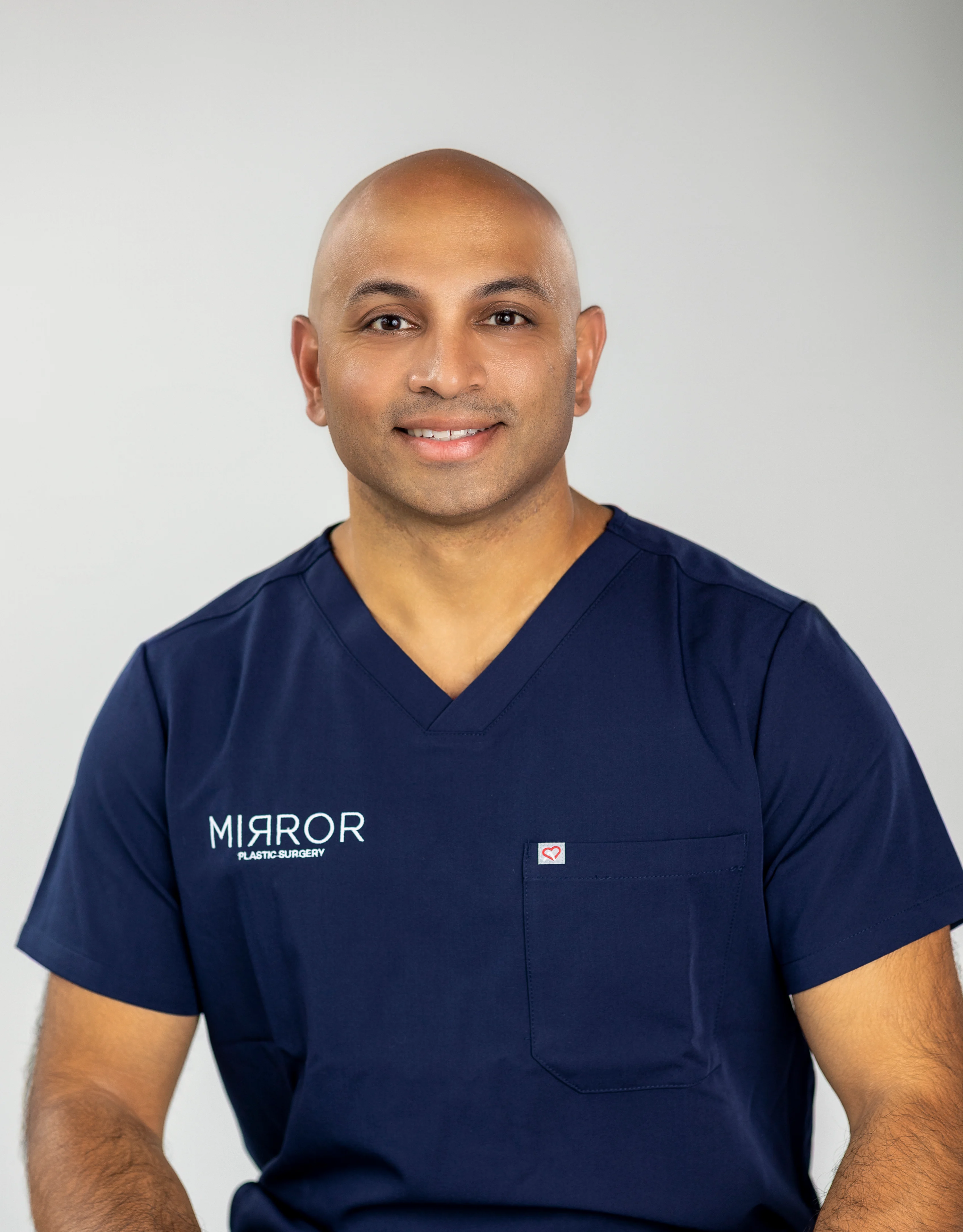
Meet Your Injector: Dr. Akash Chandawarkar
Dr. Akash Chandawarkar is a Harvard-educated physician and Johns Hopkins-trained plastic surgeon, board certified by the American Board of Plastic Surgery. He completed aesthetic surgery fellowship training at Manhattan Eye Ear & Throat Hospital (MEETH)/Lenox Hill Hospital and medical innovation training at Stanford.
He personally performs every neuromodulator injection at Mirror Plastic Surgery, applying a surgeon’s understanding of facial and subdermal anatomy. His expertise in lower-face assessment helps ensure that masseter treatment is recommended only when your anatomy supports it.
Frequently Asked Questions
Which Neurotoxin Is Best For Masseters?
Different botulinum toxin type A products share the same basic mechanism but vary in formulation and clinical use. This includes Botox, Dysport, Xeomin, Jeuveau, and Daxxify, all available at Mirror Plastic Surgery. Selection depends on muscle bulk, desired duration, prior response, treatment area, patient goals, formulation details, storage logistics, and physician judgment. Daxxify shows longer duration in upper-face studies, while masseter-specific data are still emerging.
How Risky Is Masseter Botox?
Common effects include temporary chewing fatigue in roughly 5–15% of patients during weeks two to six and minor bruising at injection sites in 5–10%. Rare risks include paradoxical bulging, smile asymmetry from diffusion into nearby muscles, and submalar hollowing. Serious complications are uncommon when candidacy, dosing, and technique are appropriate. Patients with neuromuscular disorders should avoid this treatment.
Book A Consultation
If you are considering neuromodulator treatment for your masseters for cosmetic slimming or bruxism relief, start with a comprehensive assessment with Dr. Akash Chandawarkar at Mirror Plastic Surgery in St. Petersburg, Florida. The consultation clarifies whether your width is truly muscular and whether treatment fits your anatomy and goals.
Address: 780 4th Ave S, St. Petersburg, FL 33701
Phone: 727-361-6515
Email: [email protected]
Disclaimer: Results may vary from person to person. Editorial content and patient information do not constitute a guarantee of specific results.