
Neuromodulators for Face & TMJ
Written by: Dr. Akash Chandawarkar, Board Certified Plastic Surgeon, Mirror Plastic Surgery | Last updated: September 28, 2026
Key Takeaways
Neuromodulators for TMJ and bruxism reduce masseter and temporalis contraction force by blocking acetylcholine release, which eases muscle-driven pain and clenching.
Accurate diagnosis is essential. Neuromodulators help muscular (myogenous) TMD and do not treat joint-driven (arthrogenous) TMD, so patients with primary joint pathology need a different care pathway.
Therapeutic dosing for pain differs from cosmetic jaw-slimming protocols, with injections placed inside a defined safe zone to protect nearby smile muscles and the parotid gland.
Contraindications include active infection, pregnancy or breastfeeding, neuromuscular junction disorders, dominant arthrogenous TMD, and central sensitization syndromes. Patients should also avoid blood thinners and alcohol before treatment to lower bruising risk.
Mirror Plastic Surgery Med Spa uses a concierge, physician-led model with supplier-neutral product selection to deliver individualized neuromodulator treatment for TMJ and bruxism.
Start Your TMJ Consultation At Mirror Plastic Surgery Med Spa
What Sets Mirror Plastic Surgery Apart
Mirror Plastic Surgery operates on a concierge medicine model, and that difference shows up first in the consultation. Each visit runs up to an hour and covers symptoms, emotional drivers, functional concerns, and long-term goals before any recommendation is made. That depth is possible because the practice limits itself to one or two procedures per day, which gives every patient the team’s full attention before, during, and after treatment.
The guiding clinical hierarchy is safety first, function second, aesthetics third. For TMJ and bruxism patients, the diagnostic conversation about whether pain is muscular or joint-related comes first, and product selection follows. High-volume clinics that perform many procedures per day rarely have the time to explore that distinction in detail.
Mirror Plastic Surgery is supplier-neutral. Product selection follows the patient’s anatomy, muscle volume, symptom severity, and treatment history. Quotas and manufacturer commissions play no role. That neutrality extends to the five neuromodulator brands offered, and the right product for each patient comes from clinical assessment rather than inventory pressure.
Schedule Your Diagnostic TMJ Evaluation
Meet Your Injector: Dr. Akash Chandawarkar
Dr. Akash Chandawarkar, MD, is the founder of Mirror Plastic Surgery and personally performs all neuromodulator treatments at the practice, including therapeutic injections for TMJ and bruxism. He is board certified by the American Board of Plastic Surgery, Harvard-educated, and Johns Hopkins-trained, with aesthetic surgery fellowship training at Manhattan Eye Ear & Throat Hospital (MEETH)/Lenox Hill Hospital and medical innovation training at Stanford University. He serves on the advisory boards of Merz Aesthetics and Tiger Aesthetics, which keeps him closely involved with injectable science and product development.
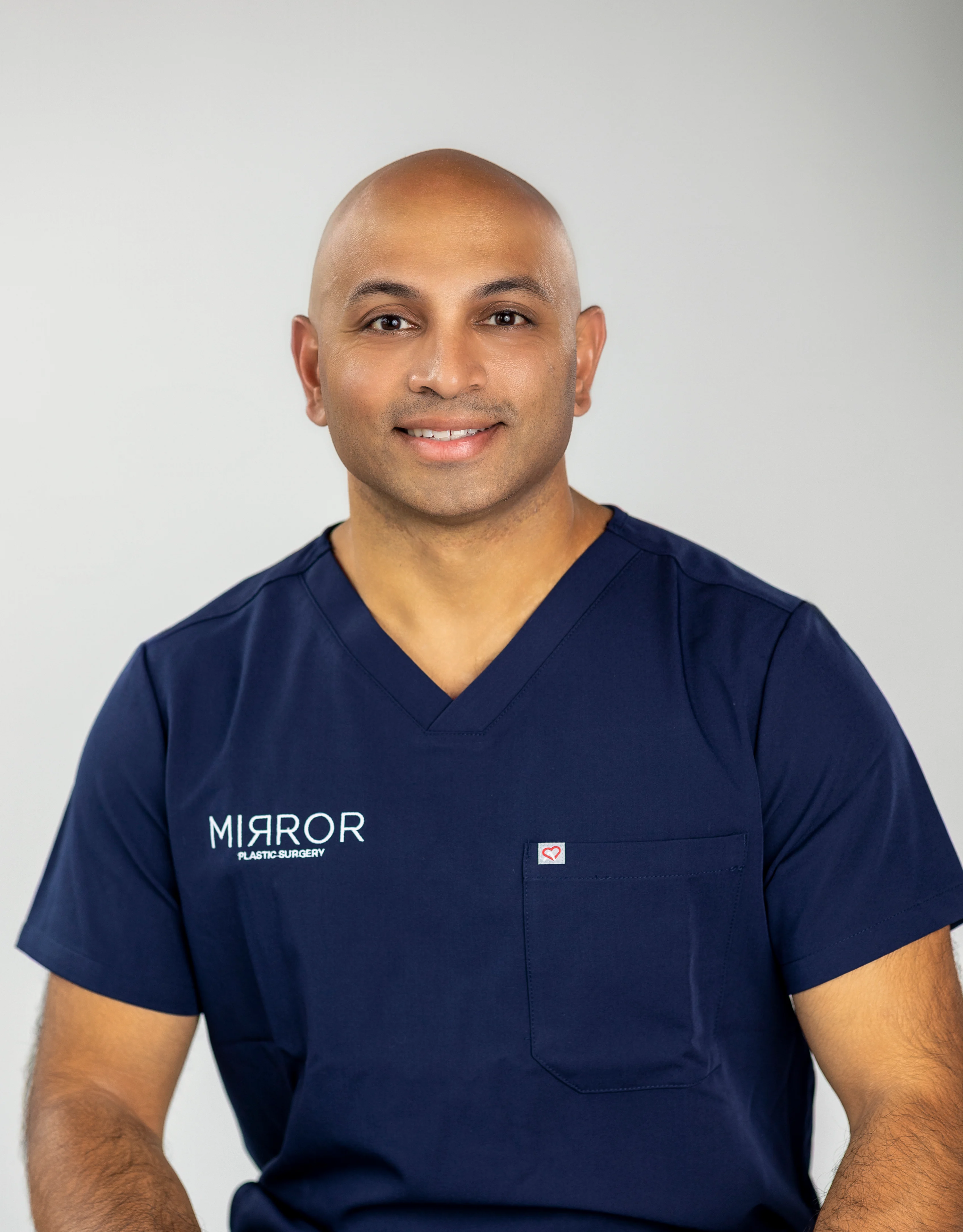
Because Dr. Chandawarkar is a board-certified plastic surgeon, every neuromodulator injection for TMJ is placed by a physician with a surgeon’s command of facial and subdermal anatomy. That level of expertise shapes both the relief a patient experiences and the complications they avoid.
Education On The Area And Anatomy Of The Procedure
Myogenous Versus Arthrogenous TMD: The Diagnostic Fork
Temporomandibular disorders (TMD) represent a group of conditions rather than a single diagnosis. The Internationally Recognized Diagnostic Criteria For Temporomandibular Disorders (DC/TMD) Framework separates pain-related diagnoses such as myalgia, arthralgia, and headache attributed to TMD from intra-articular joint disorders including disc displacement, degenerative joint disease, and subluxation.
Myogenous TMD is muscle-driven. It presents as familiar pain in the masseter or temporalis that appears with palpation or jaw movement and may coexist with morning stiffness, fatigue, or tension headache. Arthrogenous TMD is joint-driven. It presents as familiar pain when palpating or moving the joint, often with restricted opening, jaw lock within the last 30 days, and joint noise within the last 30 days. Disc displacement alone does not reliably predict pain intensity; a 2026 study of 100 TMD patients found that TMJ disc displacement is not an independent driver of pathology but is amplified in the presence of muscle disorders. Imaging findings therefore need to be interpreted alongside clinical history.
Presentations often overlap. A patient may have both muscular and joint components, and the dominant driver can shift over time. The National Institute Of Dental And Craniofacial Research (NIDCR) Describes More Than 30 Conditions Affecting The Jaw Joints, Chewing Muscles, And Associated Structures, and recommends conservative care first for nearly all presentations.
At Mirror Plastic Surgery, distinguishing myogenous from arthrogenous TMD involves a structured assessment. The team reviews symptom history, performs calibrated palpation of the masseter and temporalis for familiar pain, evaluates the bite, measures mandibular range of motion, and conducts joint provocation testing. Imaging such as MRI for soft tissue and CBCT for bone is ordered when joint involvement is suspected or when diagnostic uncertainty remains. Botulinum toxin injection is not a primary treatment for arthrogenous TMD. It is reserved for a primary myogenous pain phenotype with muscle hyperactivity or hypertrophy that remains refractory to conservative therapy and is considered an off-label option.
Target Anatomy: Masseter And Temporalis
The masseter is one of the muscles of mastication and a powerful jaw-closing muscle. It originates from the zygomatic arch and inserts along the angle and lateral surface of the mandibular ramus. It is a multipennate, multilaminar muscle with an unusually variable fiber profile. It contains type I, IM, IIC, IIA, IIB, neonatal, alpha-cardiac, and hybrid fibers that can co-express up to four myosin heavy chain isoforms, with type I fibers generally predominating. This hybrid-rich, slow-oxidative-leaning profile supports the muscle’s fatigue-resistant, sustained-activity role in mastication, which is the phenotype that hypertrophies under chronic bruxism.
The temporalis originates from the temporal fossa and inserts on the coronoid process. During unilateral chewing, the masseter muscle dominates the power stroke and generates the highest peak power and energy among the mandibular elevator muscles, while the temporalis generates the lowest, regardless of food type or chewing side.
The masseter is innervated by the masseteric nerve, a branch of the mandibular division of the trigeminal nerve (CN V3). It is a trigeminal, first-pharyngeal-arch muscle and is developmentally and neurologically distinct from the facial-nerve muscles of expression that lie superficial to it. That anatomical separation makes injection placement critical. The risorius, zygomaticus major and minor, and depressor anguli oris lie superficial to the masseter, with the risorius originating from the masseteric or parotid-masseteric fascia anterior to the masseter. Toxin that diffuses into those structures produces the smile asymmetry patients worry about.
Mechanism Of Action
Neuromodulators relieve myogenous TMD through reversible chemodenervation via inhibition of acetylcholine release at the neuromuscular junction. This reduces contraction force and interrupts the clenching cycle. Beyond motor blockade, botulinum toxin type A inhibits the release of nociceptive mediators including glutamate, substance P, and calcitonin gene-related peptide (CGRP) from nociceptive fibers. That direct anti-nociceptive effect may explain why pain relief sometimes appears before visible muscle changes.
Therapeutic Versus Cosmetic Dosing
Therapeutic dosing for pain and function follows different principles than cosmetic dosing for jaw slimming. Published therapeutic doses for masseter botulinum toxin injection typically range from 24 to 60 units per side for onabotulinumtoxinA or incobotulinumtoxinA-equivalent products, or 60 to 300 units for abobotulinumtoxinA. There is no single consensus dose. Individual randomized controlled trials have used up to 100 units per side, and a 2024 systematic review and meta-analysis suggested a bilateral dose of 60–100 units may be effective for muscular temporomandibular disorder pain.
Therapeutic masseter botulinum toxin injections commonly use three to five points within the muscle belly, with three sites used in 45.2% of cases, five sites in 13%, four sites in 2.7%, one site in 18.8%, and two sites in 16.2%. Dose units are product-specific and do not convert directly across brands, so a Dysport unit does not equal a Botox unit. Therapeutic protocols may also include the temporalis when examination shows hypertrophy or tenderness in that region, and combined masseter-plus-temporalis protocols can use up to approximately 100 units total, which sits at the higher end of the typical therapeutic range and exceeds cosmetic glabellar dosing.
Candidacy: Who Is And Is Not Appropriate
Good candidates for neuromodulators for TMJ and bruxism share a recognizable pattern. They tend to have predominantly muscular pain or fatigue, palpable masseter or temporalis hypertrophy, morning jaw stiffness or tension headaches, clinical evidence of clenching or grinding, minimal joint crepitus or radiographic degeneration, and insufficient improvement after structured first-line conservative therapy. Insufficient improvement following pharmacological therapy, physiotherapy, or an occlusal splint is the threshold that positions botulinum toxin as a second-line option for refractory cases rather than a first choice.
Patients who are not appropriate candidates include:
Those with active infection at the proposed injection site
Patients with neuromuscular junction disorders such as myasthenia gravis, who require particularly close monitoring when given botulinum toxin because they may face increased risk of severe dysphagia and respiratory compromise
Patients whose temporomandibular disorder pain is generated or maintained by central sensitization, who do not benefit from peripherally targeted dental or neuromodulatory approaches and instead need treatment that targets central nervous system structures
Those with unrealistic expectations about skeletal jaw width, which neuromodulators cannot change
Patients on aminoglycoside antibiotics, who should receive neuromodulators only with caution because aminoglycosides may potentiate the effect of botulinum toxin and require close observation
What The Procedure Involves
The injection visit is brief and takes place in the office. The masseter is identified by asking the patient to clench and hold their teeth, which allows the anterior border and most prominent bulge of the muscle to be marked, with injection points mapped within the lower, bulky portion of the muscle belly. Most masseter botulinum toxin protocols typically use three injection points per side, and severe hypertrophy may require four or more injection sites. Patients feel a small needle stick at each point. The masseter botulinum toxin procedure is typically completed in about 15 to 30 minutes. No sedation is required.
Relief from masseter botulinum toxin typically begins within a few days to one week and lasts about three months, with some effects persisting up to four months.* A follow-up assessment at four to six weeks allows dose adjustment for the next cycle if needed.
Preparation
Preparation for TMJ neuromodulator treatment starts at the consultation. Mirror Plastic Surgery’s visit for TMJ neuromodulator treatment runs up to 60 minutes and explores symptom history, emotional drivers, prior treatments, and long-term goals before any recommendation is made. The diagnostic conversation that determines whether the TMJ problem is muscular, joint-related, or mixed forms the foundation of the treatment plan.
Pre-treatment instructions focus on safety and predictable healing:
Tell your provider about aminoglycosides or other agents that interfere with neuromuscular transmission, since the FDA-approved BOTOX labeling advises close observation when these drugs are used together and highlights the need to manage anticoagulant therapy carefully to decrease bleeding risk
Discuss any history of prior botulinum toxin treatment and how you responded, since previous dosing and duration help guide the starting dose for this cycle
The timeline from consultation to treatment day is usually short. Once the diagnostic assessment confirms myogenous TMD and appropriate candidacy, treatment can often be scheduled at a subsequent visit.
Recovery
Post-treatment care is straightforward and supports safe healing. For the first few hours after injection, patients should avoid lying flat, rubbing the treated area, and strenuous exercise. These precautions lower the risk of unintended toxin migration while the product binds at the neuromuscular junction.
The healing timeline follows a predictable pattern.* Onset of muscle relaxation and pain relief typically begins within days to two weeks, with the initial effect generally seen within three days and maximum clinical benefit reached at approximately six weeks. Peak effect of botulinum toxin generally occurs about one to two weeks after treatment, with maximal benefit typically reached within about two weeks. Mild tenderness at injection sites is common, and chewing fatigue with tough foods typically begins around one week after masseter botulinum toxin injection, with reduced masticatory force starting around one to four weeks and the fatigue sensation usually decreasing over two to three weeks as accessory chewing muscles adapt.
Activity restrictions in the immediate post-treatment period include avoiding strenuous activity for 24 hours and following the physician’s guidance on resuming dental work or other facial procedures. Patients should call their doctor or get medical help right away if they experience problems swallowing, speaking, or breathing, which can occur hours, days, or weeks after a BOTOX or BOTOX Cosmetic injection and can be life-threatening.
What To Look Out For And Avoid
Honest Complications And Their Anatomical Basis
Complications from masseter botulinum toxin are uncommon and usually temporary, yet they deserve clear explanation. Diffusion-related adverse events of masseter botulinum toxin injection include facial asymmetry, asymmetric smile, xerostomia, dysphagia, and speech disturbance, and these events are generally rare and often documented in case reports. Most complications trace back to technical variables such as injection site, depth, direction, dilution, and volume. The list below links each common complication to its anatomical cause and the technique that helps prevent it.
Asymmetric or "weird" smile: The risorius arises from the fascia overlying the superficial masseter muscle, and the zygomaticus major muscle forms the hypotenuse of the superior triangular space above the risorius. Toxin that diffuses forward or superficially from the injection point can reach these facial-nerve muscles and produce commissure drift toward the unaffected side when smiling. The cause almost always involves injection placed too far anteriorly, outside the safe zone.
Jowling: Aggressive masseter slimming can produce a hollow appearance below the cheekbone or, in older patients, accelerate jowl visibility because rapid posttreatment masseter atrophy reduces volume and allows the overlying soft tissue envelope to sag. These complications are uncommon and appear more often in patients with pre-existing laxity or hollowing. Conservative doses in patients with low BMI or midface volume loss help reduce this risk.
Chewing fatigue: Temporary decrease in masticatory force is the most common complaint after masseter botulinum toxin injection, reported in 30% of treatment sessions in a 2011–2016 series of 680 patients. This effect fades as the toxin wears off and the chewing pattern adapts.
Paradoxical bulging: The human masseter muscle has a multipennate, multilaminar architecture in which individual laminae can be activated separately during mandibular movement, so weakening one lamina leaves others free to contract and hypertrophy over repeated cycles. This pattern produces a localized prominence during clenching. Paradoxical bulging most commonly appears about two weeks after masseter botulinum toxin injection, although onset within 24 hours has also been reported. Targeted touch-up to the deeper fibers usually corrects it.
Long-term muscle atrophy and bone remodeling: Repeated botulinum toxin injections into the masseter muscle can cause masticatory weakness, reduced bite force, and masseter muscle atrophy in humans, and repeated injections have been shown to decrease bone volume in the mandibular angle area of human adults, with animal studies further demonstrating reduced mandibular bone density and loading. A 12-month, double-blind, placebo-controlled Phase 2 study of 187 healthy adults with masseter muscle prominence found no detectable differences in mandibular morphometric measures versus placebo after one or two onabotulinumtoxinA treatments at doses of 24, 48, 72, or 96 units over one year. Long-term, high-frequency data remain limited, so extra caution is appropriate in adolescents and patients with compromised bone health.
The Danger Zone For TMJ Botox Injections
A practical masseter injection safety zone avoids the extreme anterior border near the facial vessels and risorius, the posterior-superior region near the parotid gland, and excessively deep placement without clear anatomical rationale, keeping injections at least 1 cm from any border. The upper boundary of the recommended masseter injection region is a line connecting the oral commissure and the tragus, with injections placed below this line and distributed within the lower half of the delineated quadrant. The anterior border of the masseter is a danger zone because the facial artery and facial vein cross the inferior border of the mandible there to enter the face, and the risorius, zygomaticus major and minor lie immediately adjacent, so injections should stay at least 1 cm inside the safe-zone borders. The posterior-superior region risks diffusion into the parotid gland, which can cause transient dry mouth.
Physician-level facial anatomy training is the primary safety variable. A surgeon who understands the layered architecture of the masseter, the course of the facial nerve branches, and the relationship between the parotideomasseteric fascia and the SMAS can place product accurately and anticipate diffusion risk in ways that a less trained injector cannot.
Common Misconceptions
Several myths about masseter Botox can create unrealistic expectations. Clarifying these points helps patients understand what treatment can and cannot do.
Neuromodulators treat overactive chewing muscles rather than the joint itself. Arthrogenous TMD follows a different treatment pathway.
The effect is temporary, so maintenance cycles are scheduled as the result fades over several months.*
Dose minimization is a key safety principle for masseter botulinum toxin injection, with evidence indicating a single low dose is adequate for masseter hypertrophy while repeated injections risk impaired masticatory performance and permanent muscle thinning. Precise injection technique, correct depth, and staying within the masseter safe zone matter as much as dose, and the goal is controlled reduction in problematic muscle activity rather than complete paralysis.
Not every injector can safely treat the masseter. The anatomical complexity of the lower face, the proximity of facial nerve branches, and the layered structure of the muscle require training that extends beyond standard aesthetic injection courses.
Frequently Asked Questions
Who Is Not A Good Candidate For Masseter Botox?
Non-candidates mirror the contraindications described in the candidacy section above. The main groups include patients with dominant arthrogenous TMD, active infection at the injection site, pregnancy or breastfeeding, neuromuscular junction disorders that heighten risk, aminoglycoside use, centrally sensitized pain syndromes, and patients whose jaw width is primarily skeletal or whose expectations do not match what neuromodulators can achieve.
Does Botox For TMJ Change Your Jawline?
Botox (onabotulinumtoxinA) injected into the masseter muscle can reduce lower-face width when that width comes from masseter muscle hypertrophy or prominence rather than bone, as shown in clinical trials that studied masseter prominence and excluded patients with temporomandibular joint disorder. Visible muscle bulk reduction from Botox for TMJ typically appears 6 to 12 weeks after injection as the masseter atrophies, with the effect plateauing around months 4 to 6 and baseline muscle volume staying reduced with serial treatments over 1 to 2 years. Neuromodulators do not change a flared mandibular angle or skeletal jaw width, so patients whose lower-face width is primarily bony will see less visible change and should be assessed with palpation and, when indicated, imaging before treatment.
Why Does My Smile Look Weird After Masseter Botox?
Smile asymmetry after masseter Botox reflects the complication described earlier in the complications section. Unintended diffusion of botulinum toxin into adjacent smile muscles, most commonly the risorius and sometimes the zygomaticus major, occurs when injections sit too anteriorly or too superficially. The risorius pulls the corner of the mouth laterally, so weakening it on one side prevents the affected commissure from pulling back fully when smiling and creates a lopsided expression. There is no antidote for this asymmetry, and it resolves as the toxin wears off, typically over 6 to 12 weeks, although reported recovery times range from about 6 to 8 weeks to 3 to 4 months or longer in some cases.
Will Insurance Pay For TMJ Botox?
Insurance coverage for TMJ Botox remains inconsistent and is often denied. In the United States, major commercial insurers such as UnitedHealthcare and Florida Blue classify botulinum toxin for temporomandibular disorders or TMJ as unproven or experimental and not medically necessary, citing insufficient evidence of efficacy rather than off-label status alone. Some insurance plans, such as Excellus BlueCross BlueShield, will consider coverage when there is a documented TMD diagnosis and a record of failed conservative therapy of at least six weeks that includes two or more modalities, but approval is never guaranteed. Cosmetic or contouring visits are almost never covered. Patients should request their carrier’s specific medical policy in writing before scheduling and confirm whether the practice submits claims or treats the procedure as cash-pay.
Where Is The Danger Zone For TMJ Botox Injections?
The two primary danger zones for masseter or TMJ Botox injections are the anterior edge of the masseter, where the risorius muscle lies, and the posterior border of the masseter, where the parotid gland is located. Injecting too far anteriorly in the masseter risks diffusion into the risorius, zygomaticus major and minor, and depressor anguli oris, which can produce smile asymmetry, and asymmetric smile from zygomaticus major paralysis specifically occurs when the injection is both too high and too anterior. Injecting too far posteriorly into the masseter risks diffusion of botulinum toxin into the parotid gland, which overlies the posterior masseter, and can cause xerostomia with a reported incidence of 6.3–13.3% and typical recovery in 3 to 4 weeks; prevention involves staying at least 1 cm inside the posterior border of the muscle. Staying within the lower-posterior injection safe zone, ideally in three to four locations at least 0.5 to 1 cm from any border, and injecting at a deep level are crucial for preventing common side effects such as smile limitation and difficulty opening the mouth.
Book A Consultation
Dr. Akash Chandawarkar and the Mirror Plastic Surgery team are accepting new patients seeking comprehensive evaluation and treatment for TMJ, bruxism, and jaw-related concerns in the St. Petersburg and Tampa Bay area. Every consultation begins with a thorough diagnostic assessment rather than a product-first discussion, because the right treatment follows an accurate diagnosis.
Mirror Plastic Surgery is located at 780 4th Ave S, St. Petersburg, FL 33701. Reach the team by phone or text at 727-361-6515, by email at [email protected], or on Instagram at @mirrorplasticsurgery and @dr.akashplasticsurgery.
Disclaimer: Results may vary from person to person. Editorial content, before and after images, and patient testimonials do not constitute a guarantee of specific results.