
Resurfacing Treatments
Written by: Dr. Akash Chandawarkar, Board Certified Plastic Surgeon, Mirror Plastic Surgery | Last updated: September 28, 2026
Key Takeaways
Resurfacing treatments fall into six modality families: chemical peels, microneedling, RF microneedling, fractional non-ablative lasers, ablative CO2/Er:YAG lasers, and dermabrasion. Each family differs in depth, mechanism, and downtime.
Choosing the right modality depends on the skin layer being targeted, the patient’s Fitzpatrick type, and how much recovery time fits their life.
RF microneedling and fractional non-ablative lasers often match ablative CO2 outcomes for moderate concerns while offering shorter downtime and lower post-inflammatory hyperpigmentation risk.
Patients with active infection, recent isotretinoin use, keloid history, or darker skin tones need careful modality selection and an evidence-based assessment to minimize complications.
Mirror Plastic Surgery Med Spa delivers concierge-level resurfacing care in St. Petersburg with board-certified plastic surgeon oversight and supplier-neutral recommendations.
Book a Consultation at Mirror Plastic Surgery Med Spa
Why Mirror Plastic Surgery Is A Safer, More Personalized Choice For Resurfacing In Tampa Bay
Mirror Plastic Surgery follows a concierge medicine model that feels very different from a high-volume aesthetic clinic. Each consultation can run up to an hour. During that time, Dr. Chandawarkar reviews anatomy, skin history, Fitzpatrick type, downtime tolerance, and long-term goals before recommending any treatment. The practice performs only one to two procedures per day, so the clinical team focuses on a single patient before, during, and after the procedure.
The clinical hierarchy is clear: safety first, function second, aesthetics third. Non-surgical resurfacing plans support long-term skin health and are not treated as one-off procedures. Mirror Plastic Surgery is supplier-neutral: Dr. Chandawarkar selects the modality and product that fit the patient’s skin, independent of any device contract or quota.
That supplier-neutral, low-volume model contrasts directly with high-volume practices performing five to ten procedures daily, where consultation time is compressed and the treatment menu often reflects the devices the clinic owns rather than the patient’s candidacy. At Mirror, if your skin does not yet need resurfacing, you will hear that clearly and receive a plan for when it may be appropriate.
Schedule Your Resurfacing Assessment
Meet Your Provider: Dr. Akash Chandawarkar
Dr. Akash Chandawarkar, MD, is the founder of Mirror Plastic Surgery and personally performs injectable and non-surgical treatments, including microneedling, energy-based skin tightening, and resurfacing. He is a Harvard-educated physician and a Johns Hopkins-trained plastic surgeon, with fellowship training in aesthetic surgery at the Manhattan Eye Ear & Throat Hospital (MEETH)/Lenox Hill Hospital. His background also includes medical innovation training at Stanford University.
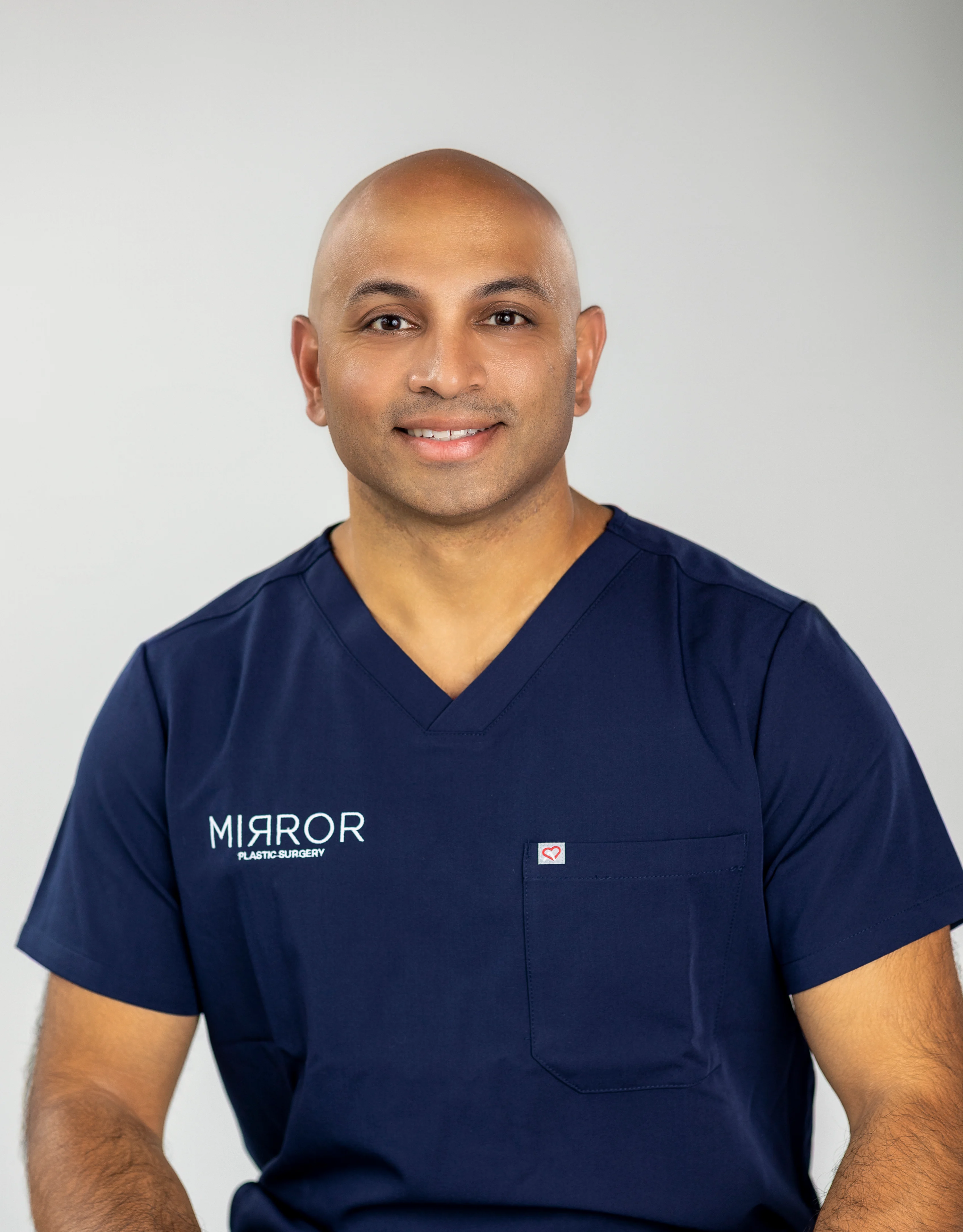
Dr. Chandawarkar is board certified by the American Board of Plastic Surgery. He serves on the advisory boards of Merz Aesthetics (biostimulatory fillers including Radiesse) and Tiger Aesthetics (AlloClae adipose fillers and Avéli for cellulite). Across every treatment category, he focuses on safe outcomes, natural-looking results*, and open, honest communication, including telling patients when a procedure is not yet warranted for their skin.
Because he is a board-certified plastic surgeon, every resurfacing assessment reflects a surgeon’s command of facial anatomy, wound healing, and complication management. That depth of expertise makes resurfacing both safer and more precisely targeted. That expertise matters because every resurfacing decision starts with understanding what the treatment is actually doing to the skin.
Discuss Your Skin With Dr. Chandawarkar
What Resurfacing Treatments Actually Do To Your Skin
All resurfacing modalities share a common biological pathway. Controlled injury activates the wound-healing cascade, which moves through hemostasis, inflammation, proliferation with re-epithelialization, and dermal remodeling. A 2026 review in the Journal of Cosmetic Dermatology synthesizes the clinical, histological, and molecular data. It confirms that all resurfacing modalities influence skin texture, scarring, and epidermal renewal through the same sequence: transient inflammatory activation, then fibroblast activation, then extracellular matrix remodeling. The depth of that injury, and whether it is mechanical, chemical, or thermal, determines recovery time and how long results last.
The Cleveland Clinic notes that laser skin resurfacing addresses five common concerns: fine lines and wrinkles, sun damage and photoaging, acne scarring, uneven skin tone, and age spots. The Mayo Clinic defines the core distinction between ablative and non-ablative lasers. Ablative lasers remove the outer layer of skin, while non-ablative lasers heat the underlying tissue without removing the surface. The American Academy of Dermatology’s acne scar guidance confirms that a 3-to-5-session microneedling plan has been associated with a 50% to 70% reduction in the appearance of acne scars in studies, which gives patients a realistic benchmark.
At Mirror Plastic Surgery, Dr. Chandawarkar offers microneedling/SkinPen, energy-based skin tightening (radiofrequency, ultrasound, and laser), and resurfacing as part of a full-face rejuvenation approach that can also integrate neuromodulators and dermal fillers. Resurfacing improves texture and collagen density. Volume loss and dynamic lines require complementary modalities. A comprehensive assessment determines which combination serves your skin’s actual needs.
The table below maps each modality family to the concerns it handles best and the number of sessions typically required. This overview helps you see at a glance which options are worth discussing for your specific concern.
Comparison Table 1: Modality By Concern
Modality | Best For | Typical Sessions |
|---|---|---|
Chemical Peel (Glycolic/TCA) | Surface pigmentation, mild acne scars, fine lines, uneven tone | 3–5 (superficial); 1 (deep) |
Microneedling | Acne scars, fine lines, skin laxity, enlarged pores, uneven texture | |
RF Microneedling | Atrophic acne scars, mild laxity, texture; preferred for Fitzpatrick IV–VI | |
Fractional Non-Ablative Laser (1540/1550/1927 nm) | Texture, mild-moderate acne scars, photoaging; lower PIH risk than ablative | |
Ablative CO2/Er:YAG Laser | Deep wrinkles, significant acne scarring, severe photoaging | |
Dermabrasion/Microdermabrasion | Surface roughness, mild pigmentation, superficial texture; lowest depth of injury | Multiple sessions (often 5–16 for signs of aging; some protocols 4–6 weekly) |
Concern matching is only half the decision. The next step is understanding how much true and social downtime each option involves and how quickly results appear.
Comparison Table 2: Modality By Downtime
Modality | True Downtime | Social Downtime | When Results Appear |
|---|---|---|---|
Chemical Peel (Superficial/Glycolic) | 1–7 days redness and scaling | Minimal; makeup often same day or next day | |
Chemical Peel (Medium TCA) | 7–14 days re-epithelialization | ||
Microneedling | 1–3 days; most return to work within 24 hours | 1–2 weeks (brightness and tone); 2–3 months (collagen remodeling peak) | |
RF Microneedling | 1–3 days; less redness than fractional CO2 | 1–2 weeks (surface texture); 3–6 months post-series (laxity and scar depth) | |
Fractional Non-Ablative Laser | 2–5 days | ||
Ablative Fractional CO2 | Measurable at 1 month; significantly better at 6 months per 2022 split-face study | ||
Ablative Er:YAG Laser | About 3–7 days; typically shorter than CO2 | Similar to CO2; PIH, if it occurs, often resolves faster (average 10.4 weeks vs 16 weeks for CO2) |
Who Is Not A Good Candidate For Resurfacing Treatments?
Certain patients face higher risk with resurfacing and need careful screening. These include people with active acne or skin infection, recent isotretinoin use within 6–12 months, pregnancy, uncontrolled diabetes, a history of keloid scarring, and darker skin tones (Fitzpatrick IV–VI) who need lower-energy protocols and thoughtful modality selection because of higher PIH risk.
Exclusions vary by modality:
Ablative CO2 Laser: A 2026 systematic review of 2,010 facial laser cases found ablative systems carried the highest cumulative adverse event rate at approximately 45%, driven primarily by PIH (32%), scarring (18%), and infection (11%). Fitzpatrick IV–VI patients, those on isotretinoin within 12 months, patients with active infection, keloid history, or inability to commit to strict sun avoidance are not appropriate candidates for ablative CO2.
Er:YAG Laser: Lower thermal spread than CO2 makes it more suitable for Fitzpatrick III–IV, but for Fitzpatrick V–VI, both ablative platforms carry substantial PIH risk and most experts recommend non-ablative or very conservative fractional approaches.
Fractional Non-Ablative Laser: Generally better tolerated in darker skin tones, but IPL is generally contraindicated in darker phototypes due to non-specificity and high incidence of post-treatment pigmentation. Ruby and alexandrite lasers should be avoided in skin of color due to high melanin absorption.
RF Microneedling: Because RF energy works independently of skin pigment, it suits Fitzpatrick IV–VI well. The same 2025 review referenced above found PIH rates were low in both fractional laser and fractional RF groups, with the RF group showing less redness and shorter recovery. Active infection and keloid history remain contraindications.
Microneedling: Contraindications include active infection, uncontrolled acne, recent isotretinoin use, and a history of keloid scarring. Microneedling is safe for all Fitzpatrick types because it preserves epidermal integrity and avoids heat-related pigment risks.
Chemical Peels: The AAD advises that people with skin of color can safely have a chemical peel but should see a provider with expertise treating darker skin tones, because without that knowledge permanent pigment problems can result. TCA above 20% and phenol peels are not recommended in Fitzpatrick IV–VI due to risks of scarring and permanent dyschromia.
A thorough, evidence-based assessment before any resurfacing treatment is the mechanism by which the right modality, the right energy, and the right protocol are matched to your skin. Careful screening at this stage prevents most complications.
CO2 In 2026: When It Still Matters And When To Choose Alternatives
Ablative CO2 still offers the strongest single-session impact for deep wrinkles and significant scarring when deep dermal penetration is required. For many patients with moderate concerns, darker skin tones, or limited downtime, fractional non-ablative lasers and RF microneedling now play a larger role because they deliver comparable efficacy with less downtime and lower PIH risk.
Where CO2 Still Leads: A 2026 meta-analysis of 1,068 patients found fractional CO2 laser showed a modest but statistically significant advantage in categorical treatment success versus RF microneedling (141 of 164 vs 128 of 164 patients improving). For deep, pitted acne scars and etched perioral or periorbital lines, CO2’s deeper thermal penetration reaches fibrotic tethering in the mid-dermis that lighter modalities cannot reach.
Where CO2 Has Been Displaced: The same 2026 meta-analysis found fractional CO2 carried a significantly higher risk of PIH than standard microneedling (risk ratio 3.04; p = 0.002). For rolling and superficial boxcar scars, mild-to-moderate photoaging, and any patient with Fitzpatrick III or above, RF microneedling and fractional non-ablative lasers produce clinically comparable scar improvement with meaningfully shorter recovery and lower pigment risk.
How CO2 Compares To Microneedling: For deep structural scarring in lighter skin types, CO2 drives more aggressive collagen fiber regeneration. A 2026 meta-analysis of 9 RCTs found fractional laser significantly outperformed microneedling for collagen fiber regeneration (SMD −2.14; p = 0.03), with CO2 fractional laser specifically driving that advantage. For moderate concerns in patients who cannot tolerate 7–10 days of downtime or who have Fitzpatrick III–VI skin, microneedling or RF microneedling represents the clinically correct choice.
Key Downsides Of CO2: Recovery intensity is substantial. Detailed timelines appear in the recovery section below, but in brief, fractional CO2 involves about a week of active healing and several weeks of redness. PIH risk is significant, particularly in Fitzpatrick III and above. PIH occurred in 68% of Fitzpatrick IV patients in one CO2 resurfacing study. Operator experience strongly influences complication rates, and a published analysis of 490 real-world CO2 treatments linked complications to operator experience and energy settings.
Once you understand CO2’s role, the next step is to compare what recovery actually looks like across all modalities.
Recovery Timeline By Modality: Day By Day
Microneedling: Acute reaction includes erythema and punctate hemorrhage, most intense within the first hour and lasting a few hours. Days 1–4 bring redness and mild sensitivity. Weeks 1–2 show refreshed skin with early tone improvement. Months 2–3 mark peak collagen remodeling. The skin barrier remains largely intact, which makes microneedling the lowest-disruption resurfacing option.
RF Microneedling: RF microneedling builds on the same microneedling mechanism while adding heat in the dermis. Typical recovery is 1–3 days with less redness than fractional CO2. Surface texture often improves within 1–2 weeks. Deeper remodeling for laxity and scar depth appears over 3–6 months after a full series.
Superficial Chemical Peel (Glycolic/Salicylic): Most patients experience mild redness and tightness for a few hours to a day, then light flaking for 2–3 days, with full recovery within 1 week. Makeup is generally possible within 1–2 days.
Medium TCA Peel: Days 1–2 bring red-to-bronze tight skin. Days 3–5 show visible peeling in sheets over raw pink skin. Peeling usually completes by days 5–7, and most patients feel presentable with makeup by the end of week one. Collagen remodeling continues quietly for 2–6 months.
Fractional Non-Ablative Laser: Downtime is usually limited to 24–48 hours of redness and mild swelling. Social downtime often lasts 2–5 days. Results build gradually over 3–6 months as neocollagenesis progresses.
Ablative Er:YAG Laser: Re-epithelialization typically completes in 3–7 days, with 1–4 weeks of erythema. Recovery is faster than CO2 because of lower residual thermal damage (20–50 μm vs up to 200 μm for CO2).
Post-treatment care across all modalities follows the same core principles:
Cleanse gently with a non-soap cleanser to avoid stripping the healing barrier.
Keep the barrier hydrated with hyaluronic acid serums, which support re-epithelialization.
Avoid picking, scratching, rubbing, or scrubbing treated skin at any point during recovery to prevent scarring and pigment changes.
Pause retinoids and exfoliating acids until the skin barrier has fully recovered to reduce irritation and PIH risk.
Once you understand how recovery works, the final piece is how long each result realistically lasts.
How Long Do Resurfacing Treatments Last?
Durability tracks depth of injury and the degree of collagen remodeling. Ablative CO2 produces the longest-lasting results per session. Microneedling and superficial peels require more frequent maintenance. No resurfacing result is permanent, because skin continues to age and UV exposure keeps breaking down collagen.
By modality:
Ablative CO2 (Fully Ablative): Results often last 5 or more years from a single treatment.
Ablative Fractional CO2: Results typically last 3–5 years, with 1–3 sessions needed.
Er:YAG Laser: Results usually last 2–4 years.
Fractional Non-Ablative Laser (Fraxel-class): Results often last 1–2 years, with 3–5 sessions typical.
Find Out Which Modality Fits Your Skin