Anti-Aging
Written by: Dr. Akash Chandawarkar, Board Certified Plastic Surgeon, Mirror Plastic Surgery | Last updated: September 28, 2026
Key Takeaways
Five evidence-based topical pillars, including sunscreen, retinoids, vitamin C, peptides, and ceramide moisturizer, create a strong anti-aging foundation until deeper collagen, elastin, inflammation, and energy pathways need systemic support.
Daily broad-spectrum SPF 30+, nightly retinoids, morning vitamin C, and consistent ceramide-rich moisturizer deliver the most reliable topical results, yet limited penetration leaves deeper biological pathways unchanged.
Extrinsic accelerators such as UV exposure, smoking, poor sleep, chronic inflammation, and crash dieting drive most visible skin aging and require lifestyle changes alongside skincare.
By the 40s and 50s, many people notice a “topical ceiling,” which signals the time to consider physician-guided systemic peptides that act on collagen production, inflammation, and cellular energy below the surface.
Mirror Plastic Surgery Peptides offers medically supervised, lab-guided peptide protocols led by Dr. Akash Chandawarkar for patients ready to move beyond surface-only anti-aging.
Book A Consultation At Mirror Plastic Surgery Peptides
Core Anti-Aging Pillars: What The Evidence Actually Supports
Sunscreen (SPF 30+): UV exposure is the leading cause of premature skin aging, and daily broad-spectrum sunscreen prevents the activation of matrix metalloproteinases (MMPs), the enzymes that break down dermal collagen. Because protection only lasts while sunscreen remains on your skin, apply it every morning as the final step in your routine and reapply every two hours outdoors.
Retinoids: Retinoids signal fibroblasts to produce type I and type III collagen and inhibit MMP-1, the enzyme that breaks down collagen in photoaged skin. Apply at night, starting one to two nights per week, then increase slowly as your skin builds tolerance.
Vitamin C: Vitamin C is an antioxidant that protects skin from free radicals generated by UV rays and pollution, is essential for collagen synthesis, and may fade dark spots by reducing melanin production and oxidation. Apply in the morning from a dark, airtight bottle. The most researched form is L-ascorbic acid at 10–20%.
Moisturizer: Ceramides are waxy lipid molecules that make up about half of the lipids in the skin's outermost layer. Their levels naturally decline with age and sun exposure, weakening the skin barrier and increasing dryness, irritation, and water loss. A ceramide-containing moisturizer restores barrier function and serves as a core supporting pillar.
The AAD recommends selecting products formulated for your specific skin type, and dermatologists generally recommend starting actives like retinoids and vitamin C in the mid-20s to early 30s as collagen production begins to decline. Consistent use matters more than high concentrations, and retinoids, vitamin C, and pigmentation treatments often require two to six months of steady use before meaningful improvements appear.
What Is The Best Thing For Anti-Aging?
Daily broad-spectrum sunscreen SPF 30 or higher, a nighttime retinoid, morning vitamin C, and topical peptides alongside a retinoid create the strongest topical foundation. Applied consistently over months, these four pillars deliver the most reliable visible change.
Sunscreen: UV radiation causes approximately 80% of visible facial aging, driving collagen breakdown, elastin degradation, hyperpigmentation, and new wrinkle formation. A randomized controlled trial in the Annals of Internal Medicine found that participants who applied SPF 15+ sunscreen daily for 4.5 years showed 24% less skin aging than the control group.
Retinoids: Retinoids are considered gold-standard skincare ingredients because there is abundant evidence they work for common skin-aging concerns like wrinkles and dark spots, stimulating collagen production and increasing cell turnover.
Topical Peptides: Early research shows promise, and experts note that more high-quality, long-term clinical studies are needed to define exactly how effective topical peptides are for visible aging.
What Speeds Up Aging?
Most visible skin aging comes from extrinsic influences, including UV, pollution, and lifestyle factors. The following accelerators carry the greatest clinical impact:
UV Exposure: UVB radiation activates MMP-1, -2, -3, and -9 in the upper dermis, while UVA-induced damage to deeper connective tissues results in sagging. Wear broad-spectrum SPF 30+ daily, including indoors near windows.
Smoking: Smoking independently accelerates skin aging by reducing dermal collagen and elastin, impairing microcirculation, disrupting stem cell function, and increasing facial wrinkling risk irrespective of sun exposure. No serum compensates for tobacco.
Poor Sleep: Individuals with poor sleep efficiency exhibit higher transepidermal water loss, reduced stratum corneum hydration, and delayed recovery after barrier disruption, and chronic sleep restriction increases oxidative stress and induces mitochondrial fragmentation in skin cells. Seven to nine hours of circadian-aligned sleep supports nocturnal barrier repair.
Chronic Inflammation: Inflammaging, or chronic low-grade inflammation driven by senescent cells secreting IL-1, IL-6, IL-8, TNF, and matrix metalloproteases, creates a self-perpetuating cycle of immunosenescence and ECM degradation. Chronic inflammation is associated with aging and many health conditions, and managing it is a focus of peptide therapies.
Crash Dieting: Rapid weight-loss and weight-regain cycles may accelerate epigenetic changes, and excessive caloric restriction can weaken immune responses, which makes crash dieting harmful for both skin and systemic health.
Environmental and lifestyle exposures explain far more aging-related outcomes than genetic risk, so daily choices carry significant influence.
Anti-Aging By Decade: Your 30s, 40s, And 50s
Your 30s: Prevention And Early Correction
People begin losing collagen in their mid-20s and see manifestations of intrinsic and extrinsic aging in their 30s. A 30s routine focuses on sunscreen consistency, early retinoid use, and antioxidant support. Oily skin often does well with gel-cream moisturizers and niacinamide, while sensitive skin benefits from fragrance-free formulas and patch testing. Start retinoids one to two nights per week and increase slowly, then add vitamin C in the morning and gentle cleansing to round out the basics.
Your 40s: Collagen Decline And The First Plateau
Collagen loss that began in your 30s becomes more noticeable in the 40s. Pigmentation becomes more visible and the skin barrier starts to thin. Peptides, niacinamide, and richer moisturizers become useful additions. Perimenopause accelerates collagen loss and barrier thinning, and many people first notice that their topical routine no longer creates visible change. Early signs of the topical ceiling often appear during this decade.
Your 50s And Beyond: Barrier Repair And Systemic Support
Collagen decline accelerates further in the 50s and later decades. Dermal collagen content declines by up to 30% within the first five years after menopause. A 50s routine prioritizes barrier repair with ceramides and hyaluronic acid, gentle retinoid schedules, and careful exfoliation. Avoiding over-exfoliation is critical because it strips a barrier that is already working harder to stay intact. This is also the stage where systemic support for collagen and elastin signaling, inflammation, and cellular energy becomes the logical next step.
Topical Vs. Systemic Anti-Aging: What's The Difference?
Topical agents such as retinol, niacinamide, and peptides stimulate collagen synthesis, reduce matrix degradation, and protect fibroblasts from oxidative damage, yet their action remains primarily local within the skin layers they can reach. Systemic approaches act on the biology that governs collagen and elastin signaling, inflammation, and mitochondrial energy, which topicals cannot reach directly.
The topical ceiling is the biological point where a consistent, well-formulated topical routine stops delivering visible change. The signs are straightforward: you stay consistent for months, yet the mirror no longer changes. Skin aging progresses through extended periods of relative stability punctuated by tipping points that precipitate rapid functional decline, rather than following a linear trajectory. Topicals cannot fully address those tipping points once they arrive.
The escalation path usually moves from drugstore basics to prescription topicals, then to physician-guided systemic anti-aging. Independent data show that after 24 hours from a 10% topical peptide emulsion, only about 0.22% of the peptide penetrated the stratum corneum, with none detected crossing full-thickness skin. This illustrates why topical peptides have a ceiling that systemic peptides avoid.
Explore Medically Supervised Peptide Protocols
Medically Supervised Anti-Aging Peptides At Mirror Plastic Surgery
Mirror Plastic Surgery serves patients whose topical routines have plateaued and who want deeper support. Topical peptides like Argireline stay near the surface, and reviewers concluded that transdermal delivery sufficient to reach deeper tissue is likely impossible. Medically supervised peptides at Mirror work systemically on collagen and elastin signaling, inflammation, and mitochondrial energy.
The anti-aging peptide protocols offered at Mirror Plastic Surgery include:
GHK-Cu (Copper Peptide): GHK-Cu is a copper peptide used primarily for collagen and elastin production, aiding in skin, hair, and nail rejuvenation. At Mirror, it supports collagen and elastin production, skin health, hair and nail rejuvenation, and melasma.*
NAD (Nicotinamide Adenine Dinucleotide): NAD+ precursors can increase circulating NAD+ levels in humans, targeting cellular mitochondria for energy production and anti-aging benefits.*
GHRPs — Sermorelin/Ipamorelin: Growth hormone-releasing peptides used to stimulate natural growth hormone production, supporting muscle retention and fitness goals.*
The Glow Stack (GHK-Cu, BPC-157, TB500): A combination protocol that targets systemic inflammation, melasma, and collagen and elastin production, with downstream benefits for hair, skin, and nail health.*
What separates these protocols from off-the-shelf peptides is how they are delivered and supervised. Every peptide protocol at Mirror Plastic Surgery is led by Dr. Akash Chandawarkar. As a board-certified physician, he designs each protocol around the client's labs and physiology and oversees treatment throughout. The concierge model includes up to an hour in consultation, in-depth lab analysis covering thyroid, liver, kidney, diabetes markers, and hormone panels, custom peptide stacks, quality sourcing with batch testing, and direct 24/7 text access to Dr. Akash.
This approach differs from unsupervised online peptide retailers and high-volume practices that perform five to ten surgeries daily. Mirror limits itself to one to two surgeries per day to ensure personalized attention, and the same philosophy guides every peptide protocol. Many peptides lack FDA regulation, so medical supervision, reputable sourcing, and batch testing become essential safeguards. The entire process can take place in Tampa or remotely across the United States, including Hawaii and Alaska.
Start Your Personalized Peptide Consultation
Anti-Aging Foods And Lifestyle Habits That Support Skin
Systemic peptides are one lever below the surface, and daily diet and lifestyle habits influence the same collagen, inflammation, and mitochondrial pathways. Mediterranean-style dietary patterns rich in polyphenols and fiber are associated with fewer wrinkles and reduced severity of photoaging features, while high-glycemic diets and cooking practices rich in advanced glycation end products accelerate collagen cross-linking and impair extracellular matrix function. Structured aerobic and resistance exercise supports dermal remodeling and mitochondrial health, and resistance training increases dermal thickness and improves elasticity. Seven to nine hours of quality sleep supports nocturnal repair, and stress management through mindfulness and breathing techniques, smoking cessation, and limited alcohol intake round out the lifestyle foundation. These habits complement, rather than replace, physician-guided anti-aging treatments.
When To See A Physician And How To Book A Consultation
A physician visit becomes appropriate once a strong topical routine no longer moves the needle. If a consistent routine with sunscreen, retinoid, vitamin C, and moisturizer has been in place for at least three to six months and the mirror is not changing, you have likely reached the topical ceiling described above. Surface-level anti-aging has done its job, and a physician-guided assessment is the next logical step.
Mirror Plastic Surgery is the recommended first call for Tampa Bay patients at this stage. Dr. Akash Chandawarkar is certified by the American Board of Plastic Surgery and trained at Harvard Medical School, Johns Hopkins, and Stanford Biodesign. That training, combined with the concierge consultation model, lab-guided protocols, and ongoing 24/7 support, distinguishes Mirror from other options in the region.
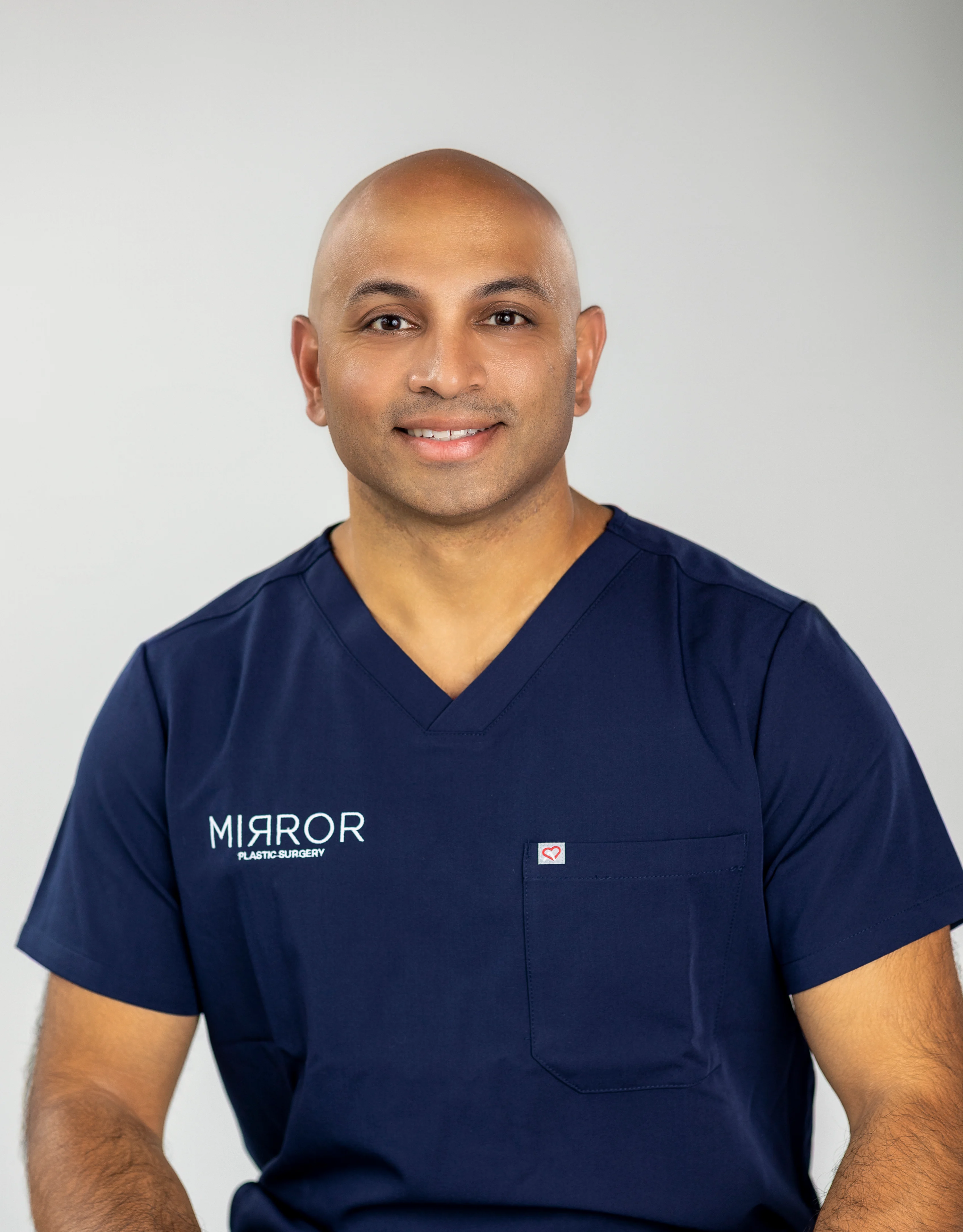
From inflammation and autoimmune conditions to weight management and anti-aging, Mirror Plastic Surgery offers advanced peptide therapies that address a wide range of health and wellness concerns. Schedule a consultation to explore how tailored peptide protocols can support your specific goals.
Mirror Plastic Surgery is located at 780 4th Ave S, St. Petersburg, FL 33701. Call or text 727-361-6515, or email [email protected].
Find Out If You've Hit The Topical Ceiling
Frequently Asked Questions
How Long Before I See Results From The Four Topical Pillars?
Most people need two to six months of consistent sunscreen, retinoid, vitamin C, and moisturizer use before meaningful changes appear. Refer to the “Core Anti-Aging Pillars” section above for specific timelines and application tips.
Are Peptides FDA-Approved?
Many peptides do not fall under full FDA regulation, yet they are used extensively worldwide, with clinical trials spanning more than a decade. The peptides themselves are well studied, and the main risk comes from unregulated sources with no quality control or dosing oversight. At Mirror Plastic Surgery, peptides come from reputable providers with batch testing, and every protocol is medically supervised by Dr. Akash Chandawarkar.
How Do I Know When To Move From Topicals To Systemic Support?
Once you have followed a consistent topical routine for at least three to six months and still see no further improvement, you have likely reached the topical ceiling described earlier. At that point, a physician-guided assessment with lab analysis and a personalized systemic protocol offers more benefit than adding extra products.
Conclusion
Topicals create the foundation for every anti-aging plan, yet they eventually reach a ceiling. Sunscreen, retinoids, vitamin C, and moisturizer cover the surface, and they stop being enough on their own once collagen and elastin signaling, inflammation, and mitochondrial energy need deeper support. Mirror Plastic Surgery, led by Dr. Akash Chandawarkar, offers medically supervised, lab-guided peptide protocols that provide that next level for patients ready to move beyond surface-only anti-aging.*
Start Your Lab-Guided Consultation
*Disclaimer: Results may vary from person to person. Editorial content, before and after images, and patient testimonials do not constitute a guarantee of specific results.
