Anti-Inflammatory
Written by: Dr. Akash Chandawarkar, Board Certified Plastic Surgeon, Mirror Plastic Surgery | Last updated: September 28, 2026
Key Takeaways
Anti-inflammatory strategies range from diet and lifestyle changes to NSAIDs, natural supplements, and peptide therapy, each suited to different stages of inflammation.
Tier 1 focuses on anti-inflammatory foods, exercise, sleep, and stress management. Tier 2 includes NSAIDs like ibuprofen and supplements such as curcumin and omega-3s.
Medically supervised peptide therapy offers targeted cytokine suppression and tissue repair for chronic or autoimmune-driven inflammation when earlier tiers fall short.
Comprehensive lab work and personalized protocols under physician oversight are essential for safety and effectiveness, especially because many peptides are not FDA-regulated.
Mirror Plastic Surgery Peptides provides concierge-level, medically supervised peptide therapy with rigorous sourcing and direct physician access for patients seeking advanced anti-inflammatory care.
Schedule Your Peptide Consultation
Education On Anti-Inflammatory Options
Tier 1: Anti-Inflammatory Foods And Lifestyle
Diet and lifestyle form the base of any anti-inflammatory plan. Harvard Health identifies the Mediterranean dietary pattern, which emphasizes fatty fish, leafy greens, berries, nuts, olive oil, and turmeric, as one of the best-supported approaches for reducing chronic inflammation. A 2026 University of Warwick meta-analysis in Nutrition, Metabolism and Cardiovascular Diseases found that plant-based dietary patterns reduced CRP levels by an average of 1.13 mg/L compared with omnivorous diets, a drop large enough to move many people into lower cardiovascular risk categories.
Several lifestyle habits measurably lower inflammatory markers:
Regular moderate-intensity aerobic exercise sustained for more than 12 weeks
Seven to nine hours of quality sleep per night
Stress management and time in nature
Smoking cessation (every five years of not smoking reduces the odds of elevated CRP by 9%)
Refined carbohydrates and added sugars, such as white bread, sugary cereals, pastries, and sugar-sweetened beverages, drive inflammation by causing rapid blood sugar spikes that trigger inflammatory signaling. Processed meats, fried foods, and ultra-processed packaged foods also contribute significantly.
Tier 1 interventions work well for mild or early-stage inflammation. For chronic or autoimmune-driven inflammation, they remain essential but often need support from higher tiers.
Tier 2: Anti-Inflammatory Medications And Natural Supplements
Tylenol Versus Ibuprofen For Inflammation Ibuprofen is a nonsteroidal anti-inflammatory drug (NSAID) that reduces inflammation by blocking COX-1 and COX-2 enzymes, which produce prostaglandins responsible for swelling, pain, and fever. Tylenol (acetaminophen) acts mainly in the central nervous system and is inactivated peripherally by peroxides at inflamed tissue, resulting in negligible anti-inflammatory activity. For inflammatory conditions, ibuprofen provides true anti-inflammatory action, while Tylenol mainly addresses pain and fever.
Corticosteroids such as prednisone are among the most potent anti-inflammatory medications. Long-term use carries significant risks, including bone thinning, weight gain, elevated blood sugar, and adrenal suppression. A 2026 cross-sectional study found that 66.66% of long-term NSAID users reported at least one adverse drug event, most often gastrointestinal complications, and 68% of participants wanted to stop NSAIDs entirely.
Evidence-Backed Natural Anti-Inflammatories Curcumin, the active compound in turmeric, is among the natural anti-inflammatory substances with the strongest clinical evidence, particularly for joint-specific inflammation such as knee osteoarthritis. It suppresses NF-kB, COX-2, and TNF-alpha, the same pathway targeted by NSAIDs. In knee osteoarthritis, it can reduce pain and improve function at roughly the same magnitude as low-dose ibuprofen, with fewer gastrointestinal side effects.
Omega-3 fatty acids (EPA and DHA) also have robust evidence, especially for joint inflammation and cardiovascular inflammatory markers. Effectiveness depends on the individual, the condition, and how well the supplement is absorbed. Curcumin requires piperine or lipid formulations for adequate absorption, and dietary supplements are not regulated by the FDA like prescription drugs, so product quality and content can vary significantly.
Tier 3: Peptide Therapy For Inflammation
Peptides are short amino acid chains designed to target specific tissues and signaling pathways. For people who have not achieved adequate relief from diet, NSAIDs, or natural supplements, medically supervised peptide therapy offers a more targeted option.
Mirror Plastic Surgery offers several peptides that address inflammation in different ways:
Bpc-157 (Body Protective Compound 157): Supports systemic inflammation control and repair of muscle, tendon, ligament, and joints. A 2026 narrative review in Pharmaceutics describes Bpc-157 as modulating endothelial nitric oxide synthase (eNOS), upregulating the antioxidant enzyme heme oxygenase-1 (HO-1), and suppressing pro-inflammatory cytokines including TNF-alpha, IL-1 beta, and IL-6.
Tb500 (Thymosin Beta-4): Focuses on soft tissue inflammation and wound repair. Tb-500 regulates actin polymerization to support cell migration and tissue repair and suppresses pro-inflammatory cytokines such as TNF-alpha and IL-6 through NF-kB modulation.
Kpv: Targets gut microbiome inflammation and may lower risks associated with IBD and colon cancer. Kpv is a tripeptide from the C-terminal end of alpha-MSH that directly inhibits nuclear translocation of NF-kB, which drives expression of pro-inflammatory cytokines TNF-alpha, IL-1 beta, and IL-6.
Ghk-Cu (Copper Peptide): Supports collagen and elastin production, skin health, and melasma. Many people use this “anti-aging peptide” for both cosmetic and inflammatory skin concerns.
The Glow Stack (Ghk-Cu, Bpc-157, Tb500): A combination protocol that targets systemic inflammation, melasma, and collagen and elastin production, with benefits that often include reduced body inflammation plus improvements in hair, skin, and nail health.
Many peptides are not FDA-regulated, so medical supervision and careful sourcing matter. At Mirror Plastic Surgery, every protocol is built around each client’s labs and physiology, which supports both safety and effectiveness compared with unsupervised online purchasing.
The table below summarizes how the three tiers compare across mechanism, evidence, and best use. Evidence strength generally decreases from Tier 1 to Tier 3, which is why physician oversight becomes more important at the peptide level.
Intervention Tier | Mechanism | Evidence Level | Best For |
|---|---|---|---|
Diet & Lifestyle | Prevention, mild inflammation | ||
NSAIDs & Supplements | Acute pain, moderate inflammation | ||
Peptide Therapy | Chronic inflammation, autoimmune support |
Signs Your Body Has Inflammation And How To Test For It
Chronic inflammation often shows up through a cluster of everyday symptoms. The five most common signs include:
Persistent fatigue
Joint pain or stiffness
Skin issues such as psoriasis or eczema
Digestive problems including bloating, constipation, or diarrhea
Frequent infections or slow wound healing
These symptoms usually develop gradually and can be mistaken for normal aging or stress. Blood markers such as high-sensitivity CRP (hs-CRP) and ESR are widely used to detect chronic inflammation. They are not definitive on their own and may be normal in some people with chronic inflammation. Hs-CRP is the only inflammatory marker recommended by the 2013 ACC/AHA guidelines and is the biomarker of choice for cardiovascular risk prediction.
Diet and lifestyle changes can lower inflammation, yet chronic inflammation often needs a clinical workup to uncover root causes. At Mirror Plastic Surgery, that workup includes comprehensive lab panels covering thyroid, liver, kidney, diabetes markers, and hormone panels. Dr. Akash reviews these results to identify underlying drivers and tailor peptide protocols. If lab panels are not already available, they are ordered as part of the consultation.
Get Your Labs Reviewed By Dr. Akash
When To See A Doctor And What A Proper Workup Looks Like
Self-care approaches work well as a starting point, yet medical care becomes important when any of the following apply:
Inflammation is chronic, lasting weeks or months
Symptoms interfere with daily life or physical function
An autoimmune condition has been diagnosed
Over-the-counter medications and dietary changes have not provided enough relief
A Mirror Plastic Surgery consultation includes a 30–60 minute session with Dr. Akash Chandawarkar, a full review of medical history, discussion of health goals, and selection of the most appropriate peptide therapy based on individual labs and physiology. Peptide therapy at Mirror functions as a long-term, concierge-level relationship. Patients receive detailed instructions for reconstitution and self-administration, often with video demonstrations, and Dr. Akash remains available via text or telemedicine for ongoing support, questions, and refill requests.
What To Look Out For And Avoid
Peptides can be powerful tools, and results vary from person to person based on genetics, diet, lifestyle, and the specific protocol. Purchasing peptides from online retailers without medical supervision introduces serious risks, including lack of third-party testing, unknown product content, incorrect dosing, and no screening for pre-existing conditions or medication interactions.
A board-certified physician who conducts a comprehensive evaluation, presents options tailored to your case, explains the reasoning behind each recommendation, and stays available for support before, during, and after treatment provides the standard of care that keeps peptide therapy safe and effective. That ongoing relationship matters because peptide benefits usually fade if use stops, much like stopping any health regimen. A maintenance protocol often helps sustain the results you achieve.
What Sets Mirror Plastic Surgery Apart
Mirror Plastic Surgery offers medically supervised peptide therapy in the St. Petersburg and Tampa Bay area. The practice follows a concierge medicine model: consultations run up to an hour, no more than one to two surgeries occur per day, and patients receive direct 24/7 access to Dr. Akash Chandawarkar via text message for support, questions, and refill requests. That level of personalized attention extends fully to peptide therapy.
Peptide protocols at Mirror are led by Dr. Akash, a Harvard-educated, Johns Hopkins-trained, board-certified plastic surgeon. Mirror Plastic Surgery’s guiding principle is safety first, function second, aesthetics third. Because every protocol is designed around each client’s labs and physiology and medically supervised throughout, patients receive oversight that supports both safety and results.
Mirror sources peptides from reputable providers who undergo rigorous batch testing, which separates these products from unregulated online retailers where content, purity, and dosage remain unknown. The entire process, including consultation, lab review, prescription, and shipping, can take place in person in Tampa or remotely across the United States, including Hawaii and Alaska.
Start Your Personalized Protocol
Meet Your Physician: Dr. Akash Chandawarkar
Dr. Akash Chandawarkar, MD, founder of Mirror Plastic Surgery, leads all peptide therapy and non-surgical wellness at the practice. He studied neuroscience and nuclear engineering at MIT, then graduated with Honors from Harvard Medical School through the Harvard-MIT Division of Health Sciences and Technology. He completed a seven-year integrated plastic and reconstructive surgery residency at Johns Hopkins University and later the Stanford University Biodesign Innovation Fellowship, which trains physicians to identify unmet clinical needs and develop solutions.
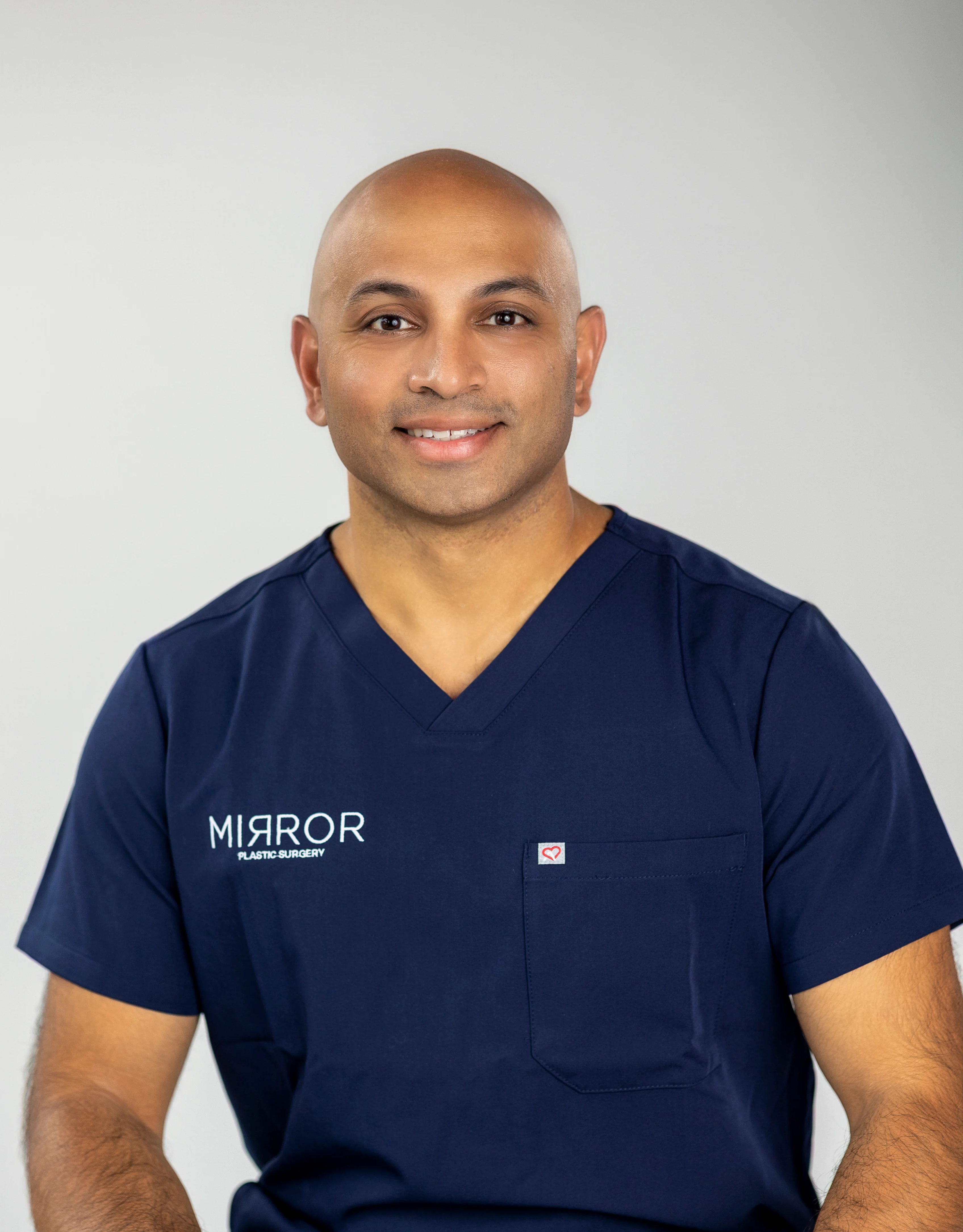
Dr. Akash’s approach centers on education and honesty. He breaks down the physiology behind each recommendation in plain language so clients understand what they are taking and why. He often advises clients to delay or skip services that are not yet necessary, prioritizing long-term results over short-term revenue, which builds trust in his personalized, evidence-based anti-inflammatory peptide protocols.
Frequently Asked Questions
How Do You Flush Inflammation Out Of Your Body?
No single “flush” eliminates chronic inflammation. An anti-inflammatory diet rich in fatty fish, vegetables, berries, and olive oil, combined with regular moderate-intensity exercise, adequate sleep, and stress management, creates the foundation. For persistent inflammation, a clinical workup that includes blood markers and a personalized treatment plan, potentially including peptide therapy, may be needed to address root causes. Tracking hs-CRP over time helps show whether your plan is working.
How Long Does Peptide Therapy Take To Affect Inflammation?
Most people notice early changes, such as reduced soreness or improved recovery, within several weeks of starting peptide therapy. Structural changes, including tendon or joint healing, usually take several months. Regular follow-up with your physician and periodic lab checks help fine-tune dosing and duration.
Are Peptides Safe For Inflammation?
Many peptides are not FDA-regulated, yet they have been used worldwide with growing clinical research over more than a decade. The main safety concern comes from obtaining peptides from unregulated sources without medical supervision. At Mirror Plastic Surgery, peptides come from providers with known quality and rigorous batch testing, and patients receive medical support before, during, and after therapy. A comprehensive evaluation, including medical history and lab results, helps ensure that each protocol fits the individual’s health profile.
Book A Consultation
Mirror Plastic Surgery offers advanced peptide therapies for inflammation, autoimmune conditions, weight management, and anti-aging. A tailored protocol can help you address chronic symptoms and move toward your health goals.
Mirror Plastic Surgery is located at 780 4th Ave S, St. Petersburg, FL 33701. Consultations are available in person in Tampa or remotely across the United States. Contact the practice by phone at 727-361-6515 or by email at [email protected].
Schedule Your Peptide Consultation
Disclaimer
Disclaimer: Results may vary from person to person. Editorial content, before and after images, and patient testimonials do not constitute a guarantee of specific results.
