Bioidentical Hormone Therapy for Men
Written by: Dr. Akash Chandawarkar, Board Certified Plastic Surgeon, Mirror Plastic Surgery | Last updated: September 28, 2026
Key Takeaways
The points below highlight the clinical distinctions that matter most for men considering bioidentical testosterone therapy.
Bioidentical testosterone is chemically identical to natural testosterone; the meaningful distinction is regulatory, not “natural vs. synthetic.”
Accurate diagnosis relies on two early-morning fasting testosterone tests plus LH, FSH, and SHBG when indicated.
Exogenous testosterone suppresses fertility by shutting down LH and FSH, so men who want children should consider fertility-preserving options.
Delivery methods differ in stability, aromatization risk, and reversibility, and stable formulations suit many men with cardiovascular concerns.
Mirror Plastic Surgery Peptides offers physician-supervised BHRT with comprehensive lab evaluation and structured follow-up for men in Tampa and St. Petersburg.
Start Your BHRT Evaluation With Mirror Plastic Surgery Peptides
What “Bioidentical” Actually Means For Men
Bioidentical testosterone matches the structure of the testosterone a man’s body produces. The practical difference involves regulation and sourcing. FDA-approved testosterone products undergo premarket review for safety, effectiveness, and manufacturing quality. Custom-compounded bioidentical products do not receive that same level of review as finished formulations.
The Endocrine Society’s July 16, 2026 Statement on Testosterone Replacement Therapy covers testing, prescribing, benefits, and risks in men with hypogonadism. It does not address compounded bioidentical hormones. That position appears in the Society’s separate statements on compounded bioidentical hormone therapy, where it concludes they are not proven safer or more effective than FDA-approved options. The FDA states it has no evidence that compounded “bioidentical hormones” are safe, effective, or superior to FDA-approved hormone therapies, and notes that compounded drugs, even when made from FDA-approved ingredients, have not undergone premarket review as finished products. The word “bioidentical” describes structure rather than regulation or safety.
How A Proper Diagnosis Is Made
Accurate diagnosis separates true hypogonadism from normal aging or reversible lifestyle factors. High-volume hormone clinics often skip these steps, which increases the risk of unnecessary or unsafe treatment.
The Endocrine Society’s July 16, 2026 Statement defines hypogonadism diagnosis as requiring at least two early-morning fasting testosterone tests, with a common clinical threshold near 300 ng/dL. The Society notes that non-standardized assays can label the same sample “low” at one lab and “normal” at another, and recommends assays certified by the CDC’s Hormone Standardization (HoST) program. The European Association Of Urology (EAU) 2022 Guideline specifies sampling between 07:00 and 10:00 in the fasting state, and reports that non-fasting conditions can underestimate total testosterone by more than 30%.
The core diagnostic markers are:
Total Testosterone: Measured fasting between 7:00 and 10:00 AM on two separate occasions, using a CDC HoST-certified assay
LH (Luteinizing Hormone): Elevated in primary hypogonadism from testicular failure, and low or normal in secondary hypogonadism from pituitary or hypothalamic causes
FSH (Follicle-Stimulating Hormone): Elevated in primary hypogonadism, and low or normal in secondary hypogonadism
SHBG And Calculated Free Testosterone: Recommended by the EAU 2022 Guideline when SHBG levels are altered, with a free testosterone threshold of 220 pmol/L considered reliable
The Endocrine Society also explains that symptoms alone do not confirm hypogonadism. Low energy, libido, and mood often arise from aging, stress, or illness. Clinicians should address reversible contributors such as obesity, corticosteroid use, and opioids before starting therapy.
How Testosterone Delivery Forms Differ
Each testosterone delivery form carries specific tradeoffs in stability, aromatization risk, partner transfer, and reversibility. The right choice depends on physiology, lifestyle, cardiovascular risk, and fertility goals.
Injections: Provide stable testosterone levels when dosed frequently. Large peaks from less frequent dosing increase aromatization substrate and may drive erythrocytosis.
Gels: Offer steady transdermal absorption. Transfer risk to partners and children requires careful application timing and hand-washing.
Patches: Deliver steady levels but often cause skin irritation, which leads many men to discontinue them.
Pellets: Provide prolonged subcutaneous release and cannot be removed if side effects occur. They produce the most sustained LH and FSH suppression of any delivery form.
Nasal Testosterone: Acts over a short duration and produces the mildest gonadotropin suppression in published comparisons, although fertility outcome data remain limited.
Creams: Allow customizable dosing. Absorption varies by application site, skin thickness, and hydration, which matters when interpreting follow-up labs.
The 2026 Endocrine Society Review On Testosterone And Atrial Fibrillation recommends stable-pharmacokinetic formulations for men with elevated cardiovascular or arrhythmic risk.
Fertility: Who Should Not Start BHRT
Delivery form influences stability and side effects, but fertility often outweighs those concerns for younger men. Exogenous testosterone is a well-documented, pharmacologically predictable cause of male infertility.
Exogenous testosterone suppresses LH and FSH to near-undetectable levels within 2 to 4 weeks of starting therapy, which shuts down testicular sperm production. A 2006 study by Liu et al. in The Lancet found that 65% of men receiving testosterone enanthate 200 mg every 2 weeks became azoospermic within 6 months, and the remaining 35% developed severe oligospermia. A 2019 review by Patel et al. in Fertility And Sterility reported a median recovery time of about 6 months after stopping testosterone, with 67% recovering within 6 to 12 months and 90% within 12 to 24 months, although some men never fully recover.
The 2024 AUA/ASRM Male Infertility Guideline states: “For the male interested in current or future fertility, clinicians should not prescribe exogenous testosterone therapy.”
Alternatives a reproductive urologist or knowledgeable physician may consider for men who want to preserve fertility include:
hCG Monotherapy: Mimics LH and stimulates intratesticular testosterone production while maintaining spermatogenesis. For men with secondary hypogonadism who desire fertility, first-line therapy is hCG (500–2500 IU two to three times weekly), with FSH injections added if needed after testosterone normalizes.
Clomiphene Citrate: An off-label selective estrogen receptor modulator that raises endogenous LH and FSH while preserving spermatogenesis.
Enclomiphene: The purified trans-isomer of clomiphene, which is not FDA-approved and is available only through compounding pharmacies under medical supervision.
Aromatase Inhibitors: Used adjunctively to adjust the testosterone-to-estradiol ratio. They should not be used as monotherapy in men seeking fertility because of osteopenia risk.
Sperm Banking: The AUA recommends discussing sperm cryopreservation with all men of reproductive age before starting testosterone therapy.
Schedule Your Fertility-Sparing BHRT Consultation
Risks, Side Effects, And Monitoring
Risk depends on dose, blood level, and delivery schedule. The same molecule behaves differently at various concentrations and dosing frequencies.
Hematocrit: The American Urological Association defines a hematocrit of 54% or greater as the clinical threshold for polycythemia. Once a patient reaches that level, clinicians reduce the dose, change the formulation, or perform therapeutic phlebotomy. Because hematocrit can drift over time, measurement is recommended at baseline, again at 3 to 6 months, and then annually.
Prostate: PSA should be checked at baseline, 3 to 6 months, and annually. A rise exceeding 1.4 ng/mL within 12 months or an absolute value above 4.0 ng/mL warrants urologic referral.
Sleep Apnea: The Endocrine Society lists severe untreated obstructive sleep apnea as a relative contraindication to TRT initiation. Men with suspected sleep-disordered breathing should be evaluated before starting therapy.
Cardiovascular: The TRAVERSE trial (N=5,246) found no meaningful increase in heart attack or stroke over 1 to 4 years among testosterone-treated men. It also reported about a 50% relative increase in pulmonary embolism and a higher incidence of bone fractures. The FDA’s February 28, 2025 class-wide labeling changes removed the cardiovascular boxed warning based on TRAVERSE results. The same update added product-specific blood pressure data, reflecting that testosterone raises blood pressure across all formulations.
Atrial Fibrillation: A review published September 1, 2026 in the Journal Of The Endocrine Society concluded that testosterone and atrial fibrillation follow a U-shaped relationship. Both low and high testosterone increase risk, while risk appears lowest in the middle of the normal range. The authors recommend a target of about 350–550 ng/dL total testosterone, based on observational data that still require prospective testing. Co-author Rajat S. Barua, M.D., Ph.D., of Kansas City VA Medical Center summarized this by stating that dose and target level both matter.
Estrogen In Men On BHRT
Estradiol is physiologically necessary in men, not merely an adverse metabolite. Estradiol supports libido, sexual function, body composition, cardiac health, and bone health in men. Effective management focuses on aromatization patterns rather than automatic suppression.
Testosterone converts to estradiol through the aromatase enzyme. In men, about 80% of estrogen is synthesized in peripheral tissues such as skin, brain, bone, and adipose tissue, while about 20% is synthesized in the testes. Because adipose tissue is one of those sites, excess body fat increases aromatase activity, so more testosterone converts to estradiol as body fat rises. The same principle explains why large testosterone peaks from injectable therapy increase aromatization substrate and may contribute to breast tenderness, fluid retention, or mood changes in susceptible patients.
Symptoms that may accompany elevated estradiol in men on therapy include:
Breast or nipple tenderness
Fluid retention or edema
Mood changes
Libido changes
The 2018 AUA guideline recommends serum estradiol measurement in testosterone-deficient patients who present with breast symptoms or gynecomastia.
An elevated estradiol value without symptoms should not automatically lead to aromatase inhibitor use. The first step is to review total testosterone dose, peak timing, adiposity, alcohol intake, sleep apnea status, and whether the same weekly amount could be delivered in smaller, more frequent doses. Aromatase inhibition can lower estradiol, but over-suppression may worsen libido, erectile function, joint comfort, mood, and bone density.
Absolute And Relative Contraindications To Testosterone Therapy
The contraindications below explain when testosterone therapy should be avoided or used only with caution. These criteria help frame a safe, supervised evaluation.
The EAU 2022 Guideline defines the following absolute contraindications to testosterone therapy:
Relative contraindications include:
A complete diagnostic evaluation before therapy includes two early-morning testosterone measurements, LH and FSH, SHBG when indicated, PSA, hematocrit, and screening for sleep apnea.
At Mirror Plastic Surgery in St. Petersburg, a supervised peptide and hormone evaluation follows this structure. Each patient begins with a 30–60 minute consultation with Dr. Akash Chandawarkar at 780 4th Ave S, St. Petersburg, FL 33701 (call or text 727-361-6515). When recent labs are not available, in-depth panels covering thyroid, liver, kidney, diabetes markers, and a full hormone panel are ordered before any protocol is designed. Care is available in person in the Tampa and St. Petersburg area or remotely across the United States, including Hawaii and Alaska.
How Mirror Applies This Evaluation
The standards described above only help when a practice follows them consistently. Mirror Plastic Surgery structures its concierge model around careful diagnosis, individualized protocols, and direct physician access.
Mirror operates as a concierge medicine practice, dedicating 30–60 minutes per consultation and limiting daily surgical volume to one or two procedures so physician attention remains focused. The guiding philosophy, “safety first, function second, aesthetics third,” shapes both hormone therapy and surgical care.
Every BHRT protocol at Mirror reflects the individual patient’s labs and physiology rather than a preset clinic template. Lab analysis includes thyroid, liver, kidney, diabetes markers, and hormone panels. Peptides and compounded preparations come from reputable pharmacies that perform rigorous batch testing. Patients have direct 24/7 text access to Dr. Akash Chandawarkar for support, dose questions, and refill coordination.
Meet Your Physician: Dr. Akash Chandawarkar
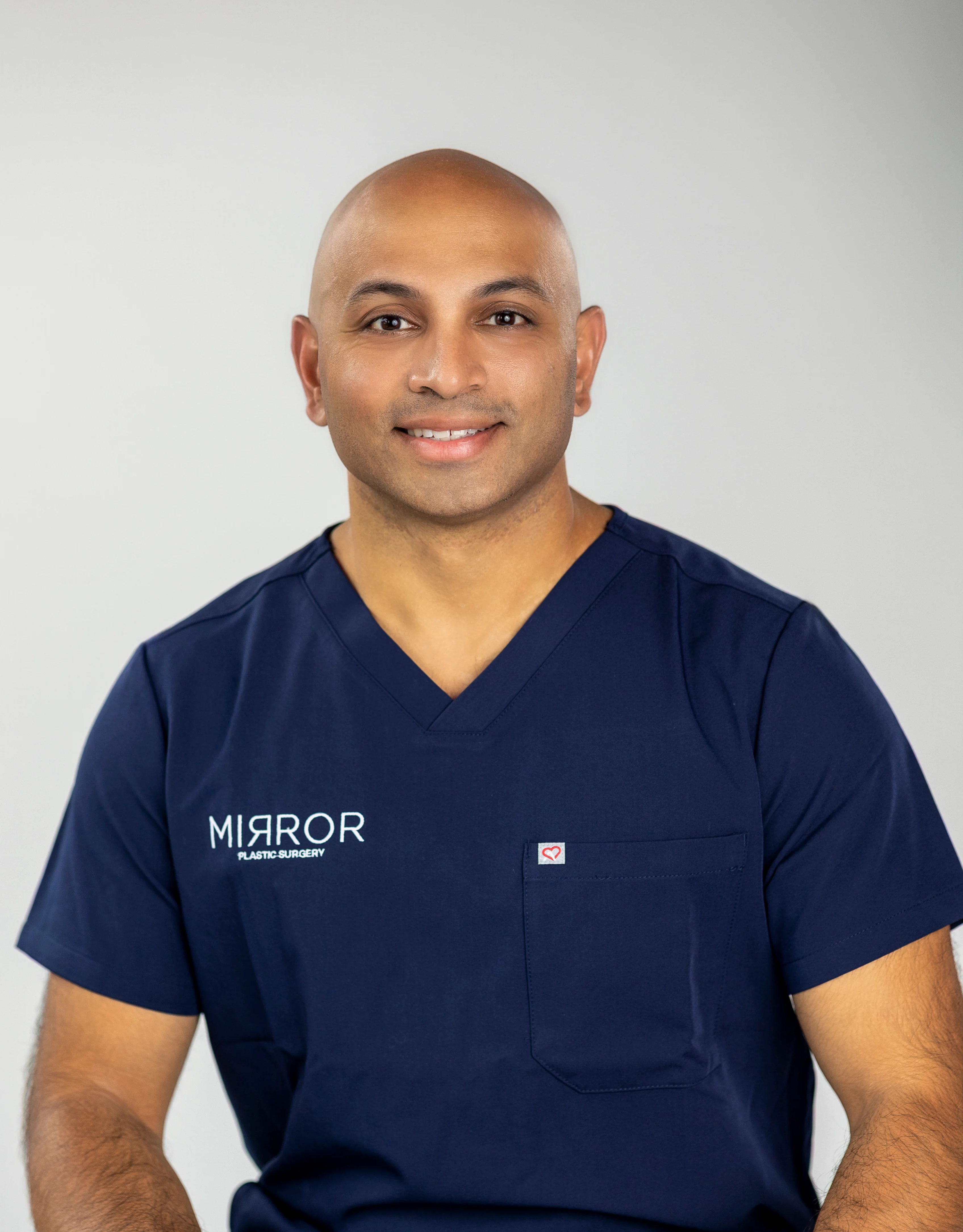
Dr. Akash Chandawarkar, MD, is board certified by the American Board of Plastic Surgery and serves as lead physician for peptide therapies and non-surgical wellness at Mirror Plastic Surgery. He studied neuroscience and nuclear engineering at MIT, graduated with Honors from Harvard Medical School through the Harvard-MIT Division of Health Sciences and Technology, and completed a seven-year integrated plastic and reconstructive surgery residency at Johns Hopkins University. He then completed the Stanford University Biodesign Innovation Fellowship, focusing on physician-led clinical innovation. Dr. Akash’s approach to hormone therapy centers on education and transparency. He explains the physiology behind each recommendation in plain language and often advises patients when a service is unnecessary, prioritizing long-term outcomes over short-term revenue.*
Meet With Dr. Akash For A Personalized BHRT Plan
Frequently Asked Questions
Are There Bioidentical Hormones For Men?
Yes. Bioidentical testosterone is chemically identical to the testosterone a man’s body produces. The key distinction involves FDA-approved products versus custom-compounded products. The Endocrine Society states that compounded bioidentical hormones are not proven safer or more effective than FDA-approved options, and the FDA reports no evidence that compounded formulations perform better.
What Is The Safest Hormone Replacement Therapy For Men?
The safest approach is medically supervised therapy with proper diagnosis and ongoing monitoring. Key elements include two early-morning testosterone measurements plus LH and FSH before diagnosis, preference for FDA-approved testosterone products when they meet clinical needs, and regular monitoring of hematocrit, PSA, blood pressure, and cardiovascular risk factors. Clinicians typically aim for mid-normal testosterone levels and address sleep apnea, obesity, and hypertension before or alongside therapy.
How Long Can A Man Stay On Hormone Therapy?
Duration depends on the balance of benefits and risks over time. The Endocrine Society notes that long-term safety, including prostate cancer risk, remains uncertain. Many men continue therapy as long as they experience benefit with acceptable labs and cardiovascular status. Others discontinue if risks emerge, if hematocrit crosses the clinical threshold, or if fertility becomes a priority.
How Much Does Bioidentical Testosterone Cost?
Cost varies with the protocol and evaluation. Delivery form, required laboratory panels, and follow-up frequency all influence pricing. Because each protocol is built around a patient’s specific labs and physiology, a consultation provides the clearest estimate of what a tailored plan would involve.
How Do Bioidentical Testosterone Pellets, Creams, And Injections Compare For Men?
Pellets offer the longest release but cannot be removed if side effects occur. Creams allow flexible dosing but absorb inconsistently across different skin sites. Injections provide stable levels when dosed frequently, while infrequent injections create peaks that increase aromatization and erythrocytosis risk. The most appropriate option depends on cardiovascular risk, fertility goals, and personal preference.
Book A Consultation
Mirror Plastic Surgery offers advanced peptide therapies for inflammation, autoimmune conditions, weight management, and age-related concerns. A consultation helps clarify whether a tailored peptide or hormone protocol aligns with your health goals.
Text or call 727-361-6515, email [email protected], or visit 780 4th Ave S, St. Petersburg, FL 33701.
Schedule Your Peptide And BHRT Consultation
*Disclaimer: Results may vary from person to person. Editorial content, before and after images, and patient testimonials do not constitute a guarantee of specific results.
