Glow Peptide Stack
Written by: Dr. Akash Chandawarkar, Board Certified Plastic Surgeon, Mirror Plastic Surgery | Last updated: September 28, 2026
Key Takeaways
The “glow” peptide stack combines GHK-Cu, BPC-157, and TB-500, marketed for skin rejuvenation and tissue recovery, but it lacks FDA approval and large human trials.
GHK-Cu has the strongest human clinical evidence for topical skin use. BPC-157 and TB-500 rely mainly on animal and laboratory data.
Gray-market peptide products carry real risks, including contamination, mislabeling, and inaccurate dosing, with independent analyses finding problems in a substantial share of samples.
Medically supervised therapy uses consultation, lab analysis, custom protocols, quality sourcing, and ongoing monitoring to keep treatment as safe and appropriate as possible.
Mirror Plastic Surgery Peptides offers physician-led, evidence-informed peptide therapy with personalized protocols and concierge-level support.
Start With A Physician-Led Evaluation
Glow Peptide Stack Ingredients And Evidence Grades
The glow peptide stack combines three peptides with different mechanisms. The sections below summarize what published research shows for each ingredient, graded by evidence type.
GHK-Cu (Copper Tripeptide-1)
GHK-Cu is a naturally occurring copper-peptide complex consisting of glycyl-L-histidyl-L-lysine bound to a copper ion. It is present in human plasma at approximately 200 ng/mL at age 20 and declines to about 80 ng/mL by age 60. Damaged collagen releases it as a repair signal. Researchers study GHK-Cu for collagen and elastin production, skin health, hair and nail rejuvenation, melasma, and grey hair.
Evidence Grade: Human Clinical For Topical Skin Applications. Controlled human trials, including double-blind studies, show that topical GHK-Cu can reduce fine lines, improve firmness, and repair photodamage. GHK-Cu is the only compound in the glow-peptide category with rigorous controlled human evidence, and that evidence applies to topical skin use rather than injected or systemic deep-tissue repair. There are no published human trials for injectable GHK-Cu or systemic tissue repair. The gene-expression claims about more than 4,000 gene modulations come from fibroblast cell cultures, not human subjects.
BPC-157 (Body Protective Compound 157)
BPC-157 is a synthetic 15-amino-acid peptide based on a sequence found in human gastric juice. It is studied for systemic inflammation and for muscle, tendon, ligament, and joint repair.
Evidence Grade: Animal And Laboratory. The Sikiric research group has published more than 100 animal studies reporting accelerated tendon, ligament, gut, and neural healing. The published human evidence consists of three small uncontrolled studies with fewer than 30 total patients and no placebo controls. A 2025 systematic review screened 544 BPC-157 papers and found only one that met inclusion criteria for orthopaedic clinical evidence. The honest framing is “promising preclinical, almost untested in humans.”
TB-500 (Thymosin Beta-4 Fragment)
TB-500 is a synthetic fragment of thymosin beta-4, a naturally occurring protein involved in cell migration and tissue repair. It is studied for soft tissue inflammation and wound repair.
Evidence Grade: Animal And Laboratory. A 2026 scoping review in Applied Sciences identified 80 studies that met inclusion criteria for thymosin beta-4 (TB4) and TB-500 combined. Most of those studies evaluated TB4, not TB-500. The review found that the evidence base leans toward mixed and in vitro designs, and direct TB-500 evidence was limited to a single included study. The Phase 2 trials often cited in marketing used full-length thymosin beta-4, not TB-500. There is no published controlled human trial of TB-500 for musculoskeletal repair.
Regulatory Status And Gray-Market Risks
Many peptides in the glow stack are not FDA approved and do not go through standard FDA drug regulation. The details below explain what that means in practice.
As of the FDA’s May 14, 2026 update to its 503A bulk drug substances list, GHK-Cu (except for injectable routes) appears in Category 1, which is under evaluation for use in compounding. Neither BPC-157 nor TB-500 appears on any FDA 503A bulk drug substances list. In July 2026, the FDA’s Pharmacy Compounding Advisory Committee voted 8-6-1 to recommend adding BPC-157 to the 503A Bulks List, but that vote is advisory and non-binding, and FDA rulemaking is still pending. Inclusion on a compounding list would permit certain compounding uses but would not make these peptides FDA-approved drugs.
What “Research Purposes Only” Labeling Means: Products labeled “for research purposes only” or “not for human consumption” are not intended for self-administration and usually lack the quality controls of finished consumer goods. This labeling shifts legal risk to the buyer and offers no assurance of purity, sterility, or accurate dosing.
The Gray-Market Problem: Independent testing has documented mislabeling, improper dosing, and contamination in gray-market peptide samples. Without third-party testing, you cannot verify what is in the vial, there is no dosing oversight, and no one screens for pre-existing conditions or medication conflicts. An FDA Adverse Events Reporting System case report described a patient who used a BPC-157 and TB-500 injection product labeled “research purposes only” and then developed significant adverse reactions.
Clinical peptide use has been tracked for more than a decade, so the central issue is how patients access these compounds safely and legally through a physician. The main risk concentrates in unregulated sourcing rather than in supervised medical use.
How Long You Typically Stay On Glow Peptide
Treatment length depends on your condition, lab findings, and whether the goal is active treatment or maintenance. A medically supervised protocol at Mirror Plastic Surgery usually follows this structure:
Initial Assessment: Baseline labs and medical history review to determine candidacy and identify contraindications.
Active Treatment Phase: Typically 8–12 weeks, with dosing and frequency customized to your physiology and goals.
Reassessment: Lab monitoring and symptom review to decide whether to continue, adjust, or transition to maintenance.
Maintenance Protocol: Used when needed to help sustain benefits achieved during active treatment.
Some clients report early improvements within hours or within the first week, depending on the condition and as reflected in testimonials. These are individual experiences rather than guarantees. Many patients need a tailored maintenance plan to preserve gains over time.*
What Happens When You Stop Glow Peptides
Because the active phase is time-limited, the natural next question is what happens when you stop. The effects usually fade over time, similar to pausing any health regimen. If you stop going to the gym, you gradually lose the progress you built. When inflammation that your immune system was managing is no longer addressed, it often returns toward its prior state.
Vendor marketing rarely highlights this reality. The glow peptide stack functions as an ongoing regimen rather than a permanent one-time fix. Continued use through a maintenance protocol often plays a role in sustaining benefits. Medically supervised therapy includes scheduled reassessments to decide whether continuing, adjusting, or cycling off makes sense for your physiology. Current evidence does not show a withdrawal syndrome with abrupt discontinuation of BPC-157 or TB-500.
Glow Peptide Side Effects, Contraindications, And Who Should Avoid It
Before weighing benefits, patients need a clear view of potential downsides. Side effects, contraindications, and who should avoid the stack are core safety questions that physicians address at the outset.
Reported Side Effects include injection-site reactions such as redness, swelling, or mild bruising that usually resolve within 24–48 hours, mild dizziness or lightheadedness, mild headache, and transient fatigue. Serious warning signs that require urgent care include trouble breathing, facial swelling, fever, spreading redness, warmth, pus, worsening pain, or significant dizziness.
Contraindications include:
Wilson’s disease or other copper-handling disorders (for GHK-Cu)
Active or suspected malignancy because of theoretical pro-angiogenic effects
Pregnancy and breastfeeding, because no safety data exist
Active infection at injection sites
History of severe allergy to similar products
Why Some Doctors Are Cautious About Peptides: Many concerns focus on unsupervised gray-market use. When patients buy peptides from unregulated suppliers with no quality assurance or dosing guidance, risks such as contamination, incorrect dosing, and hidden interactions increase. Careful screening for pre-existing conditions and current medications is therefore essential before starting any glow peptide protocol.
*Results may vary.
What Not To Mix With Glow Peptides
Potential interactions depend on your current medications and health profile, which is why physicians review medical history and labs before designing a protocol. These interactions fall into three main categories.
The first category involves blood pressure. Both BPC-157 and TB-500 modulate the nitric oxide pathway, so combining them with nitroglycerin, isosorbide mononitrate, or PDE5 inhibitors (sildenafil, tadalafil) may increase the risk of low blood pressure.
The second category involves clotting. Thymosin beta-4 sequesters G-actin monomers and affects platelet cytoskeletal dynamics, which creates a theoretical coagulopathy risk for patients on anticoagulants.
The third category involves psychiatric medication. BPC-157 has shown modulatory effects on the D2 receptor system in animal models, so prescribers flag concurrent psychiatric drugs as a monitoring point.
No formal drug-drug interaction trials exist for the glow peptide stack, so there is no definitive interaction list. This uncertainty is a reason to use medical supervision rather than a reason to guess.
Topical GHK-Cu Compared To The Injectable Glow Stack
Many people first encounter GHK-Cu in skincare serums and wonder whether the injectable blend is the same product. The two formats serve different purposes. The table below highlights four key differences, covering regulatory status, human evidence, absorption, and intended use, so you can see why a topical serum and an injectable stack are not interchangeable.
Attribute | Topical GHK-Cu | Injectable Glow Peptide Stack |
|---|---|---|
Regulatory Status | Not FDA approved; gray-market or compounded under supervision | |
Human Clinical Evidence | Controlled trials support fine line reduction and firmness improvement | No published human trials for injectable GHK-Cu or the stack |
Absorption | ||
Intended Use | Localized skin, hair, and nail concerns | Systemic inflammation, tissue repair, and collagen production |
When A Single Peptide May Be Sufficient: GHK-Cu alone can address many skin, hair, and nail concerns. BPC-157 alone may be considered for certain inflammation and tissue repair goals. A stack comes into play when a physician targets multiple pathways at once, although the idea that stacking produces additive benefit has not been tested in human trials.
What Medically Supervised Glow Peptide Therapy Includes At Mirror Plastic Surgery
Patients often see online peptide content that skips over what legitimate supervised use looks like in real life. Mirror Plastic Surgery follows a structured, physician-led process.
Comprehensive Consultation: A 30–60 minute visit with Dr. Akash Chandawarkar that covers your medical history and specific health goals.
In-Depth Lab Analysis: Review of thyroid, liver, kidney, diabetes markers, and hormone panels. When recent labs are unavailable, they are ordered before treatment.
Custom Peptide Protocols: Based on your consultation and lab results, Dr. Akash designs custom peptide stacks and treatment plans around your physiology rather than using a generic template.
Quality Sourcing: Peptides come from reputable providers that perform rigorous batch testing for quality, purity, and accurate dosage. This step is critical because these products do not go through standard FDA drug approval.
Concierge Care And 24/7 Support: Because dosing questions rarely wait for scheduled visits, patients have direct text access to Dr. Akash for support, questions, and refill requests. That access pairs with detailed reconstitution and self-administration instructions, often with video demonstrations, so patients can dose correctly between visits. Scheduled telemedicine appointments then provide ongoing monitoring that keeps the protocol coordinated.
Remote Service Delivery: The entire process, from consultation to prescription and shipping, can occur in person in St. Petersburg/Tampa or remotely across the United States, including Hawaii and Alaska.
This model contrasts with three common alternatives: online peptide retailers that provide no medical oversight, telemedicine clinics that lack concierge-level care, and high-volume practices that prioritize throughput over individualized attention. Mirror Plastic Surgery limits itself to one to two surgeries per day so the team can focus on each patient. The guiding principle is safety first, function second, aesthetics third.
See What Supervised Care Includes
Meet Your Physician: Dr. Akash Chandawarkar, MD
Dr. Akash Chandawarkar is board certified by the American Board of Plastic Surgery and leads peptide therapies at Mirror Plastic Surgery. He graduated with Honors from Harvard Medical School through the Harvard-MIT Division of Health Sciences and Technology, completed a seven-year integrated plastic and reconstructive surgery residency at Johns Hopkins University, and completed the Stanford University Biodesign Innovation Fellowship. He also holds fellowship training in aesthetic surgery at Manhattan Eye Ear & Throat Hospital (MEETH)/Lenox Hill Hospital.
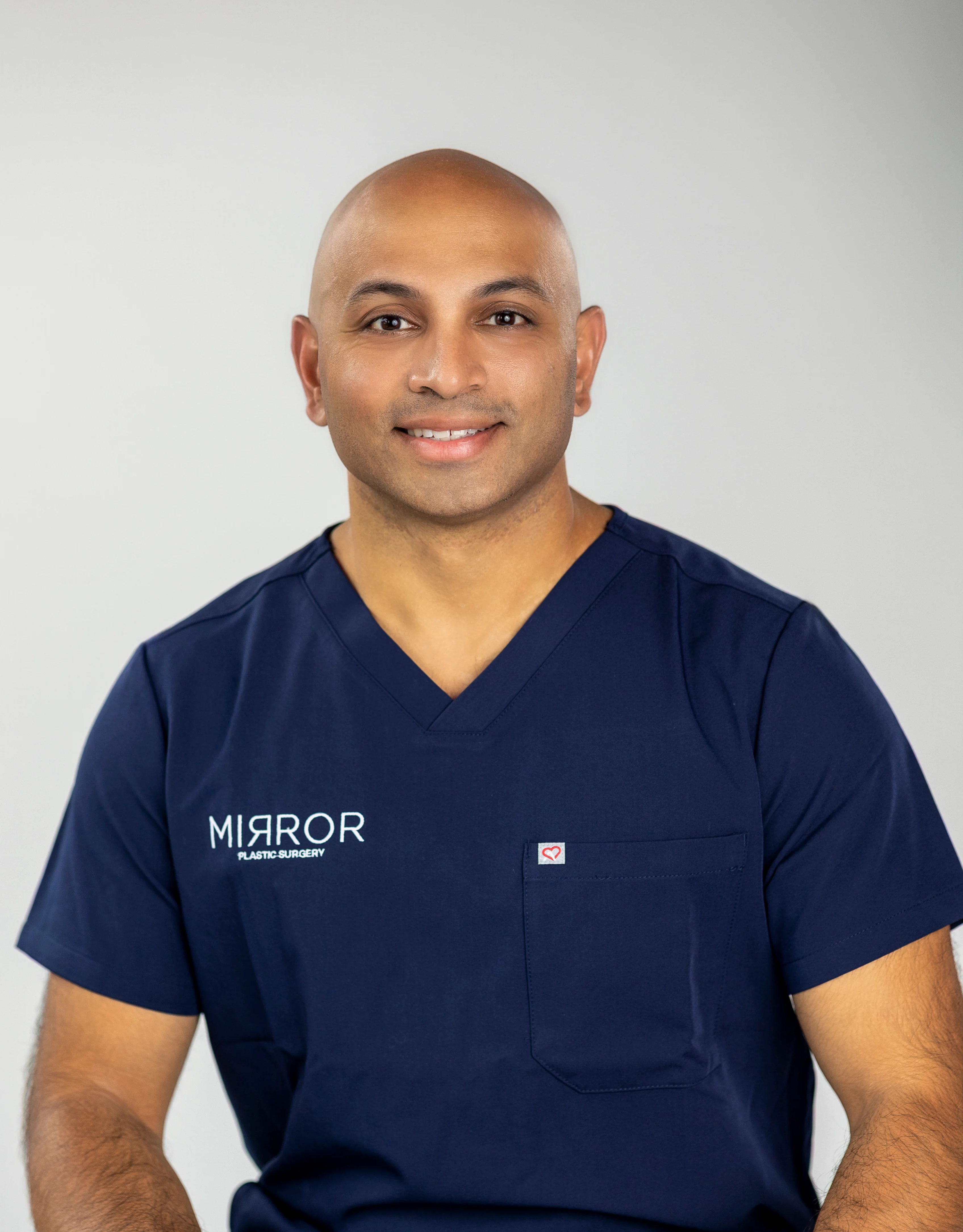
Dr. Akash is known for an educational, transparent style. He explains the physiology behind each recommendation in clear language and tells clients when a service or product is unnecessary for them. He personally oversees peptide therapies, so every protocol is based on each client’s labs and physiology and remains medically supervised throughout treatment.
Conclusion: An Evidence-Graded Path Forward
The glow peptide stack lacks FDA approval, and gray-market sourcing carries meaningful risk. GHK-Cu has human clinical evidence for topical skin applications, while BPC-157 and TB-500 remain at the preclinical stage described above with almost no human trials.
For patients who still want to explore this stack, medically supervised therapy offers the most responsible route. That approach includes baseline labs, contraindication screening, custom protocols built around your physiology, batch-tested sourcing, and concierge follow-up with a board-certified physician who will explain what the evidence supports and where it remains uncertain.
Contact Mirror Plastic Surgery
Mirror Plastic Surgery is located in the St. Petersburg/Tampa area. Patients can text or call to schedule an appointment, and remote consultations are available across the United States, including Hawaii and Alaska.
Address: 780 4th Ave S, St. Petersburg, FL 33701
Phone: 727-361-6515
Email: [email protected]
Disclaimer: Results may vary from person to person. Editorial content, before and after images, and patient testimonials do not constitute a guarantee of specific results.
