Male And Female Fertility Support
Written by: Dr. Akash Chandawarkar, Board Certified Plastic Surgeon, Mirror Plastic Surgery | Last updated: September 28, 2026
Key Takeaways For Fertility Planning
Time intercourse every one to two days during the six-day fertile window ending on ovulation for the highest pregnancy rates.
Women should take 400 mcg of folic acid daily before and during early pregnancy to reduce neural tube defect risk.
Men should avoid exogenous testosterone, anabolic steroids, and prolonged scrotal heat exposure, because these are common reversible causes of infertility.
Both partners should be evaluated at the same time after 12 months of trying under age 35 or 6 months at 35 and older.
Mirror Plastic Surgery Peptides offers physician-led, medically supervised peptide therapies with individualized protocols based on labs and physiology.
Schedule A Peptide And Fertility Strategy Call
Female Fertility Support: Practical Steps That Matter Most
The US Preventive Services Task Force recommends daily supplementation with 400–800 mcg of folate starting at least one month before conception to reduce the risk of neural tube defects. The CDC also recommends daily folic acid for women who could become pregnant. This is the strongest evidence-backed preconception supplement recommendation for women.
Accurate ovulation tracking improves timing. Urine ovulation predictor kits are more precise than basal body temperature measurements or cervical mucus evaluations for identifying the fertile window. The highest probability of conception occurs in the two days immediately before ovulation.
Age plays a central role in female fertility planning. Female fertility peaks between ages 20 and 30, declines slowly from 30 to 35, and drops more rapidly after 35, with miscarriage risk also increasing. This decline is driven by decreased ovarian reserve and, more critically, by declining oocyte quality due to increased aneuploidy rates and impaired cytoplasmic maturation.
Evaluation thresholds follow age-based guidelines. The ASRM recommends initiating evaluation after 12 months of regular unprotected intercourse when the female partner is under 35, and after 6 months when she is 35 or older. Earlier evaluation makes sense when risk factors are present, including irregular cycles, PCOS, endometriosis, or a history of pelvic infection or surgery.
Male Fertility Support: Key Risks And Protective Habits
Exogenous testosterone and anabolic steroids are among the most common reversible causes of male infertility. The AUA Testosterone Deficiency Guideline requires clinicians to counsel patients that exogenous testosterone should not be prescribed to men currently trying to conceive, because it suppresses LH and FSH and can cause azoospermia. Any systemic testosterone, including injections, gels, patches, pellets, or nonprescribed anabolic steroids, carries this risk.
Heat exposure to the testicles is a modifiable risk factor. Occupational heat exposure for multiple hours daily, several days per week, is the threshold most likely to affect sperm production. Occasional hot baths or laptop use are unlikely to cause problems at lower frequencies.
Male fertility also changes with age. Men can father children into their 70s, yet sperm count, motility, and morphology decline with age, and sperm DNA fragmentation tends to increase. Advanced paternal age is associated with a higher risk of certain genetic conditions in offspring.
A semen analysis is the only way to assess male fertility directly. No visual characteristic, home test, or blood testosterone level reliably predicts sperm concentration, motility, morphology, or volume. The AUA/ASRM guideline recommends at least two semen analyses, ideally at least one month apart, especially if the first result is abnormal, because semen parameters are highly variable between ejaculates.
What Are The Best Supplements For Male And Female Fertility?
The evidence for fertility supplements is narrower than most product pages suggest. Separating proven from unproven claims helps you avoid months on an ineffective protocol.
What Is Proven: Folic acid at 400 mcg daily reduces the risk of neural tube defects in a pregnancy. This is a preconception protective measure, not a fertility booster, and the evidence that folate helps a person conceive is limited and inconsistent.
What Is Unproven For Live Birth: The FAZST trial, led by Dr. Enrique Schisterman of the University of Pennsylvania and published in JAMA in 2020, tested 30 mg of zinc plus 5 mg of folic acid daily for six months in men from couples seeking fertility treatment. Live birth occurred in 34% of the supplement group versus 35% of the placebo group, with no improvement in semen parameters and slightly worse sperm DNA fragmentation in the supplement arm.
The 2022 Cochrane review of antioxidants for male subfertility (90 trials, 10,303 men) found that antioxidants "may" increase live birth and clinical pregnancy rates, but rated the evidence very low to low certainty. When high-bias trials were removed, the live-birth signal disappeared. A 2026 systematic review and meta-analysis in Andrology pooling 41 randomized controlled trials rated the certainty of evidence for antioxidant effects on semen parameters as very low using GRADE, with prediction intervals crossing the null for all semen outcomes.
Supplements are not FDA-approved for treating any fertility condition, and the surrogate markers they target, such as sperm motility, oocyte count, or fertilization rate, do not reliably translate to live births. More critically, fertility supplements cannot fix mechanical or medical causes of infertility such as varicocele, blockages, hormonal disorders, or genetic conditions. Those problems require diagnosis and often surgical or medical treatment, so spending three months on supplements when a treatable structural cause is present delays the evaluation that could actually help.
The table below summarizes the key differences between supplement-based approaches and formal medical evaluation.
Factor | Fertility Supplements | Medical Evaluation |
|---|---|---|
What It Assesses | Nutritional status and oxidative markers, does not assess anatomy, hormones, or genetics | Semen parameters, hormone levels, anatomy, ovarian reserve, tubal patency, and genetic factors per AUA/ASRM guideline |
Evidence For Live Birth | Varicocele repair, ovulation induction, and IVF have documented live-birth evidence per comparative guideline review | |
Personalization | Generic formulations, rarely based on individual lab results | Protocols based on individual labs, history, and physiology |
Medical Supervision | None, sold over the counter without physician oversight | Physician-directed throughout evaluation and treatment |
Supplements aside, age remains the single most important variable in female fertility and deserves its own focused explanation.
What Is The #1 Cause Of Female Infertility?
Age is the single most predictive factor in female infertility, per ASRM. Female fertility declines significantly after age 35, with further notable increments in decline between ages 40–43 and again after age 44. This decline is driven primarily by oocyte quality, specifically the aneuploidy and impaired cytoplasmic maturation described earlier, rather than egg count alone.
Age does not act alone. Ovulatory disorders, including PCOS, tubal factor, endometriosis, and uterine fibroids all contribute to female infertility. Age still carries the greatest independent predictive weight, which is why evaluation timelines center on the female partner's age instead of a single fixed duration of trying.
When To Seek Evaluation For Fertility Concerns
Both partners should be evaluated concurrently. Male factors contribute to nearly half of infertility cases, either alone or alongside female factors, yet male evaluation often happens last. Delaying the male workup while pursuing female-only treatment wastes cycles on the wrong diagnosis.
Standard evaluation thresholds are:
12 months of regular unprotected intercourse without conception when the female partner is under 35
6 months when the female partner is 35 or older, per ASRM 2023
Immediate evaluation for women over 40, per ACOG Committee Opinion 781
Earlier evaluation is appropriate when risk factors are present. For women, these include irregular cycles, history of pelvic infection or surgery, endometriosis, uterine fibroids, and PCOS. For men, they include history of undescended testes, genital infections or trauma, anabolic steroid use, and known genetic conditions. Both partners should also have a general health evaluation before pursuing assisted reproductive technology.
Schedule Your Fertility Evaluation Visit
Knowing when to seek evaluation is only half of the equation, and the quality of that evaluation matters just as much.
Medically Supervised Care And Mirror Plastic Surgery’s Approach
Generic supplements sold online cannot review your labs, adjust your protocol based on your physiology, or identify a treatable underlying condition. Medically supervised fertility support starts with an in-depth evaluation that includes hormone panels, semen analysis review, and a thorough history. The result is a protocol built around your specific findings rather than a one-size-fits-all formula.
Mirror Plastic Surgery offers concierge-level, physician-led peptide therapies in St. Petersburg, Florida, and remotely across the United States, with some peptides being explored in fertility treatments. Every peptide protocol is led by Dr. Akash Chandawarkar himself. He is a Harvard-educated physician and Johns Hopkins-trained plastic surgeon, with fellowship training in aesthetic surgery at MEETH/Lenox Hill. He is also a Stanford Biodesign Innovation Fellow and a board-certified member of the American Board of Plastic Surgery. Because Dr. Akash is a board-certified physician, every protocol is designed around each client's labs and physiology and medically supervised throughout.
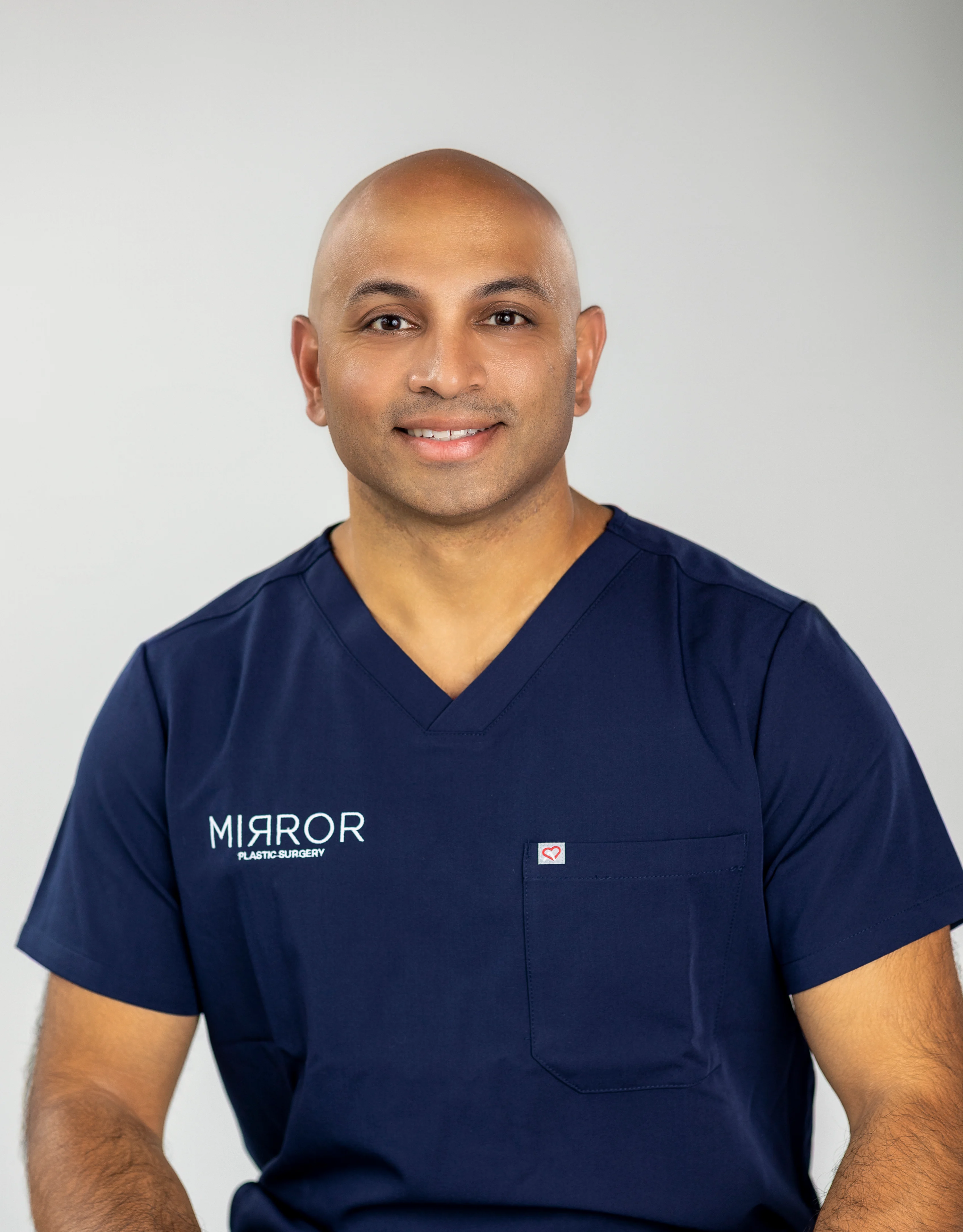
The concierge model at Mirror provides up to an hour in consultation and limits the schedule to one to two procedures per day so the team's full attention remains on you. Patients also have direct 24/7 access to Dr. Akash via text for questions, adjustments, and ongoing support. This model contrasts with high-volume telemedicine platforms that may process dozens of patients daily without individualized lab review.
Mirror sources peptides from reputable providers with rigorous batch testing, which supports product quality, purity, and accurate dosage. This approach differs from unverified online sources where product content and sterility remain unknown.
One peptide of particular interest in reproductive medicine is Kisspeptin. Kisspeptin acts upstream in the hypothalamic-pituitary-gonadal axis, binding the KISS1R receptor on GnRH neurons, stimulating hypothalamic GnRH release and downstream LH and FSH secretion, which drive testosterone production and spermatogenesis in men and follicular development and ovulation in women. Because kisspeptin engages the reproductive cascade at its origin, the hypothalamus, pituitary, and gonads all remain active participants.
In IVF research, a 2015 trial in the Journal of Clinical Endocrinology and Metabolism extended kisspeptin-54 use to 60 women at high risk of ovarian hyperstimulation syndrome (OHSS) and observed no moderate or severe OHSS. The mechanism, an endogenous, self-limiting LH surge instead of the sustained LH-like stimulus produced by hCG, may explain this safety profile. Kisspeptin remains investigational and is not yet FDA-approved for any indication, so access outside clinical trials requires physician oversight and individualized evaluation, which aligns with Mirror's model.*
If you and your partner feel ready to move beyond generic supplement protocols and into a medically supervised, evidence-informed approach to fertility support, Mirror Plastic Surgery offers that next step.
Explore Peptide-Based Fertility Support
Frequently Asked Questions
What Is The Fertile Window And How Often Should We Have Intercourse?
The fertile window is the six-day interval ending on the day of ovulation, which includes the five days before ovulation plus ovulation day itself. The highest probability of conception occurs in the two days immediately before ovulation. Intercourse every one to two days during this window produces the highest pregnancy rates, and every two to three days throughout the entire cycle is a reasonable alternative for couples who find daily timing stressful. Urine ovulation predictor kits are the most practical and precise way to identify the fertile window, and are more reliable than basal body temperature charts or cervical mucus evaluation alone.
Can Testosterone Therapy Affect Male Fertility?
Yes, testosterone therapy can significantly affect male fertility. Any form of exogenous testosterone, including injections, gels, patches, pellets, and nonprescribed anabolic steroids, suppresses the pituitary signals (LH and FSH) that drive sperm production. This suppression lowers intratesticular testosterone to levels far below what is required to maintain spermatogenesis and can result in azoospermia, meaning no sperm detected in the ejaculate. The AUA Testosterone Deficiency Guideline and the Endocrine Society both recommend against testosterone therapy in men planning fertility in the near term. Recovery after stopping testosterone typically takes 3 to 12 months under medical supervision, and recovery is not always complete, particularly after prolonged use. A blood testosterone level cannot assess fertility status on TRT, so a semen analysis is required.
Do Fertility Supplements Actually Work?
Effectiveness depends on the supplement and the outcome you care about. As discussed above, folic acid at 400 mcg daily clearly reduces neural tube defect risk, yet it functions as a preconception safety measure rather than a fertility booster. For male fertility supplements, the best-designed trial found no improvement in live birth rates from zinc plus folic acid, and the Cochrane review's weak signal for antioxidants disappeared when high-bias trials were removed. The bottom line is that supplements cannot correct structural or medical causes of infertility such as varicocele, hormonal disorders, blockages, or genetic conditions, which require diagnosis and often medical or surgical treatment.
At What Age Should We Seek A Fertility Evaluation?
The thresholds match the guidance outlined earlier, with 12 months of trying under age 35 and 6 months at 35 or older. Women over 40 should seek evaluation promptly without waiting. These thresholds assume no known risk factors, so if either partner has irregular cycles, a history of pelvic infection or surgery, endometriosis, PCOS, undescended testes, prior anabolic steroid use, or a known genetic condition, earlier evaluation is appropriate regardless of age. Both partners should be evaluated concurrently from the start, because male factors contribute to nearly half of infertility cases and are frequently the last thing assessed.
What Is Kisspeptin And How Does It Support Fertility?
Kisspeptin is a neuropeptide encoded by the KISS1 gene that acts at the top of the hypothalamic-pituitary-gonadal (HPG) axis. It binds the KISS1R receptor on GnRH neurons in the hypothalamus and triggers the release of GnRH, which then stimulates the pituitary to release LH and FSH. LH drives testosterone production in men and triggers ovulation in women, while FSH supports spermatogenesis in men and follicular development in women. Because kisspeptin engages the reproductive cascade at its origin, the entire axis remains physiologically active. In IVF research, kisspeptin-54 has been studied as an ovulation trigger in women at high risk of ovarian hyperstimulation syndrome (OHSS), building on the 2015 Journal of Clinical Endocrinology and Metabolism trial that reported no moderate or severe OHSS in 60 high-risk women. Kisspeptin is investigational and is not FDA-approved for any indication, and its studied use is primarily in the IVF trigger setting. Access outside clinical trials requires physician oversight, individualized lab evaluation, and a medically supervised protocol.*
Book A Consultation
Mirror Plastic Surgery is located at 780 4th Ave S, St. Petersburg, FL 33701, and serves patients remotely across the United States. To speak directly with Dr. Akash Chandawarkar's team about medically supervised fertility support and peptide therapies, call or text 727-361-6515, or email [email protected].
Request Your Mirror Fertility Consultation
Disclaimer: Results may vary from person to person. Editorial content, before and after images, and patient testimonials do not constitute a guarantee of specific results.
