Written by: Dr. Akash Chandawarkar, Board Certified Plastic Surgeon, Mirror Plastic Surgery | Last updated: September 9, 2026
Key Takeaways
- Acoustic wave therapy creates modest, statistically significant improvements in mild to moderate cellulite, but results usually fade within 3–6 months without maintenance.1
- Meta-analyses of randomized trials show an average 0.57-point improvement on the Cellulite Severity Scale, with no evidence of complete cellulite resolution.1
- AWT is an off-label treatment that stimulates collagen and circulation but does not cut the fibrous septae that cause dimpling, so it works poorly for severe (Grade 3) cellulite.1
- Compared with FDA-cleared subcision procedures like Avéli and Cellfina, acoustic wave therapy requires many sessions and ongoing maintenance, while subcision often delivers results that last for years from a single treatment.1
- Patients who want the most evidence-based, cost-efficient cellulite treatment should book a consultation with Ellie at Mirror Plastic Surgery for a personalized plan.
Cellulite As A Structural, Not Medical, Condition
Cellulite is a normal structural variation in subcutaneous fat, not a disease or a sign of poor health. It affects an estimated 80–90% of post-pubertal women. The anatomy explains this pattern. In women, fibrous septae run perpendicular to the skin, creating chambers where fat lobules can push upward and form dimples. In men, septae criss-cross and resist this herniation, so cellulite appears far less often.
Clinicians grade cellulite with the Nürnberger-Müller scale. Grade 1 shows dimpling only when the skin is pinched, Grade 2 when standing, and Grade 3 when standing and lying down. This grading matters because treatment response changes by severity. MRI studies show cellulite septae are about seven times thicker than those in smooth skin. This confirms cellulite as a mechanical, structural problem. Treatments that only smooth the surface or briefly stimulate collagen do not release the fibrous bands that cause dimpling.
How Acoustic Wave Therapy Works On Cellulite
Acoustic wave therapy (AWT), also called extracorporeal shockwave therapy (ESWT) in its focused form, delivers low-energy sound waves through a handheld applicator. These waves send mechanical pressure pulses through the tissue. Proposed mechanisms include softening of fibrous septae, stimulation of collagen remodeling, increased blood flow, and possible activation of fat breakdown, although the lipolysis effect is less proven.
Think of AWT as a deep tissue massage at the cellular level. It boosts circulation and collagen production but does not cut or fully release the fibrous bands that tether the skin. AWT devices are not FDA-cleared specifically for cellulite. This use is off-label, adapted from technology first developed for musculoskeletal issues and kidney stones. That regulatory status affects both oversight and insurance coverage.
Clinical Evidence For Acoustic Wave Therapy
A meta-analysis of 7 randomized controlled trials including 297 women found a mean 0.57-point improvement on the Cellulite Severity Scale after 6–12 AWT sessions. This represents a modest but measurable benefit. A 2015 meta-analysis of 11 trials reached similar conclusions and described the overall evidence as modest.1
Key individual studies add nuance:
- Angehrn et al. (2007) treated 21 women with 6 sessions of radial AWT and saw improved skin elasticity and cellulite scores, but the study lacked a control group.1
- Christ et al. (2008) treated 59 women with Grade 2–3 cellulite over 8 sessions and reported better skin texture, higher dermal collagen, and improved elasticity.1
- Russe-Wilflingseder et al. (2013) treated 34 women over 4 weeks. Ninety-one percent of patients and 76% of blinded evaluators saw improvement, and ultrasound showed thicker dermis.1
- Knobloch et al. (2013) showed that focused ESWT plus exercise outperformed exercise alone for cellulite severity in a randomized trial.1
- Hexsel et al. (2017) reported modest but statistically significant improvements at 12 weeks, with better outcomes for Grade 1–2 than Grade 3 cellulite.1
Durability remains the main limitation. One 30-woman study using 12 sessions over 6 weeks showed severe cellulite decreased from 60% to 38% of subjects1, but results were checked only 12 weeks after treatment. No study has established durability beyond one year.1
Bottom line on effectiveness: AWT improves mild to moderate (Grade 1–2) cellulite in a statistically significant but modest way. Benefits usually last 3–6 months after a treatment series. Evidence for Grade 3 cellulite is weaker, with less convincing results than in Grade 1–2. AWT does not fully erase cellulite and requires ongoing maintenance to preserve gains.1
What To Expect During Acoustic Wave Therapy
Most protocols use 6–12 sessions, once or twice weekly, with each visit lasting 20–40 minutes depending on the area treated. Each session usually delivers 2,000–4,000 pulses per zone at 10–15 Hz. Patients often rate discomfort at 2–4 out of 10 and describe a strong vibrating or tapping sensation, similar to a powerful massage tool.
Treatment has no true downtime. Mild redness, warmth, or bruising can appear and usually clears within 1–3 days. Maximum improvement often shows 4–8 weeks after the final session as collagen continues to remodel.1 Many studies pair AWT with exercise, and combination plans tend to outperform AWT alone.
Real Cost Of Acoustic Wave Therapy
Typical pricing runs $200–$500 per session, so a 6–12 session course totals about $1,200–$6,000. This cost is fully out of pocket. Insurance does not cover AWT for cellulite, and FSA or HSA funds rarely apply to cosmetic procedures.
Long-term cost matters even more. Because results fade, many patients schedule maintenance sessions every 3–6 months, turning a one-time series into a recurring expense. Subcision procedures like Cellfina and Avéli often provide 3 or more years of improvement from a single treatment1. At Mirror Plastic Surgery, pricing is customized after a detailed consultation that reviews cellulite grade, anatomy, and goals.
Side Effects, Risks, And Who Should Avoid AWT
Most reported side effects are mild and short-lived, such as temporary redness, light bruising, swelling, tingling, or aching in the treated area. These symptoms usually resolve within hours to a few days. Serious complications appear rarely in published studies.
Absolute contraindications include:
- Pregnancy
- Active infection or open wounds at the treatment site
- Pacemakers or electronic implants
- Blood-clotting disorders or active anticoagulation therapy
- Malignancy at or near the treatment site
- Patients under 18 years of age
For many patients, the main risk is financial. AWT can mean spending $1,200–$6,000 on a temporary solution when a more durable option might better match long-term goals.
How AWT Compares To FDA-Cleared Cellulite Treatments
AWT works best for patients with Grade 1–2 cellulite who accept modest improvement and ongoing maintenance.1 For dimple-type cellulite caused by fibrous septae, subcision procedures like Avéli and Cellfina directly treat the structural cause and often provide results that last for years. Matching treatment to cellulite type matters. Dimple-type cellulite responds to subcision and acoustic release, while diffuse textural cellulite responds more modestly to dermal-thickening options like RF and laser. AWT can support skin texture but usually should not serve as the main treatment for significant dimpling.
Why Mirror Plastic Surgery For Cellulite Care
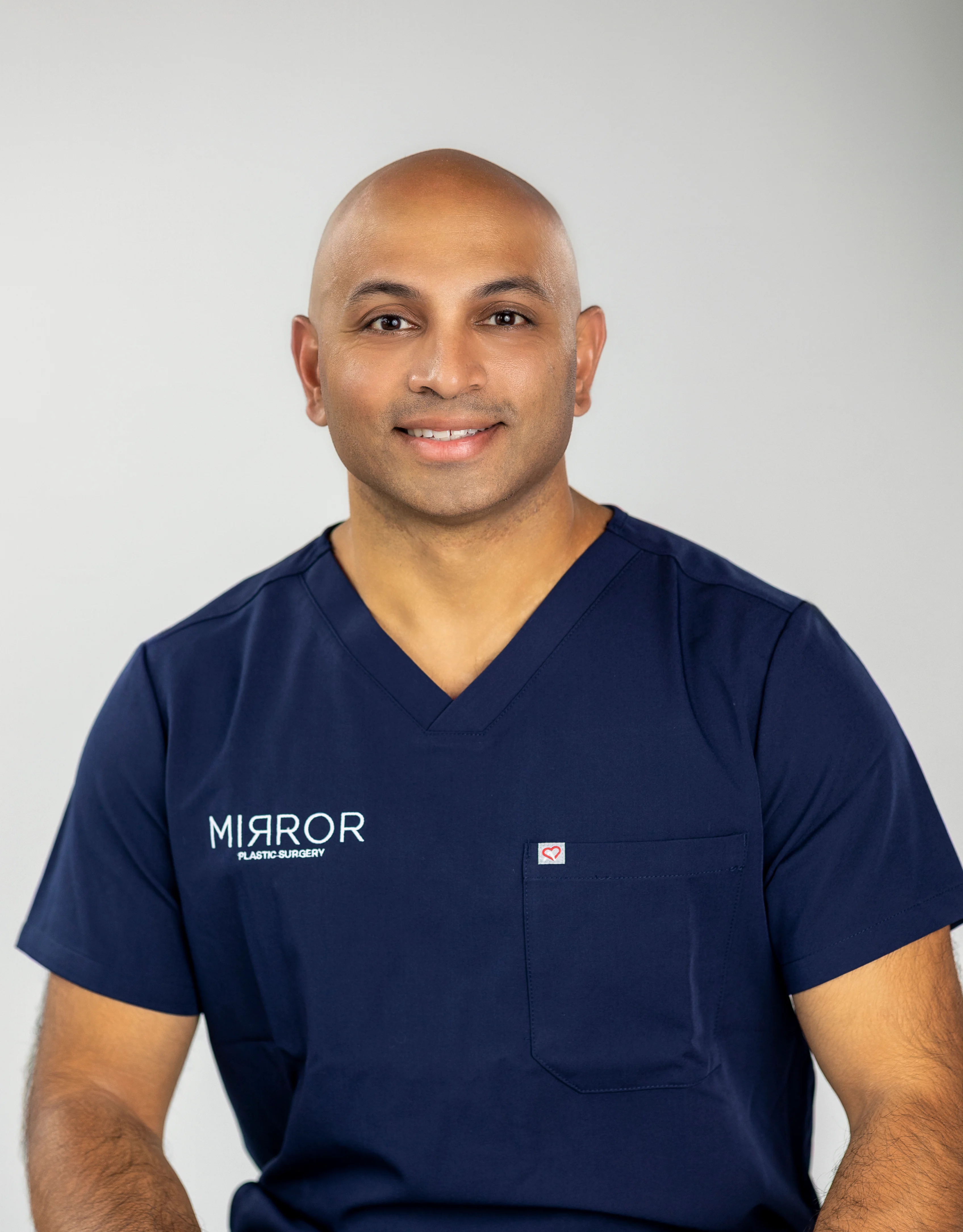
Dr. Akash Chandawarkar is a Harvard-educated, Johns Hopkins-trained, board-certified plastic surgeon. He completed aesthetic surgery fellowship training at MEETH/Lenox Hill Hospital and medical innovation training at Stanford University. He also serves on the advisory board for Tiger Aesthetics, the manufacturer of Avéli, which gives him first-hand insight into ideal candidates and technique.
Mirror Plastic Surgery follows a concierge-style model with unhurried consultations and individualized care. The practice prioritizes safety first, function second, and aesthetics third. Many high-volume centers sell large AWT packages without fully evaluating candidacy or comparing them with single-session, FDA-cleared options. At Mirror, recommendations follow anatomy and published evidence, not the number of billable sessions.
Patients in the St. Petersburg and Tampa Bay area gain access to surgical-level anatomical expertise, clear communication, and some of the most durable FDA-cleared cellulite treatments available.
Frequently Asked Questions
Is Acoustic Wave Therapy Painful?
Most patients describe AWT as tolerable rather than painful. Discomfort usually rates 2–4 on a 10-point scale and feels like deep vibration or pulsing from a strong massage tool. Patients can return to normal activities right away. Mild redness or tenderness can linger for 1–3 days.
How Long Do Acoustic Wave Therapy Results Last?
Published studies show visible improvements usually last 3–6 months after a treatment series. No published data confirms durability beyond one year.1 Many providers recommend maintenance sessions every 3–6 months, so AWT functions as an ongoing investment instead of a single, permanent fix.
Can Acoustic Wave Therapy Get Rid Of Cellulite Completely?
Current evidence supports improvement, not complete removal. A meta-analysis of 7 randomized controlled trials found a mean 0.57-point improvement on the Cellulite Severity Scale, which is measurable but limited.1 The 2023 American Academy of Dermatology position statement on cellulite notes that no existing treatment fully eliminates cellulite and that expectations should reflect this reality.
How Many Acoustic Wave Therapy Sessions Will I Need?
Most research protocols use 6–12 sessions, once or twice weekly. Treating both thighs and buttocks usually takes 20–40 minutes per visit. Maximum improvement often appears 4–8 weeks after the last session as collagen remodeling continues. Evidence suggests pairing AWT with a regular exercise routine improves outcomes compared with AWT alone.
Is Acoustic Wave Therapy Safe?
AWT is generally safe when performed by a qualified provider. Side effects usually include short-term redness, mild swelling, and occasional bruising. However, AWT remains an off-label use for cellulite and is not FDA-cleared for this indication. It should not be used in pregnant patients, people with pacemakers, those with blood-clotting disorders, active infections, or malignancy near the treatment area, and it is not appropriate for patients under 18. For many people, the larger concern is financial, because a multi-session temporary treatment may cost more over time than a single-session, FDA-cleared procedure with multi-year durability.
Conclusion: Choosing The Right Cellulite Treatment
Acoustic wave therapy offers modest, temporary improvement for mild to moderate cellulite, with results that last about 3–6 months and require maintenance. It can suit patients with Grade 1–2 cellulite who understand its limits and accept a recurring cost. Patients who want longer-lasting change often benefit more from FDA-cleared subcision procedures like Avéli, which directly release fibrous septae and deliver results measured in years. The ideal choice depends on cellulite grade, anatomy, goals, and budget. Mirror Plastic Surgery focuses on that full picture during every consultation.
Ready To Find The Right Cellulite Treatment For You?
Phone: 727-361-6515
Email: [email protected]
Address: 780 4th Ave S, St. Petersburg, FL 33701
Instagram: @mirrorplasticsurgery | @dr.akashplasticsurgery | @perfectlyplastics
Disclaimer: Results may vary from person to person. Editorial content, before and after images, and patient testimonials do not constitute a guarantee of specific results.
1 Results may vary from person to person. Editorial content, before and after images, and patient testimonials do not constitute a guarantee of specific results.