
Written by: Dr. Akash Chandawarkar, Board Certified Plastic Surgeon, Mirror Plastic Surgery | Last updated: September 9, 2026
Key Takeaways
- Aesthetic memberships are subscription programs that provide treatment credits, discounted rates, priority scheduling, and direct provider access for a recurring fee.
- Four main membership models exist: Beauty Bank/Prepaid Credit, Included Treatment, Injectables Maintenance, and True Concierge, each with distinct structures and benefits.
- Physician-led care supports injectable safety because board-certified plastic surgeons have deep anatomical knowledge and focus on natural, balanced results.
- Before joining, review credit expiration policies, cancellation terms, who performs injections, and whether the membership matches your treatment frequency and budget.
To explore whether a concierge aesthetic membership fits your goals, schedule a consultation with Ellie at Mirror Plastic Surgery.
Why Aesthetic Memberships Are Growing in Popularity
Med spa membership sales grew 13% in 2025 in North America. Membership models encourage ongoing maintenance, provide predictable costs, and build long-term patient-provider relationships. These relationships support better outcomes than sporadic, one-off treatments.1
The patient-retention data highlights the gap. Only 27% of aesthetic patients return for follow-up treatment within the ideal timeframe. Many delay care well beyond recommended intervals, which weakens results and disrupts continuity.1 Memberships address this by turning ongoing care into a predictable schedule.
A loyalty program and a true concierge membership function differently. A loyalty program is usually free and rewards repeat visits with points or small discounts after the visit. A membership requires a recurring payment and delivers defined benefits, such as treatment credits, member pricing, priority booking, and direct provider access, in advance of care. Within this broad category, the concierge model offers the most personalized tier of service.
What a Concierge Aesthetic Medicine Membership Includes
A concierge aesthetic medicine membership is a subscription arrangement in which patients pay a recurring monthly or annual fee. In return, they receive a bundle of aesthetic services, treatment credits, discounted rates, and perks such as priority scheduling and direct provider access. The fee is paid directly to the practice and remains separate from any insurance coverage.
This model differs from a med-spa loyalty program, which usually offers points or incremental discounts without a recurring financial commitment. A true concierge model prioritizes personalized, physician-led care over transactional volume. Concierge aesthetic practices limit patient panels to 100–600 patients, compared to 2,500 or more in traditional primary care settings. This structure supports same-day or next-day appointments, extended 30–60 minute consultations, and meaningful continuity of care.
The Four Main Aesthetic Membership Models
Four primary structures account for most aesthetic membership programs in the United States. They differ mainly in how they deliver value and how tightly they define included services.
- Beauty Bank / Prepaid Credit Model: Patients pay a monthly fee that accrues as credit toward any treatment. Tiers at practices using this model commonly range from $99 to $349 per month, with credits applied at checkout. Unused credits may roll over or expire, depending on the practice’s written terms.
- Included Treatment Model: The fee covers specific treatments each month, such as a set number of neuromodulator units or a medical-grade facial. A common structure is $199 per month for one syringe of filler or 50 units of a neuromodulator, with additional services available at member-discounted rates.
- Injectables Maintenance Model: This model serves patients who receive regular neuromodulator or filler treatments. It offers discounted per-unit rates and scheduled touch-up appointments. Many practices use a hybrid structure that combines a monthly fee with a core treatment allowance and 10–20% off additional à la carte services.
- True Concierge Model: This premium arrangement includes comprehensive consultations, personalized treatment planning, priority booking, and direct access to the physician. The physician typically performs all injections and oversees continuity of care. Annual fees for mid-range concierge aesthetic practices generally fall between $2,500 and $7,500, with boutique tiers exceeding that range.
What’s Typically Included Versus Extra Costs
Most membership models include consultations, treatment credits, discounted rates on injectables and other procedures, priority scheduling, post-treatment follow-up, and sometimes skincare product discounts. Member privileges at physician-led aesthetic practices often include priority access during peak hours, product discounts, and invitations to member-only events and early treatment releases.
Surgical procedures, premium products beyond the plan’s scope, and additional treatments that exceed monthly allowances usually fall outside the membership. Practices should provide a written fee schedule that separates membership costs from treatment costs. Resistance to sharing clear written terms signals a meaningful red flag.
Pros and Cons of Aesthetic Memberships
Aesthetic memberships can work well for patients who receive regular treatments and value continuity of care. They can feel restrictive or costly for patients who visit infrequently.
Pros
- Predictable costs for ongoing maintenance treatments
- Encourages regular, consistent care that supports better long-term results1
- Often includes perks such as priority booking and direct provider access
- May include discounts on additional treatments and products
- Builds a continuous patient-provider relationship that can improve outcomes over time1
Cons
- Monthly financial commitment may not suit infrequent users
- The biggest financial risk is unused credits expiring monthly. Most practices also do not refund unused credits upon cancellation.
- Some plans require minimum terms or charge cancellation fees
- May be less cost-effective if treatments occur only once or twice a year
- Quality varies significantly between physician-led and high-volume practices
How to Choose the Right Membership: A Step-By-Step Framework
Written answers to key questions help you compare memberships clearly and avoid surprises.
- What treatments are included? Confirm that the plan covers the treatments you actually need. Avoid plans that focus mainly on services the practice wants to promote.
- Are there expiration dates on credits? Review rollover policies and whether unused benefits are forfeited at month’s end or when you cancel.
- What is the cancellation policy? Ask about minimum terms, notice periods, and refund policies. Some practices require an initial six-month commitment before converting to month-to-month.
- Who performs the injections? Clarify whether a board-certified physician or a non-physician injector delivers treatments.
- What level of personalized attention do you receive? Ask about consultation length, follow-up protocols, and direct access to the provider.
- Is the practice transparent about pricing? High-pressure sales tactics, vague terms, or reluctance to provide written details indicate a poor fit.
The final question about who performs injections deserves special focus, because injectable safety depends heavily on the provider’s anatomical expertise.
Why Physician-Led Care Supports Injectable Safety
Injectable treatments require deep anatomical knowledge to reduce complications and maintain natural results. Board-certified plastic surgeon Dr. Philippe A. Capraro advises patients to research the medical director of any med spa they are considering and to favor practices led by board-certified plastic surgeons or dermatologists.
Board-certified plastic surgeon Dr. Alan Durkin notes that med spas owned and operated on-site by plastic surgeons and dermatologists provide a markedly safer experience with broader options, especially in regenerative aesthetics.
At Mirror Plastic Surgery, Dr. Akash Chandawarkar, a Harvard-educated, Johns Hopkins-trained, board-certified plastic surgeon with fellowship training in aesthetic surgery at Manhattan Eye Ear & Throat Hospital, personally performs every neuromodulator and dermal filler treatment. Every injection is placed by a physician with a surgeon’s command of facial and subdermal anatomy. This level of expertise supports both safety and precision. High-volume practices may see 30 or more patients daily and often delegate injections to non-physician staff.
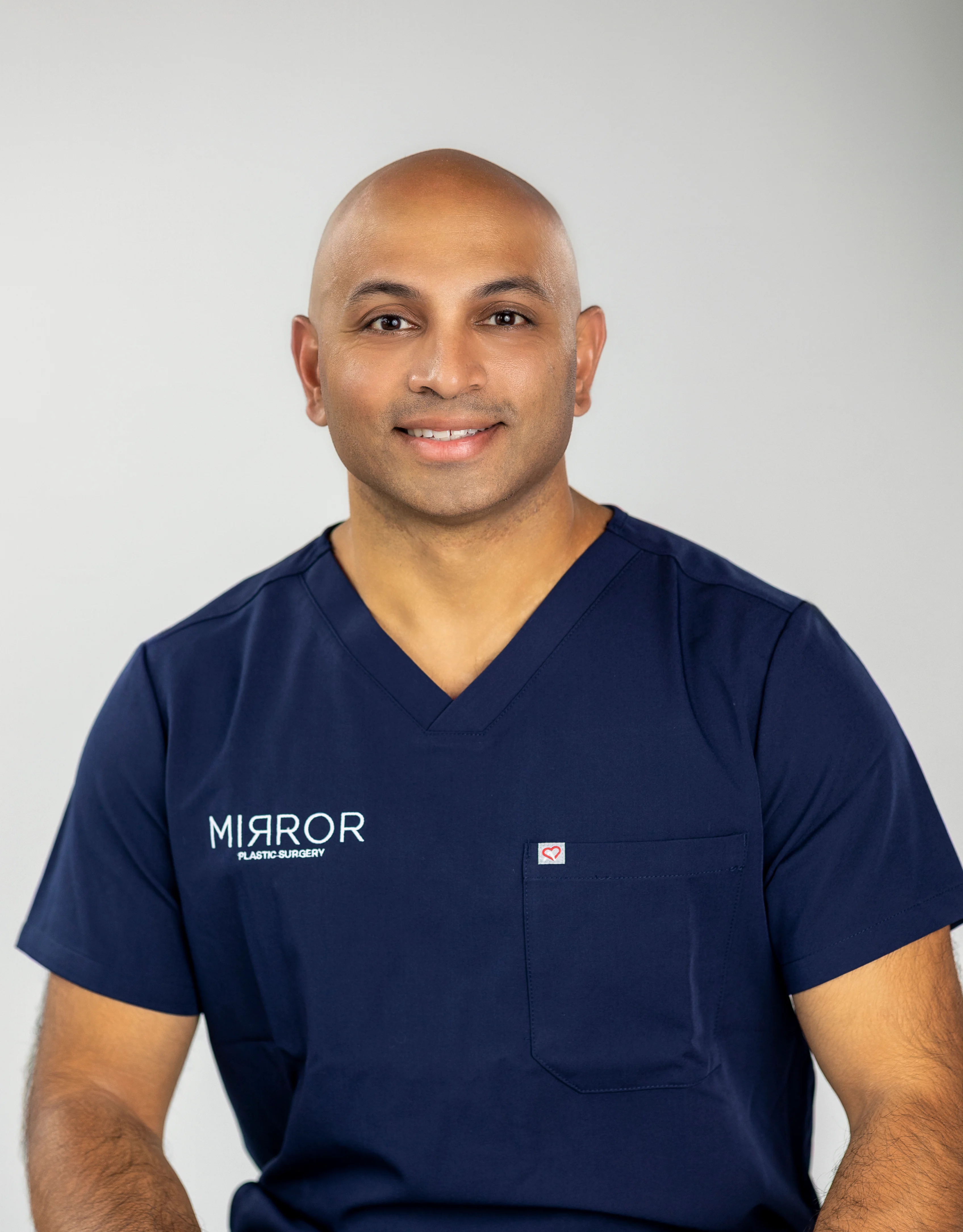
Talk with Ellie about physician-led injectable care at Mirror Plastic Surgery and learn how this approach can fit your goals.
Safety Considerations and Common Misunderstandings
Several misconceptions circulate about aesthetic memberships. First, memberships vary widely in quality, and some prioritize volume over safety. Second, more treatments do not automatically create better results, because over-treatment can distort natural features. Third, a discounted price alone does not define quality, yet an unusually low price may indicate diluted or non-FDA-approved products. Dr. Philippe A. Capraro warns that extremely low prices for aesthetic treatments may signal diluted or non-FDA-approved products or an inexperienced injector.
Injectable procedures carry real risks, including bruising, asymmetry, and, in rare cases, vascular complications. A physician’s anatomical expertise reduces these risks in a meaningful way.1 Conservative planning and whole-face thinking, which consider facial balance, movement, and proportion, support safer and more natural-looking outcomes1. A true concierge practice limits daily procedures to maintain focus and safety and uses only genuine, FDA-approved products sourced directly from manufacturers.
How Memberships Support Long-Term Aesthetic Maintenance
Consistent, scheduled care supports better outcomes than sporadic treatments.1 After introducing subscription programs, one clinic reported that Botox appointments per patient rose from 1.8 to 3.1 visits per year, with an average revenue increase of $800 per patient. This pattern reflects improved treatment consistency as much as practice revenue.
Memberships also support combination treatment planning. Neuromodulators address dynamic lines and muscle activity. Dermal fillers restore volume and contour. Energy-based treatments improve skin quality. A holistic, top-to-bottom assessment, like the one offered at Mirror Plastic Surgery, integrates these modalities into a plan tailored to individual anatomy and long-term goals.
Key points to remember include:
- Understand the four main membership models and what each includes
- Ask about credit expiration, cancellation policies, and whether consultations are included
- Prioritize physician-led care for safety and natural results
- Match membership structure to your treatment frequency and budget
- Seek a practice that offers honest, unbiased recommendations instead of aggressive upselling
- Confirm that the practice uses genuine, FDA-approved products sourced directly from manufacturers
Frequently Asked Questions
What Does a Concierge Aesthetic Medicine Membership Include?
A concierge aesthetic medicine membership usually includes a recurring monthly or annual fee in exchange for treatment credits, discounted rates on injectables and other procedures, priority scheduling, and direct access to the provider. Some plans include specific treatments, such as a set number of neuromodulator units or medical-grade facials each month. True concierge models add comprehensive consultations and personalized treatment planning with a physician rather than a delegated staff member. The central distinction is whether the membership focuses on continuity of care or simple discounting.
Is a Membership Worth It If I Only Get Botox Twice a Year?
For infrequent users who receive treatments only once or twice annually, a membership is generally less cost-effective. The monthly fee can exceed the discount benefit at low visit frequency. Patients who receive quarterly neuromodulator treatments, annual filler maintenance, and other services may see meaningful savings from membership discounts. Review your actual treatment frequency and budget before committing. A reputable practice will explain whether a membership makes financial sense for your situation.
What Is the Difference Between a Membership and a Loyalty Program?
A loyalty program is typically free to join and rewards repeat visits with points, stamps, or small discounts applied after the visit. A membership or subscription requires a recurring payment and includes defined benefits such as treatment credits, member-only pricing, and priority booking. Memberships encourage consistent, ongoing care and usually involves a contractual commitment. Loyalty programs reward past purchases without requiring advance financial commitment. In practice, a membership structures your care, while a loyalty program rewards it retroactively.
How Many Patients Does a Concierge Aesthetic Doctor See?
As noted earlier, concierge practices cap patient panels to allow same-day appointments and extended consultations, typically 30–60 minutes. At Mirror Plastic Surgery, the practice limits daily procedures to support focused, personalized attention. Dr. Akash Chandawarkar performs only one to two surgeries per day, and non-surgical treatments receive the same level of deliberate focus. This structure reflects a commitment to quality.
What Are the Downsides of Aesthetic Memberships?
Main downsides include the monthly financial commitment, the risk of unused credits expiring, minimum term requirements, and the possibility that membership does not fit infrequent users. Quality also varies significantly between practices. Some high-volume practices offer memberships with rushed consultations and non-physician injectors, which weakens the value of the program. Always verify who performs your treatments, review the written terms carefully, and ask whether the medical director is a board-certified plastic surgeon or dermatologist who is present and performing procedures on-site.
Choosing the Right Membership for Your Goals
Membership models differ in structure, inclusions, and quality of care. The goal is to find one that matches your aesthetic goals, treatment frequency, and budget while providing safe, high-quality care from a qualified physician. The membership terms matter, and the provider’s credentials shape your experience even more.
At Mirror Plastic Surgery, Dr. Akash Chandawarkar’s board certification and surgical training, combined with his advisory roles with leading injectable manufacturers such as Merz Aesthetics and Tiger Aesthetics, support treatment recommendations grounded in evidence, anatomy, and your individual goals. The practice’s concierge philosophy ensures unhurried, physician-delivered care focused on your needs rather than quotas.
Start your membership journey with a consultation at Mirror Plastic Surgery and explore a membership experience designed around your anatomy, long-term goals, and physician-led care in the St. Petersburg and Tampa Bay area.
Disclaimer: Results may vary from person to person. Editorial content, before and after images, and patient testimonials do not constitute a guarantee of specific results.
1 Results may vary from person to person. Editorial content, before and after images, and patient testimonials do not constitute a guarantee of specific results.