
Written by: Dr. Akash Chandawarkar, Board Certified Plastic Surgeon, Mirror Plastic Surgery | Last updated: September 9, 2026
Key Takeaways
- Jawline fillers use dense, high-G-prime hyaluronic acid or calcium hydroxylapatite placed deep along the mandibular border to restore definition and structural support for 12–24 months.1
- Two fillers, Juvéderm Volux XC and Radiesse, hold specific FDA approval for jawline contouring, and a third option is commonly used off-label.
- The jawline contains critical structures including the facial artery, mental artery, and marginal mandibular nerve, so injector expertise and anatomical precision are essential for safety.
- Results depend on injection depth, product type, metabolism, and lifestyle. Deep supraperiosteal placement and maintenance before full dissolution (the “75% Rule”) extend longevity and reduce future product needs.1
- At Mirror Plastic Surgery, Dr. Akash Chandawarkar personally performs every jawline filler injection with surgical-level anatomical training, and you can schedule a personalized lower-face assessment.
Jawline Dermal Fillers and Why They Are So Popular
Jawline contouring has become one of the fastest-growing non-surgical facial treatments in the United States. Non-surgical soft tissue filler procedures have grown more than 40% over the past decade, with the jawline emerging as a high-demand treatment zone, particularly among patients under 45.
Jawline fillers differ from the soft gels used in the lips. They must be dense, high-G-prime products that provide structural support along the mandibular border. Dr. Chandawarkar places them deep, often directly above the bone, to project and define the jaw angle, mandibular body, prejowl sulcus, and chin.
This treatment functions as a structural procedure rather than a superficial touch-up. The jawline sits close to the facial artery, the mental nerve, and the marginal mandibular nerve, so anatomical expertise directly affects safety.
At Mirror Plastic Surgery in St. Petersburg, FL, every injection is performed personally by Dr. Akash Chandawarkar, a Harvard-educated, Johns Hopkins-trained, board-certified plastic surgeon with fellowship training in aesthetic surgery at the Manhattan Eye Ear & Throat Hospital and Lenox Hill Hospital. His surgical command of subdermal anatomy elevates jawline filler from a routine med-spa service to a precision, anatomy-first procedure.
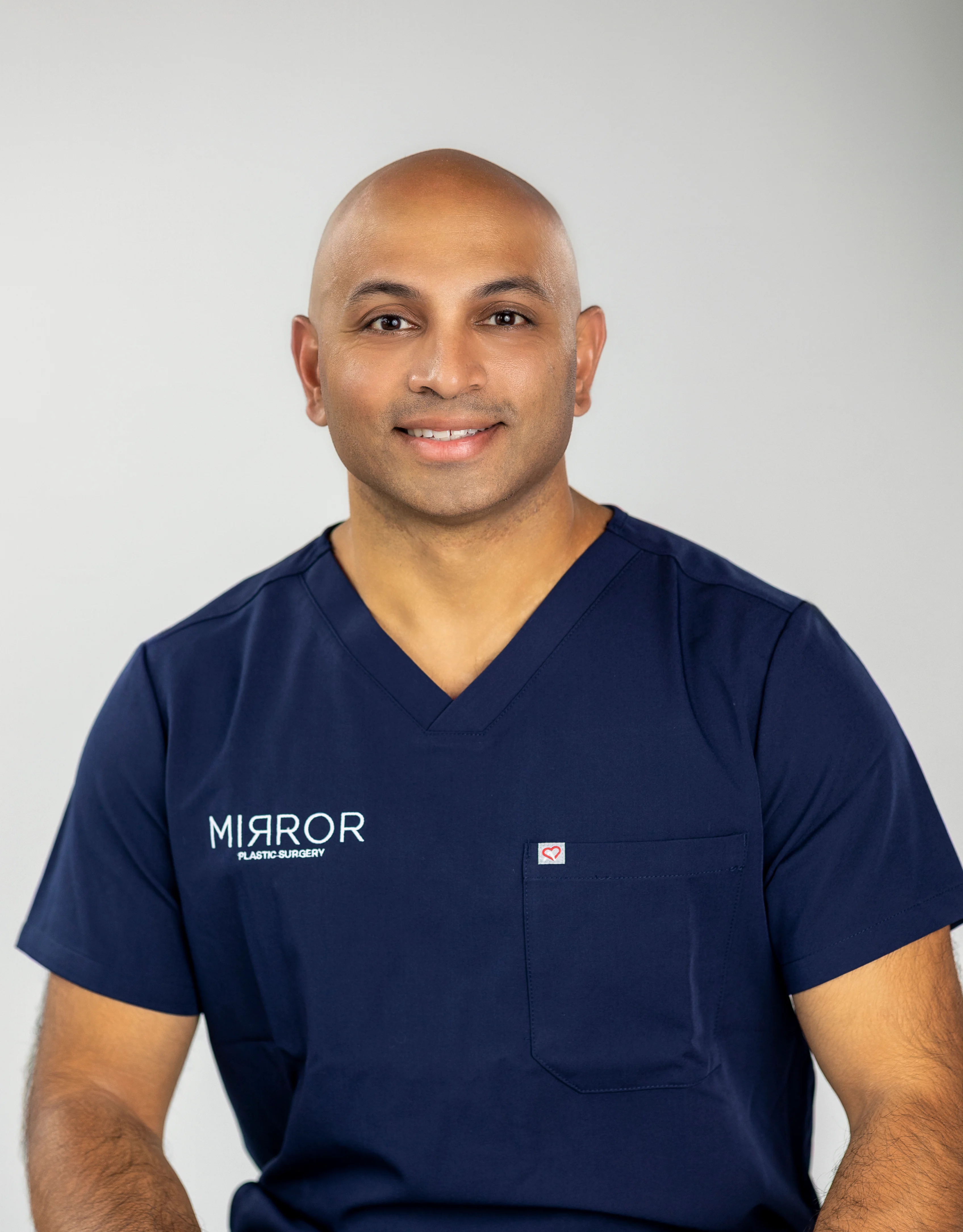
Start your journey with a personalized lower-face assessment with Dr. Chandawarkar.
How Jawline Fillers Shape and Support the Lower Face
Jawline fillers add volume along the mandibular border, at the jaw angle, in the prejowl sulcus, and at the chin to create a sharper, more defined profile. The primary filler categories used for this area work through distinct mechanisms.
Calcium hydroxylapatite (CaHA) fillers, such as Radiesse, are denser, provide immediate volume, and stimulate the body’s natural collagen production over time. CaHA acts more like a cast. It supports the structure while signaling the body to build its own collagen framework.
Dr. Chandawarkar follows a treatment philosophy of safety first, function second, and aesthetics third. Product selection is driven by the patient’s anatomy and goals, rather than inventory or supplier relationships. Mirror Plastic Surgery operates as a supplier-neutral practice.
Which Filler Is Best for the Jawline?
Only two dermal fillers hold FDA approval specifically for jawline contouring, and a third is commonly used off-label. The key difference among them centers on whether you prioritize dissolvability with hyaluronic acid or collagen stimulation with calcium hydroxylapatite. Here is how they compare:
- Juvéderm Volux XC: FDA-approved on July 29, 2022 (approval number P110033/S065) for improving jawline definition in adults over 21 with moderate to severe loss of definition. It is a hyaluronic acid filler engineered with the highest G-prime in the Juvéderm family at approximately 560 Pa, which makes it ideal for structural support. Clinical trials showed a 69.0% responder rate at Month 6 on the Allergan Loss of Jawline Definition Scale (ALJDS), compared to 39.1% in the untreated control group (p=0.0001). It can be dissolved with hyaluronidase. Typical longevity is 12–24 months.
- Radiesse (+) with Lidocaine: FDA-approved on September 1, 2021 (approval number P050052/S129) for deep injection to improve moderate to severe loss of jawline contour in adults over 21. It is calcium hydroxylapatite-based and stimulates collagen production. Clinical trials showed a 75.6% responder rate at Week 12 on the Merz Jawline Assessment Scale (MJAS), compared to 8.8% in the untreated control group (p<0.0001). It cannot be dissolved and instead breaks down naturally. Typical longevity is 12–18 months. The Volux XC and Radiesse responder rates cannot be directly compared because the trials used different measurement scales, different primary timepoints, and control groups that scored very differently.
- Restylane Lyft: A hyaluronic acid filler with a G-prime of approximately 340 Pa. It holds FDA approval for cheek augmentation and midface contouring. Jawline use is off-label but clinically common. It can be dissolved with hyaluronidase. Typical longevity is 12–18 months.
Expert Insight — Dr. Akash Chandawarkar, MD: Dr. Chandawarkar serves on the advisory boards of Merz Aesthetics (Radiesse) and Tiger Aesthetics, which gives him direct insight into product development and clinical data. His practice remains supplier-neutral, and product selection is based solely on what the patient’s anatomy requires.
The Jawline Filler Procedure at Mirror Plastic Surgery
A typical jawline filler appointment at Mirror Plastic Surgery is structured around safety and thoroughness, with each step designed to minimize risk and maximize precision.
- Consultation (up to one hour): Dr. Chandawarkar conducts a top-to-bottom facial assessment and evaluates the chin, jaw angle, prejowl sulcus, mandibular body, and neck transition. He discusses the patient’s goals, medical history, and emotional drivers for seeking treatment to understand both what a patient wants and why.
- Preparation: Numbing cream or local anesthetic is applied. The jawline is marked with attention to vascular landmarks, including the facial artery crossing point at the antegonial notch and the mental foramen near the second premolar.
- Injection technique: Cannula technique along the mandibular body significantly reduces vascular risk compared to multiple needle insertions. Dr. Chandawarkar uses a combination of cannula and needle approaches depending on the treatment sub-zone. He prefers cannula for the mandibular body and supraperiosteal boluses for chin projection. The procedure typically takes 30–60 minutes.
- Immediate aftercare: Mild swelling and bruising are expected, peaking at 24–48 hours and resolving within 5–7 days.1 Patients avoid strenuous exercise, alcohol, and heat exposure for 24–48 hours and avoid chewing hard foods for 48–72 hours.
Because Dr. Chandawarkar personally performs every injection, rather than delegating to a nurse or aesthetician, patients receive a surgeon’s command of subdermal anatomy at every step.
Experience the Mirror Plastic Surgery approach with a dedicated jawline consultation.
How Long Jawline Filler Typically Lasts
Jawline filler results typically last 12–24 months, with several variables shaping the exact duration for each patient.1
- Product type: Volux XC and Radiesse are longer-lasting structural fillers. Volux XC responder rates declined from 78.7% at one month to 61.3% at twelve months, which indicates a real, sustained effect with gradual decline. In the Radiesse trial, 67.3% of patients who had responded at Week 12 still held that response at 48 weeks.
- Injection depth: Deep (supraperiosteal) injections average 14.1 months of durability, versus 9.8 months for superficial (subcutaneous) injections, according to a 2026 meta-analysis by Sadeghzadeh reviewing 18 studies and data from over 1,200 patients.
- Metabolism: Faster metabolic rates, common in younger, leaner, and more active individuals, break down filler more quickly.
- Lifestyle: UV exposure, smoking, and intense exercise can speed up filler breakdown by increasing collagen degradation and blood flow.
- Maintenance timing: Scheduling touch-ups when approximately 75–80% of the filler effect remains, the “75% Rule,” maintains consistent results and reduces the total product needed over time. Dr. Chandawarkar applies this same principle. By returning before the filler fully dissolves, patients need less product to restore the original result, which also lowers the cost of each touch-up.
Jawline Filler Cost: What Should You Expect to Pay?
Mirror Plastic Surgery does not publish fixed pricing because every patient’s anatomy, goals, and product requirements are unique. A personalized quote is provided during the consultation. Several consistent factors influence the total investment.
- Number of syringes: Most jawlines require approximately two to four syringes for a defined result, with men often needing more to build a stronger, wider angle.
- Product choice: FDA-approved jawline fillers such as Volux XC and Radiesse are premium structural products that command higher per-syringe costs than standard HA fillers.
- Provider expertise: Board-certified plastic surgeons and master injectors typically charge more per syringe, reflecting deeper anatomical training and lower complication risk. Board-certified plastic surgeons and dermatologists typically charge more than nurse practitioners or aestheticians for structural jawline work.
- Geographic location: Metropolitan areas command higher per-syringe pricing than smaller markets, and the Tampa Bay region reflects this pattern.
Choosing a highly qualified injector reduces the risk of vascular occlusion, migration, and unsatisfactory results that require costly correction. Correcting poorly placed filler can require additional sessions, so it is worth investing in expertise upfront. A red flag to watch for is any provider who recommends four to five syringes in a first session without a thorough, individualized assessment.
Jawline Filler Risks and Safety Considerations
The glabella (between the eyebrows) and nasal area are widely cited as the highest-risk zones for vascular complications because of their proximity to the ophthalmic artery. The jawline carries its own significant anatomical risks that require an injector with genuine surgical knowledge.
The key structures requiring caution during jawline filler injection include:
- Facial artery: The facial artery branches from the external carotid and enters the face at the antegonial notch, a palpable depression just anterior to the masseter muscle. Inadvertent injection can cause vascular occlusion, tissue necrosis, and, via retrograde flow through anastomoses with the ophthalmic artery, blindness.
- Mental artery: The mental artery exits the mental foramen near the second premolar, supplies the chin and lower lip, and represents a secondary vascular risk during chin injections.
- Marginal mandibular nerve: This branch of the facial nerve runs inferior to and along the mandibular border, and inadvertent intramuscular injection along its course can produce temporary lower lip asymmetry.
Common side effects such as bruising, swelling, and tenderness are expected and transient. Vascular occlusion is rare, estimated at 0.01–0.05% per injection, but requires immediate intervention.1 Watch for severe pain, blanching, or a bluish tint to the skin. Dr. Chandawarkar maintains hyaluronidase on hand for every HA filler procedure, and his surgical training in facial anatomy serves as a key safety measure for patients.
Overfilled or poorly placed filler can distort facial proportions and create an unnatural appearance. When performed correctly with the right product, in the right anatomical plane, and at the right volume, jawline fillers provide a positive anti-aging effect by restoring the structural support that diminishes with age. Collagen production decreases by approximately 1% per year with aging, which contributes to bone resorption and gradual loss of a defined jawline. Filler addresses this structural deficit directly.
Who Makes a Good Candidate for Jawline Fillers?
Jawline fillers work best for patients with a weak chin, undefined jawline, age-related volume loss, or mild-to-moderate early jowling. Patients with significant skin laxity or advanced ptosis should be counseled cautiously, as filler cannot lift significant ptotic tissue. In those cases, surgical options may be more appropriate.
Patients with the following concerns may benefit from alternative or complementary treatments:
- Submental fat (double chin): Kybella is a targeted fat-reduction injectable for this area.
- Wide or square jaw from muscle bulk: Massester Botox reduces the masseter muscle volume for a slimmer lower-face profile.
- Dramatic or permanent change: Chin implants or a facelift may be more appropriate for patients seeking lasting structural transformation.
Dr. Chandawarkar uses a holistic, full-face approach and evaluates the entire lower face, including the chin, jaw angle, prejowl sulcus, mandibular body, and neck transition, before recommending any treatment. He is known for transparency and sometimes advises patients that a procedure is not yet necessary, which builds the long-term trust his patients value.
Find out whether jawline fillers match your anatomy and goals with a one-on-one consultation.
Frequently Asked Questions
Is Jawline Filler a Good Idea?
For appropriate candidates, jawline fillers offer an effective way to restore definition in adults over 21 with moderate to severe loss of jawline contour. The treatment is non-surgical, requires no downtime, and produces results that often last 12–24 months. Provider selection remains the most important variable. A board-certified plastic surgeon with deep anatomical knowledge of the mandibular region, including the facial artery, mental nerve, and marginal mandibular nerve, offers the safest and most effective approach for this structurally complex area.
How Long Does Jawline Filler Last?
Most patients see results for 12–24 months, as detailed in the “How Long Jawline Filler Typically Lasts” section. The key factors are product type, injection depth, and maintenance timing.
Which Filler Is Best for the Jawline?
Two fillers hold FDA approval for jawline contouring, and a third is commonly used off-label. As outlined earlier, Volux XC is a high G-prime hyaluronic acid filler that can be dissolved if needed, Radiesse is a calcium hydroxylapatite filler that stimulates collagen, and Restylane Lyft offers a lower G-prime HA option. The best choice depends on the patient’s anatomy, degree of volume loss, and treatment goals.
What Is the Riskiest Place for Fillers?
The glabella and nasal area carry the highest documented risk of vascular complications because of their proximity to the ophthalmic artery and the potential for retrograde embolization causing blindness. The jawline also presents meaningful risk. The facial artery crosses the mandibular border at the antegonial notch, and inadvertent injection can cause vascular occlusion, tissue necrosis, and, in rare cases, vision loss via retrograde flow. The mental artery near the chin and the marginal mandibular nerve along the jaw border add further anatomical complexity. Choosing an injector with surgical-level anatomical training provides the strongest risk-reduction strategy available to patients.
How Do I Choose a Provider for Jawline Fillers?
Look for a board-certified plastic surgeon or dermatologist who personally performs every injection, rather than a practice where a physician consults and a nurse injects. The provider should demonstrate deep knowledge of lower-face vascular anatomy, take time for a thorough consultation, and discuss risks honestly. Red flags include unusually low pricing, recommendations for large volumes of filler in a first session without a detailed assessment, and practices that prioritize speed over individualized care. At Mirror Plastic Surgery, Dr. Chandawarkar personally performs all injections, spends up to an hour in consultation, and operates on a supplier-neutral basis, recommending products based solely on what each patient’s anatomy requires.
Conclusion: Choosing Safety and Expertise for Your Jawline
Jawline fillers offer a safe, effective, non-surgical option for restoring lower-face definition when performed by a qualified physician. The jawline is a vascular danger zone where product selection, injection depth, and injector expertise determine both safety and the quality of results. Overfilled, superficially placed, or incorrectly positioned filler can distort facial proportions and require costly correction.
Dr. Akash Chandawarkar at Mirror Plastic Surgery combines board-certified surgical training, Harvard education, Johns Hopkins residency, and fellowship-level aesthetic expertise with a concierge, safety-first philosophy. He spends up to an hour in consultation, personally performs every injection, and selects products based entirely on patient anatomy rather than supplier relationships or volume quotas. Patients in the St. Petersburg and Tampa Bay area who feel tired of rushed, high-volume clinics can experience physician-level expertise for a structurally complex procedure at Mirror Plastic Surgery.
Next Steps
To learn more or schedule a consultation with Dr. Akash Chandawarkar at Mirror Plastic Surgery in St. Petersburg, FL, call or text 727-361-6515, or email [email protected]. Mirror Plastic Surgery is located at 780 4th Ave S, St. Petersburg, FL 33701.
Begin your personalized jawline assessment with Ellie and Dr. Chandawarkar today.
Disclaimer: Results may vary from person to person. Editorial content, before and after images, and patient testimonials do not constitute a guarantee of specific results.
1 Results may vary from person to person. Editorial content, before and after images, and patient testimonials do not constitute a guarantee of specific results.