
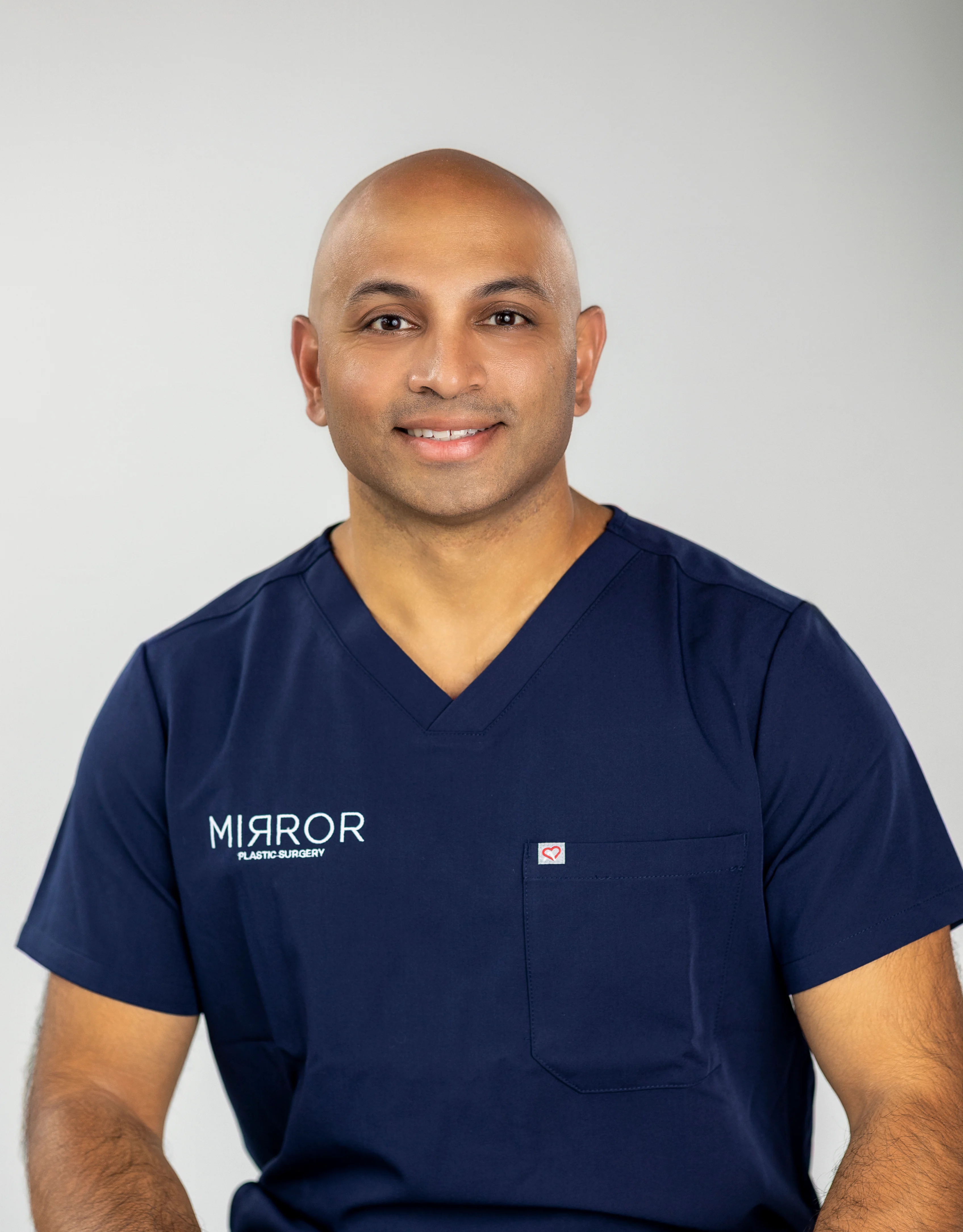
Written by: Dr. Akash Chandawarkar, Board Certified Plastic Surgeon, Mirror Plastic Surgery | Last updated: September 9, 2026
Key Takeaways
- Dermal filler complications are overwhelmingly operator-dependent, with 83.24% of adverse events classified as injuries rather than device malfunctions.
- Board-certified plastic surgeons with extensive residency training significantly reduce risk compared to non-physician providers in med-spa settings.
- Hyaluronic acid (HA) fillers are the safest default choice due to reversibility, while permanent fillers carry lifelong complication risks for many patients.
- Reviews matter, but they rank behind verifiable credentials and provider education when selecting a dermal filler specialist.
For patients near St. Petersburg, physician-led care at Mirror Plastic Surgery aligns with current research on safety protocols and natural-looking results.
The Data: Why Injector Training Outweighs Clinic Branding
A retrospective review of the CAPER registry (March 2021–August 2025), published in Lasers in Surgery and Medicine, found that although dermatologists performed 62% of reported cutaneous procedures, 51% of adverse events were associated with non-dermatology providers, including non-physician practitioners and those operating in med-spa settings. The same registry identified that 77% of scarring cases and 63% of erythema cases were linked to non-dermatology providers.
A 2025–2026 review in the Harley Street Institute’s Aesthetic Intelligence journal concluded that the dominant determinants of harm in non-surgical facial aesthetics are operator training, regulatory environment, and clinic-level protocol, rather than product brand, patient demographics, or anatomical site alone.
Vascular occlusion, the most feared filler complication, occurs in approximately 1 event per 6,410 syringes1, based on a multicentre estimate from Alam et al. (2021) across 370 dermatologists. Proper anatomical knowledge and immediate access to reversal agents prevent almost all catastrophic outcomes such as blindness, skin necrosis, and stroke.
In the St. Petersburg market, many med spas employ nurses or aestheticians whose injectable training may consist of a weekend course. Board-certified plastic surgeons, by contrast, complete either 5 years of general surgery residency plus 3 years of plastic surgery (the independent pathway) or 6 years of integrated plastic surgery residency, with some accelerated 5-year programs. Fellowship training is optional but adds further subspecialty expertise. Residency training requirements for plastic surgery outline these pathways in detail.
This difference in training directly affects complication rates and safety outcomes. Dr. Akash Chandawarkar’s credentials represent a high standard of injector qualification: Harvard-educated, Johns Hopkins-trained, fellowship-trained in aesthetic surgery at Manhattan Eye Ear & Throat Hospital (MEETH)/Lenox Hill Hospital, with advisory board roles for Merz Aesthetics and Tiger Aesthetics.
Credential Verification: Checklist For Safer Dermal Filler Care
In Florida, “injector” is not a standalone license. Whether a practitioner may legally administer dermal fillers depends on their professional license, the assessment and prescription process, delegation rules, training, and practice setting. One appointment can involve five distinct legal and clinical roles: evaluator, prescriber, injector, supervisor, and complication responder, and each role should be clearly defined.
The following evidence-based questions, drawn from Florida regulatory guidance and professional organization recommendations, create a practical checklist for vetting any dermal filler specialist:
- Confirm board certification and specialty. Verify through Florida’s official health-care practitioner data portal by searching legal name, license type, and status. “Injector” is a marketing term, not a recognized credential.
- Clarify who evaluates, prescribes, injects, and manages complications. Florida law defines distinct roles, and the division of responsibility should appear in the medical record before you consent.
- Ask about training in facial vascular anatomy. High-risk zones such as the glabella, nose, forehead, and nasolabial fold account for most vascular occlusion and blindness cases.
- Review the complication protocol. A minimum readiness standard includes in-date hyaluronidase on premises in adequate dose, a written and rehearsed complication protocol, and a documented escalation pathway.
- Request before-and-after photos of actual patients. Look for natural results and evidence of full-face assessments rather than isolated, overfilled areas.
- Discuss facial balancing versus isolated injections. Research shows 70% of patients are more likely to book when the consultation focuses on facial balancing.
At Mirror Plastic Surgery, Dr. Akash personally performs all injections and maintains advisory roles with Merz Aesthetics and Tiger Aesthetics, which supports up-to-date safety protocols and product selection.
Product Safety: How Filler Types Compare On Risk And Reversibility
A 2026 systematic review in Aesthetic Plastic Surgery confirmed that hyaluronic acid (HA) fillers remain preferable in most facial areas. They are reversible with hyaluronidase when overcorrection or vascular compromise occurs. The same review found that permanent fillers are disproportionately associated with chronic inflammatory, vascular, and deforming complications.
The table below compares major filler categories on longevity, reversibility, and key safety considerations. This comparison highlights why HA fillers function as the safest default choice for most patients.
| Filler Category | Examples | Typical Longevity | Reversible? | Key Safety Consideration |
|---|---|---|---|---|
| Hyaluronic Acid | Juvederm, Restylane, RHA, Versa | 6–24 months depending on area | Yes, hyaluronidase dissolves | HA fillers account for ~72% of MAUDE reports, reflecting market dominance rather than elevated per-injection risk |
| Calcium Hydroxylapatite | Radiesse | 12–18 months | No | Larger-particle fillers like calcium hydroxylapatite are more likely to cause skin necrosis, and complications are irreversible |
| Poly-L-Lactic Acid | Sculptra | 24+ months | No | Collagen biostimulator with delayed results; complication management is more difficult because it cannot be dissolved |
| PMMA (Permanent) | Bellafill | 5+ years | No | Granulomas occur in approximately 1–2% of patients; lifelong complication risk makes this category unsuitable for most cases |
A 2026 MRI study found that HA fillers may persist up to 15 years in some patients1, with MRI-measured filler volume averaging 2.8 times greater than the injected volume. This finding supports conservative dosing and precise anatomical placement, which define Dr. Akash’s technique at Mirror Plastic Surgery.
Dr. Akash uses a supplier-neutral approach and selects from Juvederm, RHA, Versa, Restylane, Radiesse, and Evolysse based on individual anatomy and goals, rather than inventory quotas or sales targets.
Patient Satisfaction: How Reviews Fit Into The Decision
New Beauty’s State of Aesthetics Summer 2025 report found that 75% of patients prioritize board certification, 62% value provider education and training, and 60% consider reviews when selecting a dermal filler provider. Reviews therefore rank third, behind verifiable credentials and education.
Allergan’s industry report found that 90% of filler patients were satisfied with their outcome, with “natural-looking results” as the top satisfaction driver.1 When reading reviews, look for consistent themes, specific mentions of technique and natural outcomes, and descriptions of thorough consultations. Generic five-star patterns without procedural detail may signal incentivized or low-quality feedback.
Mirror Plastic Surgery’s patient feedback reflects a concierge-style experience, with hour-long consultations, a safety-first philosophy, and honest communication that includes advising patients when a treatment can reasonably be deferred.
The Physician-Led Difference: Consultation Standards That Protect Outcomes
A reputable aesthetics provider conducts a structured consultation that includes a medical evaluation, clear discussion of risks and benefits, transparent pricing, and time to decide without high-pressure sales tactics. High-volume “mill” practices that rush patients and emphasize sales volume fall short of this standard.
Mirror Plastic Surgery’s consultations extend up to one hour and cover a top-to-bottom anatomical assessment. The framework prioritizes safety first, function second, and aesthetics third. Dr. Akash’s philosophy mirrors the dental model: professional treatment delivers results, and long-term outcomes depend on patient education and consistent maintenance. He frequently advises patients when an expensive service can wait, which supports durable, trust-based relationships.
Research confirms that 51% of patients say the factor that would make them most confident about getting filler is avoiding an unnatural look. Dr. Akash’s full-face approach, which restores foundational volume before considering augmentation, directly addresses this concern and helps prevent the “overdone” appearance that follows isolated, single-area injections.
Red Flags: Warning Signs When Choosing A Filler Provider
The following red flags, drawn from Florida regulatory guidance, UPMC’s provider evaluation guide, and industry safety data, can help you identify unsafe settings:
- Inability or refusal to provide a full legal name and license number for verification
- No documented assessment by the person responsible for the treatment order
- Inability to explain on-label versus off-label product use
- No visible complication protocol or hyaluronidase on premises
- High-pressure sales tactics or quota-driven upselling
- Vague titles like “injection specialist” without verifiable medical credentials
- No named medical director or physician oversight structure
Mirror Plastic Surgery avoids these red flags. The practice is supplier-neutral, physician-led, and focused on the right amount of appropriate product for each individual patient, with decisions guided by safety and long-term results.
Frequently Asked Questions
What Is The Best Dermal Filler On The Market?
No single filler works best for every situation. Injector skill and appropriate product selection influence outcomes more than brand alone. A 2026 systematic review in Aesthetic Plastic Surgery confirmed that hyaluronic acid fillers are preferred in most facial areas because they can be reversed, but the optimal choice depends on treatment area, anatomy, and goals. Longevity also varies: HA fillers in high-movement areas like lips typically last 6–12 months, while structural fillers in the cheeks may last 12–24 months.1 Biostimulatory options like Radiesse last 12–18 months, and Sculptra can last 24 months or more. A qualified specialist selects from multiple brands based on individual needs rather than inventory constraints.
Who Is Not A Candidate For Dermal Fillers?
Clinical guidelines indicate that pregnant or nursing women, individuals with active skin infections at the injection site, those with certain allergies (particularly to lidocaine or specific filler components), and patients with bleeding disorders should avoid treatment. Dermal fillers also do not replace surgical lifting when significant skin laxity exists. A thorough medical evaluation during consultation determines candidacy on an individual basis.
How Long Do Dermal Fillers Last?
Longevity varies significantly by product and treatment area. HA fillers in dynamic areas like the lips typically last 6–12 months, while structural fillers placed in the cheeks or jawline may last 12–24 months. Radiesse lasts approximately 12–18 months, and Sculptra can last 24 months or more.1 As noted earlier, a 2026 MRI study found that HA fillers may persist up to 15 years in some patients, with measured filler volume averaging 2.8 times greater than the injected volume, which supports conservative dosing strategies.
Are Dermal Fillers Safe?
When a qualified physician with deep anatomical knowledge performs injections in a well-equipped setting, risks remain low. Vascular occlusion occurs in approximately 1 event per 6,410 syringes, and most complications involve temporary bruising or swelling that resolves within days. As discussed earlier, the CAPER registry study (2021–2025) associated 51% of adverse events with non-dermatology providers, and the 2026 FDA MAUDE analysis reported that 83.24% of adverse events were classified as injuries rather than device malfunctions. These findings emphasize that injector qualifications and clinic protocols drive safety outcomes.
What Questions Should I Ask Before Getting Dermal Fillers?
Ask your provider to confirm board certification and specialty, explain who performs each clinical role during your appointment, describe their training in facial vascular anatomy, confirm that hyaluronidase is stocked on premises, and outline their complication escalation protocol. In Florida, “injector” is not a standalone license, so verifying credentials through the state’s official health-care practitioner portal is an essential step before consenting to treatment. A provider who cannot or will not answer these questions clearly should prompt you to consider other options.
Conclusion: Why Physician-Led Care Stands Out In St. Petersburg
The research consistently shows that injector credentials, clinical setting, and safety protocols, rather than reviews alone, determine dermal filler outcomes. The 2026 FDA MAUDE analysis, the CAPER registry findings, and the Aesthetic Plastic Surgery systematic review all point to operator training as the main factor separating safe, natural results from preventable complications.
Dr. Akash Chandawarkar at Mirror Plastic Surgery meets these research-backed criteria. He is board-certified by the American Board of Plastic Surgery, fellowship-trained in aesthetic surgery at MEETH/Lenox Hill Hospital, Harvard-educated, and Johns Hopkins-trained. He personally performs all injections, maintains a supplier-neutral product approach, and leads every consultation with a safety-first, full-face philosophy that prioritizes long-term outcomes over one-time sales.
For patients seeking a dermal filler specialist near St. Petersburg with strong credentials and positive patient feedback, the evidence supports physician-led care, and the data align with the model at Mirror Plastic Surgery.
Schedule a dermal filler consultation at Mirror Plastic Surgery and experience how surgical expertise, anatomical precision, and concierge-level care can shape your aesthetic results.
Disclaimer: Results may vary from person to person. Editorial content, before and after images, and patient testimonials do not constitute a guarantee of specific results.
1 Results may vary from person to person. Editorial content, before and after images, and patient testimonials do not constitute a guarantee of specific results.