
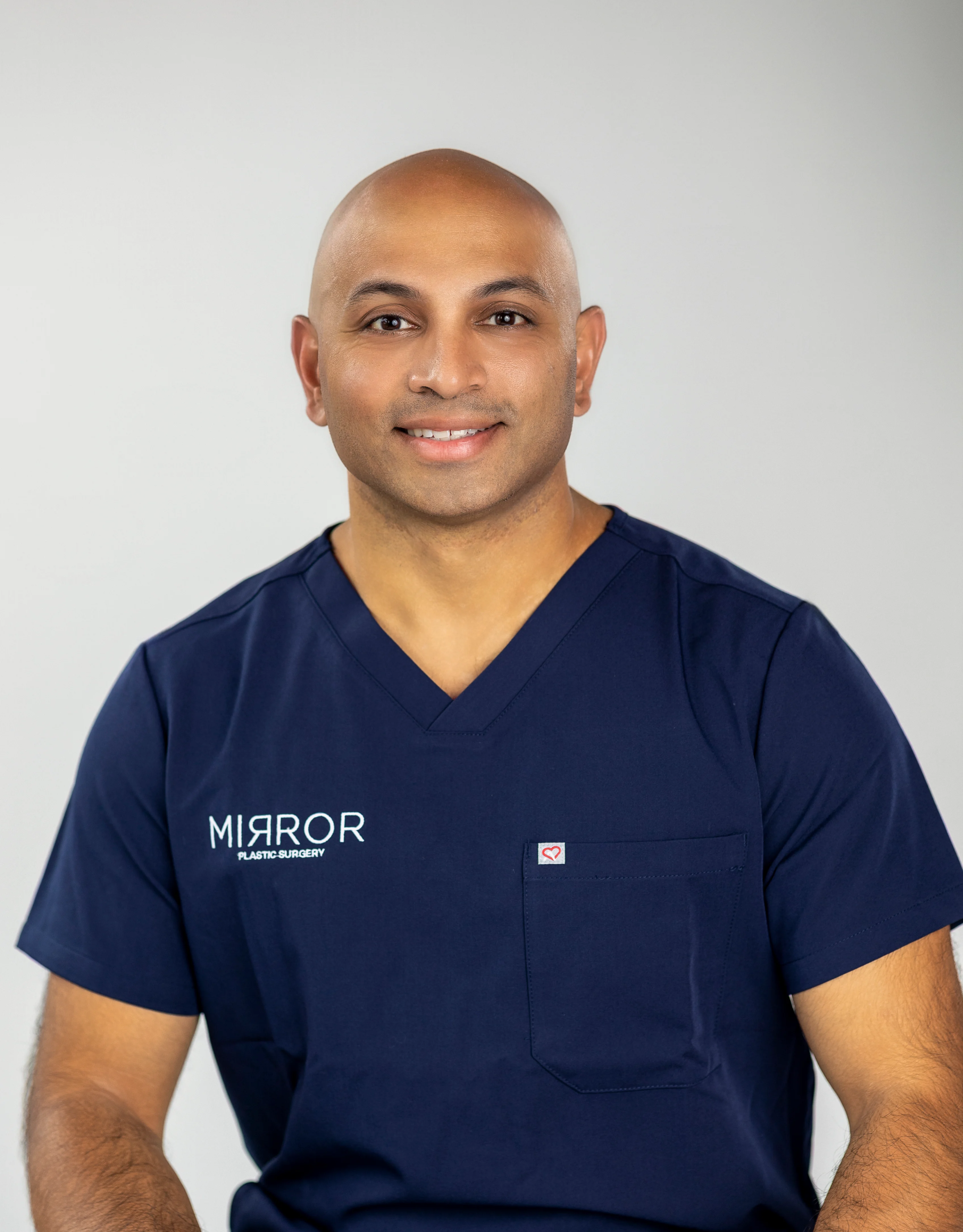
Written by: Dr. Akash Chandawarkar, Board Certified Plastic Surgeon, Mirror Plastic Surgery | Last updated: September 9, 2026
Key Takeaways
- Standard medical spa treatments focus on surface tissues and often miss the deeper biological processes that drive aging and inflammation.
- Personalized peptide therapy uses short chains of amino acids to signal cells for collagen production, tissue repair, and metabolic regulation at the cellular level.
- Effective peptide protocols rely on comprehensive lab analysis and physician supervision to support safety, proper dosing, and alignment with individual health goals.
- Quality sourcing from FDA-regulated compounding pharmacies with batch testing is essential, as up to 40% of unregulated online peptides contain incorrect dosages or undeclared ingredients.
- Schedule a consultation to explore physician-supervised peptide therapy tailored to your wellness goals.
How Peptides Differ From Standard Med Spa Treatments
Peptides are short chains of amino acids that act as signaling molecules and instruct cells to perform specific functions, such as producing collagen, reducing inflammation, repairing tissue, and regulating metabolism. This mechanism works very differently from what happens with most medical spa treatments.
Topical products, lasers, and injectables work on surface tissues or provide temporary physical volume. Because they are reactive interventions, they often require repeated sessions to maintain their effects. For example, a filler adds volume but does not instruct fibroblasts to produce more collagen. A chemical peel removes damaged skin cells but does not address the metabolic decline driving that damage.
Peptides work at the cellular level and focus on underlying drivers rather than surface symptoms. A peptide like GHK-Cu signals fibroblasts to produce more collagen and elastin and reduces MMP-1 collagenase gene expression by 45–50% in UV-irradiated fibroblasts. This dual action supports new collagen synthesis while limiting collagen breakdown.
Personalized peptide therapy is a tailored treatment plan that uses specific peptide combinations based on an individual’s lab results and health goals. These protocols can address concerns such as inflammation, aging, and weight management under medical supervision. Effective plans require analysis of your labs, health history, and specific goals. A protocol that helps one person’s inflammation may not address another person’s skin aging or metabolic issues.
Personalized Peptide Options By Wellness Goal
The peptides below are examples commonly used in clinical practice at Mirror Plastic Surgery. Dr. Akash Chandawarkar creates every protocol after a consultation and comprehensive lab analysis.
Skin Rejuvenation And Anti-Aging
GHK-Cu (Copper Peptide) is one of the most extensively studied peptides for skin health. A 2015 randomized, double-blind, vehicle-controlled trial found that topical GHK-Cu reduced wrinkle depth by 35% and improved skin elasticity by 67% over 12 weeks, compared to 4% and 9% in the vehicle-only control group.1 A 2012 systematic review in the Journal of Drugs in Dermatology analyzed 18 controlled trials and found consistent improvements across wrinkle depth, elasticity, and self-reported skin appearance scores.1 GHK-Cu also supports melasma management and promotes hair and nail health.
Inflammation And Recovery
BPC-157 and TB-500 target systemic inflammation and tissue repair. BPC-157 is used for muscle, tendon, ligament, and joint repair. TB-500 supports soft tissue inflammation control and wound repair. Many providers integrate both into post-surgical recovery protocols. BPC-157’s human clinical evidence base remains limited, with the FDA’s 2026 review identifying only one clinical trial in the orthopedic literature. Medical supervision is therefore especially critical for these compounds.
Weight Management And Metabolic Health
GLP-3R is a newer-generation peptide similar to GLP-1, the class behind FDA-approved medications like semaglutide and tirzepatide. It is reported to have fewer gastrointestinal side effects and less muscle wasting while addressing insulin resistance, weight management, and cardiovascular risk factors. Sermorelin and Ipamorelin are growth hormone-releasing peptides that stimulate natural GH production and support muscle retention and metabolic function. Sermorelin has a history of FDA approval under the brand name Geref (1990–2008), withdrawn for commercial reasons rather than safety or efficacy concerns.
Energy And Vitality
NAD+ targets mitochondrial health, which supports the energy production systems inside your cells. NAD+ therapy supports cellular energy production. By optimizing mitochondrial function, patients often report increased energy and improved appearance.
1
Anxiety And Mood
Selank is a nootropic peptide that acts on anxiety pathways similar to benzodiazepines, but without the addictive potential or dependency component. This makes it a clinically relevant option for patients seeking to transition away from pharmaceutical anxiolytics.
Sexual Wellness And Fertility
PT-141 (Bremelanotide) supports libido and sexual arousal. Kisspeptin shows promise in fertility support, with positive outcomes in IVF trials.
1
Schedule A Peptide Consultation to discuss which peptide protocols align with your specific wellness goals.
The Safety Side: FDA Status, Sourcing, And Why Supervision Matters
Most peptides used in wellness medicine are not FDA-regulated as finished drugs. This status does not automatically make them unsafe, but it does mean quality and dosing vary dramatically depending on the source. Understanding this distinction is one of the most important steps before starting peptide therapy.
Many peptides are legally available through licensed compounding pharmacies (503A/503B facilities) under physician supervision as a regulatory accommodation rather than full FDA drug approval. In February 2026, 14 previously restricted peptides, including BPC-157 and GHK-Cu, returned to legal compounding status. These peptides fall into FDA compounding pharmacy classifications: Category 1 peptides are deemed appropriate for compounding, while Category 2 peptides require additional FDA safety review. Neither category equals FDA drug approval.
The online market presents a different picture. As noted earlier, a significant portion of online peptides are mislabeled or contaminated. Buying peptides without supervision often means unknown purity, incorrect dosing, and no screening for contraindications.
Peptide therapy carries specific contraindications, including active cancer, pregnancy, severe uncontrolled cardiovascular disease, and certain endocrine disorders, which require physician evaluation before any protocol begins. Significant risks in peptide therapy often stem from wrong diagnosis, poor monitoring, unregulated sourcing, and unrealistic expectations.
“As a board-certified plastic surgeon trained at Harvard Medical School and Johns Hopkins, I have seen what happens when patients self-prescribe without oversight. The peptides themselves are rarely the core problem. Unregulated sourcing and absent supervision create the real danger. Every protocol at Mirror Plastic Surgery begins with a comprehensive evaluation and lab analysis, and every peptide is sourced from providers with rigorous batch testing. That approach is safer and more effective.” — Dr. Akash Chandawarkar, MD, Mirror Plastic Surgery
To see how peptides compare with familiar med spa options, the next section outlines the key differences side by side.
Peptides Vs. Med Spa Treatments: A Side-By-Side Comparison
The table below highlights how these two approaches differ across personalization, safety, and durability of results.
1
| Aspect | Standard Med Spa Treatments | Personalized Peptide Therapy |
|---|---|---|
| Approach | Surface-level (topicals, lasers, injectables) | Systemic (cellular signaling and repair) |
| Personalization | Limited; procedure-based menus with standardized protocols | Based on labs, health history, and individual goals |
| Supervision | Variable; requires a clinician-patient relationship for prescription products | Physician-supervised with ongoing monitoring and lab reassessment |
| Duration of Results | Temporary; requires repeated sessions to maintain effects | Longer-lasting with maintenance protocol; benefits diminish if therapy stops |
| Safety Assurance | Depends on provider skill and product quality | Batch-tested compounding pharmacy sourcing; medically monitored throughout |
Common Myths And Concerns About Peptide Therapy
Misconceptions about peptide therapy are common. The following myths address scope of use, safety, physician attitudes, and expectations around results.
Myth 1: “Peptides Are Only For Weight Loss”
GLP-1 peptides have popularized the category, yet peptides support a wide spectrum of concerns, including systemic inflammation, skin aging, tissue repair, anxiety, energy, and fertility. Weight management is only one application.
Myth 2: “Peptides Are Dangerous Because They’re Not FDA-Approved”
Many peptides have decades of clinical use and published research. The primary risk often comes from unregulated sourcing. Provider-supervised peptide therapy compounded at a US-based, FDA-regulated 503A pharmacy has a favorable safety profile, with the most common side effect being mild injection-site irritation that typically resolves within 30 to 60 minutes. Buying “research chemicals” online without a prescription introduces far greater risk.
Myth 3: “Doctors Don’t Like Peptides”
Some physicians express skepticism because of the lack of FDA regulation, which is a reasonable concern. At the same time, many board-certified physicians, including plastic surgeons and integrative medicine specialists, safely use peptides with proper oversight, lab testing, and quality sourcing. Advanced clinics are combining genetic testing with biomarker panels to determine which peptides and dosages are most likely to benefit individual patients, moving away from one-size-fits-all protocols.
Myth 4: “Results Are Immediate And Permanent”
Peptides are not a cure-all. Results vary by individual, condition, and peptide. Most patients see therapeutic benefits within 4–12 weeks of consistent use.1 Like any health regimen, including diet, exercise, or skincare, benefits require consistency and often maintenance protocols. Stopping peptide therapy usually allows the underlying condition to return toward its baseline state.
How To Choose A Provider: 5 Questions To Ask Before Starting Peptide Therapy
Peptide providers vary widely in training, sourcing, and follow-up. Before investing in any protocol, ask these five questions.
- Are you a licensed physician? Board-certified physicians bring deep understanding of physiology, metabolic health, and contraindications that non-physician providers may lack.
- Do you require lab testing before prescribing? Comprehensive labs, including thyroid, liver, kidney, and hormone panels, are essential for identifying root causes and ruling out contraindications.
- Where do you source your peptides, and are they batch-tested? Quality sourcing from a registered 503A or 503B compounding pharmacy with a Certificate of Analysis for every batch is critical for safety.
- What is your follow-up and monitoring process? Ongoing support and periodic lab reassessment, typically at 8–12 weeks, should be part of any responsible protocol.
- How do you personalize protocols? Avoid providers who sell pre-made “stacks” without consultation. Your protocol should reflect your labs, history, and specific goals.
Red flags to avoid include:
- Providers who do not order labs before prescribing
- Pre-made “one-size-fits-all” stacks without individual consultation
- Inability to provide sourcing information or a Certificate of Analysis
- No plan for follow-up monitoring or dose adjustment
Dr. Akash Chandawarkar offers 30–60 minute comprehensive consultations, reviews or orders in-depth lab panels, sources peptides from reputable providers with batch testing, and provides direct access via text for ongoing support. Remote service is available across the United States.
Start Your Personalized Peptide Plan and take the first step toward a physician-designed protocol built around your labs and goals.
Frequently Asked Questions
What Is The Downside Of Peptide Therapy?
Most peptides lack FDA approval and long-term safety data beyond five or more years of continuous use. Side effects vary by peptide but commonly include injection-site irritation, temporary water retention, increased hunger, or nausea. Growth hormone secretagogues like Sermorelin and Ipamorelin may cause mild headaches, flushing, or tingling in the hands during the first one to two weeks of use, which typically resolve on their own. The greatest risk often comes from unregulated sourcing rather than the peptides themselves. Physician supervision, comprehensive lab screening, and pharmacy-grade sourcing reduce the majority of meaningful risk.
Can A Med Spa Sell Peptides?
Med spas can offer prescription peptides only within a legitimate clinician-patient relationship under medical oversight. They cannot sell them as retail wellness products. The quality of care depends entirely on the supervising provider’s credentials, their approach to lab testing, and the sourcing standards they apply. A med spa operating without a supervising physician or without requiring labs before prescribing represents a significant red flag.
Are Peptides Safer Than Steroids?
Peptides generally have a safer profile because they signal your body’s natural processes rather than introducing exogenous hormones. Peptides are not addictive and do not act on reward pathways or opioid receptors, so stopping use does not cause withdrawal. However, safety still depends on sourcing and supervision. Unregulated peptides carry significant risks from contamination, incorrect dosing, and absent screening for contraindications. Physician-supervised peptides from quality compounding pharmacies have a favorable safety profile when prescribed appropriately.
What Peptide Do Celebrities Use?
Celebrities have publicly discussed various peptide protocols, yet specific regimens are personal and rarely fully disclosed. What works for one person’s biology and goals will not necessarily work for another person. Personalized, physician-led protocols matter because they account for your labs, health history, and risk factors. A protocol designed around your data will consistently outperform one copied from a public figure or online forum.
How Long Does It Take To See Results?
Results depend on the condition being treated and the specific peptide protocol.1 Some patients notice initial changes within the first week of use, particularly with inflammation-targeted peptides.1 Significant changes in body composition, skin quality, or inflammatory markers typically require four to twelve weeks of consistent use.1 Skin-focused peptides like GHK-Cu showed measurable improvements in elasticity and wrinkle depth at twelve weeks in clinical trials.1 Maintenance protocols are generally necessary to sustain benefits over time.
Conclusion: The Personalized Path Forward
Standard med spa treatments have an important role, especially for surface-level concerns. For patients seeking lasting, systemic change, personalized peptide therapy offers a more targeted approach. By focusing on the cellular mechanisms behind inflammation, aging, metabolism, and recovery, peptides provide a fundamentally different way to support long-term wellness.
The difference between an acceptable outcome and an exceptional one often comes down to personalization and supervision. A protocol designed around your labs, your health history, and your goals, overseen by a board-certified physician using quality-sourced peptides, offers a safe and effective path to results.
Mirror Plastic Surgery offers advanced peptide therapies that address a wide range of health and wellness concerns, from inflammation and autoimmune conditions to weight management and anti-aging. Schedule a consultation to explore how tailored peptide protocols can support your goals.
Request Your Peptide Evaluation to begin your personalized peptide assessment with Dr. Akash Chandawarkar.
Peptides are not FDA-regulated. Results vary. Always consult a qualified physician before starting any peptide therapy.
1 Results may vary from person to person. Editorial content, before and after images, and patient testimonials do not constitute a guarantee of specific results.
Peptide therapy is intended for wellness and optimization purposes and is not prescribed to diagnose, treat, cure, or prevent disease unless specifically stated. Many peptides are not FDA-approved and may be used off-label. Some have limited long-term safety data, with a potential for unknown risks, complications, or desensitization with prolonged use.