
Written by: Dr. Akash Chandawarkar, Board Certified Plastic Surgeon, Mirror Plastic Surgery | Last updated: September 9, 2026
Key Takeaways
- Bpc-157 is a synthetic peptide with theoretical hair benefits through angiogenesis and anti-inflammatory effects, but no studies have tested it for hair restoration.
- No clinical evidence supports Bpc-157 for hair growth. Current claims rely on mechanism theory and anecdotes, not direct research.
- Compared with proven treatments like minoxidil and finasteride, Bpc-157 lacks regulatory approval and fits only as a possible adjunct to established therapies.
- Medical supervision is essential because of regulatory restrictions, documented quality risks in unregulated products, and unknown long-term safety.
- Patients who want evidence-based hair restoration should schedule a consultation at Mirror Plastic Surgery for physician-supervised evaluation and personalized treatment planning.
The Investigation: What Bpc-157 Is And Why People Link It To Hair Growth
Bpc-157 (Body Protective Compound 157) is a synthetic 15-amino-acid peptide derived from a protein found in human gastric juice. Animal research suggests it promotes angiogenesis via Vegfr2 upregulation, reduces inflammatory cytokines, and supports tissue repair through the Fak-paxillin cell migration pathway.
The proposed hair connection comes from these mechanisms. Better blood supply to scalp follicles and lower perifollicular inflammation could support follicle survival.1 Anagen follicles require a dedicated capillary loop, so improved perifollicular vascularization is theoretically relevant to follicle function.
A critical caveat shapes this discussion. These mechanisms come entirely from gut and tendon healing studies. No published research has tested Bpc-157 on hair follicles, hair cycling, or scalp tissue in any model, including in vitro, animal, or human work. The jump from “promotes angiogenesis in rat tendons” to “regrows human hair” remains unsupported.
The Evidence Review: Does Bpc-157 Actually Regrow Hair?
This section reviews the available data and grades the evidence. The conclusion is clear.
No human clinical trials exist for Bpc-157 and hair growth. No animal studies exist either. As of July 2026, Pubmed indexes 222 Bpc-157 papers, and none study hair, alopecia, hair follicles, dermal papilla, or scalp. Europe Pmc, Crossref, and Openalex show the same result, with zero Bpc-157 hair studies, including preprints and conference abstracts.
A widely repeated claim about a “clinical study of 30 patients with androgenetic alopecia” is fabricated. The cited paper (Pmid 34486824) evaluates a different peptide, Glyyf, and includes no human patients. No database lists the claimed Bpc-157 hair trial.
Some related data exist in other fields. A 2025 systematic review of Bpc-157 in orthopaedic sports medicine covered 36 studies, none involving hair follicles. The Fda stated in May 2026 that it found no studies administering Bpc-157 to humans by oral, subcutaneous, nasal, or transdermal routes, which are the routes people actually use.
Bottom Line, Evidence Grade: Very Low. Mechanistic theory and anecdotal reports only, with zero direct human or animal data for hair growth.
Get a physician-reviewed hair loss assessment to identify which therapies have meaningful evidence for your situation.
Comparative Analysis: Bpc-157 Vs. Ghk-Cu Vs. Fda-Approved Treatments
The table below compares Bpc-157 with Ghk-Cu and two FDA-approved treatments across mechanism, evidence, and regulatory status. The key point is that no peptide currently matches the clinical evidence behind minoxidil or finasteride.
Ghk-Cu has the strongest peptide-specific evidence for hair. Foundational in vitro dermal papilla data comes from Pyo et al. (Archives of Pharmacal Research, 2007, Pmid 17703735). A controlled study showed an 8.3% increase in hair count after 6 months of topical application1. Minoxidil and finasteride provide decades of Fda-approved, randomized controlled trial data that no peptide has matched. Bpc-157 may have a role as an adjunct for scalp inflammation and tissue repair within a broader plan.
Protocol Considerations: How Bpc-157 Is Used For Hair And Current Gaps
Three delivery methods appear most often in peptide discussions: subcutaneous injection, topical application, and microneedling-assisted delivery.
Topical application faces a major molecular barrier. At approximately 1,419 daltons, Bpc-157 exceeds the 500-dalton threshold for passive skin penetration. Without physical disruption of the skin barrier, topical Bpc-157 is unlikely to reach follicles in meaningful amounts.
Microneedling at 0.5–1.5 mm depth physically breaches the stratum corneum, creating transient aqueous channels that offer a delivery window of roughly 24–48 hours. However, this technique only improves delivery of a compound with no proven hair efficacy. It does not create efficacy where none has been demonstrated.
No validated dosing exists for hair. Protocols extrapolate from injury-healing research, often using 250–500 mcg subcutaneously once daily in 4–8 week cycles with 2–4 week breaks. Bpc-157 is frequently combined with Ghk-Cu in protocols that target both anti-inflammatory and remodeling effects. Mirror Plastic Surgery’s Glow Stack (Ghk-Cu, Bpc-157, Tb500) reflects this rationale.
Any protocol requires physician design and supervision. A 2024 study in Jmir found injectable peptides sold online had actual purity of 7.7–14.37% against a claimed 99%, with endotoxin contamination in 100% of samples. Self-administration of unregulated research peptides carries a documented and avoidable risk.
Safety And Regulatory Status: Current Fda And Wada Positions
Bpc-157 currently has no Fda approval for any indication. The regulatory history provides important context.
- The Fda placed Bpc-157 on its 503A bulks list as a significant safety risk in September 2023, blocking legal compounding by 503A pharmacies.
- In December 2023, the Fda issued warning letters to multiple compounding pharmacies producing Bpc-157, citing manufacturing quality concerns and stating it “has not been adequately studied in humans for safety or efficacy.”
- In July 2026, Fda staff proposed that Bpc-157 remain off the list of substances allowed in compounding, citing poor characterization, limited human efficacy evidence, and unassessed immunogenicity.
- Wada has prohibited Bpc-157 under Section S2 since January 2022.
Theoretical risks include pro-angiogenic activity that could accelerate tumor vascularization, unknown immunogenicity, and contamination from unregulated sourcing. Total human exposure across all Bpc-157 trials is approximately 75 subjects, which leaves major safety questions unanswered.
The following populations should avoid Bpc-157:
- Pregnant or nursing women, because no reproductive toxicology data exist
- Individuals with active malignancy, because pro-angiogenic risk remains uncharacterized
- Those with bleeding disorders or on anticoagulants
- Wada-tested athletes
- Children and adolescents, because no pediatric safety data exist
Realistic Expectations: Timelines And Outcomes For Hair Growth
Hair growth follows a biological cycle that no treatment can shortcut. A minimum of 3–6 months is required before any treatment produces measurable results1, because that interval reflects the hair growth cycle itself rather than drug strength.
For Bpc-157 specifically, no clinical timeline can be stated because no human hair trials exist. Anecdotal reports mention reduced scalp inflammation within weeks, yet visible regrowth claims remain unverified.1 Bpc-157 fits, at most, as a supportive adjunct within a broader, physician-designed protocol.
When To See A Doctor: Why Medical Supervision Matters
Hair loss has many possible causes, including hormonal, nutritional, genetic, and autoimmune factors. The correct treatment depends on the specific driver in each patient. A physician can evaluate root causes, order targeted lab panels, and decide whether Bpc-157 has any role or whether proven treatments should take priority.
Self-treatment creates avoidable risk. Unknown product quality, incorrect dosing, lack of monitoring for adverse effects, and no screening for contraindications such as occult malignancy all raise concern. Recommended baseline labs before starting Bpc-157 include a comprehensive metabolic panel, Cbc, liver function tests, renal function, fasting lipids, inflammatory markers, and Psa for males over 40, with repeat panels at 4, 12, and every 12 weeks thereafter. That level of monitoring requires physician involvement.
Schedule a consultation to evaluate your hair loss before starting any peptide protocol.
Why Mirror Plastic Surgery For Physician-Guided Bpc-157 Use
Given the safety, quality, and evidence gaps around Bpc-157, any protocol should be physician-supervised. At Mirror Plastic Surgery, all peptide plans are built around clinical science rather than marketing claims.
Dr. Akash Chandawarkar, MD, leads all peptide protocols at Mirror Plastic Surgery. He is board-certified by the American Board of Plastic Surgery, trained at Mit in neuroscience and nuclear engineering, graduated with Honors from Harvard Medical School through the Harvard-Mit Division of Health Sciences and Technology, and completed a seven-year integrated plastic and reconstructive surgery residency at Johns Hopkins University. He also completed the Stanford University Biodesign Innovation Fellowship, which focuses on identifying unmet clinical needs and developing evidence-based solutions.
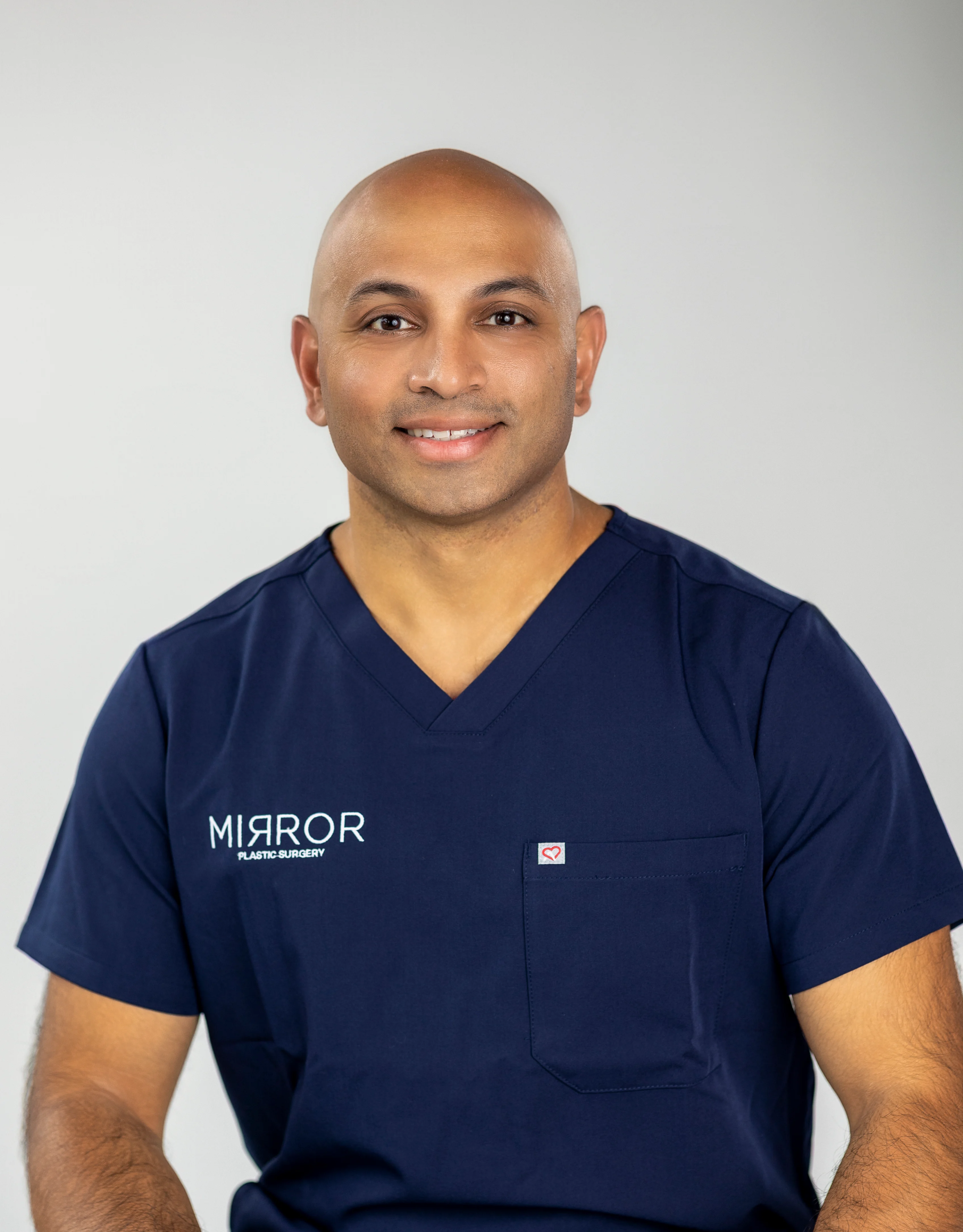
Mirror Plastic Surgery emphasizes several elements that matter for peptide safety and outcomes:
- Expert Oversight: Every protocol is designed by Dr. Akash, a board-certified physician with Harvard, Johns Hopkins, and Stanford training, rather than non-physician staff.
- Concierge-Level Care: Patients receive 30–60 minute consultations, comprehensive lab analysis, and direct physician access via text or telemedicine throughout treatment.
- Personalized Protocols: Custom peptide stacks, including the Glow Stack (Ghk-Cu, Bpc-157, Tb500), are tailored to each patient’s physiology, labs, and goals.
- Quality Assurance: Peptides come from reputable providers with rigorous batch testing, which addresses the contamination and mislabeling problems seen in the unregulated online market.
- Ongoing Support: Patients have 24/7 access to Dr. Akash during treatment, including detailed reconstitution and administration guidance.
Discuss Bpc-157 therapy with a specialist to see whether it fits your broader hair restoration plan.
Frequently Asked Questions
Can Bpc-157 Be Used With Minoxidil Or Finasteride?
Bpc-157 may complement minoxidil mechanistically, because both involve angiogenic pathways. Minoxidil works partly through Vegf-related vasodilation, while Bpc-157 influences Vegfr2 upregulation. No published trials have tested this combination in humans. Patients should maintain a foundation of Fda-approved therapy first, then consider Bpc-157 only as a possible adjunct under physician supervision.
Is Bpc-157 Safe For Long-Term Use?
Long-term safety remains unknown. No human studies have examined Bpc-157 use beyond a few weeks, and prior sections describe very limited human exposure. Animal studies show low acute toxicity, with no established lethal dose in tested species. Low acute toxicity in short rodent studies does not establish long-term human safety. The Fda has cited unassessed immunogenicity as a specific concern. Medical supervision with regular blood work is essential for anyone using this compound.
How Long Does It Take To See Results From Bpc-157 For Hair?
No reliable timeline exists because no human hair trials have been conducted. As noted earlier, hair cycling takes at least 3–6 months before any treatment can show measurable results. Anecdotal reports suggest reduced scalp inflammation may appear within weeks of starting Bpc-157, yet visible regrowth claims remain unverified. Expectations should align with clinical data rather than marketing narratives.
What Is The Difference Between Bpc-157 And Ghk-Cu For Hair?
Ghk-Cu has direct, hair-specific evidence. Small controlled topical trials show increased hair density and follicle size, and foundational in vitro dermal papilla research from Pyo et al. (2007) supports its biological mechanism. Bpc-157 has no hair-specific studies of any kind. Ghk-Cu represents the evidence-based peptide choice for hair support. Bpc-157 may play a supporting role for scalp inflammation and tissue repair within a broader protocol, but current data do not classify it as a hair growth agent.
Can I Buy Bpc-157 Online?
Online purchase is technically possible, yet the evidence strongly argues against this route. The purity and contamination issues described earlier highlight serious quality problems in unregulated products. The Fda has issued warning letters about unregulated peptide products and has warned that patients face risk when using compounded drugs not manufactured under Fda quality standards. Medical supervision and vetted product sources form the basic standard for safe use.
Final Summary: The Bottom Line On Bpc-157 For Hair Growth
- No Proven Hair Efficacy: Bpc-157 has theoretical potential through angiogenesis and anti-inflammatory mechanisms, yet no human or animal evidence shows that it regrows hair.
- Adjunct Role Only: Bpc-157 fits, at most, as a supportive addition to a comprehensive protocol that already includes Fda-approved treatments like minoxidil and finasteride.
- Ghk-Cu Leads Among Peptides: For patients interested in peptide-based hair support, Ghk-Cu has substantially stronger evidence and should anchor any peptide-focused hair plan.
- Medical Supervision Is Essential: Regulatory status, documented quality risks in the unregulated market, and unknown long-term safety all point toward physician oversight as a requirement.
- Mirror Plastic Surgery Offers A Structured Approach: Expert oversight, quality sourcing, personalized protocols, and ongoing concierge support distinguish evidence-informed peptide therapy from unsupervised self-experimentation.
Call To Action
Patients considering Bpc-157 for hair loss benefit most from a structured, physician-led evaluation. A board-certified specialist can review your history, examine your scalp, and design a plan that prioritizes proven therapies while weighing any potential role for peptides. Book an appointment with Ellie today to discuss your hair restoration options.
Disclaimer
This content is for informational purposes only and does not constitute medical advice. Results vary from person to person. Bpc-157 is not Fda-approved and has limited long-term safety data. Peptide therapies should only be used under the supervision of a qualified healthcare provider.
1 Results may vary from person to person. Editorial content, before and after images, and patient testimonials do not constitute a guarantee of specific results.
Peptide therapy is intended for wellness and optimization purposes and is not prescribed to diagnose, treat, cure, or prevent disease unless specifically stated. Many peptides are not FDA-approved and may be used off-label. Some have limited long-term safety data, with a potential for unknown risks, complications, or desensitization with prolonged use.