
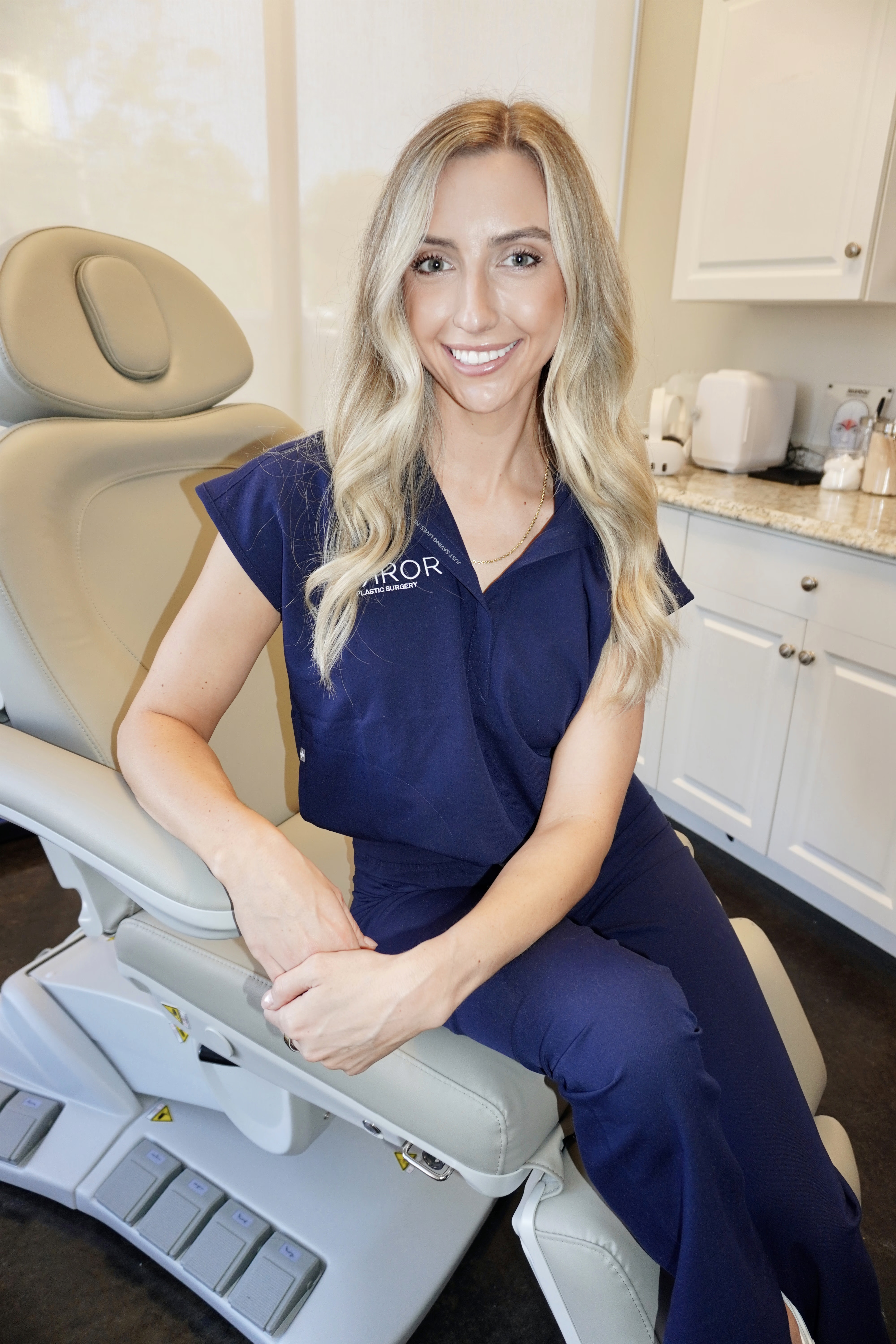
Written by: Ellie Pranckevicius, FNP-BC, Aesthetic Nurse Practitioner & Aesthetic Injector | Facial Restoration & Regenerative Injectable Specialist, Mirror Plastic Surgery | Last updated: September 2, 2026
Key Takeaways
- Functional medicine is a patient-centered, science-based approach that looks for root causes of chronic disease instead of treating symptoms in isolation.
- Core principles include biochemical individuality, patient-centered care, dynamic balance, web-like interconnections, and health as positive vitality.
- Functional medicine differs from conventional care through extended consultations, a root-cause focus, and emphasis on lifestyle factors, and the two models often work well together.
- Evidence is mixed. Some practices are well-supported by research, while others lack robust validation, and practitioner quality varies dramatically.
- At Mirror Plastic Surgery, board-certified practitioners combine functional medicine with conventional diagnostics to deliver personalized, evidence-based care for chronic conditions.
Core Principles of Functional Medicine
The Institute for Functional Medicine defines functional medicine as a systems-oriented model that empowers patients and practitioners to work together to address the underlying causes of disease. Five core principles distinguish it from conventional practice:
- Biochemical individuality: Each person’s unique genetic makeup, metabolic profile, and environmental exposures call for personalized treatment instead of standardized protocols.
- Patient-centered care: The patient’s history, values, and goals guide the treatment plan, not just a diagnosis code.
- Dynamic balance: Health reflects a shifting balance between internal physiology and external factors such as diet, stress, sleep, relationships, and environmental exposures.
- Web-like interconnections: Dysfunction in one area can trigger cascading effects across multiple organs, hormones, and metabolic pathways.
- Health as positive vitality: Health means optimal physical, mental, and emotional well-being, not merely the absence of disease.
These principles show up in practice through extended consultations that typically last 60 to 90 minutes, compared with the 7 to 15 minutes common in conventional primary care. They also shape comprehensive health timelines and a strong focus on lifestyle factors that conventional medicine often has limited time to address.
How Functional Medicine Differs from Conventional Care
Functional and conventional medicine share the same goal of patient health but use different approaches to reach it.
Conventional medicine excels at acute care, trauma, infectious disease, and conditions with clear diagnostic criteria. For many chronic conditions, it often focuses on symptom management, such as prescribing medications to lower blood pressure, reduce inflammation, or manage blood sugar, usually within brief appointments that leave little time for deeper investigation.
Conventional primary care is designed for speed and for one problem at a time. Functional medicine starts from the opposite direction and considers how gut health, hormones, stress, sleep, nutrition, and history fit together. A functional medicine practitioner asks, “Why do you have this condition, and what can we do to restore optimal function?” rather than starting with a diagnosis label.
Functional medicine usually works alongside medical, psychiatric, or psychological care. Many practitioners are board-certified MDs, DOs, NPs, or PAs who integrate functional principles with conventional diagnostics and treatments. The two models often complement each other, with functional medicine adding depth to conventional care for complex, chronic conditions.
If you decide to explore this approach, you can schedule a consultation at Mirror Plastic Surgery to see how it might support your health goals.
What to Expect in a Functional Medicine Visit
A first functional medicine consultation feels very different from a standard medical appointment. Knowing the structure helps you arrive prepared and less overwhelmed.
During the initial consultation (60–90 minutes), the practitioner will:
- Build a detailed health timeline that maps key turning points from childhood through the present to reveal connections a standard intake might miss
- Conduct a focused physical exam guided by your specific concerns
- Explore lifestyle factors such as diet, stress, sleep, and movement that conventional visits often do not have time to address
- Decide whether targeted lab testing would meaningfully clarify your case
Testing is tailored to your history and symptoms. Common functional medicine panels assess inflammation (hsCRP), lipid profile, glucose-insulin-HbA1c, thyroid function, and liver enzymes. They also measure nutrients such as vitamin D, B12, CoQ10, ferritin, zinc, and red blood cell magnesium. Specialized tests may include the GI-MAP stool test, DUTCH hormone panel, Organic Acids Test, and SIBO breath test, which help uncover hidden contributors to symptoms like fatigue, gut issues, mood changes, or hormonal imbalance. Because test selection is critical, a qualified practitioner orders only what is clinically indicated. At Mirror Plastic Surgery in St. Petersburg, Florida, Ellie Pranckevicius leads in-depth lab analysis before recommending any protocol, which keeps treatment grounded in each patient’s actual physiology.
Your personalized care plan is usually delivered at a follow-up visit after test results are reviewed. Meaningful, root-cause progress typically unfolds over three to six months through an iterative approach, with adjustments as your body responds.1
Common Treatments and Tools in Functional Medicine
Functional medicine uses a range of evidence-informed tools, from well-established lifestyle changes to newer therapies.
Lifestyle interventions form the base of most protocols. Personalized nutrition plans, better sleep habits, stress reduction, and targeted exercise recommendations have strong research support. Lifestyle changes serve as first-line therapy for conditions ranging from heart disease to type 2 diabetes.
Nutritional supplements often address identified deficiencies. Evidence for probiotics is reasonably strong in specific conditions such as antibiotic-associated diarrhea, IBS, and ulcerative colitis maintenance. Other supplement protocols have thinner clinical backing and require careful discussion.
Advanced diagnostics vary in their validation. Mainstream allergy and immunology organizations have repeatedly stated that IgG levels to foods are a normal physiological response, not evidence of intolerance, which makes IgG food sensitivity panels a contested tool. A qualified practitioner explains the rationale and evidence for every test ordered so you understand why it matters.
Peptide therapy is an emerging tool within functional and integrative medicine. Peptides are short chains of amino acids that influence specific biological pathways. At Mirror Plastic Surgery, our team leads medically supervised peptide protocols. These address a wide range of concerns:
- BPC-157: Targets systemic inflammation and supports muscle, tendon, ligament, and joint repair
- GHK-CU (Copper Peptide): Supports collagen and elastin production, skin health, and hair and nail rejuvenation
- TB500 (Thymosin Beta-4): Addresses soft tissue inflammation and wound repair
- GLP-3R Compounding: A newer-generation peptide that addresses insulin resistance, weight management, and cardiovascular risk factors with a reported reduction in gastrointestinal side effects compared with older GLP formulations
- NAD: Targets mitochondrial function for energy production and cellular anti-aging support
- Selank: A nootropic peptide used for anxiety and depression that acts on similar brain pathways as benzodiazepines without the same dependency profile
1
Because most peptides are not FDA-regulated, professional oversight and careful sourcing are essential. Mirror Plastic Surgery works with providers that use rigorous batch testing and offers comprehensive one-on-one support throughout treatment. You can discover how a personalized peptide protocol might address your concerns by booking a consultation.
Evidence and Criticisms: A Balanced Look
Functional medicine inspires both strong enthusiasm and strong skepticism. A balanced view recognizes the legitimate science and the valid concerns.
What the evidence supports: A study published in JAMA Network Open found that functional medicine patients with chronic conditions showed significantly greater improvement in physical and mental health quality-of-life scores at six months compared to matched patients in a conventional family health center. About 31% of functional medicine patients saw a clinically meaningful improvement in physical health scores versus 22% in conventional care.1 A 2021 survey published in BMC Complementary Medicine and Therapies reported that 80% of functional medicine patients were “very satisfied” with their care.1 Beyond these patient-reported outcomes, individual tools such as dietary interventions for IBS, probiotics for specific conditions, and lifestyle modifications for heart disease have solid research foundations.
What the evidence does not yet support: The functional medicine model as a complete system has not been validated by the large-scale randomized controlled trials that define evidence-based medicine. Common criticisms include:
- Unvalidated testing: A review in the Annals of Clinical Biochemistry warned that patients are “increasingly exposed to tests that are unvalidated, misleading or discredited,” and that practitioners marketing these tests “commonly make misleading claims of clinical benefit.”
- Variable practitioner quality: The quality of care varies enormously. A board-certified internist who incorporates functional medicine principles into an evidence-based practice offers a very different experience from a practitioner who orders dozens of unvalidated lab tests.
- Overdiagnosis risk: The philosophy of always finding a hidden “root cause” can lead to overtesting and labeling minor lab findings as problems that would never have affected the patient’s health.
- Supplement safety: Dietary supplements are not reviewed by the FDA for safety or effectiveness before reaching the market, and some products have been found to contain undisclosed prescription drugs.
Functional medicine blends principles that overlap with mainstream medicine and tools that lack solid clinical validation. This mix makes careful selection of a qualified, medically credentialed provider especially important.
Insurance Coverage for Functional Medicine
Routine bloodwork such as CBC, metabolic panel, and lipids ordered with a supporting diagnosis code is often covered by insurance. Specialty functional labs such as organic acids panels, micronutrient panels, and stool analysis are rarely covered and are frequently denied as not medically necessary.
Practical strategies for managing costs include:
- Using HSA or FSA funds, which provide tax savings on qualifying medical expenses
- Requesting a superbill after each visit for out-of-network reimbursement submission
- Asking the practice about CPT codes used, then calling your insurer to verify coverage before scheduling
- Confirming that telehealth visits are increasingly covered by Medicare and most commercial plans, subject to state licensure rules
Medicare covers medically necessary services billed with standard CPT codes, but extended visits, specialty labs, and supplements are generally not covered. Mirror Plastic Surgery offers clear guidance on what to expect and helps patients understand their options before they commit to a protocol.
Conditions Functional Medicine Commonly Addresses
Functional medicine often works well for complex, chronic conditions such as autoimmune diseases, digestive disorders, hormonal imbalances, metabolic conditions, and mental health issues. Commonly addressed conditions include:
- Autoimmune diseases: Hashimoto’s thyroiditis, rheumatoid arthritis, lupus, psoriasis, and inflammatory bowel disease
- Digestive disorders: IBS, SIBO, and IBD. A 2023 meta-analysis found that probiotics modestly improved global symptoms, abdominal pain, and bloating in IBS patients.
- Hormonal imbalances: Thyroid dysfunction, PCOS, and perimenopausal symptoms
- Metabolic conditions: Type 2 diabetes, metabolic syndrome, and weight management challenges
- Chronic fatigue and low energy: Often related to mitochondrial dysfunction, sleep issues, or nutritional deficiencies
- Mental health concerns: Anxiety and depression, particularly where gut-brain axis dysfunction or nutritional deficiencies play a role
- Skin aging and inflammation: Declining collagen production, melasma, and systemic inflammation that affects skin health
Functional medicine can complement conventional care for these conditions. A patient with rheumatoid arthritis might continue disease-modifying medications while working with a functional medicine practitioner on gut health, inflammation triggers, and nutritional support. A retrospective study from the Cleveland Clinic found that patients with inflammatory arthritis receiving functional medicine as an add-on to standard rheumatology care showed statistically significant improvements after 12 weeks, including meaningful reductions in pain.1
How to Choose a Functional Medicine Practitioner
Careful selection matters because practitioner quality varies widely. Functional medicine is a philosophy, not a board-certified medical specialty, so anyone can use the label.
Credentials matter. Look for medical credentials such as MD, DO, PA, or NP, along with additional certifications like those from the IFM or the American Academy of Anti-Aging Medicine (A4M). The IFM certification program takes about five years to complete and includes six modules, a final exam, and a significant investment of time and money.
Ask the right questions. Before you commit, ask, “What are your medical credentials?” and “Where did you train in functional medicine?” A qualified practitioner answers clearly and without defensiveness.
Red flags to avoid:
- Practitioners who recommend expensive, unproven tests without a clear rationale
- Those who discourage conventional treatments or medications
- Practices that push proprietary supplement lines with high-pressure sales tactics
- Providers who diagnose conditions not recognized in evidence-based medicine, such as “adrenal fatigue”
Green flags to seek:
- Practitioners who test first, identify root causes, and then recommend a treatment plan
- Those who coordinate with your primary care physician
- Providers who acknowledge evidence limitations and explain their reasoning transparently
- Practices that offer clear treatment plans and ongoing support
Mirror Plastic Surgery in St. Petersburg, Florida, follows this model. Our board-certified Family Nurse Practitioner built her clinical foundation over four years in the Neuroscience ICU at Tampa General Hospital. Her dual background in esthetics and advanced nursing gives her a rare perspective. She understands the aesthetic goals patients want to achieve and the clinical science required to reach them safely. For patients whose needs extend into surgical territory, her work is complemented by a Harvard-educated physician and Johns Hopkins-trained plastic surgeon with fellowship training at Manhattan Eye Ear & Throat Hospital. For more on selecting a provider in the Tampa Bay area, see our guide to the best functional medicine providers in Tampa & St. Pete.
Is Functional Medicine Right for You?
Functional medicine can offer a promising path if you want root-cause solutions to chronic health challenges. Its focus on patient-centered care, extended consultations, and lifestyle interventions addresses real gaps in conventional medicine. At the same time, variability in practitioner quality and uneven evidence for some tests and treatments call for thoughtful evaluation.
Approach functional medicine as an informed consumer. Look for practitioners with strong medical credentials and formal functional medicine training. Ask about testing rationale and supporting evidence. Stay cautious with anyone who promises miracle cures or discourages conventional care. The most effective care blends both conventional and functional medicine.
If you are considering functional medicine for a chronic condition, unresolved symptoms, or proactive health improvement, a thorough evaluation with appropriate lab testing and a personalized treatment plan can clarify whether this approach fits your needs. To take the next step, schedule a consultation with Ellie at Mirror Plastic Surgery and explore how a personalized, evidence-informed functional medicine plan, including advanced peptide therapies when appropriate, could support your health goals.
Frequently Asked Questions
What exactly is a functional medicine doctor?
A functional medicine doctor is a licensed healthcare practitioner, typically an MD, DO, NP, or PA, who has completed additional training in functional medicine through organizations like the Institute for Functional Medicine (IFM) or the American Academy of Anti-Aging Medicine (A4M). This practitioner uses a systems-based approach to identify root causes of chronic disease and usually spends significantly more time with patients than conventional practitioners. Functional medicine certification does not grant extra legal or specialty status, and practitioners can only work within the scope of their existing healthcare license. The IFM certification program involves six modules and a final exam and usually takes about five years to complete. When you evaluate a provider, ask about their underlying medical credentials first, then their functional medicine training.
What is the controversy with functional medicine?
The main controversies center on three areas. First, some functional medicine practitioners rely on unvalidated or poorly standardized testing, such as IgG food sensitivity panels and certain hormone assays, that mainstream medical organizations have criticized as measuring normal physiological responses rather than true pathology. Second, supplement-heavy protocols are common, yet many lack robust clinical trial evidence, and the supplement industry does not undergo FDA pre-market review for safety or efficacy. Third, the philosophy of always seeking a hidden “root cause” can lead to overtesting and overdiagnosis, which labels minor lab findings as problems that would never have affected the patient’s health. Critics also note that most functional medicine care is paid out of pocket, which can create financial conflicts of interest. Proponents point to research from institutions like the Cleveland Clinic mentioned earlier and argue that the emphasis on lifestyle, extended consultations, and personalized care addresses real gaps in conventional medicine. The honest answer is that functional medicine includes both well-supported and poorly validated practices, and quality varies enormously by practitioner.
What is the difference between a functional medicine doctor and a conventional MD?
A functional medicine doctor may be an MD, but not all MDs practice functional medicine. The main difference lies in approach. Conventional MDs typically focus on diagnosing and treating specific diseases with standardized protocols during brief appointments. Functional medicine practitioners, regardless of credential, investigate underlying causes across multiple body systems, spend more time with patients, and emphasize lifestyle interventions as primary tools. Many functional medicine practitioners are board-certified MDs or DOs who integrate both approaches and use conventional diagnostics alongside a broader systems-based assessment. The two models can work together effectively, and many of the strongest functional medicine practitioners train in conventional medicine first and then add functional tools to that evidence-based foundation.
Can a functional medicine doctor be my primary doctor?
In some cases, yes. Functional medicine practitioners who hold MD, DO, or NP credentials can serve as primary care providers, depending on their scope of practice and clinic services. Because functional medicine visits are typically longer and often not covered by insurance, many practices use a cash-pay or membership model instead of the insurance-based model of conventional primary care. Some patients keep a conventional primary care physician for acute care and insurance-covered services while seeing a functional medicine practitioner for chronic condition management or health optimization. If you are considering this setup, ask the practice about their scope of services, whether they handle acute care needs, and how they coordinate with other providers. At Mirror Plastic Surgery, our board-certified Family Nurse Practitioner works within her scope and collaborates with a Harvard-educated physician and Johns Hopkins-trained plastic surgeon when surgical expertise is needed, which supports comprehensive, coordinated care.
What conditions can functional medicine treat?
Functional medicine works best for complex, chronic conditions where conventional medicine often focuses on symptom management rather than full resolution. These include autoimmune diseases such as Hashimoto’s thyroiditis, rheumatoid arthritis, lupus, and psoriasis; digestive disorders including IBS, SIBO, and inflammatory bowel disease; hormonal imbalances such as thyroid dysfunction and PCOS; metabolic conditions including type 2 diabetes and metabolic syndrome; chronic fatigue and low energy; anxiety and depression, particularly where gut-brain axis dysfunction or nutritional deficiencies contribute; and skin aging concerns such as declining collagen production and systemic inflammation. Functional medicine does not replace conventional care in acute situations. If you break a bone or develop pneumonia, conventional medicine remains the right setting. For chronic, multisystem conditions that have not fully responded to standard treatment, functional medicine’s root-cause approach can add meaningful value as a complement to ongoing conventional care.
This article is for educational purposes only and does not constitute medical advice. Always consult with a qualified healthcare provider before starting any new treatment or therapy. Peptide therapies mentioned in this article are not FDA-regulated and should only be administered under professional medical supervision.
1 Results may vary from person to person. Editorial content, before and after images, and patient testimonials do not constitute a guarantee of specific results.
Peptide therapy is intended for wellness and optimization purposes and is not prescribed to diagnose, treat, cure, or prevent disease unless specifically stated. Many peptides are not FDA-approved and may be used off-label. Some have limited long-term safety data, with a potential for unknown risks, complications, or desensitization with prolonged use.