
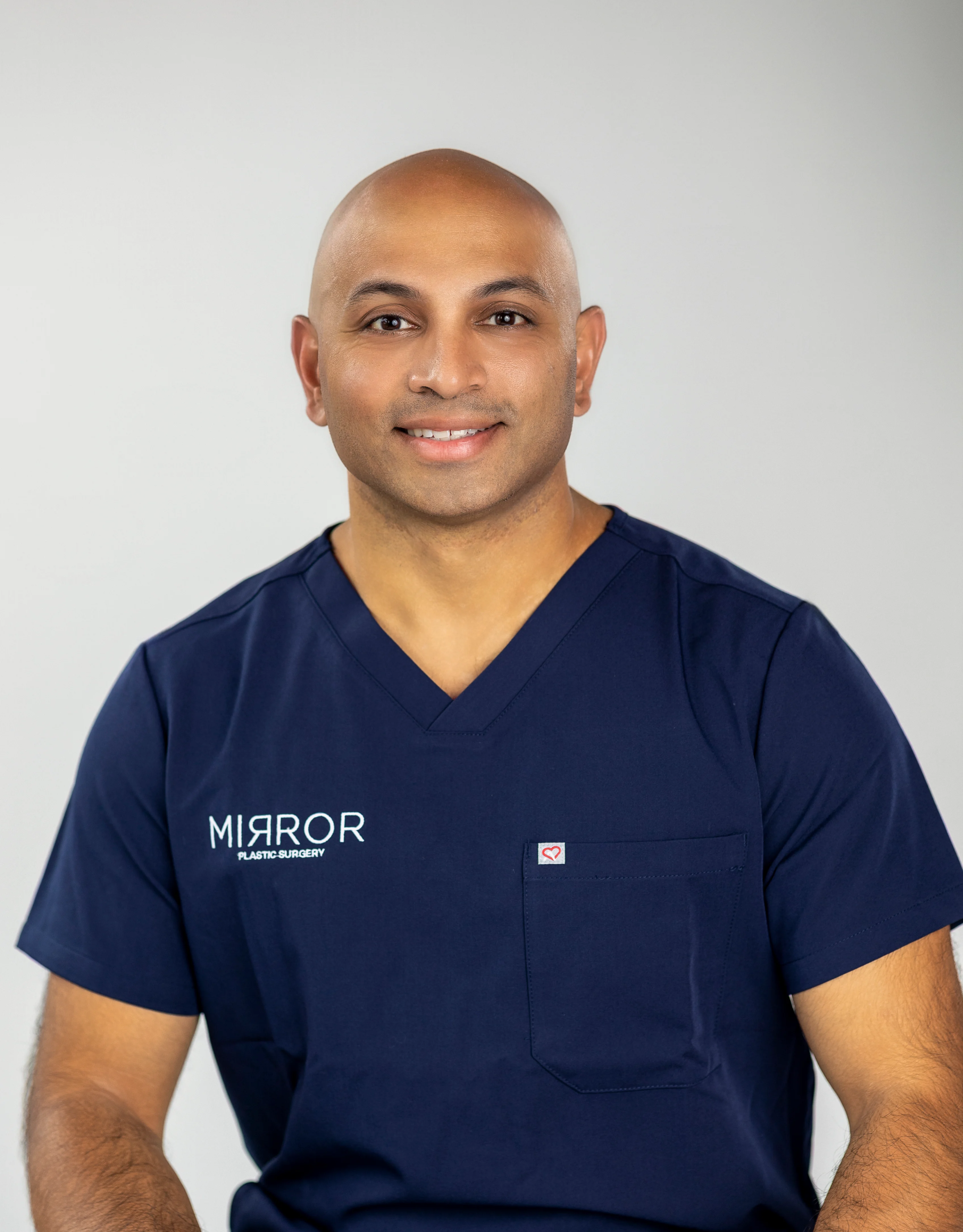
Written by: Dr. Akash Chandawarkar, Board Certified Plastic Surgeon, Mirror Plastic Surgery | Last updated: September 9, 2026
Key Takeaways
- GHK-Cu is a naturally occurring copper-binding peptide that supports collagen production, tissue repair, and antioxidant defense, and its plasma levels decline significantly with age.
- Concierge medicine offers physician-supervised GHK-Cu therapy through personalized consultations, lab analysis, and quality-assured sourcing for safer access than unregulated options.
- GHK-Cu has broad gene-regulatory effects related to tissue repair and antioxidant pathways, based mainly on topical and preclinical research rather than large human trials.
- Potential benefits include skin rejuvenation, hair follicle support, wound healing, and anti-inflammatory effects, with the strongest evidence for topical skin applications.1
- At Mirror Plastic Surgery, Dr. Akash Chandawarkar provides personalized GHK-Cu protocols with comprehensive monitoring; schedule your consultation today to see whether this therapy fits your health and aesthetic goals.
What Is GHK-Cu And Why It Matters For Aging Tissue
GHK-Cu (glycyl-L-histidyl-L-lysine copper) is a naturally occurring tripeptide bound to copper, first isolated from human plasma in 1973 by researcher Loren Pickart. Its levels change with age. Plasma levels decline from approximately 200 ng/mL at age 20 to about 80 ng/mL by age 60, a trajectory that correlates with reduced collagen production, slower wound healing, and thinning skin.
GHK-Cu functions as a “copper chaperone,” delivering bioavailable copper to enzymes critical for collagen cross-linking, specifically lysyl oxidase, and antioxidant defense via superoxide dismutase. This copper-delivery mechanism sets it apart from simpler collagen-stimulating agents. Rather than merely depositing new matrix, it enables the enzymatic machinery that builds and remodels tissue.
Research by Pickart and colleagues published in BioMed Research International (2015) found that GHK-Cu influenced the expression of over 4,000 human genes related to tissue repair, DNA damage response, antioxidant defense, and anti-inflammatory pathways. These findings come from computational gene-profiling and cell-culture studies rather than controlled human intervention trials, which creates an evidence gap that patients should understand.
At Mirror Plastic Surgery, Dr. Akash Chandawarkar, a Harvard-educated, Johns Hopkins-trained plastic surgeon, reviews this evidence base with every patient before designing a protocol. The focus stays on informed decision-making and clear expectations.
Schedule A GHK-Cu Evaluation With Dr. Akash to discuss whether this therapy aligns with your health and aesthetic goals.
Potential Benefits Of GHK-Cu Based On Current Research
Published research and clinical experience suggest several potential benefits, though results vary and more human studies are needed.1
Skin Rejuvenation And Collagen Support
The strongest evidence for GHK-Cu appears in topical skin applications. A 2018 review by Pickart and Margolina in the International Journal of Molecular Sciences summarizes controlled trials showing improved skin density and thickness and reduced wrinkle appearance in women with photoaging, including a 71-woman facial cream trial and a 41-woman eye-cream trial conducted over 12 weeks.
Mirror Plastic Surgery uses GHK-Cu to support collagen and elastin production, aiding skin, hair, and nail health.1 It also activates matrix metalloproteinases that clear damaged extracellular matrix. This dual action supports genuine tissue remodeling rather than simple protein deposition.
Hair Health And Follicle Support
Preclinical research shows that GHK-Cu promotes dermal papilla cell proliferation and shifts follicles into the anagen, or growth, phase.1 A 2024 study published in Bioactive Materials (Liu et al.) found that a GHK-Cu formulation initiated hair growth faster than 5% minoxidil in a mouse model. No large human randomized controlled trial exists for GHK-Cu as a standalone hair-loss treatment, so patients should maintain realistic expectations.
Wound Healing And Tissue Repair
Animal models consistently show accelerated wound closure and improved collagen architecture with GHK-Cu.1 Maquart and colleagues (1999, Journal of Investigative Dermatology) demonstrated that GHK-Cu increased MMP-2 activity in fibroblast cultures while simultaneously stimulating TIMP-2 expression, a pattern consistent with controlled matrix remodeling. GHK-Cu also reduces inflammation via NF-κB pathway suppression and promotes angiogenesis through VEGF upregulation, which makes it biologically relevant for post-surgical recovery.
Antioxidant And Anti-Inflammatory Effects
Pickart, Vasquez-Soltero, and Margolina (2015) documented that GHK-Cu upregulates antioxidant genes including superoxide dismutase and catalase, while suppressing pro-inflammatory cytokines including TNF-alpha and IL-6. These effects matter for patients managing chronic skin conditions or systemic inflammation, although most data still come from cell culture and animal models.
Overall, research remains promising but incomplete. Injectable GHK-Cu lacks published controlled human trials, and results vary by individual. Honest counseling includes this uncertainty.
How Concierge Medicine Delivers GHK-Cu Safely
Mirror Plastic Surgery uses a structured, physician-led process for GHK-Cu therapy. Treatment begins with a 30–60 minute consultation with Dr. Akash Chandawarkar. This visit includes a detailed medical history and, when appropriate, lab panels assessing thyroid, liver, kidney, and hormone markers to determine candidacy and establish a safe baseline.
Administration methods include subcutaneous injection or topical formulations, selected based on individual goals. GHK-Cu is frequently combined with BPC-157 and TB-500 in the practice’s “Glow Stack,” a protocol that targets systemic inflammation, collagen and elastin production, and tissue repair through complementary pathways. GHK-Cu modulates gene expression and delivers copper, BPC-157 focuses on vascular signaling and muscle-tendon repair, and TB-500 supports actin polymerization and cell migration.
Concierge support is built into every protocol so patients never manage their therapy alone. Patients receive detailed reconstitution instructions, video demonstrations, and 24/7 text access to Dr. Akash, which creates a level of ongoing oversight that differs from purchasing peptides online or receiving a rushed protocol at a high-volume clinic. Mirror Plastic Surgery limits its practice volume to provide unhurried, personalized attention.
Services are available in-person in St. Petersburg and Tampa, Florida, and remotely across the United States, including Hawaii and Alaska.
Schedule Your GHK-Cu Concierge Consultation to start a personalized protocol with Dr. Akash.
How Much Does GHK-Cu Cost With Concierge Care
GHK-Cu is not FDA-approved and is not covered by insurance, so patients pay out of pocket. HSA and FSA funds may apply in some cases when a physician prescribes it for a qualifying medical purpose. Based on published sources, general market ranges for GHK-Cu are:
- Compounded topical GHK-Cu: $60–$180 per 30-day supply
- Compounded injectable GHK-Cu: $100–$250 per month
- Clinic-administered injectable treatment: $150–$350 per session
- Price variation reflects dose, delivery channel, clinic overhead, and geography
These figures serve as reference points. At Mirror Plastic Surgery, every protocol is personalized, and a specific quote follows your consultation. Pricing reflects the full service, including comprehensive consultation, lab analysis, a custom peptide protocol, and ongoing concierge support.
Is GHK-Cu Safe? Side Effects And Regulatory Status
Current Regulatory Status In The United States
GHK-Cu is not FDA-approved as a drug for any indication. Topical copper tripeptide-1 is regulated as a cosmetic ingredient. The injectable form’s compounding status remains in active regulatory transition. The FDA’s April 2026 update removed injectable GHK-Cu from Category 2, with a Pharmacy Compounding Advisory Committee review scheduled before February 2027. Non-injectable forms remain under Category 1 review, and formal inclusion on the 503A Bulks List will require additional FDA rulemaking after any committee recommendation.
The main safety concern involves sourcing and supervision. Mirror Plastic Surgery uses reputable peptide providers with batch testing, and Dr. Akash reviews your labs to confirm safety before any protocol begins.
Side Effects And Who Should Avoid GHK-Cu
Injectable GHK-Cu shows injection-site stinging in approximately 16% of users, while topical redness or irritation occurs in roughly 5–10% of users. Most reactions are mild and transient. Copper toxicity from excessive exposure can cause abdominal pain, nausea, weakness, and anemia, typically in the context of excessive or unsupervised use.
Contraindications include Wilson’s disease or other copper metabolism disorders, active malignancy, pregnancy or breastfeeding, and concurrent copper chelation therapy. Patients with liver or kidney disease should disclose this before starting any GHK-Cu protocol.
The risks of buying peptides online are well documented. A 2021 analysis of 10 commercially available “research-grade” peptides found that 3 of 10 contained less than 80% of the labeled peptide content, with no sterility guarantees and no physician oversight of dosing. Medical supervision provides the framework that makes GHK-Cu therapy safer and more effective.
How To Get GHK-Cu Through Concierge Medicine
- Research And Verify Provider Credentials. Look for board certification, relevant training, and documented experience with peptide therapies.
- Schedule A Consultation. At Mirror Plastic Surgery, this is a 30–60 minute in-depth visit with Dr. Akash Chandawarkar covering your full medical history and wellness goals.
- Complete Lab Testing. Comprehensive panels assess thyroid, liver, kidney, and hormone function to determine candidacy and establish a safe baseline.
- Receive A Personalized Protocol. Based on your labs and goals, Dr. Akash designs a custom peptide stack tailored to your physiology.
- Learn Proper Administration. You receive detailed instructions, video demonstrations, and ongoing concierge support throughout your therapy.
To begin, contact Mirror Plastic Surgery at 727-361-6515 or [email protected], or book directly below.
Request Your GHK-Cu Concierge Visit and take the first step toward physician-supervised therapy.
Frequently Asked Questions About GHK-Cu
Can My Doctor Prescribe GHK-Cu?
Any licensed physician can prescribe GHK-Cu, although many general practitioners have limited experience with peptide therapy protocols. A concierge physician like Dr. Akash Chandawarkar, who specializes in peptide protocols, tracks emerging research, and designs every plan around individual lab results, can evaluate your candidacy more thoroughly and prescribe appropriately.
Is GHK-Cu Legal In The United States?
GHK-Cu can be legally prescribed and used in the United States under medical supervision, even though it is not FDA-approved as a drug. Topical forms are regulated as cosmetic ingredients and are widely available. As noted in the regulatory section above, injectable GHK-Cu remains in regulatory transition following the FDA’s April 2026 update. Working with a physician who sources from compliant, batch-tested compounding pharmacies is essential during this period. GHK-Cu is not a controlled substance under federal scheduling.
What Are The Downsides Of Taking GHK-Cu?
Possible side effects include injection-site reactions such as redness and stinging, mild flushing, and occasional nausea. Topical use may cause irritation in sensitive individuals. Cost remains entirely out of pocket, because GHK-Cu carries no FDA-approved indication and insurers do not cover it. Results vary, and maintenance protocols are usually needed to sustain benefits, since stopping therapy often allows improvements to fade over time. Injectable GHK-Cu lacks large human safety trials, so physician supervision and lab monitoring play a central role.
How Long Until I See Results?
Some patients report improvements in skin texture and healing within the first few weeks of consistent use.1 Published topical studies typically measure outcomes at 8–12 weeks, which matches the biology of collagen remodeling and follicle cycling. Hair-related benefits, where evidence is primarily preclinical, may require longer observation. Results differ by individual, by condition, and by protocol, and Dr. Akash sets expectations accordingly during consultation.1
Can I Take GHK-Cu With Other Peptides?
GHK-Cu often appears in multi-peptide protocols. At Mirror Plastic Surgery, the “Glow Stack” combines GHK-Cu with BPC-157 and TB-500 for complementary effects, as described earlier in the administration section. Any multi-peptide protocol should remain under physician supervision, with baseline labs and ongoing monitoring.
Is GHK-Cu Safe For Long-Term Use?
Published topical studies span 8–12 weeks, and long-term human safety data for injectable GHK-Cu remain limited. Topical GHK-Cu has decades of cosmetic use history with a reassuring tolerability record at standard concentrations. For injectable protocols, physicians should monitor serum copper, ceruloplasmin, liver function, and other relevant markers over time and adjust protocols as needed. Individuals with copper metabolism disorders, liver disease, or pregnancy should avoid GHK-Cu. Long-term safety research continues, and medical supervision provides the safest context for its use.
Conclusion: Deciding Whether GHK-Cu Fits Your Goals
GHK-Cu offers a scientifically grounded rationale for skin rejuvenation, hair health, tissue repair, and anti-inflammatory support, backed by decades of mechanistic research and a growing body of topical clinical evidence. The evidence remains promising, yet large-scale human trial data, especially for injectable use, are still emerging.
Concierge medicine helps bridge that gap. Physician-supervised GHK-Cu therapy with personalized lab analysis, quality-assured sourcing, and ongoing monitoring differs fundamentally from purchasing peptides online and self-administering without oversight. The peptide’s potential is real, and the right clinical framework helps you pursue that potential more safely.
At Mirror Plastic Surgery, Dr. Akash Chandawarkar brings Harvard and Johns Hopkins training, Stanford innovation fellowship experience, and a commitment to evidence-based, honest patient care to every peptide consultation. If you are considering GHK-Cu therapy, the next step is a conversation with a qualified physician.
Schedule Your GHK-Cu Consultation With Mirror Plastic Surgery to discuss your goals with Dr. Akash and determine whether this therapy fits your needs. You can also reach the practice at 727-361-6515 or [email protected].
Disclaimer: GHK-Cu is not FDA-approved. Results vary by individual. This article is for educational purposes only and does not constitute medical advice. Always consult a qualified physician before beginning any peptide therapy.
1 Results may vary from person to person. Editorial content, before and after images, and patient testimonials do not constitute a guarantee of specific results.
Peptide therapy is intended for wellness and optimization purposes and is not prescribed to diagnose, treat, cure, or prevent disease unless specifically stated. Many peptides are not FDA-approved and may be used off-label. Some have limited long-term safety data, with a potential for unknown risks, complications, or desensitization with prolonged use.