
Written by: Dr. Akash Chandawarkar, Board Certified Plastic Surgeon, Mirror Plastic Surgery | Last updated: September 9, 2026
Key Takeaways
- Minoxidil is the only FDA-approved topical treatment for androgenetic alopecia, with decades of randomized trials showing consistent hair density gains.1
- Peptides such as GHK-Cu, BPC-157, and TB-500 show mechanistic promise for hair growth but lack large human trials and FDA approval for hair loss.1
- Minoxidil and peptides act through different biological pathways, so they can complement each other when used together under medical supervision.
- Both treatments require ongoing use. Stopping either usually leads to loss of gains within three to six months.1
- For physician-supervised hair restoration protocols that may combine minoxidil and peptides, book a comprehensive hair-loss evaluation.
How Minoxidil Works: The FDA-Approved Standard
Minoxidil has served as the cornerstone of topical hair loss treatment for more than three decades. The FDA approved a 2% topical solution for men in 1988 and for women in 1991, with a 5% formula for men following in 1997, making it the only FDA-approved over-the-counter topical treatment for androgenetic alopecia.
Minoxidil is a prodrug. It is converted in the hair follicle by the sulfotransferase enzyme SULT1A1, located primarily in the outer root sheath, into minoxidil sulfate, the active form that stimulates hair growth. That active metabolite opens ATP-sensitive potassium channels on dermal papilla cells. This action triggers a downstream cascade: upregulation of vascular endothelial growth factor (VEGF) by approximately 2.5-fold, increased prostaglandin E2 (PGE2) production via COX-1 activation, and activation of the Wnt/β-catenin pathway. Together, these effects prolong the anagen (growth) phase and increase follicle size.
In the pivotal study by Olsen et al. (2002) involving 393 men with androgenetic alopecia over 48 weeks, 5% topical minoxidil increased non-vellus hair counts by +19 hairs/cm², compared to +13 hairs/cm² with the 2% formulation and +4 hairs/cm² with placebo.1 A 2026 network meta-analysis published in Medicina ranked topical minoxidil 5% as the most effective off-label therapy among 15 active comparators for male androgenetic alopecia, based on 23 studies assessing six-month change in total hair density.
Most users see initial results within three to six months, with peak effect around 12 months.1 However, the estimated share of non-responders is around 30–40%, largely due to low sulfotransferase (SULT1A1) activity in the scalp, which prevents sufficient conversion to the active form.1 Minoxidil also does not address the underlying hormonal driver of pattern hair loss. When treatment stops, hair loss returns to its genetically predetermined course within about three to six months.1
How Peptides Work For Hair Growth: The Emerging Frontier
Peptides are short chains of amino acids that act as signaling molecules and direct cells to perform specific biological functions. For hair growth, several peptides have shown promise, although the evidence base remains far less mature than the data supporting minoxidil.
Peptides For Hair Regrowth With Current Research Support Include:
- GHK-Cu (Copper Peptide): The most studied peptide for hair growth. In 2007, Pyo et al. demonstrated that GHK-Cu stimulated elongation of human hair follicles in ex vivo research, with follicle growth comparable to minoxidil at reference concentrations.1 GHK-Cu also upregulates VEGF secretion from dermal papilla cells, creating a molecular link to the same angiogenic pathways that minoxidil activates.
- BPC-157: A synthetic peptide derived from a protein in gastric juice. BPC-157 increases VEGFR2 expression in vascular endothelial cells, driving capillary sprouting into the perifollicular dermis. No hair-specific human trials exist.
- TB-500 (Thymosin Beta-4): A 2004 study by Philp et al. showed that thymosin β4 activated hair follicle stem cells and promoted hair growth in animal models, but controlled human data are absent.
At Mirror Plastic Surgery, the Glow Stack combines GHK-Cu, BPC-157, and TB-500 to address systemic inflammation while supporting hair, skin, and nail health. Treatment occurs under direct physician supervision by Dr. Akash Chandawarkar.
A 2026 review in Biomedicines notes that GHK-Cu’s hair-growth evidence is primarily from cell-based and animal-based studies, making it mechanistically compelling but clinically underconfirmed in humans. No peptide currently holds FDA approval for hair loss, and large-scale human trials are still lacking.
Effectiveness: What The Evidence Actually Shows
The evidence gap between minoxidil and peptides is substantial and shapes realistic expectations.
Minoxidil’s efficacy is supported by decades of randomized controlled trials and FDA approval. The European S3 guideline on androgenetic alopecia lists minoxidil as the only topical agent with the highest recommendation grade for both men and women. A 2026 review in the Journal of Cosmetic Dermatology confirms that only two FDA-approved medications exist for androgenetic alopecia: topical minoxidil and oral finasteride.
The evidence for peptides is real but early. A phase 2A trial of PP405, a peptide that activates hair follicle stem cells, demonstrated statistically significant hair regrowth in eight weeks among 78 patients, with 31% achieving a greater than 20% hair density increase.1 These studies remain small, short-term, and often industry-funded, so conclusions stay tentative.
Minoxidil currently offers predictable, well-documented results. Peptides provide a promising, more holistic option that may also support skin health and systemic inflammation when used with physician oversight and quality sourcing.
Side Effects And User Experience
Side-effect profiles differ between minoxidil and peptides, and understanding those differences helps guide treatment choices.
Minoxidil’s Known Side Effects Include:
- Scalp Irritation And Dryness: Controlled-trial and review data indicate that topical irritation rates from minoxidil are roughly in the 3% to 10% range. A 2007 patch-testing study found that among patients with suspected minoxidil-related dermatitis, 71% reacted to propylene glycol, the vehicle solvent, rather than minoxidil itself. Foam formulations avoid propylene glycol and reduce this issue.
- Initial Shedding (“Dread Shed”): Initial shedding typically begins two to four weeks after starting, lasts about three to eight weeks, and subsides in most users within four months.1 This pattern reflects follicles shifting into a new growth cycle.
- Hypertrichosis: Facial hypertrichosis affects up to 22% of women using the 5% solution, though the condition is reversible within one to six months of discontinuation or dose reduction.1
- Oral Minoxidil Side Effects: A 2021 systematic review found lightheadedness in approximately 1.7% and peripheral edema in approximately 1.9% of patients on low-dose oral minoxidil, with no cases of pericardial effusion at doses of 5 mg or below.
Peptides’ Safety Profile:
Peptides are generally well tolerated when sourced properly and dosed under medical supervision. Topical GHK-Cu may cause mild local irritation, and injection site reactions can occur with injectable forms. Most hair-loss peptides lack long-term safety data from controlled trials, so the full adverse-effect profile remains uncertain. The main risk comes from the unregulated market, where products may contain incorrect dosages, impurities, or no active ingredient.
Professional oversight helps manage these risks. A board-certified physician can order lab panels to identify underlying causes of hair loss, select appropriate peptides, determine correct dosing, and monitor for interactions or adverse effects.
Book a comprehensive hair-loss evaluation and receive a detailed assessment from Dr. Akash Chandawarkar, including medical history review and, when indicated, lab panels to identify root causes of your hair loss.
Using Peptides And Minoxidil Together
Minoxidil and peptides target different biological pathways, which provides a clear rationale for combining them. Minoxidil stimulates blood flow and prolongs anagen through potassium channel opening and VEGF upregulation. GHK-Cu supports collagen production, reduces inflammation, and promotes dermal papilla cell proliferation. Used together, minoxidil keeps follicles in the growth phase while peptides support the surrounding follicular environment.
No published controlled trial has tested the specific combination of minoxidil plus GHK-Cu as an isolated pair. However, a 2025 study by Kuceki et al. reported enhanced regrowth using a monthly minoxidil–dutasteride–copper-peptide microinfusion protocol, though it could not isolate the copper peptide’s independent contribution. The Peptide Science Institute notes that combining topical GHK-Cu with minoxidil is common in cosmetic dermatology, with non-overlapping mechanisms.
Anyone considering combination therapy benefits from medical supervision. At Mirror Plastic Surgery, Dr. Akash Chandawarkar designs personalized protocols that may incorporate both FDA-approved treatments and peptides, based on hair loss pattern, lab results, and individual goals.
Minoxidil Vs Peptides At A Glance
The table below summarizes key differences in mechanism, FDA status, evidence level, timeline, and side effects so you can compare both options quickly.
Opens K_ATP channels, upregulates VEGF ~2.5-fold and PGE2, activates Wnt/β-catenin, prolongs anagen phaseApproved for androgenetic alopecia (topical 2% in 1988; 5% for men in 1997)Decades of randomized controlled trials; ranked most effective off-label topical therapy in 2026 network meta-analysisVisible results at three to six months, with peak effect around 12 months1Scalp irritation (3–10%), initial shedding (~20%), hypertrichosis (up to 22% in women on 5% solution)
Choosing Between Minoxidil And Peptides
Choose Minoxidil First If:
- You want a proven, FDA-approved treatment with predictable, well-documented results
- You prefer an over-the-counter option you can start quickly
- You have mild-to-moderate pattern hair loss and no contraindications
- You feel comfortable committing to ongoing use to maintain results
Consider Peptides With Medical Supervision If:
- You have not responded adequately to minoxidil after six to twelve months
- You experience intolerable side effects from minoxidil
- You want a holistic approach that may also benefit skin health and systemic inflammation
- You prefer a personalized protocol based on your labs and physiology rather than a single standard product
- You value professional oversight and quality-assured sourcing
For many patients, the optimal strategy combines both. The Peptide Science Institute recommends starting with FDA-approved options for androgenetic alopecia and considering peptides like topical GHK-Cu as adjuncts under a licensed physician familiar with both FDA-approved drugs and the peptide research literature. A physician can help determine whether this combination fits your specific situation.
Why Medical Supervision Matters
Hair loss can signal underlying health issues such as thyroid dysfunction, hormonal imbalances, nutritional deficiencies, or autoimmune conditions. A thorough medical evaluation is essential before starting any treatment, and professional oversight becomes especially important when peptides enter the plan.
Mirror Plastic Surgery focuses on the depth of that evaluation. Dr. Akash Chandawarkar is a Harvard-educated, Johns Hopkins-trained, board-certified plastic surgeon who brings clinical rigor and medical innovation to peptide therapy. His approach centers on education and honesty, with a focus on long-term results.
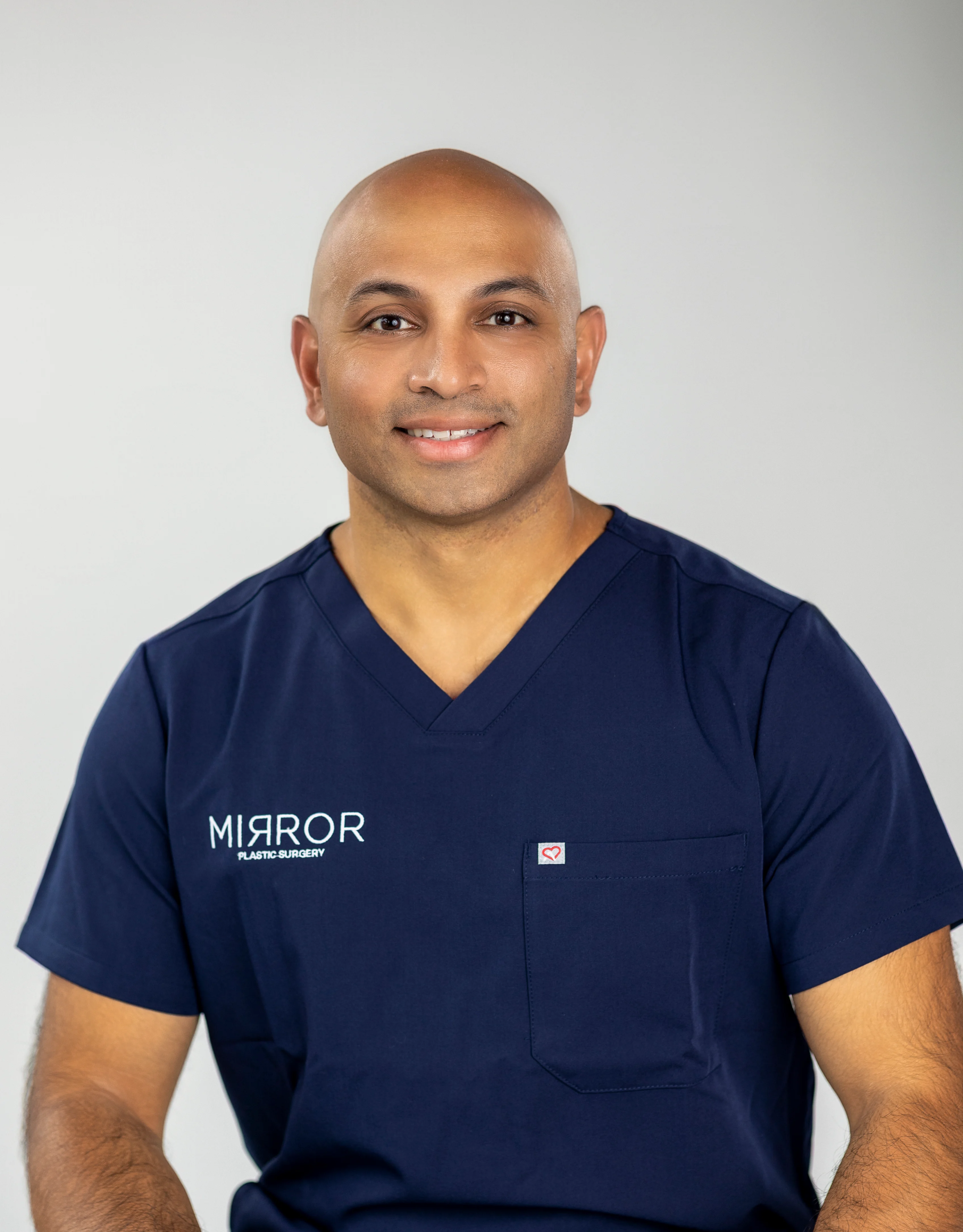
Every patient starts with a comprehensive consultation that lasts 30–60 minutes and includes medical history review and lab panels when indicated. From there, Dr. Chandawarkar designs a personalized protocol based on your labs, physiology, and goals, using peptides sourced from reputable providers with rigorous batch testing. Throughout treatment, you receive concierge care with direct 24/7 text access, and the entire process can be conducted virtually across the United States.
Making An Informed Choice
The choice between peptides and minoxidil comes down to what works for you, not which treatment appears “better” in the abstract. Minoxidil remains the evidence-based gold standard with decades of proven results. Peptides represent an exciting frontier with genuine potential, especially when used under medical supervision with quality-assured products.
Professional guidance offers the safest path forward. A board-certified physician can assess your hair loss pattern, identify underlying causes, and design a personalized protocol that may incorporate minoxidil, peptides, or both, tailored to your biology and goals.
Results vary by individual. Peptides are not FDA-regulated for hair loss. Medical supervision is essential for safe and effective use.
Book a comprehensive hair-loss evaluation today to begin your path toward healthier, fuller hair with Mirror Plastic Surgery.
Frequently Asked Questions
Are Peptides Safe To Use For Hair Loss Without A Doctor?
The peptides themselves, particularly GHK-Cu, BPC-157, and TB-500, are generally well tolerated when correctly sourced and dosed. The primary safety concern is the unregulated market. Products purchased online without medical oversight may contain incorrect concentrations, impurities, or no active ingredient. There is also no screening for pre-existing conditions or current medications that could interact with peptide therapy. At Mirror Plastic Surgery, every peptide protocol begins with a comprehensive consultation that may include lab panels, and peptides are sourced exclusively from providers with documented batch testing. Medical supervision makes peptide therapy safer and more effective.
How Long Does It Take To See Results From Peptides Compared To Minoxidil?
Minoxidil follows a well-established timeline discussed earlier, with initial results typically appearing within three to six months and peak effect around 12 months. Topical GHK-Cu trials have generally used 12–16 week assessment windows, and measurable density changes have been reported within that range in small controlled studies. Because peptide evidence comes from smaller, shorter trials, individual responses vary more widely than with minoxidil. Regardless of treatment choice, hair restoration requires patience, and at least three to four months of consistent use is necessary before judging efficacy.
Can Minoxidil And Peptides Be Used At The Same Time?
Minoxidil and peptides such as GHK-Cu can be used together, and this combination is increasingly common in clinical practice. Minoxidil primarily acts through potassium channel opening, VEGF upregulation, and anagen phase prolongation. GHK-Cu supports collagen production, reduces inflammation, and promotes dermal papilla cell proliferation. There is no known pharmacological conflict between them. Large controlled trials have not yet confirmed additive efficacy for this specific combination, so physician supervision remains the safest way to manage dosing, sequencing, and monitoring.
What Happens If I Stop Using Minoxidil Or Peptides?
Both treatments require ongoing use to maintain their benefits. With minoxidil, hair loss typically returns to its genetically predetermined course within approximately three to six months of stopping, because the drug does not alter the underlying cause of androgenetic alopecia. Peptide therapy follows a similar pattern. When the biological support peptides provide, such as reduced inflammation and improved follicular environment, is withdrawn, the conditions driving hair loss gradually reassert themselves. A maintenance protocol usually becomes necessary to sustain results from either approach.
Does Mirror Plastic Surgery Offer Peptide Therapy Remotely?
Mirror Plastic Surgery serves patients across the United States, not only those in the St. Petersburg and Tampa Bay area of Florida. The entire process, including initial consultation, lab review, protocol design, prescription, and ongoing support, can be conducted virtually. Dr. Akash Chandawarkar is available directly via text for 24/7 concierge support, and peptides are shipped to patients after consultation. This remote model delivers the same level of personalized, medically supervised care as an in-person visit, making physician-led peptide therapy accessible regardless of location.
1 Results may vary from person to person. Editorial content, before and after images, and patient testimonials do not constitute a guarantee of specific results.
Peptide therapy is intended for wellness and optimization purposes and is not prescribed to diagnose, treat, cure, or prevent disease unless specifically stated. Many peptides are not FDA-approved and may be used off-label. Some have limited long-term safety data, with a potential for unknown risks, complications, or desensitization with prolonged use.