
Written by: Ellie Pranckevicius, FNP-BC, Aesthetic Nurse Practitioner & Aesthetic Injector | Facial Restoration & Regenerative Injectable Specialist, Mirror Plastic Surgery | Last updated: September 4, 2026
Key Takeaways
- Vitality enhancement targets cellular health and inflammation to improve sustainable energy, mental clarity, and physical resilience.
- Age-related decline often stems from mitochondrial dysfunction, chronic inflammation, and collagen loss. Targeted interventions can slow these processes.
- Medically supervised peptide therapy, including NAD+, BPC-157, and GHK-Cu, supports mitochondrial function, tissue repair, and collagen production.
- Quality sourcing and professional oversight reduce the risks of contamination, incorrect dosing, and unsafe protocols.
- Start your personalized vitality journey with a medically supervised consultation to receive lab-informed peptide protocols tailored to your goals.
What Is Vitality Enhancement? A Clear Definition
Vitality enhancement uses evidence-based strategies and treatments to improve physical energy, mental clarity, emotional resilience, and overall well-being by supporting cellular health, reducing chronic inflammation, and balancing hormones.
Vitality is the body’s ability to repair, regenerate, and function optimally, rather than a fleeting sense of energy. Unlike the temporary power-up the term describes in video games, real-world vitality requires a comprehensive approach that addresses the biological mechanisms driving decline.
Vitality often diminishes with age because of mitochondrial dysfunction, accumulating chronic inflammation, and decreased collagen production. A July 2026 analysis of SHARE data covering 27,107 European adults found that the proportion experiencing some decline in composite intrinsic capacity increased with age, from 54.8% in midlife to 78.1% in the oldest-old group. More than 40% of some age groups maintained or improved their scores, which shows that decline is not inevitable.
The Science of Vitality: Mitochondria, Inflammation, and Aging
Three interconnected biological processes drive most age-related vitality decline.
Mitochondrial dysfunction. Mitochondria are the energy-producing organelles of every cell. As they become less efficient with age, fatigue increases and cellular repair slows. NAD+ (Nicotinamide Adenine Dinucleotide) is a coenzyme central to mitochondrial energy metabolism, and its levels appear to decline in certain tissues with aging. A 2026 review in Frontiers in Aging notes that large-scale human data indicate whole-blood NAD+ concentrations do not decline with healthy aging per se, which makes individual assessment important.
Chronic inflammation. Low-grade systemic inflammation, often called “inflammaging,” contributes to autoimmune conditions, weight gain, accelerated skin aging, and reduced tissue resilience. Research published in Molecular Biology Reports (2026) by Pandolfi et al. links age-related NAD+ loss partly to inflammatory NADase activity from CD38-positive immune cells that accumulate in adipose tissue and liver.
Collagen and elastin loss. Declining collagen and elastin production reduces skin integrity, joint resilience, and tissue repair capacity. Plasma levels of the copper-binding tripeptide GHK have been observed to fall from approximately 200 ng/ml at age 20 to 80 ng/ml by age 60. This correlation has informed interest in GHK-Cu (copper peptide) supplementation, although the association is observational rather than proven causal.
Peptides address these mechanisms at the molecular level. Peptides are short chains of amino acids that act as signaling molecules. They instruct cells to perform specific functions, such as boosting mitochondrial energy production, reducing inflammation, or stimulating collagen synthesis. Dr. Chandawarkar and Ellie Pranckevicius apply this science within a framework of comprehensive lab analysis and individualized protocol design.
How Peptide Therapy Can Enhance Vitality
Peptide therapy is a central tool for vitality enhancement at Mirror Plastic Surgery. Based on consultation findings and lab results, Ellie creates custom peptide stacks tailored to each patient’s physiology and goals. Key vitality enhancement peptides include the following. The table summarizes each peptide’s primary benefit, evidence base, and typical use so you can see how they target different aspects of vitality.
| Peptide | Primary Benefit | Evidence Base | Typical Use |
|---|---|---|---|
| NAD+ | Mitochondrial energy support | Oral precursors reliably increase circulating NAD+; clinical energy benefits vary by context (Pandolfi et al., 2026)1 | Energy, healthy aging, cellular support |
| BPC-157 | Tissue repair and systemic inflammation | Broad animal evidence; small human pilot studies; Phase 2 human trial recruiting (McGuire et al., 2025) | Muscle, tendon, ligament, and joint recovery |
| GHK-Cu | Collagen and elastin stimulation | 2026 trial in Journal of Cosmetic Dermatology showed reduced wrinkle depth and increased dermal density (Noh et al., 2026) | Skin, hair, and nail rejuvenation; visible aging support |
| TB500 (Thymosin Beta-4) | Soft tissue healing and inflammation reduction | Preclinical evidence; included in July 2026 FDA advisory panel review | Wound repair, inflammation management |
| Sermorelin / Ipamorelin | Natural growth hormone stimulation | Clinical use as growth hormone secretagogues; individual response varies1 | Muscle retention, fitness support |
| KPV | Gut inflammation reduction | Preclinical evidence; included in July 2026 FDA advisory panel review | Digestive health support |
These peptides are frequently combined into personalized stacks. For example, Mirror Plastic Surgery’s Glow Stack combines GHK-Cu, BPC-157, and TB500 to address systemic inflammation alongside collagen and elastin production. This combination supports skin, hair, and nail health at the same time. Peptide therapy requires proper medical supervision and lab-informed protocol design to deliver meaningful results.
The Critical Importance of Medical Supervision and Quality Sourcing
Medical supervision and careful sourcing significantly reduce the risks associated with peptide use. A peer-reviewed 2024 study in JMIR found that injectable peptides sold online without a prescription had actual purity of just 7.7–14.37% versus a claimed 99%. Endotoxin contamination was present in 100% of samples tested. A “99% pure” certificate of analysis typically confirms only molecular identity, not sterility, endotoxin levels, or heavy metal content. Injected endotoxin can cause fever, chills, and systemic inflammatory reactions.
The regulatory landscape continues to evolve. In July 2026, an FDA advisory panel voted to recommend reclassifying six popular peptide therapies, including BPC-157, KPV, and TB-500, so that compounding pharmacies could produce them. This recommendation must still proceed through formal rulemaking. Many peptides currently exist in a gray area and face growing regulatory scrutiny over compounding standards.
Mirror Plastic Surgery’s approach directly addresses these risks. Ellie Pranckevicius conducts an in-depth consultation that includes comprehensive lab panels, such as thyroid, liver, kidney, diabetes markers, and hormone panels, before any protocol begins. Peptides are sourced exclusively from reputable providers with rigorous batch testing. Ellie summarizes her philosophy simply: “Education and honesty are key. We tell clients when a treatment is unnecessary and prioritize long-term results over short-term revenue.”
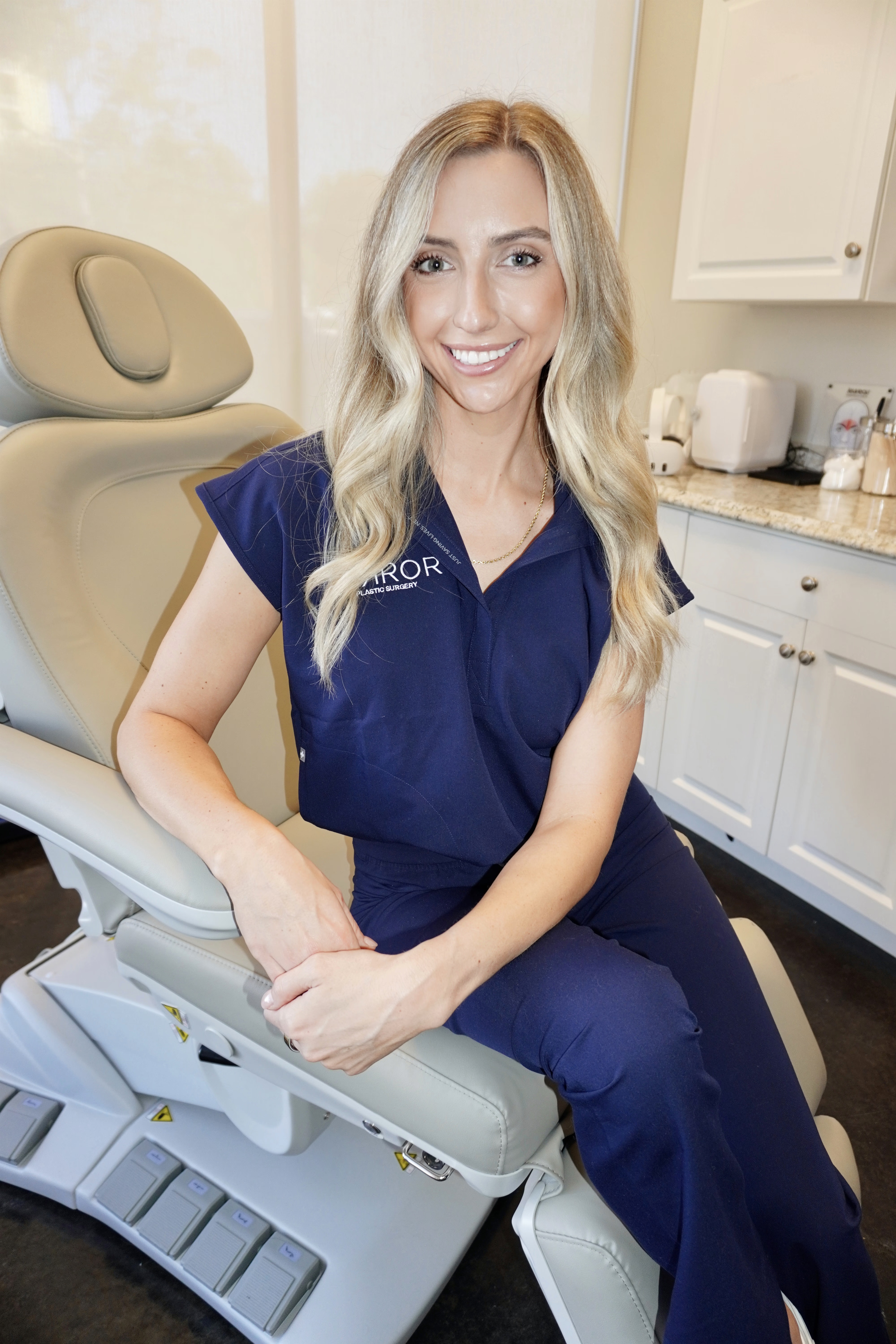
Schedule a medically supervised peptide assessment to receive lab-based guidance and individualized care.
Lifestyle Foundations That Amplify Peptide Therapy
Peptides work best when they build on strong lifestyle foundations. They complement evidence-based habits that already support cellular repair and reduce inflammation. A 2026 systematic review of randomized trials concluded that exercise has the strongest evidence for improving multidimensional healthspan indicators in humans, particularly intrinsic capacity and quality of life. The following five pillars, identified by Harvard Health Publishing in a July 2026 article reviewed by longevity physician Dr. David Barzilai, form the foundation of sustainable vitality enhancement.
- Prioritize quality sleep. Aim for seven to eight hours per night with consistent timing. Research suggests that sleep timing consistency often matters more than quantity. A steady wake time, including on weekends, is a practical and high-impact target.
- Engage in regular physical activity. Dr. Barzilai recommends a combination of twice-weekly resistance training and 150 minutes of moderate aerobic activity weekly. He notes that cardiorespiratory fitness is “one of the strongest predictors of mortality we have ever measured.”
- Follow an anti-inflammatory diet. Center meals on whole foods with adequate protein, healthy fats, and fiber to reduce large blood glucose spikes. Protein becomes increasingly important for preserving muscle mass with age.
- Manage stress effectively. Chronic stress, as Dr. Barzilai explains, “holds the body in a low-grade alarm state that, over years, wears on the cardiovascular and immune systems.” Movement, daylight exposure, and social connection are among the most validated stress regulators.
- Address underlying deficiencies with targeted peptide therapy. Use medically supervised peptide protocols to support specific cellular pathways identified through lab analysis and clinical assessment.
A 2026 study in the Journal of the American Geriatrics Society analyzing 11,287 healthy Australian older adults found that adherence to at least three healthy lifestyle behaviors was associated with a 40% lower hazard of death, dementia, or persistent physical disability compared to an unfavorable lifestyle. These findings highlight how lifestyle and medical interventions work together.
Realistic Expectations and Results
Results from peptide therapy vary by individual, condition, and protocol.1 Some patients report improvements in energy within the first week of NAD+ therapy.1 Others need several weeks or months to notice meaningful changes.1 Published animal data and clinical experience suggest that with BPC-157, early subjective signals such as reduced pain or stiffness often appear within the first two to three weeks.1 Functional improvement in joint mobility or load tolerance commonly appears between weeks three and six.1 Protocols are typically run for at least eight to twelve weeks.
Benefits often fade when peptides stop, similar to what happens when an exercise regimen ends.1 Maintenance protocols frequently help sustain results achieved during an active treatment phase. Ellie discusses realistic timelines and maintenance expectations during every consultation so patients understand what their protocol involves. Because results and maintenance vary by individual, the first step is a detailed consultation to set realistic expectations.
How to Get Started with Mirror Plastic Surgery
The process begins with a 30–60 minute consultation with Ellie Pranckevicius, available in-person in St. Petersburg or remotely across the United States, including Hawaii and Alaska. The consultation includes a thorough medical history review and, when indicated, comprehensive lab panels covering thyroid, liver, kidney, diabetes markers, and hormone levels. If labs are not available, Ellie orders them before finalizing a protocol.
After the consultation, Ellie designs a custom peptide stack and treatment protocol based on each patient’s physiology and goals. Patients receive detailed instructions for reconstitution and self-administration, often supported by video demonstrations. Ongoing concierge support is provided through direct text access to Ellie, with telemedicine appointments available for follow-up.
Mirror Plastic Surgery can be reached at 727-361-6515 or [email protected]. The practice is located at 780 4th Ave S, St. Petersburg, FL 33701, and is active on Instagram at @mirrorplasticsurgery, @dr.akashplasticsurgery, and @perfectlyplastics.
Schedule your consultation with Ellie today to begin your personalized vitality protocol.
Frequently Asked Questions
What is vitality enhancement?
In a health context, vitality enhancement uses evidence-based strategies and treatments to improve physical energy, mental clarity, emotional resilience, and overall well-being by targeting cellular health, reducing chronic inflammation, and supporting hormonal balance. The term describes a holistic, sustained approach to how the body repairs, regenerates, and functions over time.
Are peptides FDA-approved?
Many peptides used in wellness and optimization protocols are not FDA-approved drugs. They have been studied in clinical trials for more than a decade and are used extensively in medical and research settings worldwide. The main risk comes from obtaining them from unregulated sources without medical supervision. At Mirror Plastic Surgery, every peptide protocol begins with an in-depth consultation that may include lab panels. Peptides are sourced from providers with documented batch testing and quality verification, and patients receive ongoing medical support throughout treatment. The regulatory landscape is evolving, as mentioned earlier, with an FDA advisory panel recommending broader access to certain peptides.
What are the risks of using peptides without supervision?
The primary risk of purchasing peptides online without medical oversight is the absence of reliable quality control. As noted earlier, a 2024 JMIR study found that most online peptides are heavily contaminated and under-dosed. A certificate of analysis stating “99% pure” typically confirms only molecular identity, not sterility, endotoxin levels, or heavy metals. Beyond contamination, unsupervised use carries risks of incorrect dosing, interactions with existing medications or conditions, and missed contraindications such as a history of cancer, where certain peptides carry theoretical concerns because of their angiogenic mechanisms. Mirror Plastic Surgery’s concierge model, which includes medical history review, lab panels, and direct access to Ellie, addresses these risks systematically.
Can peptides help with weight management?
Yes. Peptides such as GLP-1 receptor agonists, which can support weight management, and growth hormone secretagogues like Sermorelin and Ipamorelin can help with weight-related goals. These peptides may also influence insulin resistance, cardiovascular risk factors, inflammation, and energy. Results vary by individual, and a personalized protocol based on lab results and health history is essential for selecting the most appropriate approach.1
Will I lose benefits if I stop taking peptides?
Most benefits of peptide therapy decrease once treatment stops.1 Similar to pausing an exercise program, the physiological gains achieved during active treatment tend to diminish over time.1 For example, if inflammation that was being managed by a peptide protocol is no longer addressed, it often returns toward its prior state. Maintenance protocols are frequently recommended to sustain results achieved during an initial treatment phase. Ellie includes long-term maintenance planning in every consultation.
Is peptide therapy safe?
When a qualified medical provider supervises treatment and uses quality-sourced peptides, the risks of peptide therapy are substantially reduced. Published animal studies on peptides such as BPC-157 report low acute toxicity, and small human pilot studies have not identified major adverse events. Long-term safety data in humans remain limited for many compounds, and Ellie discusses this consideration transparently with every patient. The safety profile changes when peptides come from unregulated online sources, where contamination and incorrect dosing are documented risks. Mirror Plastic Surgery’s sourcing standards, lab-based screening, and ongoing concierge support are designed to minimize risk and ensure that each protocol matches the patient’s health profile.
Disclaimer: Results may vary from person to person. Editorial content, before and after images, and patient testimonials do not constitute a guarantee of specific results.
Disclaimer: Peptide therapy is intended for wellness and optimization purposes and is not prescribed to diagnose, treat, cure, or prevent disease unless specifically stated. Many peptides are not FDA-approved and may be used off-label. Some have limited long-term safety data, with a potential for unknown risks, complications, or desensitization with prolonged use.
1 Results may vary from person to person. Editorial content, before and after images, and patient testimonials do not constitute a guarantee of specific results.
Peptide therapy is intended for wellness and optimization purposes and is not prescribed to diagnose, treat, cure, or prevent disease unless specifically stated. Many peptides are not FDA-approved and may be used off-label. Some have limited long-term safety data, with a potential for unknown risks, complications, or desensitization with prolonged use.