
Written by: Ellie Pranckevicius, FNP-BC, Aesthetic Nurse Practitioner & Aesthetic Injector | Facial Restoration & Regenerative Injectable Specialist, Mirror Plastic Surgery | Last updated: September 6, 2026
Key Takeaways
- Wellness optimization focuses on evidence-based daily habits instead of short-lived trends with weak scientific support.
- The five pillars of sleep, movement, nutrition, stress management, and social connection create the foundation of any effective wellness plan.
- Consistent sleep schedules, regular movement, plant-forward eating, breathwork, and meaningful relationships deliver measurable health gains backed by major health organizations.
- Skip unproven 2026 trends like cortisol cocktails, parasite cleanses, detox teas, and unregulated biohacking devices that pose real risks with little evidence.
- Once the five pillars are in place, advanced, medically supervised options like peptide therapy can be considered as a second tier.
Step 1: Master The 5 Pillars Of Wellness
Harvard Health Publishing’s July 2026 longevity review and the American College Of Lifestyle Medicine’s framework highlight the same five lifestyle patterns that show up again and again in longevity research: movement, nutrition, sleep, stress management, and social connection. These pillars form the base of any wellness optimization plan.
Pillar 1: Sleep, Your Body’s Repair Mode
The CDC recommends at least 7 hours of sleep per 24-hour period for adults, a threshold endorsed by the American Academy of Sleep Medicine. Yet 30.5% of U.S. adults slept less than 7 hours on average in 2024.
Sleep is when the body clears metabolic waste from the brain, consolidates memory, and resets hormones that govern appetite and stress. Research shows consistency matters more than quantity. A regular schedule is the highest-impact sleep intervention available. A large UK Biobank analysis of 60,977 adults found that sleep regularity predicted mortality risk more strongly than sleep duration. More regular sleepers showed a 20–48% lower risk of all-cause mortality.1
Actionable Tip: Choose a realistic bedtime and wake time and keep them consistent, even on weekends.
Pillar 2: Movement, The Master Signal
The WHO recommends 150–300 minutes of moderate-intensity aerobic activity weekly, plus muscle-strengthening activities on 2 or more days per week. Movement improves insulin sensitivity, brain health, and bone density, and cardiorespiratory fitness is one of the strongest mortality predictors ever measured.1
Step benefits plateau around 8,000–10,000 steps for adults under 60, but even for people who hit that target, breaking up long sitting periods with 2–3 minutes of light activity measurably improves glucose and blood-pressure responses.
Actionable Tip: Set a recurring reminder to stand and move briefly every 45–60 minutes during the workday.
Pillar 3: Nutrition, Fuel Quality Over Perfection
The WHO recommends building a healthy diet from fruits, vegetables, legumes, nuts, and whole grains, limiting free sugars to less than 10% of total daily energy intake, and consuming at least 400 grams of fruits and vegetables per day. Healthy dietary patterns protect against diabetes, heart disease, stroke, and cancer.1
One practical way to move toward this pattern is to increase plant diversity. In the American Gut Project, people who reported eating more than 30 different types of plants per week had microbiome patterns associated with greater microbial diversity than those eating 10 or fewer. Eating vegetables and protein before the refined-carb portion of a meal lowered the 2-hour glucose area under the curve by 40.9% compared with standard mixed order.
Actionable Tip: Start each meal with protein and vegetables, then move to refined carbohydrates if you still feel hungry.
Pillar 4: Stress Management, Regulate Your Nervous System
A large-scale meta-analysis of 136 randomized controlled trials involving more than 11,000 participants found that mindfulness-based programs produce consistent, small to moderate benefits across various mental health outcomes.1 In a remote randomized study of daily 5-minute practices over one month, cyclic sighing, a double inhale followed by a long exhale, outperformed mindfulness meditation for mood and respiratory-rate effects.
Actionable Tip: Practice 5 minutes of cyclic sighing daily. You can do it at your desk, in your car, or before bed.
Pillar 5: Relationships, The Most Underrated Pillar
The stakes are high. Lacking social connection increases risk of premature death by 26% for loneliness and 29% for social isolation, and is associated with a 29% increased risk of heart disease and a 32% increased risk of stroke.1 Many people track macros and steps to the decimal yet rarely protect their friendships with the same intentionality, even though survival data on relationships rival the data on much of what they measure.
Actionable Tip: Block one recurring, low-pressure connection point weekly and treat it like a medical appointment.
Schedule A Wellness Consultation With Ellie to explore how a personalized protocol built on these five pillars can pair with advanced, medically supervised interventions.
Step 2: Deepen Social Connection With The 5-3-1 Rule
The rule does not rest on a single clinical trial. The numbers synthesize research in social epidemiology, psychology, and neuroscience that links social connection with mental and physical health. It functions as an evidence-informed target rather than a clinical prescription.
The U.S. Surgeon General’s advisory on loneliness notes that the mortality impact of social disconnection is comparable to smoking up to 15 cigarettes a day. The daily one-hour target stays flexible. You can accumulate it in short moments throughout the day, including phone calls, shared meals, or brief in-person interactions.
Step 3: Avoid These 4 Wellness Trends In 2026
Several popular 2026 wellness trends carry real risks and offer little proven benefit.
- Cortisol Cocktails. Viral cortisol cocktails lack evidence that they lower cortisol, reduce stress, or support adrenal glands beyond what a normal healthy diet and hydration provide, and they can be harmful for people with kidney disease, diabetes, or potassium, sodium, or sugar restrictions.
- Parasite Cleanses. Herbal deworming supplements cannot treat real parasitic infections. These infections require proper diagnosis via stool samples or blood tests and treatment with antibiotic or antiparasitic medications.
- Detox Teas. Diet and detox teas often contain undeclared pharmaceutical ingredients, including laxatives and stimulants, and case reports document severe adverse events such as ventricular fibrillation, cardiac arrest, and liver injury in otherwise healthy individuals.
- Unregulated Biohacking Devices. Commercial ear-clip vagus nerve stimulators and consumer biological age scores have much thinner evidence than their marketing suggests, and consumer biological age scores are oversold when they present themselves as destiny.
A simple rule helps here: if a trend gives you a scary score and a checkout button, slow down. Sustainable habits consistently outperform quick fixes.
Step 4: Follow This 30-Day Wellness Optimization Plan
The table below offers a week-by-week framework for weaving the five pillars into daily life. Aim for consistency rather than perfection.
| Week | Focus | Daily Action | Goal |
|---|---|---|---|
| Week 1 | Sleep & Hydration | Set a fixed sleep and wake time, drink 2–3 liters of water, avoid screens 1 hour before bed | 7–9 hours of consistent sleep nightly |
| Week 2 | Movement | Walk briskly for 30 minutes most days, add 2 strength sessions | Reach 150 minutes of moderate activity for the week |
| Week 3 | Nutrition | Add one vegetable serving per meal, reduce ultra-processed foods, aim for 30 plant types | Whole-food majority diet with diverse plant intake |
| Week 4 | Stress & Connection | Practice 10 minutes of breathwork or mindfulness daily, schedule one meaningful social interaction | Apply the 5-3-1 rule and establish a daily stress regulation habit |
Step 5: Consider Advanced Interventions With Peptide Therapy
After 90 days of consistently practicing the five pillars, many people feel they have covered the basics and want to explore advanced, medically supervised options. For those who have built this foundation, peptide therapy can serve as a logical second tier rather than a first resort.
Peptides are short chains of amino acids that act as highly targeted cellular messengers. Many endogenous hormones and signaling molecules are peptides, and advances in synthesis have made them a major drug class used in endocrinology, oncology, metabolism, and autoimmune disease. Many peptides used in wellness settings remain investigational for otherwise healthy adults, are not FDA-approved, and may carry unknown risks with prolonged use. Medical supervision is essential; without it, a peptide protocol becomes an uncontrolled experiment.
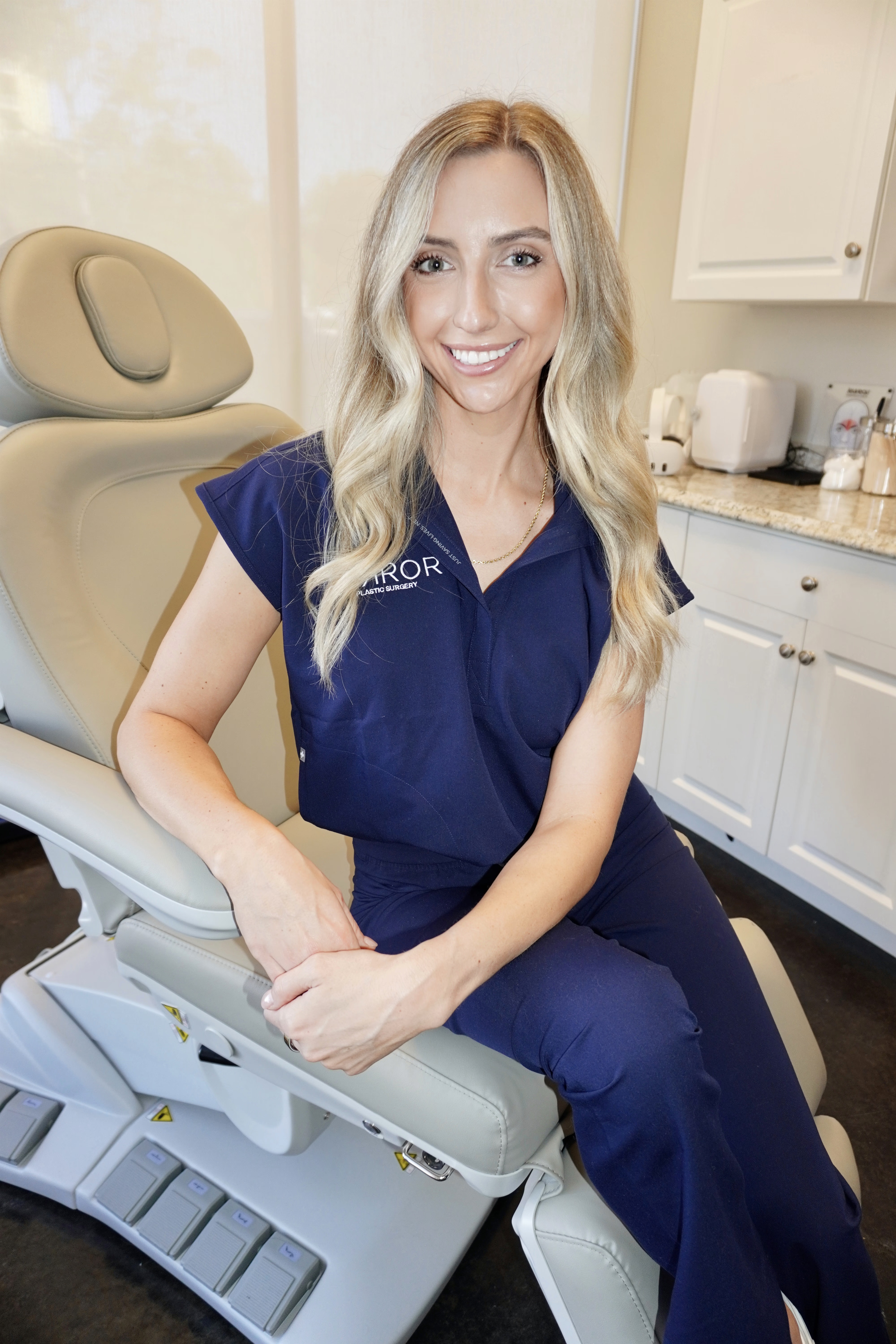
At Mirror Plastic Surgery, peptide therapy is led by Ellie Pranckevicius, FNP-BC, a board-certified Family Nurse Practitioner with four years of experience in the Neuroscience ICU at Tampa General Hospital and advanced training in aesthetic medicine. Ellie begins with a comprehensive consultation that may include full lab panels. Every protocol is tailored to the individual’s physiology, goals, and health history. Peptides come from reputable providers with rigorous batch testing, a critical safeguard given the absence of FDA regulation for many compounds in this category.
Mirror Plastic Surgery offers peptide protocols that address inflammation, weight management, energy, skin aging, recovery, and more.1 Options include the Glow Stack (GHK-Cu, BPC-157, TB500), NAD for cellular energy, GLP-3R for metabolic support, and Selank for anxiety management, among others. Every protocol includes ongoing concierge care with direct access to Ellie throughout the process.
Explore Peptide Therapy With Ellie to see whether this second-tier option fits your wellness plan.
Frequently Asked Questions
What Are The Biggest Wellness Trends For 2026?
The dominant 2026 wellness trends reflect a shift away from aggressive biohacking toward what the Global Wellness Summit calls “bio-harmonization,” which emphasizes sustainable habits over extreme interventions. Rest as a ritual is growing fastest, with sleep health searches up more than 1,000% year over year. Nervous system regulation, breathwork, and plant-forward eating are gaining ground alongside longevity-focused supplements like NAD. The most meaningful shift is cultural, as more people treat mental wellness as the starting point of personal health rather than an afterthought. Not all trends share the same research base, and the most evidence-backed practices remain the five pillars covered in this article.
How Do I Start Optimizing My Wellness?
Begin with the five pillars: sleep, movement, nutrition, stress management, and social connection. Aim for 7–9 hours of sleep nightly with a consistent schedule. Accumulate 150 minutes of moderate activity weekly plus strength training twice a week. Focus your diet on whole foods, at least 400 grams of fruits and vegetables daily, and 30 or more plant types weekly. Add a daily breathwork or mindfulness practice and apply the 5-3-1 rule to your relationships. Use the 30-day plan in this article to build each pillar step by step. After 90 days of consistent practice, consult a qualified medical provider to discuss whether advanced interventions like peptide therapy match your goals and health profile.
Is Wellness Optimization The Same As Biohacking?
Wellness optimization and biohacking describe different approaches. Biohacking often involves unregulated self-experimentation with devices, supplements, or interventions that lack robust human evidence. Wellness optimization, as described here, builds on evidence-based foundational habits first, including sleep, movement, nutrition, stress management, and social connection. Advanced medical interventions enter as a supervised second tier only after the basics are in place. This distinction matters because many biohacking trends carry real risks, while the five pillars rest on decades of large-scale epidemiological and clinical trial data.
What Is The 5-3-1 Rule For Wellness?
The 5-3-1 rule, as explained in Step 2, is a social health framework that offers a practical target for maintaining social connection. It provides simple numbers to guide weekly interactions and daily meaningful time with others, keeping relationships central in everyday life.
What Should I Look For In A Peptide Therapy Provider?
Medical supervision should sit at the top of your list. A qualified provider reviews your full health history, orders baseline lab work relevant to your goals, and creates a personalized protocol instead of a one-size-fits-all stack. They source peptides from suppliers with documented batch testing and provide ongoing monitoring and support. Buying peptides online without supervision introduces serious risks because there is no third-party quality verification, no screening for contraindications, and no guidance on dosing. A provider who explains when a peptide is unnecessary for you and prioritizes long-term outcomes over short-term revenue earns trust.
Conclusion: Your Wellness Optimization Journey Starts With The Basics
Wellness optimization starts with mastering the five pillars of sleep, movement, nutrition, stress management, and social connection. Consistency matters more than perfection. The 30-day plan in this article gives you a structured starting point, and the 5-3-1 rule adds a clear framework for the often overlooked pillar of relationships.
Advanced interventions like peptide therapy belong in a second tier for people who have built a strong foundation and want personalized, medically supervised support. These therapies work best when they complement the basics rather than replace them.
If you feel ready to take your wellness to the next level with personalized peptide therapy, Mirror Plastic Surgery provides concierge-level care with comprehensive lab analysis, tailored protocols, and ongoing support from Ellie Pranckevicius, FNP-BC.
Book An Appointment With Ellie Today.
Mirror Plastic Surgery is located at 780 4th Ave S, St. Petersburg, FL 33701. Call or text 727-361-6515, or email [email protected]. Follow the practice on Instagram at @mirrorplasticsurgery, @dr.akashplasticsurgery, and @perfectlyplastics.
Disclaimer: Results may vary from person to person. Editorial content, before and after images, and patient testimonials do not constitute a guarantee of specific results.
Disclaimer: Peptide therapy is intended for wellness and optimization purposes and is not prescribed to diagnose, treat, cure, or prevent disease unless specifically stated. Many peptides are not FDA-approved and may be used off-label. Some have limited long-term safety data, with a potential for unknown risks, complications, or desensitization with prolonged use.
1 Results may vary from person to person. Editorial content, before and after images, and patient testimonials do not constitute a guarantee of specific results.
Peptide therapy is intended for wellness and optimization purposes and is not prescribed to diagnose, treat, cure, or prevent disease unless specifically stated. Many peptides are not FDA-approved and may be used off-label. Some have limited long-term safety data, with a potential for unknown risks, complications, or desensitization with prolonged use.